West of Mérida: Travel Guide: Between highland coffee and Caribbean beaches
- red = sights
- blue = accommodation
- yellow = food and drink
- green = transprt
The western half of the state of Mérida offers a delightfully diverse landscape: below the high mountain zone, aromatic highland coffee is grown in many places, whilst high-quality cocoa (origin: Sur del Lago) is cultivated at even lower altitudes. Several winding side roads lead down from the mountains into the lowlands of the Llanos or to Lake Maracaibo. There, in El Vigía, lies the region’s main airport with daily connections to Caracas.
Ejido
EjidoEjidoEjido, the second-largest city in the state of Merida, forms the vibrant administrative and economic heart of the region. As part of a major urban axis, it lies at an altitude of around 1,200 metres in the fertile valley of the Rio Chama, in the immediate vicinity of the state capital, Merida. The town is a major transport hub and is known above all for its intensive agricultural production, with the cultivation of garlic, onions and peppers having made the region famous beyond the country's borders.For travellers, Ejido is primarily a stopover, serving as a base for excursions into the surrounding Andean landscape, such as the Sierra Nevada National Park. Within the town, attractions such as the modern Cathedral of Nuestra Senora del Rosario de Chiquinquira, the central Plaza Bolivar and the Parque La Isla recreational park on the riverbank invite visitors to linger. A visit to the local Mercado Municipal offers a genuine insight into everyday life and the region's agricultural produce. – With over 100,000 inhabitants, it is the second-largest city, an agricultural centre (garlic, onions, peppers) and a transport hub. Worth seeing are Plaza Bolívar, the Iglesia Matriz De Ejido church and the nearby Mercado Municipal, which is a hive of colourful activity.
Jají
Jají – An Andean gem with colonial charmJají – An Andean gem with colonial charmAbout an hour's drive from Mérida, at an altitude of 1,780 metres, lies the picturesque village of Jají. This picturesque village with its cobbled streets was founded as early as 1586, but acquired its current, uniform appearance during an extensive reconstruction in 1971. The approximately 60 colonial-style houses, whose façades are traditionally painted in blue and white, lend Jají its unique charm. Around Plaza Bolívar, you can browse the craft shops, whilst several restaurants invite you to stop for a bite to eat.At Fonda Doña Carmen, a colonial-era building with a beautiful courtyard, the local specialities of pea soup and trout are served in a variety of ways. Simple accommodation is available in the village itself. A good half-hour's drive away, towards La Azulita, the Estancia La Bravera, with its lovingly tended gardens, is a highly recommended place to stay.
A worthwhile destination is the theme park 'La Venezuela de Antier'. Here, the artist Alexis Montilla has faithfully recreated 1920s Venezuela with its various regions and traditions. In the mountains above Jají, Thomas Niko Walter, a German with a fascinating history, grows high-quality Andean coffee on a small finca. – If you turn off towards the north-west at Ejido, you first pass the open-air museum La Venezuela de AntierLa Venezuela de AntierA unique open-air museum created with great dedication by the artist Alexis Montilla. Since its opening in 1991, visitors have been able to discover the Venezuela of the 1920s here - faithfully recreated in all its richness and diversity of traditions.
Across the extensive grounds, every single state is represented with its own architecture, folklore, cuisine, music and dances. The depiction of Yaracuy is particularly impressive, where cattle are driven over the mountains. A replica of Salto Angel will soon be added to the site.
The atmosphere is steeped in nostalgia and history, transporting visitors of all ages back to a bygone era. A hands-on journey into the past - vivid, lovingly designed, educational and particularly popular with families. Due to the high altitude, it is advisable to pack warm clothing.
-
Address: km 5, Carretera Panamericana, via Jaji, Merida
Price: €€-€€€ . You then arrive in the beautiful little town of Jají with its blue and white colonial houses. A stroll around Plaza Bolívar is well worth it.
Accommodation
Half an hour past Jají, towards La Azulita, lies Estancia La BraveraEstancia La BraveraHalfway between Jají and La Azulita, this paradise for nature lovers is hidden behind an unassuming entrance gate. Much like a botanical garden, the estate brings together all the plant species of the Andean páramos – expertly identified by specialists and lovingly arranged. Particularly enchanting are the countless hummingbirds flitting through the lush vegetation.
The ten rooms are tastefully furnished and invite you to linger. The heart of the estate is a traditional caney with a wood-burning stove, where the owners themselves cook for their guests.
The estancia is run by the owners, who look after their guests' well-being with personal dedication.
-
Address: Km 18 vía Jají-La Azulita, Páramo del Tambor, Mérida , which is worth a visit for its hummingbirds and botanical garden alone.
Food and drink
In a side street not far from Plaza Bolívar, Fonda Doña CarmenFonda Doña CarmenThis popular restaurant is situated in an old colonial building with thick adobe walls and tiled roofs, not far from Plaza Bolívar. Owner Omar Balza welcomes his guests with authentic Andean cuisine, centred around two specialities: the famous pea soup (Sopa de arvejas) and trout (Trucha), which is prepared here in every conceivable way. There are also hearty chicken and beef stews (Hervidos) as well as meat dishes grilled over an open fire.
Of particular interest is the courtyard, where guests can experience the cultivation and processing of regional coffee up close – a wonderful complement to the culinary offerings.
-
Address: Calle Sucre, No. 22, opposite the Museo de Los Pájaros, Jají, Mérida
Price: € serves pea soup and trout.
And elsewhere
Just before Jají, the German political activist Thomas “Niko” WalterUltimately, it is not just the fascinating landscapes, but above all the extraordinary people who make a journey worthwhile. One of them is Thomas 'Niko' Walter. In the green mountains near Mérida, the German political rebel has built a new life for himself - as a coffee farmer, craftsman and witness to a life that cannot be easily categorised.
His path led him, via various detours, to Venezuela. In the 1990s, he was part of the militant left in Berlin. The charge: planning to blow up a deportation detention centre, with the intention that no one should be harmed in the process. In 1995, he and his comrades went into hiding; via stopovers in places such as Nicaragua, they eventually reached Venezuela. Their story has even been made into a film - the documentary 'Gegen den Strom - Abgetaucht in Venezuela' (Partisan Filmverleih) portrays the rebels' journey.
Today, aged over 60, Thomas lives in Venezuela as a recognised political refugee. Here, he runs a small coffee finca with great dedication, and is happy to show visitors around. He explains the entire process - from bean to cup. You'll learn how coffee is grown, harvested, processed and roasted. He has also set up a small workshop where he teaches local young people the craft of carpentry. Of course, there's plenty of time for conversation. There's no shortage of fascinating topics. runs a small coffee finca and a carpentry training workshop.
Meanwhile, La Caravana EscuelaLa Caravana EscuelaIn 2019, blacksmith and cameraman Daniel Souto launched the 'Travelling Blacksmith School,' which travels through mountain villages around Mérida. In five-day intensive courses, participants learn the ancient craft of blacksmithing, using scrap materials like old car body panels as raw material. At the end, a fully equipped smithy is left to the village community, where trained blacksmiths can continue working, make tools, and later sell them.
The blacksmiths meet regularly for exchange and further training, and there is now collaboration with schools integrating the craft into technical lessons. In just a few years, over 200 farmers have been trained, more than 5,000 tools forged, and several thousand people reached along the production chain. New jobs have been created not only in smithies, but also in construction, carpentry, and arts and crafts.
The team is especially proud that many young people are becoming enthusiastic about the craft. 'Blacksmithing transcends generations,' says Souto. 'Our workshops are spaces of creativity and freedom where young people can have fun and feel useful whilst learning invaluable skills.' Souto can be contacted via WhatsApp for visits to village smithies; donations can also be made through his Instagram profile. ‘s blacksmithing school is on the move, travelling through the mountain villages and teaching people the craft of blacksmithing.
La Azulita
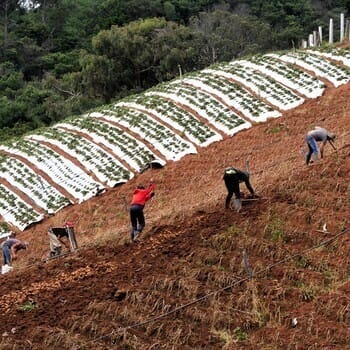 La Azulita – the blue village of the AndesLa Azulita – the blue village of the AndesWith just 16,000 inhabitants, La Azulita lies at 1,135 metres in the Venezuelan Andes, offering year-round temperatures of 17-25°C. Named after the bluish glow of its surrounding mountains, the village is an idyllic retreat for nature lovers.
The heart of the town is Plaza Bolivar, dominated by the neo-Gothic Santuario Inmaculada Concepcion with its 45-metre towers and striking stained-glass windows. Nearby, Trattoria de Herli serves excellent pizza and pasta, while Posada El Tejar offers simple accommodation on the outskirts, where owner Hektor occasionally makes papelon in his old sugar mill.
Once reliant on coffee, La Azulita now thrives on tourism. Designated an 'Ecological Village of the Americas' in 1990 thanks to 80% intact primary forest, it also offers caving at Cuevas del Pirata and the best climbing in Merida state.
La Azulita lies on a major bird migration corridor, with nearly 400 bird species recorded, including parakeets, toucans, and rare hummingbirds like the Perija hummingbird and blue-throated starling. Birds of prey and endangered species also thrive here, and the town is internationally known for its birdwatching competitions. – If you follow the route northwards from Jají, you’ll reach the village of La Azulita in just over an hour; it’s named after the bluish glow of the surrounding mountains. There, in the surrounding primary forests (80% preserved, awarded the title of ‘Ecological Village of the Americas’ in 1990), nearly 400 bird species have been recorded – a paradise for birdwatchers and hikers. Climbing tours and cave explorations are offered at the Cuevas del Pirata (Cuevas del Quebradón)Cuevas del Pirata (Cuevas del Quebradón)A special recommendation for nature lovers and adventure seekers: the Cuevas del Pirata are located in the Sierra de La Culata National Park, just a few minutes from La Azulita. According to legend, the pirate Henry Morgan once used the caves as a hideout after raiding Mérida. Indigenous ceremonies are also said to have taken place here. A place steeped in history.
The limestone cave system, with several entrances, was formed by thousands of years of water erosion. Inside, visitors will find galleries, chambers and halls at a pleasant 19-22 degrees. Insects, birds and nocturnal bats live here. Inside the cave, there are routes of varying difficulty – however, a guide is mandatory, as it is easy to get lost in the labyrinth.
Active visitors can go climbing, abseiling, whizzing down the zip line (Tirolesa) or exploring the treetop trails. Among climbers, this spot is considered the best in the entire state of Mérida. Guides and safety staff are on hand – make sure to bring cash for the guides! Picnic areas and hiking trails invite you to linger.
Nearby, on the way to El Zancudo, lies La Palmita waterfall with kiosks, tables and a pool of ice-cold river water – ideal for a day out in the fresh air. There is a natural pool in Aguas Calientes. Everything is signposted and just a few minutes away.
-
Address: La Azulita, Mérida
*Tip: remember to bring cash for the guides . In the village centre, the imposing brutalist church building, the Santuario de la Inmaculada Concepción (La Azulita)Santuario de la Inmaculada Concepción (La Azulita)This impressive place of worship comes highly recommended for lovers of architecture and art: the Santuario de la Inmaculada Concepción in La Azulita differs fundamentally from the region's typical colonial churches. Completed in 1967, the building uniquely combines modern, Gothic, African and Arabic stylistic elements.
Its sheer scale is monumental: two tall towers, a pointed dome and a main spire 43 metres high define its appearance. The façade, with its columns and arcades, is made of exposed concrete (Brutalism). Inside, the Moroccan-style columns and the walls and floors of hammered granite catch the eye. At the entrance portal, a 7-metre-high sculpture of the patron saint welcomes visitors.
The absolute highlight is the two huge, colourful stained-glass windows (vitrales) in the chancel. The larger window measures 30 metres, consists of over twenty glass panels and depicts the Inmaculada Concepción (Immaculate Conception), based on a work by the Spanish painter Murillo. It floods the entire sanctuary with coloured light.
The second window (9 metres) depicts the Santo Cristo (Holy Christ) in shades of blue, scarlet and yellow. The two are linked by a painted gold-bronze bell, surrounded by ten angels.
-
Address: Plaza Bolívar, La Azulita, Mérida , is a surprise.
Accommodation
The Posada El TejarPosada El TejarThis accommodation is idyllically situated on the outskirts of La Azulita, yet remains central: shops, restaurants and Plaza Bolívar are all within easy walking distance. Here, travellers will find everything they need – the rooms are simply but functionally furnished, each with its own small bathroom and good Wi-Fi. Guests can cook for themselves in the communal kitchen or enjoy a meal in the on-site restaurant.
A real highlight is Hektor, the owner. He runs his own trapiche (traditional sugar mill), where he occasionally makes his own papelón (cane sugar syrup) using traditional methods – a craft that has become rare, which he is happy to demonstrate.
Near the river are caves that can be visited. Hektor can arrange local guides to take you there on request. A place that invites you to linger and where you'll want to stay an extra day. In good weather, you can even watch the famous Catatumbo lightning from here, which lights up the sky at night.
-
Address: Inicio Avenida Paéz, La Azulita, Mérida
Price: € is beautifully situated on the outskirts of the village. Its owner, Hektor, runs a small trapiche (sugar mill). In the off-the-beaten-track village of Ciudad Fresita – a haven for dropouts in the mountainsCiudad Fresita – a haven for dropouts in the mountainsDeep in the mountains above La Azulita lies a special place: Ciudad Fresita, a small village off the beaten track. Those who live here have usually ended up here by chance or in search of something new – and stayed. The residents come from all corners of the globe, bringing with them different religions, cultures and ways of life. Art, nature and peaceful coexistence characterise everyday life, and together they seek happiness.
The small settlement consists of around 20 houses; there is an ashram and a yoga centre, and accommodation is also available. What makes this place so special is the complete tranquillity. No noise, no crime, no political or economic worries – here, the world seems to stand still. , there is an ashram and a yoga centre.
Food and drink
Delicious pizza and pasta are available at the La Trattoria de HerliLa Trattoria de HerliLocated right on Plaza Bolívar, Trattoria Herli is a real highlight. The food here is excellent – especially the pizzas, which are considered the best in the area. With a crispy, thin base and delicious toppings, they are a real treat. The pasta dishes are also impressive. The portions are generous and the service is excellent.
A place where you'll want to linger and enjoy the atmosphere of the village square.
-
Address: Plaza Bolívar, La Azulita, Mérida
Price: €-€€ , above Plaza Bolívar.
Santa Apolonia
Santa Apolonia – the scent of coffee and hot springs in the AndesSanta Apolonia – the scent of coffee and hot springs in the AndesAt the foot of the Sierra La Culata, at an altitude of 760 metres, lies an insider's tip for anyone seeking peace and relaxation off the beaten track: Santa Apolonia. The lush green surroundings are perfect for hiking, small streams tempt you to take a refreshing dip, and the pleasant climate all year round (daily average: 23 °C) does the rest. Those wishing to enjoy a touch of Caribbean flair in between can reach the white sandy beach of Palmarito on Lake Maracaibo in half an hour.This picturesque Andean village was founded in 1878 during the Venezuelan coffee boom. Even today, life here revolves – alongside modest tourism – primarily around coffee cultivation. Sugar cane, cocoa and citrus fruits also thrive here.
And then there is the true heart of Santa Apolonia: the Aguas Termales El Jagüey. Here, mineral-rich water at a temperature of 35-40 °C bubbles up directly from the depths of the Andes – once revered as sacred by the indigenous people. Today, there is a charming, somewhat ageing thermal spa here, where visitors can relax surrounded by ferns and birds. – Coffee cultivation, sugar cane, cocoa and citrus fruits characterise the region around Santa Apolonia on the northern slopes of the Andes. However, the town is best known for its thermal springs, the Aguas Termales El JagüeyAguas Termales El JagüeyIf you're looking for natural hot springs and don't expect a sterile wellness oasis, this is the place for you. The family-run thermal spa is nestled in the green mountains of Santa Apolonia and boasts three pools – including a pool with mineral-rich thermal water at 35-40 °C, a cold pool for a refreshing contrast, and a separate children's pool. There is also direct access to a small river, the Río San Juan, where warm and cold water mix naturally – a unique bathing experience.
The complex opened in 1984 and has become an integral part of the region. In addition to the pools, there is a restaurant serving Venezuelan home-style cooking (breakfast, lunch and dinner), a children's playground, a sauna and a hotel with 23 simple but clean rooms (ranging from double rooms to six-person group accommodation).
The owner, Ms Ana Celis Peña Salcedo, has built this paradise with her own hands over the decades – her story is as impressive as the landscape itself.
A perfect place for anyone who appreciates a slower pace of life, nature and genuine hospitality.
-
Address: km 12, Santa Apolonia, Mérida .
Accommodation
Aguas Termales El JagüeyAguas Termales El JagüeyIf you're looking for natural hot springs and don't expect a sterile wellness oasis, this is the place for you. The family-run thermal spa is nestled in the green mountains of Santa Apolonia and boasts three pools – including a pool with mineral-rich thermal water at 35-40 °C, a cold pool for a refreshing contrast, and a separate children's pool. There is also direct access to a small river, the Río San Juan, where warm and cold water mix naturally – a unique bathing experience.The complex opened in 1984 and has become an integral part of the region. In addition to the pools, there is a restaurant serving Venezuelan home-style cooking (breakfast, lunch and dinner), a children's playground, a sauna and a hotel with 23 simple but clean rooms (ranging from double rooms to six-person group accommodation).
The owner, Ms Ana Celis Peña Salcedo, has built this paradise with her own hands over the decades – her story is as impressive as the landscape itself.
A perfect place for anyone who appreciates a slower pace of life, nature and genuine hospitality.
-
Address: km 12, Santa Apolonia, Mérida
Palmarito
PalmaritoPalmaritoEven the journey to this small fishing village on Lake Maracaibo is an experience in itself: a country road winds through picturesque scenery dotted with mango trees and coconut palms swaying in the breeze above the lake. Palmarito is known as 'the beach of Mérida'. The palm-fringed sandy beach, the colourful houses and the cheerful atmosphere lend the place a Caribbean flair – enhanced by the warm climate all year round.Originally, this region was settled by the indigenous Carib people. During the colonial era, African slaves were brought here to work on the local cocoa haciendas. To this day, the Afro-Venezuelan tradition remains alive – such as the veneration of San Benito and the rhythms of the Chimbánguele.
As the saying goes: Mérida has it all: the Andes and snow, the Llanos, towns and beaches.
-
Special feature: In the surrounding Sur del Lago region, one of Venezuela's finest cocoa varieties is grown – another reason to visit Palmarito.
Pueblos del Sur
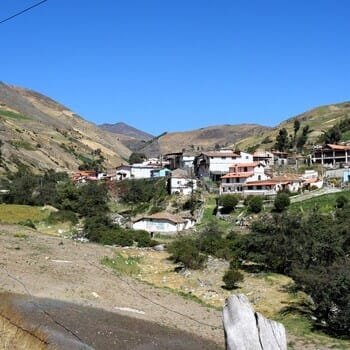 The Pueblos del Sur: Authentic Andean life in the mountainsThe Pueblos del Sur: Authentic Andean life in the mountainsSouth of Mérida lie the secluded villages of El Morro, San José de Acequias, Mucutuy, Aricagua and Chacantá, collectively known as the Pueblos del Sur. The region is ideal for activities such as trekking and birdwatching in unspoilt nature and offers insights into local crafts, such as traditional leather bag-making in Mucutuy. The spectacular, winding approach is particularly popular with motorcyclists due to its challenging route. Overall, the villages offer an authentic glimpse into rural life in the Venezuelan Andes.
Life in the Pueblos del Sur is characterised by traditional agriculture, with high-quality shade-grown coffee, sugarcane for panela (unrefined, dried sugarcane juice) and small-scale subsistence farming. The tourist infrastructure is basic and follows the concept of 'Turismo de Pueblos'. There is basic accommodation (mucuposadas) as well as small shops and eateries in the larger villages.
*Tip: The villages are suitable for day trips from Mérida, but advance planning is essential for a stay of several days. – Between Ejido and Lagunillas, the route to the secluded Pueblos del Sur (Villages of the South) – very popular with motorcyclists – branches off. Visitors experience authentic country life and enjoy the tranquillity. The entire area is ideal for long hikes and birdwatching.
El MorroEl Morro – The Gateway to the SouthEl Morro (formerly Mucubache) has always marked the entrance to the Pueblos del Sur. Situated at over 1,700 metres, it formerly served as an important trading post between Barinas and Mérida. The village lies within the Sierra Nevada National Park and is surrounded by unspoilt nature. The majority of the inhabitants bear the surname Dugarte, which points to a long and self-contained settlement history dating back to its foundation around 1655.
The approach via the winding and steep road from the Chama Valley is no easy feat and prepares visitors for the seclusion of the villages that follow – a charming and rustic introduction to Andean village culture., at an altitude of 1,700 metres, is known as the gateway to the Pueblos del Sur. San José de AcequiasSan José de AcequiasSan José de Acequias is often regarded as the heart and administrative centre of the Pueblos del Sur. Its name reveals what shapes its life: the water of the 'acequias' (irrigation channels), which have been making the surrounding fields fertile for centuries. The village sits on a sunny terrace with sweeping views of the rugged mountain ranges. The village centre is dominated by the white church with its two towers, a landmark of the region. Life revolves around coffee cultivation and agriculture. Here you can experience the vibrant daily life of the southern villages, with a small village square and simple shops.
San José de Acequias is an ideal starting point for hikes to nearby fincas, where you can learn about the coffee-making process from plant to cup. is the administrative centre of the region. MucutuyMucutuyMucutuy nestles in a quiet, green highland valley. Its name, which is thought to be of indigenous origin, translates as 'place of eternal water' or 'place of the breeze' - an apt description of the gentle, nature-loving atmosphere here. The village is characterised by a peaceful tranquillity, and the people here live mainly off vegetables and fruit grown for their own consumption. The village church captivates with its simple yet impressive architecture.
Mucutuy is best known for its traditional crafts. A speciality are the sturdy leather bags, called 'carrieles', which have been used by Andean farmers for generations.
A visit to Mucutuy offers an authentic insight into life in the Andean highlands - a world that has retained its own, tranquil rhythm. is known for its leather bags, whilst AricaguaAricaguaAricagua is the most remote and perhaps the most unspoilt of the three main villages. Surrounded by dense cloud forest and steep slopes, it feels like a forgotten enclave. The small chapel and the scattered houses made of mud bricks and wood blend perfectly into the dramatic landscape. The community is small and there is a close-knit social bond. The main livelihoods are coffee cultivation, grown on tiny plots, and the rearing of sheep and cows. The quality of the highland coffee produced here is exceptional.
Aricagua offers access to unspoilt cloud forests and secluded hiking trails. The village is ideal for travellers seeking an utterly authentic experience and willing to forego comfort. produces excellent highland coffee. Near ChacantáChacantáChacantá is another significant village in this region and part of the network of the 'Pueblos Originarios del Río Nuestra Señora'. It is particularly renowned for its spectacular natural surroundings. Nearby are impressive waterfalls that offer a refreshing dip after a strenuous hike through the wild landscape.
The atmosphere is just as unspoilt as in Aricagua, with a small community rooted in agriculture and livestock farming. It is worth asking here for local guides who can lead you to the hidden natural wonders of the area. Chacantá reinforces the image of the Pueblos del Sur as a region where nature is the main attraction and village life adapts to it., hikers can take a refreshing dip beneath the waterfalls.
Accommodation
All accommodation is of a basic standard; booking in advance is advisable. In San José de Acequias, the Posada MochabáPosada MochabáBehind the gate lie three small huts with pointed roofs, three trout ponds, grass, bright flowers, sheltering mountains, and there Martín appears, with that look on his face as if the world were perfect, to welcome us. Dinner of fresh trout and vegetable soup; breakfast of wheat arepas, quark and free-range eggs. It's a stay for reflection, for strolls through the village and horse rides.
-
Address: San José de Acequias, Mérida has its own trout ponds. Between Mucutuy and Mucuchachi lies the simple Mucoposada SamaipatMucoposada SamaipatThis is the home of Liodly Pernía and Edward García and their children. Clean and cosy rooms. Breathtaking views, flowers, fruit trees, eggs from free-range hens, quail farming (the quail are served in various stuffed dishes), and free-range pigs.
-
Address: La Ensillada, between Mucutuy and Mucuchachí, Mérida . The Cistercian monastery Monasterio Trapense Nuestra Señora De Los AndesMonasterio Trapense Nuestra Señora De Los AndesIt is home to the Cistercian Trappist monks and the perfect place to listen to the silence. Surrounded by mountains, it is a beautiful, simple building with magnificent gardens. Accommodation is available at the Casa de Retiros and the Casa San Bernardo, both offering comfortable rooms and hearty meals.
The complex is architecturally charming and, with its peaceful atmosphere, provides an ideal setting for reflection and contemplation.
-
Address: Carretera vía Estanques towards Los Pueblos del Sur, Mérida offers rooms to guests. In Chacantá is the Posada KiutrindúPosada KiutrindúThe owner, Tomasa García, is from Chacantá. She opened a guesthouse because there wasn't a single bed in her village to accommodate visitors. The name means 'flower', and each room is named after a flower. She takes her guests to the waterfalls and the sugar mill and offers them biruz, as the coffee substitute drunk in this area is called. She is entertaining and talkative. Her guesthouse is simple and pretty.
-
Address: At the end of Calle Sucre, house #18-04, Chacantá, Mérida .
Lagunillas
LagunillasLagunillasFounded in 1656 under the name San Juan Bautista de Lagunillas, this town of around 118,000 inhabitants lies at an altitude of just over 1,000 metres in a valley traditionally characterised by agriculture. The highly developed indigenous cultures of the Timoto-Cuica once practised agriculture here using elaborate terraced fields and irrigation systems.Lagunillas boasts a beautiful colonial town centre, the heart of which is the Pueblo Viejo district - a veritable open-air museum with well-preserved buildings from bygone eras, inviting visitors to take a leisurely stroll.
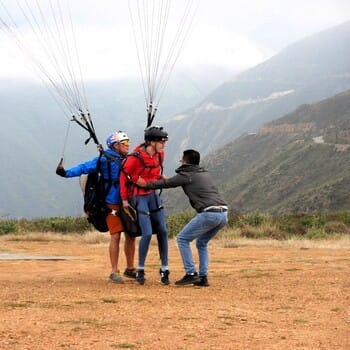
The surrounding area is not only known for its fields, but also for a special adventure: paragliding flights take off from nearby Tierra Negra, soaring over the spectacular Andean landscape. Parapente Tierra Negra also offers tandem flights.
Activities
Parapente Tierra Negra Parapente Tierra NegraParapente Tierra Negra – Your therapy at 500 metresSome answers aren't found on the sofa, but in the air. Because you might not be able to buy happiness - but you can buy a paragliding flight. And that comes pretty damn close to the feeling.
Tierra Negra is an internationally renowned spot for paragliding. Thanks to the stable wind and weather conditions, you can fly here almost all year round, whether alone or in a tandem flight. The take-off is at around 1,600 metres, with the landing in the Rio Chama valley at approximately 1,100 metres.
With 28 years of experience and FAM-certified pilots, safety is the top priority at Parapente Tierra Negra - whether you're booking a tandem flight or want to take a course. Everything is organised from take-off to landing, at fair prices.
Experience breathtaking views over Merida, a pure adrenaline rush and a sense of freedom you won't forget in a hurry. is one of several operators.
El Vigía
El VigíaEl Vigía – The tropical gateway to the AndesEl Vigía, with around 70,000 inhabitants, is Mérida state's second-largest city and its youngest, founded just over a century ago. While Mérida sits in the cool highlands, El Vigía offers tropical flair at just 130 metres above sea level on the banks of the Río Chama, with year-round temperatures averaging 32 °C. The fertile plains are shaped by livestock farming and plantations, especially plantains. El Vigía is a modern transport hub with a historic past. From 1893 to 1952, its railway shipped Andean coffee to Zulia's ports - a legacy still honoured by a steam locomotive on Plaza El Ferrocarril. Today, El Vigía International Airport is the main entry point for travellers heading to Mérida, saving them the arduous overland journey. From there, buses or private transport continue to Mérida.A regional highlight lies about 50 km north in Zulia state: from the fishing village of Concha, boat trips lead to the Río Catatumbo estuary. Between March and October, the famous Relámpagos del Catatumbo occur there - silent lightning displays illuminating Lake Maracaibo, best viewed from stilt houses or organised tours., the tropical gateway to the Andes. El El Vigía AirportEl Vigía Airport – Your gateway to the AndesThe modern regional airport of El Vigía (IATA code: VIG) is the most important air hub for the entire Andean region. As a practical and fast alternative to the time-consuming overland journey, it is a popular gateway to the Sierra Nevada and the colonial city of M?rida.
The airport is very conveniently located directly on the Pan-American Highway, about 70 km west of M?rida and just a few minutes from the centre of El Vig?a. Taxis or hire cars will take you reliably to M?rida (approx. 1.5-hour drive). (IATA: VIG) is the main gateway to the Andean region by air. In the town centre, at Plaza El FerrocarrilPlaza El Ferrocarril – Where the city beganPlaza El Ferrocarril, officially known as 'Plaza La Cordillera', is the historic heart and symbolic birthplace of El Vigia. The arrival of the first train from Santa Barbara del Zulia on 28 July 1892 marks the actual birth of modern El Vigia and heralded its role as a central trading hub for the surrounding states.
The square in its present form is relatively young: it was built between 1967 and 1972. At its centre stands one of the original steam locomotives from the glorious railway era. For over 60 years, the 'La Cordillera' railway line connected El Vigia with the ports in the neighbouring state of Zulia, from where the famous Andean coffee was exported all over the world. It was only the devastating floods of the Rio Chama, which destroyed the track, that led to the cessation of operations. Today, the coffee is transported to the ports by lorry.
The square still serves as a popular backdrop for celebrations, but appears somewhat neglected overall. It is to be hoped that its historical significance will be honoured in future through appropriate maintenance and enhancement., you can admire a historic steam locomotive, a remnant of the former railway line that was used to transport coffee.
Accommodation
The Juniotel Hotel BoutiqueJuniotel Hotel BoutiqueAn excellent five-star hotel with spacious and comfortable rooms at an affordable price. The hotel is located in a modern shopping centre next tot he airport, with a wide range of dining options and nightlife in the immediate vicinity.
-
Address: Avenida Don Pepe Rojas, C.C. Junior Mall, Level 1, Unit S/N, El Vigia, Merida
Price: €€-€€€ , situated right next to the airport, is one of the country’s few five-star hotels. Somewhat more centrally located is the family-run Bari HotelBari HotelThe Bari Hotel is the perfect place to unwind after an exciting day in the great outdoors. Following the strenuous boat trip to the spectacular Catatumbo thunderstorms, you can look forward to the comfort of a hot shower and spacious, comfortable beds.
This family-run hotel stands out for its personalised service and thoughtful touches. Facilities include a refreshing swimming pool (a blessing in El Vigia's tropical climate), a restaurant serving delicious food - do try the pizza! - and a terrace where yoga classes are even offered, ideal for unwinding.
The owners organise tours to the natural wonder of the Relampagos.
-
Address: Avenida Don Pepe Rojas, El Vigia, Merida
Price: €-€€ , which also organises tours to the Catatumbo thunderstorms (with an overnight stay in a hammock).
Bailadores and Tovar
Bailadores and TovarBailadores and TovarFounded in 1601 as Veracruz de los Bailadores, Bailadores was long an agricultural centre and one of Venezuela's 'breadbaskets' in the 20th century. Today, it offers a mix of nature, culture, and local enterprise. Attractions include the Cascada de La India Caru waterfall and the legendary La M serpentine road, which marks the start of the ascent into the Páramo La Negra.Modern Bailadores thrives on change: while ore mining continued into the 1960s, tourism and specialised crops now dominate - notably Finca El Camarero, Venezuela's largest rose producer. In the town centre, Plaza Bolívar and the Santuario Diocesano de Nuestra Señora de la Candelaria are worth a visit, as is the Casa de los Belandria, where Simón Bolívar was reportedly first hailed as 'El Libertador' in 1813.
Neighbouring Tovar, the 'Sultana del Mocotíes,' sits lower at 952 metres with a warmer climate. A cultural hub, it is known as the 'Cuna del Arte Merideño' - the cradle of Mérida's art - and is home to many regional arts and crafts workshops. For accommodation, Estancia La Vera Cruz offers modern comfort with local roots and promotes regional produce. – If you follow the main road (Troncal 7) westwards from Lagunillas, you will soon reach Tovar. Much of Mérida’s handicrafts are produced in this small town. The transition to the much older town of Bailadores is seamless. It is the agricultural centre of the region, and home to Finca El CamareroFinca El CamareroFinca El Camarero is Venezuela’s largest rose producer and is run as a family business by Eduardo Belandria and Naiyibi Arias in the highlands of Bailadores. The company embodies the region’s indomitable pioneering spirit: rather than relying on traditional agriculture, the business has successfully focused on the cultivation of high-quality ornamental plants and supplies the national market with millions of roses each year – all of which are sold domestically.
The finca embodies a deep connection to the local area and a determination to advance the region through hard work and innovation.
The site also features guest rooms for overnight stays.
-
Address: at the entrance to Bailadores, directly on the main road, Mérida
*Price: € (Admission and accommodation are budget-friendly)
Cascada de La India Carú is ideal for a half-day trip and can be combined with exploring the wider region around Bailadores. invites you to take a dip. Extensive hikes and trekking tours are possible in the Páramo Batallón and Páramo La NegraPáramo Batallón and Páramo La NegraGeneral Juan Pablo Peñaloza National Park, encompassing the Páramos Batallón and La Negra, is a reserve of exceptional beauty and ecological importance in the Venezuelan Andes. Covering 75,200 hectares, it stretches along the Mérida–Táchira border.
These high-mountain landscapes lie between 1,800 and 3,300 metres and act as giant natural water reservoirs, supplying drinking water to surrounding regions. A network of 117 lagoons criss-crosses the misty landscape. One of the best known is Laguna Brava (Laguna las Palmas), at around 2,200 metres on the state border, with clear waters and an imposing mountain backdrop.
The park hosts endangered species such as the spectacled bear, tapir, and mountain porcupine. Birdwatchers can spot the colourful Andean parakeet, one of few parrots living permanently above 2,000 metres. The winding road from Bailadores up to Páramo La Negra offers breathtaking panoramic views over the Valle del Mocotíes; the famous 'M' bend is a legendary photo stop. The park also offers excellent hiking and trekking through unspoilt high-altitude terrain.
-
Address: General Juan Pablo Peñaloza National Park, Mérida-Táchira border
*Tip: Bailadores is a good starting point. Access to Laguna Brava is typically from the Mérida side. Due to the cool, misty climate, warm and weatherproof clothing is recommended. A visit here offers an authentic experience of the Andes' elemental grandeur – a must for nature lovers!
The bend lies at an altitude of around 2,200 metres near the border between the states of Merida and Tachira, on the way to the Paramo de La Negra. The cool climate, the frequent mist and the view of the green mountain slopes and agricultural terraces make the spot an impressive natural experience.
There are various stories about how this unusual road layout came about. A local legend has it that the then-president, Marcos Perez Jimenez, ordered the route to be a deliberate detour after the landowner objected to the original alignment. It is more likely, however, that the engineers designed the hairpin bends out of topographical necessity to cope with the road's steep gradient.
Today, the 'M' is a must-see for travellers in the Valle del Mocoties and a symbol of the impressive engineering and scenic beauty of the Venezuelan Andes., a hairpin bend shaped like an M at an altitude of 2,200 metres, which is a popular spot for photos. South of the main route, places such as the abandoned Rincón de Las Tapias mine bear witness to the region’s mining history Region’s mining historyHistorical mining and contemporary conflicts: the case of BailadoresThe Andean region of Venezuela is not only a landscape of breathtaking beauty, but also bears the marks of a long tradition of mining. In some places, this tradition dates back as far as the 17th century. The question of whether this historic industry should be revived today is leading to profound conflicts between economic interests, government policy and the will of local communities. A case in point is unfolding in the Mocotíes Valley near Bailadores.
There, the ‘Rincón de Las Tapias’ mine was exploited for centuries until 1966, leaving behind lasting environmental damage, particularly due to heavy metals in the waterways. The possibility of reopening such mines poses enormous challenges for the region. The legal situation is contradictory: on the one hand, Venezuela has progressive environmental legislation enshrined in its constitution, designed to preserve ecosystems worthy of protection. On the other hand, more recent laws such as the ‘Anti-Blockade Law’ of 2022 and the 2019–2025 National Mining Plan create a framework that could facilitate the rapid reactivation of mining projects and circumvent established environmental regulations.
The municipality of Bailadores has already successfully resisted this threat on two occasions. In 1992, widespread resistance thwarted plans by an international mining consortium to reactivate the mine (for the extraction of zinc, copper and lead). In 2018–19, determined civil society protests, public gatherings and the use of social media once again succeeded in halting the illegal construction of an access road near the national park. This commitment forced the authorities to act and has brought all related activities to a standstill for the meantime.
The story of Bailadores shows how local communities, through unity, mobilisation and drawing on their historical experience, can effectively stand up for the protection of their livelihoods, their water resources and their natural heritage. Although the conflict continues to smoulder, the population’s success to date underscores the power of collective action within a complex and contradictory political and legal environment. For travellers, this perspective offers a deeper understanding of the region, which is characterised not only by an agricultural idyll but also by the active defence of that very idyll.
The conflict illustrates how local communities in the Venezuelan Andes are actively protecting their livelihoods and environment. For visitors, this offers an authentic insight into a region whose identity is shaped not only by breathtaking nature but also by the self-assured commitment of its inhabitants. and the locals’ struggle for a decent life.
Accommodation
Estancia La Vera CruzEstancia La Vera CruzEstancia La Vera Cruz is a privately run country lodge near Bailadores. It combines modern comfort with the nature and culture of the Andes. The estate captivates with its immaculate and warm design. Guests appreciate the extensive gardens, the pool with panoramic views and the large dining room opening out onto the landscape. In the background, the protective mountain ranges rise up.The Estancia supports the region by promoting local products and offering authentic excursions in the surrounding area.
-
Address: Mesa de Adrián, Carretera Trasandina between Tovar and Bailadores, Mérida.