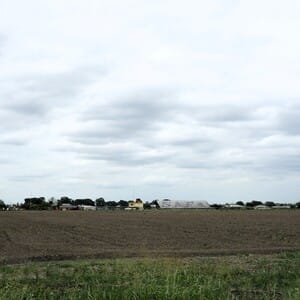
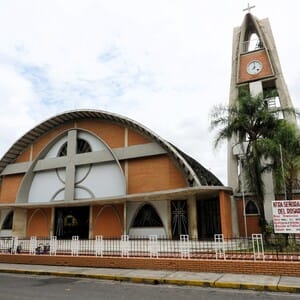
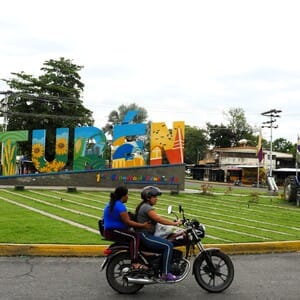
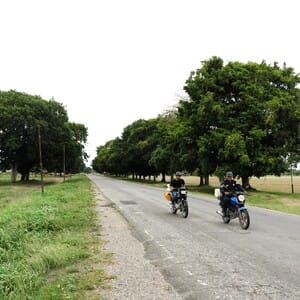
Welcome to the agricultural heart of Venezuela
As of August 27, 2026
Not every traveller grasps the appeal of these sun-scorched plains and small towns at first glance – many feel mainly the oppressive heat and push on. But those who take time for detours along the Autopista discover an unspoilt, vast land with interesting attractions. Such as the Campos de GirasolesCampos de GirasolesAnyone travelling through the state of Portuguesa between December and February should not miss the spectacular sight of the blooming sunflower fields around Guanare and Turén. The bright yellow flowers, which stretch as far as the eye can see across the landscape of the Llanos, are not only popular with photographers but also a living piece of history, as the history of these fields is closely linked to European immigration following the Second World War. Between 1948 and 1961, some 920,000 Europeans alone emigrated to Venezuela. Many of them were specifically settled in rural areas to modernise agricultural practices.
As Venezuela had to import almost all of its cooking oil at the time, the first attempts were made in the 1970s to cultivate sunflowers for the production of cooking oil. The fertile soil, ample rainfall and warm temperatures in Portuguesa proved to be almost ideal for cultivation, with the result that the region has developed into a centre for this crop.
Since 2023, domestic tourism has also discovered these impressive photo opportunities. During the flowering season from December to February, excursions to the sunflower fields around Turén are organised even from Caracas – a great opportunity to experience the country and its people at first hand.
Period: December to February
Regions: around Turén; along the access road to the Santuario de Nuestra Señora de Coromoto. (flowering season December to February), which attract tens of thousands of domestic visitors every year. However, never underestimate the power of the sun: plenty of drinking water, headgear and sun protection (SPF 50+) are mandatory here, not a recommendation.
Acarigua-Araure
400,000 inhabitants, 200 metres altitude
 The twin city of Acarigua-AraureAcarigua-AraurePopulation: 400,000; altitude: 200 metres
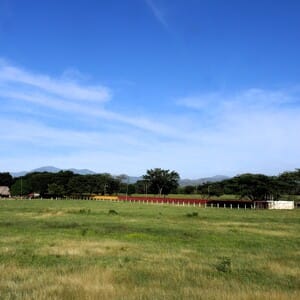
Although Acarigua is not the capital of Portuguesa State – that honour falls to Guanare – together with the neighbouring municipality of Araure, it forms the most important economic, industrial and commercial centre of Venezuela’s western lowlands. With a population of around 400,000, it is also the most populous town in the Llanos. Acarigua-Araure forms the centre and the driving force behind the development of a region regarded as the breadbasket of Venezuela. In addition to rice, the main crops grown are sugar cane, maize, sesame, tomatoes and other vegetables. Extensive pastoral farming is another key aspect of agricultural activity.
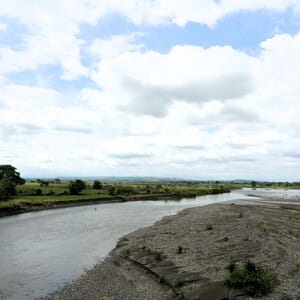
The town lies on the Acarigua River, from which it takes its name; this derives from the indigenous term ‘akaregua’, meaning ‘place of the caimans’. The first reports of the area can be found in the records of the German conquistador Nicolás Federmann, who arrived here on 15 December 1530 whilst searching for the mythical city of ‘El Dorado’. Shortly afterwards, the first plantations established by the conquistadors were recorded; however, these were subject to regular attacks by the Carib Indians well into the 17th century.
Following a period of economic prosperity in the 18th century, the War of Independence and the successive civil wars of the 19th century led to the devastation of the region and the town. It was not until the presidency of Antonio Guzmán Blanco, from 1877 onwards, that Acarigua acquired a modern public infrastructure. Thanks to the National Rice Plan of 1949 and the associated creation of the ‘Unidad Agrícola de Turén’, Acarigua – alongside Puerto Ordáz – became the fastest-growing town in the country. is not the capital of Portuguesa, but without question the economic centre and heart of Venezuela’s breadbasket. It presents itself as modern and likeable and offers some interesting sights in its surroundings.
In the centre of Araure, the venerable Iglesia Nuestra Señora del PilarIglesia Nuestra Señora del PilarThe beautiful colonial church of Nuestra Señora del Pilar is the most significant historical monument in the entire region surrounding Araure. It is one of the few surviving 18th-century buildings, and its construction took over forty years. Today, it is protected as a National Historic Monument and stands as a living testament to the colonial era.
The authentic architecture is particularly impressive: mud-brick walls, wooden roofs, a historic bell tower, a pulpit, the choir and a high altar adorned with gold leaf decorations transport visitors back to a bygone era. The façade is unique – there are only three similar ones in the whole of Venezuela. A true historical gem.
-
Address: Calle 5 and Avenida 23, Araure, Portuguesa. is impressive, while in the centre of Acarigua the Museo de Arte Acarigua Araure (MAAA)Museo de Arte Acarigua Araure (MAAA)The MAAA was founded in 1989 on the initiative of the local Club Paéz. It is housed in a modernist building dating from 1955 and sees itself as a pilot museum for the Llanos region.
It hosts changing exhibitions on the culture of the Llanos. The museum also serves as a venue for theatre, music and dance performances, as well as readings.
-
Address: Avenida 15 between 13 de junio and 5 de diciembre, Acarigua, Portuguesa.
Opening Hours: See Instagram tempts visitors with changing exhibitions on the culture of the Llanos. Slightly to the south, at the roundabout, rises the monumental monument La EspigaLa EspigaAs befits the country’s breadbasket, a monument has been erected here to the ear of corn. The monumental concrete sculpture, dating from 1980, was originally intended to be 70 metres high, thereby even surpassing the Statue of Liberty in New York. Ultimately, it stands at ‘only’ 40 metres, which still makes it one of the tallest sculptures in the country.
-
Address: Troncal 5 at the junction with Avenida 13 de Junio, Araure, Portuguesa. – a concrete ear of corn that commemorates the agricultural character of the region. Just under two kilometres south-east of the city outskirts, in the Curpa ParkCurpa ParkTen minutes’ drive east of the centre of Acarigua lies Curpa Park, home to the birthplace of General José Antonio Páez, the hero of the Venezuelan War of Independence. Set amidst the 70-hectare grounds is the general’s birthplace, where numerous artefacts and documents belonging to Páez are on display. A huge mural depicts scenes from Páez’s life.
-
Address: Via a Payara, Acarigua, Portuguesa. , lies the birthplace of José Antonio PáezJosé Antonio PáezJosé Antonio Páez (1790–1873) was one of Venezuela’s most significant military leaders and politicians. Born in Curpa near Acarigua in what is now the state of Portuguesa, he came from a humble background and worked as a cattle herder before joining the independence forces in 1810.
As a charismatic leader of the Llaneros – the mounted herders of the vast plains – he earned the nickname El Centauro de los Llanos. With his cavalry, he played a decisive role in the Battle of Carabobo (1821), which broke Spanish resistance in Venezuela. Simón Bolívar promoted him to commander-in-chief whilst they were still on the battlefield.
However, whilst Bolívar dreamt of a united nation, Gran Colombia, Páez strove for Venezuela’s independence. In 1826, charges brought against him, known as La Cosiata, triggered a crisis that ultimately led to Venezuela’s secession from the union in 1829–30. Páez became the first president of the new state in 1830 and ruled – with interruptions – until 1843. Later, during the civil war of the 1860s, he once again assumed dictatorial powers, but failed and went into exile in New York, where he died in 1873. In 1888, his remains were transferred to the Venezuelan Pantheon.
For travellers in Portuguesa, Páez is more than just a historical figure – he is the son of this region. His life story shows how, from the vast, sun-scorched plains, a man emerged who shaped the destiny of an entire country. Acarigua, now a bustling town, preserves the memory of this extraordinary rise from cattle herder to head of state., the first president of Venezuela.
Practical travel information
Arrival and departure
Long-distance bus: The bus station Terminal de Pasajeros de Acarigua-Araure is located two hundred metres south of the Llano Mall shopping centre. There are several daily connections to Caracas (4 – 5 hours), Maracaibo (6.5 – 7.5 hours), Valencia (2 hours), Barquisimeto (1.5 – 2 hours), Barinas (3 hours) and San Cristóbal (8 hours).
By road: Acarigua-Araure lies on the Troncal 5 (Autopista José Antonio Páez), which connects Barquisimeto in the state of Lara with San Cristóbal in Táchira and is built as a motorway as far as Barinas. The connection to Valencia is built as a motorway as far as San Carlos; from there a well-developed country road leads via Campo Carabobo to Valencia.
Accommodation
Along the main roads but also in the city centre there is a wide selection of accommodation in various categories. Our recommendation:
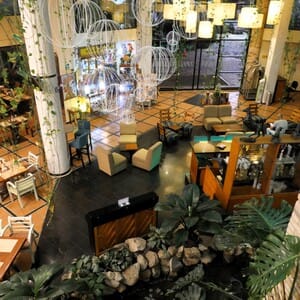
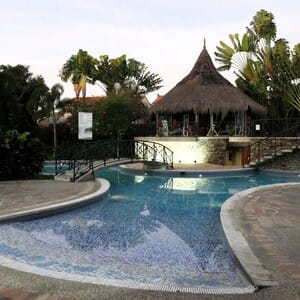
Conveniently located, with pool and restaurant, not just for passing through: Hotel GEO InnHotel GEO InnStrategically situated at the entrance to the town when approaching from Barquisimeto, the Eco Inn offers spacious rooms, a swimming pool and a restaurant serving Italian cuisine.
-
Address: Avenida Vencedores de Araure, entrance to the General Paéz motorway, exit for Barquisimeto, Araure, Portuguesa.
Price: €€–€€€ .
Food and drink
The cuisine of the Llanos is characterised by (beef) meat, cheese and the ubiquitous CachapaCachapaThe cachapa is one of Venezuela’s most popular street snacks and can be found in every region of the country, but particularly in the Llanos. Unlike the arepa, which is made from maize flour, the cachapa is made from fresh, young maize – also known as ‘jojoto’ – which gives it a natural sweetness and a soft, slightly grainy texture.
The dough is baked on a hot iron griddle, known as a budare, until golden brown, then folded and filled with a generous portion of soft white cheese, which melts into a creamy consistency under the heat. It is often served with a knob of butter. Cachapa can be enjoyed on its own, as a side dish or with savoury fillings such as carne mechada (shredded beef) or crispy chicharrón. It was declared part of Venezuela’s intangible cultural heritage in 2019. It goes well with a freshly prepared papelón con limón – a refreshing sugarcane drink with lemon.
Recipe for Cachapa
Ingredients for around 6–8 small cachapas: 400 g fresh sweetcorn kernels (or tinned, drained); 100 ml milk; 1 egg; 1 tbsp sugar; a pinch of salt; 2 tbsp maize flour (optional, for a firmer batter); 200 g soft white cheese (e.g. queso de mano or mozzarella); butter for greasing
Method: 1.) Roughly purée the fresh sweetcorn kernels with the milk, egg, sugar and salt in a blender or food processor – the mixture should remain slightly chunky, not completely smooth. If necessary, stir in the maize flour until a thick batter forms. 2.) Grease a heavy frying pan or griddle with a little butter over a medium heat. For each cachapa, pour about one ladleful of batter into the pan and spread it out into a flat, round pancake about 1 cm thick. 3.) Cook each side for 3–4 minutes until golden brown and slightly crispy around the edges. The cachapa should remain soft and moist on the inside. 4.) Cut the soft cheese into slices or strips. Remove the cooked cachapa from the heat, place the cheese in the centre, fold one half over the top and leave to rest briefly until the cheese melts. Serve immediately – ideally with a knob of butter on top.. Our recommendations:
Food
The Linda BarinasLinda BarinasThis barbecue restaurant is regarded as an ambassador for Llanero culture. At weekends, live music often creates a lively atmosphere. The service is consistently described as excellent, and the cuisine centres on grilled cuts of meat cooked to perfection.
Authentic cuisine at affordable Price – highly recommended.
-
Address: Avenida Rotaria and Avenida 21, Acarigua, Portuguesa.
Opening Hours: Tuesdays to Sundays, from 11.00 am
Price: €€ is a typical grill restaurant for the region.
Traditional fare is also served by the small street restaurant Palma CachorraPalma CachorraWhat once began as a small roadside stall to fund treatment for the owners’ sick daughter has developed into a wonderful restaurant beneath mango trees, where the food is prepared with great dedication.
Fresh ingredients and generous portions – a must in the Llanos – win over the customers. The grilled meat – the smoked ribs are highly praised – is served with steamed yuca (cassava) and ice-cold, refreshing drinks.
-
Address: Avenida 32 between Calle 34 and 35, Acarigua, Portuguesa.
Opening Hours: daily from 11 am to 11 pm
Price: €-€€ .
Homemade burgers on homemade brioche buns, along with freshly squeezed juices and lemonades, are available at La 316 BurgerLa 316 BurgerHere, burgers are served on brioche buns – both homemade – with all the trimmings. They’re served with freshly squeezed juices and lemonades, and the desserts are also highly praised.
-
Address: Avenida Los Malavares, Las Villas Shopping Centre, Ground Floor, Unit 10, Araure, Portuguesa.
Opening Hours: Monday to Sunday, 9 am to 10 pm
Price: €-€€ .
Arabic cuisine in a modern ambience is offered by BarakasBarakasAt Barakas, the menu features Arabic specialities such as mezze, salads, falafel and shawarma. The cuisine is widely praised, the atmosphere is modern, and the Price are reasonable.
-
Address: Avenida Los Malavares, Las Villas Shopping Centre, Ground Floor, Unit 1, Araure, Portuguesa.
Opening Hours: Monday to Sunday, 11 am to 10 pm
Price: €-€€ .
The India Verana AsadorIndia Verana AsadorThis exceptional restaurant is situated in the historic centre of Araure, in a house over 300 years old. You can sit indoors or outdoors in a beautiful courtyard and treat yourself to a culinary delight.
The creative force behind the restaurant is chef Óscar Rodríguez, who has 27 years’ experience. He delights diners with traditional meat dishes as well as specialities such as the creamy ‘Asopado de Mariscos’ – a creamy rice stew with fish stock, langoustine brisqué and a medley of seafood – or an innovative ‘Pastel de Cachapa’, a maize pancake served with a dollop of cream, cheese and confit pork. The legendary desserts in particular – above all the perfect mango jelly and the grilled pineapple with vanilla ice cream – are definitely worth trying.
Highly recommended for anyone who values good, authentic cuisine with a regional focus.
-
Address: Calle 3 between Avenida 24 and 25, Araure, Portuguesa.
Opening Hours: daily from 12 noon to 11.30 pm
Price: €€–€€€ is known for its modern interpretations of regional specialities.
In Between
Amanecer Coffee ExperienceAmanecer Coffee ExperienceA modern coffee shop run by the well-known coffee roaster Amanecer. It offers a wide selection of coffee drinks, freshly squeezed juices and a very large choice of sweet and savoury treats. It goes without saying that the coffee comes from Venezuela.
-
Address: Centro Comercial Plaza Mayor, Araure, Portuguesa.
Opening Hours: daily from 7 am to 11 pm
Price: €€ offers a broad selection of Venezuelan coffees and other drinks, as well as snacks for a small appetite.
Home-baked bread and vegetarian sandwiches are offered by the Green LoungeGreen LoungeThis small vegetarian and vegan restaurant has been run by the Huang family, who are of Taiwanese origin, for over 20 years. The menu features delicious sandwiches, salads, savoury and sweet crêpes, and vegetarian burgers. The bread comes from their own bakery and is made with sourdough.
-
Address: Avenida 13 de junio between Avenida 33 and 34, Araure, Portuguesa.
Price: €€ .
Shopping
At the Llano Mall shopping centre, exhibitions by local artisans take place regularly – with handmade pieces from leather, wood, metal and gemstones, as well as paintings and sculptures at moderate prices. In addition, the centre offers the usual shopping, dining and entertainment.
A special tip is the handcrafted pralines and chocolates from Violet ChocolatesViolet ChocolatesAt Violeta, fine chocolates and pralines are crafted from locally sourced cocoa with great attention to detail. The creamy goat’s milk chocolate is a real bestseller, and the combination of mango and chocolate offers a fruity, exotic surprise. There are pralines with salted caramel, passion fruit, coconut or red berries. The combination of cocoa with turmeric – a ‘superfood’ – is also a hit with customers. From bean to bar, everything is handmade and crafted with passion.
By the way: The scientific name for cocoa is Theobroma cacao, which literally translates as ‘food of the gods’.
-
Address: Urbanisación La Hacienda, Calle 1, Casa 13, Araure, Portuguesa.
Opening Hours: Monday to Friday, 8 am to 5 pm. .
Excursions in the surrounding area
Just a few kilometres north-east of Araure, directly on the Autopista towards San Carlos, lies the Los Arroyos Leisure ParkLos Arroyos Leisure ParkJust under ten kilometres north-east of Araure, in the village of Agua Blanca, lies this leisure centre right next to the Troncal 5 road, featuring Latin America’s largest natural outdoor swimming pool, small waterfalls and caves. The 32-hectare site features walking trails, a climbing and abseiling park, and other sporting facilities. If you walk a few hundred metres into the grounds, you’ll usually find a quiet, shady spot.
-
Address: Agua Blanca, Los Llanos Motorway, via Araure – San Carlos, Portuguesa. – the largest natural outdoor swimming pool in South America.
West of the city, in the gentle hills, awaits the challenging hike to the 7 Cascadas de Camburito7 Cascadas de CamburitoA few kilometres north-west of Araure, starting from the hamlet of Camburito, you can undertake a scenic but challenging hike to the 7 Cascadas. After just half an hour, you reach the first of the seven waterfalls, which are situated directly one above the other. You should be sure-footed, wear non-slip shoes and, above all, have no fear of heights. Countless colourful, iridescent butterflies flit about the individual pools. It is advisable to hire a guide who knows the area well.
-
Address: Caserio (= hamlet) Camburito, Araure, Portuguesa.. The path leads along a cool river that invites swimming at several points. In the immediate vicinity is also the horse ranch El Establo EcuestreEl Establo EcuestreThis horse ranch offers riding activities for all ages. The regular programme includes riding lessons for beginners and advanced riders alike, group and individual competitions, rodeos and the popular yoga session with horses.
A particular highlight are the cabalgatas (= guided horse rides) at weekends and on public holidays, where you can explore the breathtaking beauty of the countryside together in a small group.
-
Address: Centro Ecuestre El Establo, Via a Camburito, Araure, Portuguesa. . Those who climb further up into the hills will reach the Hacienda Las TaparasHacienda Las TaparasTo the west of Araure, nestled in the gentle mountain slopes of the Río Guache valley, lies Hacienda Las Taparas – a simple, family-run coffee finca. Here, top-quality Robusta coffee (Canephora) thrives, its strong, slightly bitter flavour particularly appealing to lovers of intense roasts.
With roughly twice the caffeine content of the Arabica bean, Robusta coffee is a real pick-me-up.
A visit is particularly worthwhile during the coffee blossom season in April and May, when a beguiling scent of vanilla hangs over the plantations, or from November and December onwards, when the harvest begins. The farm thrives on hard work and a passion for excellent coffee. A worthwhile destination for anyone wishing to experience authentic Venezuelan coffee.
-
Address: Hacienda Las Taparas, Guache de Garabote, Portuguesa. , where Robusta coffee of the finest quality is grown.
North-west of Araure, on the Troncal 5 towards Los Jacuzzis de la LuciaLos Jacuzzis de la LuciaAbout ten kilometres from Acarigua towards Barquisimeto lies this wild and romantic swimming spot on the Rio Auro. The six-kilometre-long trail is steep and challenging in places, but it’s said to be well worth the effort. Hikers can look forward to cascades and natural swimming spots in the refreshing mountain river.
The restaurant El Rincón del Senderista is still accessible by car; its soups are highly praised.
-
Address: Troncal 4 to Barquisimeto, Los Jacuzzis, Portuguesa. beckon – small waterfalls with dreamlike swimming spots. For refreshments before or after a hike, El Rincón del SenderistaEl Rincón del SenderistaThis simple restaurant, beautifully situated in the countryside, is highly praised for its soups and stews. It is located just a few metres off Troncal 4, the road leading to Barquisimeto.
-
Address: La Lucia, Entrada a los Yacuzis, Troncal 4 to Barquisimeto, Portuguesa.
Price: € is a good choice. Further along the same road one reaches the Destilerias Unidas S.A,Destilerias Unidas S.A,In the small village of La Miel, situated about twenty kilometres north of Acarigua towards Barquisimeto, one of the world’s finest rums is produced: Rón Diplomático. The production process utilises former white oak whisky casks, resulting in a traditional rum with rich and warm notes. Diplomático, which is available as Reserva Exclusiva (average age 12 years), Reserva (8 years) and Añejo (7 years), regularly wins gold medals at international competitions.
In Germany, Ron Diplomático is marketed under the name Botucal. This is due to a trademark dispute with the discount retailer Aldi, which stocks a low-cost brandy called Diplomat. Aldi took legal action against Destilerias Unidas’ Diplomático and won the trademark dispute. From then on, Diplomático has been known as Botucal in Germany; the name is derived from the hacienda where it is produced and means ‘Green Hill’.
Destilerias Unidas also produce the equally fine rum varieties Cacique and Pampero.
Visits to the production facilities are possible, and the on-site restaurant is said to serve quite decent meals.
-
Address: Carretera Barquisimeto Acarigua, km 44, La Miel, Lara.
Opening Hours: Monday to Friday, 8 am to 3.30 pm. , where the famous Ron DiplomáticoRon DiplomáticoBehind this name lies one of the world’s best-known premium rums: Ron Diplomático. Whilst the brand operates internationally under the name Diplomático, it is marketed in Germany as Botucal for trade mark reasons, as the name Diplomático was already in use for a cognac sold by the discount retailer Aldi and was therefore protected. The name Botucal is derived from the region where the sugar cane used is grown, and roughly translates as ‘green hill’ – the rebranding has not affected the outstanding quality in any way.
The Ron Diplómatico / Botucal range is diverse and divided into several lines. The flagship is the Reserva Exclusiva, a blend of distillates matured for up to twelve years in small oak casks, with aromas of caramel, vanilla, chocolate and plum jam. The Tradition Range also includes the white Planas and the full-bodied Mantuano.
A Prestige Range offers limited-edition bottlings such as the Single Vintage, a blend of distillates from a single vintage with notes of dark chocolate and dried fruit, and, as the crowning glory, the Ambassador, which, following ageing in bourbon casks, is further refined in Pedro Ximénez sherry casks.
The quality of Diplómatico / Botucal rums is attested to by numerous international awards. The Reserva Exclusiva has won gold medals at the International Sugar Cane Spirits competition, the UK Rumfest in London, Rum XP in Miami – where it was also named ‘Best in Class’ in 2012 – and, as far back as 1996, at the St John’s International Rum Festival in Canada. The rum magazine *Howler* also awarded the Reserva Exclusiva an outstanding 97 points. What most buyers in Germany do not realise is that they are enjoying one of the world’s most highly acclaimed rums – just under a different name. is produced.
Turén
56,200 inhabitants, 90 metres altitude
About an hour east of Acarigua-Araure lies TurénTurénPopulation: 56,200, altitude: 90 metres
The region around Turén is the heart of Venezuela’s agricultural economy. Thanks to the flat terrain and the tropical climate, with average temperatures of around 27 °C, rice, cotton, sesame, maize, sorghum and sugar cane thrive here. The sunflower fields are particularly impressive; they are in full bloom from December to February – a sea of bright yellow that attracts visitors from all over the country.
A defining chapter in the region’s recent history is the Colonia Agrícola de Turén: in the 1940s and 1950s, this agro-industrial settlement project brought thousands of European immigrants – mainly Italians and people of German descent from Romania – to the region. They came to escape the horrors and hardships of the post-war period and found a new home here on the fertile soil. Their descendants still farm the same fields today.
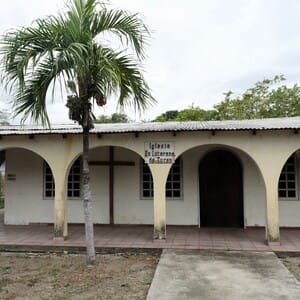
To this day, these European roots are reflected in the local culture: surnames and architecture are reminiscent of Italy and Germany, whilst the cuisine delights with homemade pasta and cheese specialities. Visitors to the region are immersed not only in a fascinating landscape, but also in a moving history of new beginnings, fresh starts and living traditions. – a place that appears unremarkable at first glance, but on closer inspection tells stories of considerable weight. Those who find the time for a detour will be rewarded with a piece of living settlement history. From around 1840, in the first decades after independence, European settlers – especially from Germany and Italy – were drawn to this fertile land to develop the region agriculturally. To this day, this is evidenced by the originally Evangelical Lutheran Church of TurénEvangelical Lutheran Church of TurénIn the heart of the Colonia Agrícola de Turén stands a small piece of European history: the Evangelical Lutheran Church. It is the only Lutheran congregation in the region and a living testament to the history of German settlement. It belongs to the Iglesia Luterana de Venezuela (ILV) and is firmly rooted in village life. Services are held every third Sunday of the month at 10.00 am – a regular fixture that brings together locals and descendants of the European settlers alike. In addition to church services, the church organises social activities such as the annual Almuerzo Navideño (Christmas lunch).
-
Address: Calle 6 No. 88, Colonia Turén, Portuguesa. , a quiet testament to this often-forgotten immigration era of the Colonia Agrícola de TurénColonia Agrícola de TurénFollowing the War of Independence against Spain and the separation from Gran Colombia, Venezuela was in desperate need of labour to boost agricultural production and secure its borders. From the 1840s onwards, the country therefore actively recruited European settlers. This led to the establishment of Colonia Tovar near Caracas in 1843, followed by Colonia Turén in 1849 – both settled by Germans.
Around a hundred years later, the project gained new momentum: Europe lay in ruins after the Second World War, whilst Venezuela urgently needed skilled labour in the wake of the oil boom. The government under the dictator Pérez Jiménez pursued a policy of open borders and the targeted recruitment of Europeans to modernise agriculture.
In 1952, the first large contingent of Italian families arrived, later followed by German settlers from Romania. Each family was given 24 hectares of land, a house, machinery and loans. The colony rapidly developed into a major producer of rice, sisal, sesame and bananas and boasted a modern cattle-breeding programme. In the 1960s and 1970s, it experienced an economic boom, at times accounting for a third of the agricultural output of the entire state of Portuguesa.. There are PetroglyphsPetroglyphsThe Venezuelan Llanos region, which includes the state of Portuguesa, was already inhabited in pre-Columbian times. The oldest known traces of human settlement in the plains of Portuguesa and Barinas date from around 300 to 600 BC.
These early inhabitants left behind numerous petroglyphs – rock carvings featuring geometric, anthropomorphic (human-like) and zoomorphic (animal-like) motifs. The region is characterised by a remarkable concentration of these rock carvings, which can be found throughout the Llanos foothills of the states of Cojedes, Portuguesa and Barinas. They are regarded as fundamental evidence of the indigenous ethnic groups that inhabited the area.
In addition to the rock carvings, the pre-Columbian cultures constructed a complex network of dams and paths for irrigation and water management, as well as earth mounds that may have served as watchtowers, burial sites or places of refuge during floods. These remains form part of a wider archaeological context that provides compelling evidence of the early settlement history of the Llanos. in many places, as evidence of an even older settlement. Along the rivers, the former main transport routes, scattered remnants from the era of inland navigation can be found on the The Age of River TransportThe Age of River TransportThe development of the Llanos was inextricably linked to making its major rivers navigable. Via the extensive network of waterways, goods from the Andes and the Llanos – coffee, tobacco, hides and feathers – reached the export ports on the Orinoco, such as Angostura (now Ciudad Bolívar) or Puerto de Tablas (now San Félix). From around 1830, the use of the Orinoco’s tributaries intensified. The Río Apure and its tributary, the Río Portuguesa, became the lifeblood of the region, linking the agricultural hinterland with international shipping routes. Initially, transport was carried out using bongos and flat-bottomed lanchas, which were ideal for the often shallow rivers.
The introduction of steamships from the second half of the 19th century onwards triggered a veritable revolution in mobility. On 27 June 1884, the steamship ‘Apure’, which had been specially built for navigation on the Río Apure, arrived from Trinidad. The impressive vessel had a steel hull, a load capacity of 250 tonnes, a stern wheel, a 150 PS steam engine and could reach speeds of 12 miles per hour. It was used for both the transport of goods and passenger travel. The importance of river trade is evident from the fact that, in 1858, there were nine foreign consulates based in Puerto Nutrias in the neighbouring state of Barinas – a striking testament to the economic dynamism of these waterways.
Well into the third decade of the 20th century, the rivers of the Llanos remained the region’s undisputed transport routes and shaped an entire era of trade and mobility. However, with the advent of road transport, the waterways were increasingly forgotten. A lack of maintenance – above all, the absence of regular dredging – led to the progressive silting up of the navigation channels. Thus, the large steamships gradually disappeared until the rivers ultimately became impassable for commercial shipping – the quiet end to a glorious era.
Even today, large, old iron chains bear witness to that long-gone era. Known as ‘Las Cadenas de El Baúl’ or ‘Las Cadenas del Socorro’, various stories surround them: The official version states that they were brought here around 1936 to clear scrubland. Yet many locals are firmly convinced that they are in fact the anchor chains of the steamships – and thus the last remaining witnesses to an era when the rivers were the roads of the Llanos.. Anyone wishing to go on a search for traces here can contact Mauricio KnobelsdorfMauricio KnobelsdorfMauricio Knobelsdorf, who is of German and Polish descent, is extremely well-versed in the history of Turén. .
But Turén also harbours dark memories: in 1952, the Turén Massacre (1952)Turén Massacre (1952)During the military dictatorship, the Turén Massacre took place on 29 September 1952, following a failed uprising by around 80 armed peasants. In protest against land expropriations and the refusal to grant agricultural loans, they had attacked the local National Guard post. Five people were killed, and the rebels seized weapons.
In retaliation, the military dispatched a heavily armed company of the National Guard from Barquisimeto, which, with the support of the air force, opened fire on the settlements. Buildings and residents were fired upon indiscriminately. The exact number of victims is unknown; estimates suggest 200 people were injured and at least 100 peasants and workers were executed. 500 people, including women and children, were arbitrarily arrested, taken to other prisons and tortured there. The communist peasant leader Rufino Mendoza was publicly executed.
The Turén massacre is a dark chapter in Venezuelan history and remains largely unknown to the public to this day. took place here, one of the cruelest chapters of the military dictatorship of Marcos Pérez JiménezMarcos Pérez JiménezMarcos Evangelista Pérez Jiménez (1914–2001) was a Venezuelan military officer and the country’s dictator from 1952 to 1958. Born in the border state of Táchira, this graduate of the military academy took part in coups d’état in 1945 and 1948 and, following the second coup, became a member of the ruling military junta. The junta called for elections in 1952. When the initial results indicated a victory for the opposition, the junta halted the count and declared itself the winner. On 2 December 1952, Pérez Jiménez became provisional president and was formally elected president in April 1953 – a constitution granted him dictatorial powers.
His reign was a mixed bag: using revenue from the oil industry, he launched an ambitious infrastructure programme – motorways, bridges, dams, public buildings and the construction of the famous Humboldt Hotel in Caracas were all built during this period. The economy developed rapidly, and Venezuela experienced a wave of modernisation.
However, the flip side was the brutal suppression of the opposition. His secret police, the Dirección de Seguridad Nacional, persecuted critics; political parties were banned, the university was closed, and the press was silenced. Pérez Jiménez and his henchmen enriched themselves through public construction projects.
Massive protests and resistance from the Church, workers and sections of the military led to his overthrow on 23 January 1958. He fled to the USA, was extradited to Venezuela in 1963 and sentenced to four years’ imprisonment for embezzlement. After his release in 1968, he lived in exile in Spain, where he died in 2001. – a place of remembrance that does not let one forget the dark sides of Venezuelan history.
Quite different is the magic that attracts thousands of domestic visitors every year between December and February: then the Campos de GirasolesCampos de GirasolesAnyone travelling through the state of Portuguesa between December and February should not miss the spectacular sight of the blooming sunflower fields around Guanare and Turén. The bright yellow flowers, which stretch as far as the eye can see across the landscape of the Llanos, are not only popular with photographers but also a living piece of history, as the history of these fields is closely linked to European immigration following the Second World War. Between 1948 and 1961, some 920,000 Europeans alone emigrated to Venezuela. Many of them were specifically settled in rural areas to modernise agricultural practices.
As Venezuela had to import almost all of its cooking oil at the time, the first attempts were made in the 1970s to cultivate sunflowers for the production of cooking oil. The fertile soil, ample rainfall and warm temperatures in Portuguesa proved to be almost ideal for cultivation, with the result that the region has developed into a centre for this crop.
Since 2023, domestic tourism has also discovered these impressive photo opportunities. During the flowering season from December to February, excursions to the sunflower fields around Turén are organised even from Caracas – a great opportunity to experience the country and its people at first hand.
Period: December to February
Regions: around Turén; along the access road to the Santuario de Nuestra Señora de Coromoto. transform the fields around Turén into a radiant yellow sea of blossoms – a natural spectacle of rare beauty that bathes the wide landscape of Portuguesa in a unique light.
San Rafael de Onoto
In the far north-east of Portuguesa lies San Rafael de OnotoSan Rafael de OnotoPopulation: 21,500; altitude: 160 metres
San Rafael de Onoto is situated in north-eastern Portugal, on the eastern shore of the Embalse Las Majaguas reservoir. The town was founded in 1726 by Spanish and Portuguese Franciscan monks, who established a mission here. The town lies at an altitude of 175 metres and has a humid tropical climate; with an annual average of 26.5 °C, average daily maximum temperatures range between 31 and 35 degrees.
From the reservoir, there is a sweeping view across the gentle foothills of the Andes, which are reflected in the water – a place with a tranquil, almost meditative atmosphere. A local operator hires out canoes, allowing visitors to explore the tranquillity of the water for themselves. To this day, the region remains predominantly agricultural – the cultivation of maize and sugar cane, as well as livestock farming, form the economic backbone of the community., a small, tranquil municipality at the foothills of the Andes directly on the Las Majaguas ReservoirLas Majaguas ReservoirBuilt in 1963, the Las Majaguas Reservoir, with a capacity of 1.2 billion cubic metres, is a vast freshwater reservoir that irrigates the region’s agricultural land. It is home to over 20 islands, which become visible at low water, and offers opportunities for boat trips, fishing and swimming. The biodiversity is remarkable: aquatic plants such as La Bora and water lettuce, birds such as the Gallitos de Laguna and kingfishers, and fish such as the Pavón – a protected species that may only be caught if it measures 35 centimetres or more.
-
Address: San Rafael de Onoto, Portuguesa. reservoir. The local Parque Leonardo HernándezParque Leonardo HernándezOn the banks of the Las Majaguas reservoir lies Parque Leonardo Hernández, a small green oasis that has been roused from its slumber thanks to the tireless efforts of a group of senior citizens. The park is named after its first and long-serving caretaker, Leonardo Hernández – his son now carries on his father’s commitment to preserving the site.
For years beforehand, the park had been left to run wild and fall into disrepair. The huts, once built for visitors, were in danger of collapsing. In May 2021, an initiative was launched comprising 25 men and women of retirement age, many of them former workers, who organised themselves as the “Guardianes del Parque Leonardo Hernández”. Through a great deal of voluntary work, they cleared the park – including the jetty – of undergrowth; today, tourist boats set off from there.
The senior citizens work for free and fund their efforts by selling soups and other food to visitors. Their dedication has transformed a forgotten place back into a vibrant meeting place for families and nature lovers.
-
Address: San Rafael de Onoto, Portuguesa. has been lovingly restored by a committed group of elderly citizens and today invites visitors to linger.
Just a few minutes outside the town, the Las Tucuraguas WaterfallLas Tucuraguas WaterfallThe Las Tucuraguas waterfall is a refreshing dip just a few minutes’ drive from San Rafael de Onoto and is considered the highest waterfall in the Llanos. A three-kilometre-long footpath leads there, which is easily manageable even for less experienced walkers.
In some sections, the path follows the traces of the historic route that Simón Bolívar once took on his way to the Battle of Araure.
Along the way, several natural pools line the path, inviting visitors to take a dip. The best known of these is the Pozo Azul, where a camp of the same name is located. Lush vegetation, heliconias and numerous bird species accompany visitors on their way.
-
Address: San Rafael de Onoto, Portuguesa. – the highest waterfall in the entire Llanos – plunges into the depths and at the same time offers refreshing swimming spots.


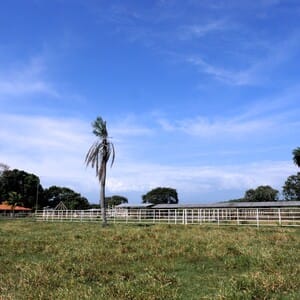
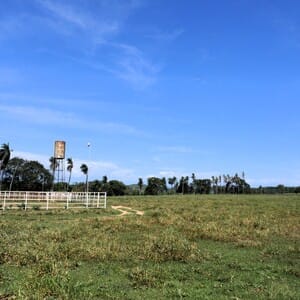
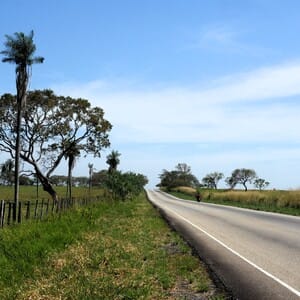
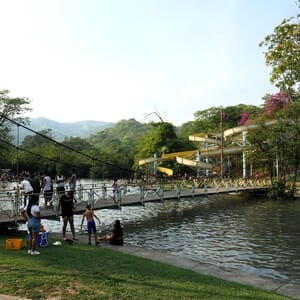
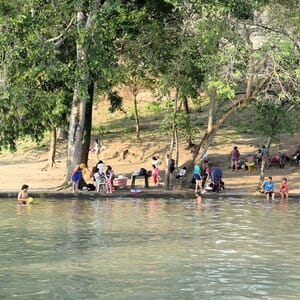
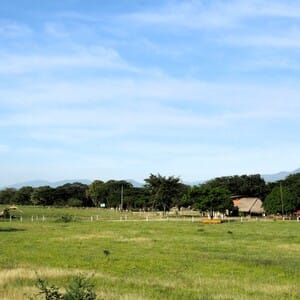
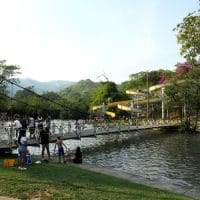 The twin city of is not the capital of Portuguesa, but without question the economic centre and heart of Venezuela’s breadbasket. It presents itself as modern and likeable and offers some interesting sights in its surroundings.
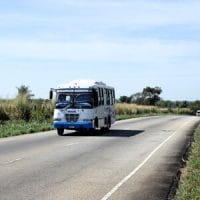 Long-distance bus: The bus station Terminal de Pasajeros de Acarigua-Araure is located two hundred metres south of the Llano Mall shopping centre. There are several daily connections to Caracas (4 – 5 hours), Maracaibo (6.5 – 7.5 hours), Valencia (2 hours), Barquisimeto (1.5 – 2 hours), Barinas (3 hours) and San Cristóbal (8 hours).