Between wide plains and green hills
As of August 27, 2026
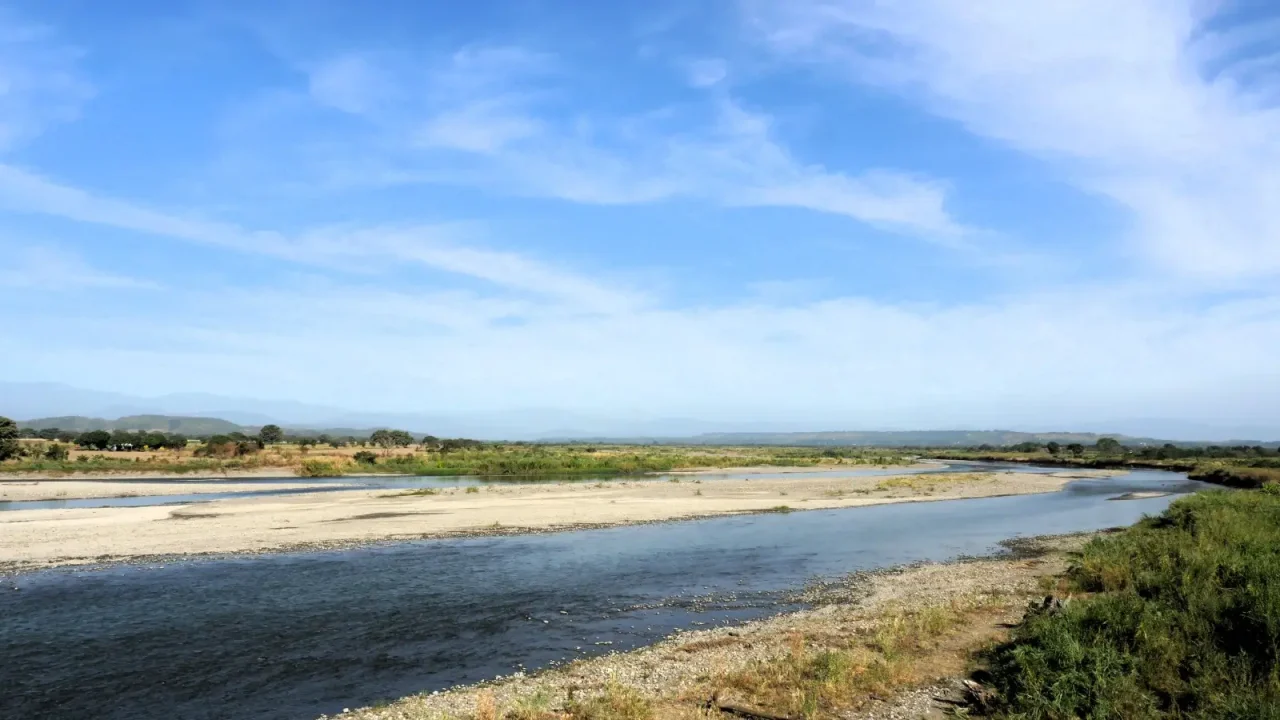
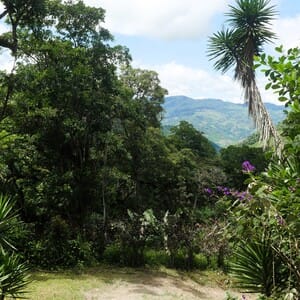
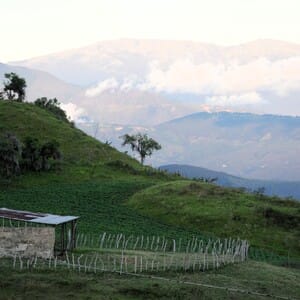
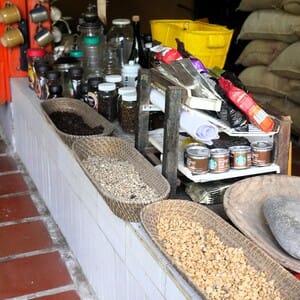
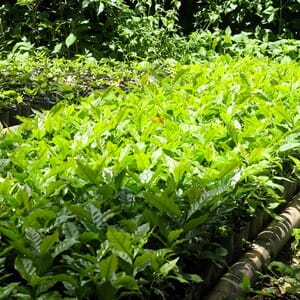
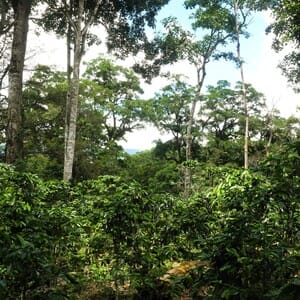
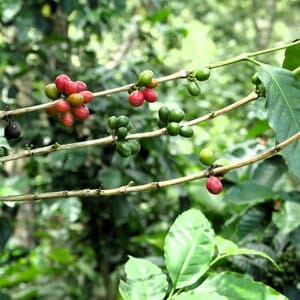
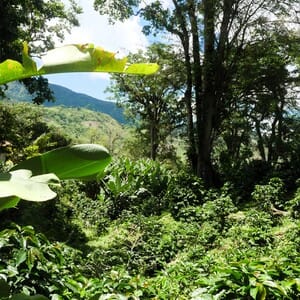
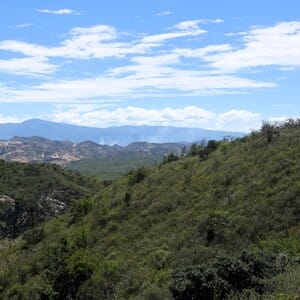
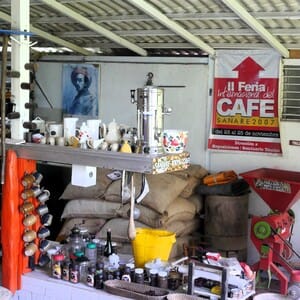
Those who venture into the south of Portuguesa will be rewarded with several surprises: on one side the wide plains of the Llanos, on the other the lush green hills of the Andean foothills. Towns such as Ospino and Biscucuy have preserved their original, colonial charm. In many places, the excellent Coffee from PortuguesaCoffee from PortuguesaThe state of Portuguesa is one of Venezuela’s most important coffee-growing regions. On the Andean slopes around Biscucuy, excellent high-altitude coffee thrives across more than 52,000 hectares – thanks to ideal altitudes and a mild climate. In the ‘Comuna San José de Saguaz’ alone, 855 families are involved in coffee production.
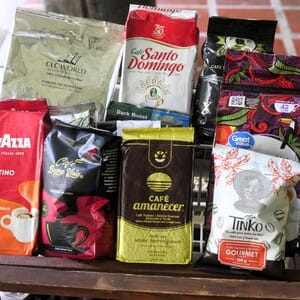
However, the region is not only a growing area but also a major centre for coffee processing. With 68 roasteries, a large proportion of the country’s coffee is processed here. In 2026, several producers from Portuguesa made it into the national selection of the very best – proof of the high quality of the coffee grown here. One of the better-known brands is ‘Amanecer’ coffee.
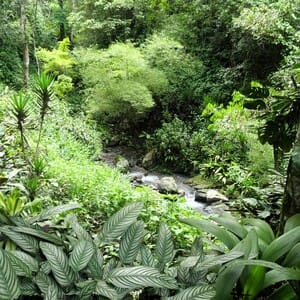
Guided tours such as the ‘Ruta Agroturística del Café’ offer a special experience. This coffee route takes visitors to old haciendas around Biscucuy and showcases the entire production chain – from planting and harvesting to preparation – “de la tierra a la taza” (from the ground to the cup). can be sampled. On the border with the state of Lara, the species-rich and difficult-to-access El Guache National ParkEl Guache National ParkThis national park is a hidden gem in the foothills of the Venezuelan Andes, stretching across parts of the states of Lara and Portuguesa. It was established on 5 June 1992 with the aim of protecting the sensitive headwaters of the Guache, Ospino, Toco, Morador and Are rivers, which supply water to the agriculturally important region of Portuguesa. The protected area covers an area of approximately 12,500 hectares and is managed by the Instituto Nacional de Parques (Inparques). The park is home to a diverse range of flora and fauna and serves as an important refuge for endangered species such as the Oso Frontino (spectacled bear) and the Paují Copete de Piedra. The vegetation ranges from open savannahs to evergreen mountain cloud forests, which are home to numerous tree ferns and species such as the guamo. Among the park’s natural attractions are several waterfalls, such as the Chorro Santa Bárbara, and natural pools in the Río Palmarito. Despite these attractions, the park receives relatively few visitors due to its difficult accessibility. Prior authorisation from Inparques must be obtained for activities such as birdwatching, hiking and climbing. The climate in the park is tropical and humid, with temperatures ranging between 19 °C and 26 °C. Interestingly, there are also a few small, traditional communities within the park’s boundaries, whose main livelihood is coffee farming. reveals itself as a paradise for hikers and nature lovers.
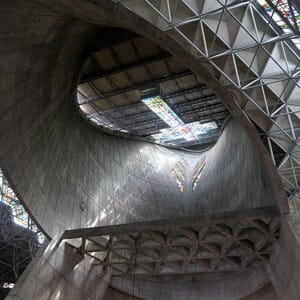
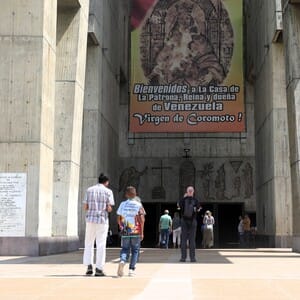
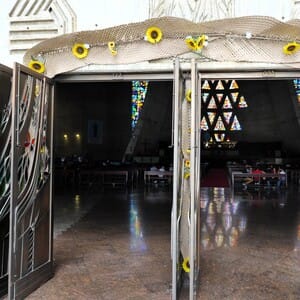
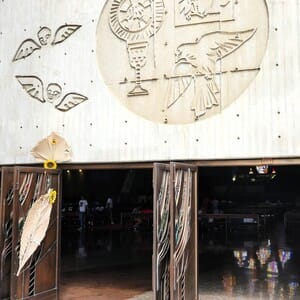
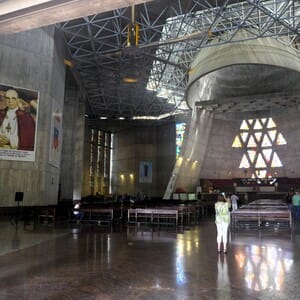
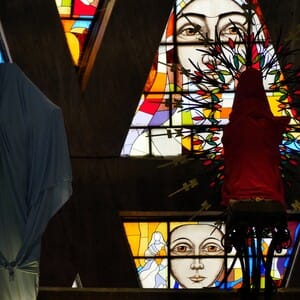
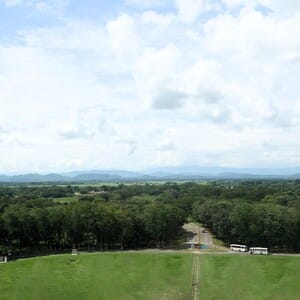
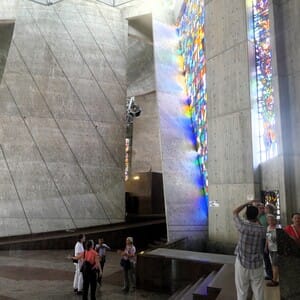
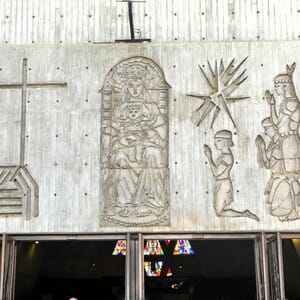
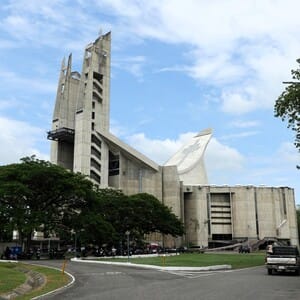
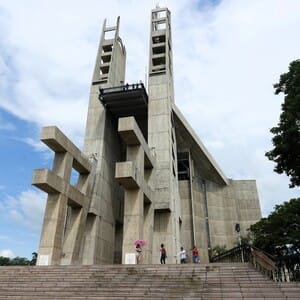
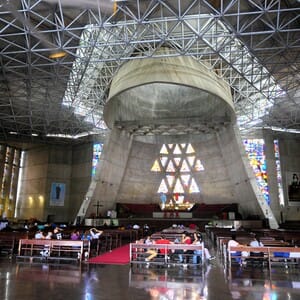
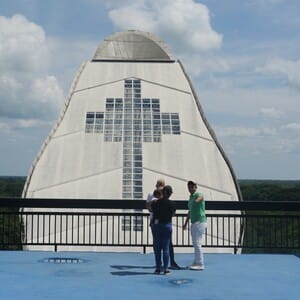
However, the undisputed main attraction is the Sanctuary of Our Lady of CoromotoSanctuary of Our Lady of CoromotoOnly slightly smaller than St Peter’s Basilica in Rome, this imposing modernist building, a fine example of brutalist architecture, can accommodate some 50,000 people inside. Whilst the exterior is bare concrete, the interior glows with coloured light refracted through hundreds of stained-glass windows. It is the same light that makes the surrounding land fertile and nourishes the Venezuelan people. From the roof terrace, which can be reached by lift, there is a fantastic view of the surrounding countryside, stretching as far as the Andes mountain range.
The planning and construction of the complex spanned more than twenty years, until it was finally inaugurated on 7 January 1996. More than two million worshippers attended the first Mass celebrated by Pope John Paul II in February of the same year. This sanctuary is dedicated to the patron saint of Venezuela, the Virgin of Coromoto. According to legend, the Virgin Mary is said to have appeared to the cacique Coromoto at this spot in 1652 and commanded him to lead his people to baptism.
Inside the basilica there are three altars: one in each side aisle and the high altar in the centre, with the bishop’s throne. Behind the high altar stands the throne of the Virgin, on which the image of the Virgin of Coromoto can be seen. This image is now the object of veneration. Beneath the basilica is a museum dedicated to the Virgin of Coromoto, which also displays the vestments worn by the Pope during his Mass in this basilica in 1996.
On the American continent, the Santuario de Nuestra Señora de Coromoto is regarded as the second most modern and significant basilica after the Shrine of Our Lady of Guadalupe in Mexico.
-
Address: Troncal 5 Guanara – Barinas, turn-off 10 km south of Guanare in Sabana de San José, Portuguesa., an architectural jewel of BrutalismBrutalismBrutalism is an architectural style of the Modernist era that spread worldwide from 1950 onwards and reached its peak between the 1960s and 1980s. The term is derived from the French expression ‘béton brut’ (raw concrete), which, in the form of exposed concrete, dominates the exterior surfaces of buildings. The term was introduced by Le Corbusier, who used it to describe the exposed concrete surfaces of the residential buildings he designed in Marseille.
The Brutalist style was often associated with an idealised aspiration to be authentic in terms of materials and construction, and ethical in regard to the social aspects of architecture. In this respect, the negative perceptions of the style today do it an injustice. The use of exposed concrete emphasises the structure, much like in the Bauhaus style; the forms are geometric and relatively simple.
Caracas is one of the cities worldwide with the highest density of Brutalist-style buildings. Particular highlights include the Teatro Teresa Careño, the Banco Central de Venezuela building and the Torre Altamira. of rare power, for which one should plan one to two hours.
Never forget sufficient drinking water, headgear and sun protection (SPF 50+).
Guanare
240,000 inhabitants, 180 metres altitude
GuanareGuanarePopulation: 240,000; altitude: 180 metres
Guanare, the capital of Portuguesa State, is picturesquely situated at the foot of the Andes. Founded in 1591 – more than sixty years after the northern town of Acarigua – it has managed to preserve some of its colonial charm over the centuries.
As in the entire Llanos region, agriculture is the main source of livelihood. Whilst cereal cultivation was once the main focus, today speciality crops such as sesame, millet, tobacco, sugar cane and, towards the Andes, coffee are increasingly being grown.
When visiting Guanare, one cannot fail to pay a visit to the patron saint of Venezuela, the Virgin of Coromoto. She is venerated in two places: in the historic old cathedral in the historic centre of Guanare, the Basilica Menor Nuestra Señora de Coromoto, and in the modernist sanctuary a few kilometres outside the town. The latter was built on the spot where the chieftain Coromoto is said to have had a vision of the Virgin Mary., the capital of the state of Portuguesa, lies picturesquely at the foot of the Andes. In the centre, Guanare has preserved its colonial charm; the
Basilica-Cathedral of Nuestra Señora de CoromotoBasilica-Cathedral of Nuestra Señora de CoromotoThe Cathedral of Guanare, elevated to the status of Basílica Menor Nuestra Señora de Coromoto, is best visited in the afternoon, when the interior is bathed in golden light from the rose window at the rear. It was here that Simón Bolívar once prayed on 22 May 1821, one month before the decisive Battle of Carabobo. The stained-glass windows were made in Germany, the tabernacle is crafted from Peruvian silver, and the altar is coated in liquid gold – whilst Monsignor José Vicente de Unda, a priest and educator, left his heart here, which is still preserved in formaldehyde to this day.
-
Address: Plaza Bolívar, Guanare, Portuguesa. at the
Plaza Bolívar in GuanarePlaza Bolívar in GuanareIn the centre of Plaza Bolívar stands an equestrian statue that is an exact replica of the Bolívar statue in Caracas. But that is not all: originally, the then President Rómulo Betancourt had intended this statue for Peru. However, Gonzalo Barrios, then President of the National Congress and a native of Portuguesa, ‘kidnapped’ the statue and brought it to his home state. Ever since, it has graced this shaded square in front of the small basilica and the cathedral of Guanare. In an ironic twist of fate, their tabernacles were originally crafted from Peruvian silver.
-
Address: Plaza Bolívar, Guanare, Portuguesa. is an absolute must-see. A few steps away lies the
Museo Inés Mercedes Gómez AlvarezMuseo Inés Mercedes Gómez AlvarezThe museum itself is an extraordinary colonial building dating from 1801. The distinguished priest José Vicente de Unda lived here for many years; he would later go down in history as a hero of independence and a passionate advocate of education. For years, he campaigned for the establishment of an educational institution and eventually presented his vision to Simón Bolívar – with success: on 16 May 1825, the first public secondary school was founded in Guanare, now known as the Liceo Unda – a pioneer and model for the ‘Colegios Nacionales’ (national schools) later established throughout Venezuela
-
Address: Carrera 3 and Calle 17, Guanare, Portuguesa.
Opening Hours: daily from 8 am to 4 pm (may vary) , where in 1825 the first public secondary school in Venezuela was established. Right next door is the
Parque Los SamanesParque Los SamanesJust a few steps from Plaza Bolívar lies the 10.5-hectare Parque Recreacional Los Samanes – the city’s ‘green lung’ and a popular destination for families and nature lovers. It takes its name from the majestic samanes – centuries-old giant trees belonging to the mimosa family.
Simón Bolívar’s troops once rested in the shade of their wide, umbrella-shaped canopies during his campaign in 1813.
The park is criss-crossed by walking trails, children love the petting zoo, and a small hill offers a wonderful panoramic view of the town and the surrounding vast landscape of the Llanos. Refreshments are available in the newly opened café. Thanks to free Wi-Fi and completely refurbished lighting, the park is also an inviting place in the evening. At weekends and on public holidays, folklore events featuring the music and dance of the Llaneros are frequently held.
-
Address: Carrera 1 and Calle 16, Guanare, Portuguesa., the city’s green lung.
Slightly outside lies the main attraction: the Sanctuary of Our Lady of CoromotoSanctuary of Our Lady of CoromotoOnly slightly smaller than St Peter’s Basilica in Rome, this imposing modernist building, a fine example of brutalist architecture, can accommodate some 50,000 people inside. Whilst the exterior is bare concrete, the interior glows with coloured light refracted through hundreds of stained-glass windows. It is the same light that makes the surrounding land fertile and nourishes the Venezuelan people. From the roof terrace, which can be reached by lift, there is a fantastic view of the surrounding countryside, stretching as far as the Andes mountain range.
The planning and construction of the complex spanned more than twenty years, until it was finally inaugurated on 7 January 1996. More than two million worshippers attended the first Mass celebrated by Pope John Paul II in February of the same year. This sanctuary is dedicated to the patron saint of Venezuela, the Virgin of Coromoto. According to legend, the Virgin Mary is said to have appeared to the cacique Coromoto at this spot in 1652 and commanded him to lead his people to baptism.
Inside the basilica there are three altars: one in each side aisle and the high altar in the centre, with the bishop’s throne. Behind the high altar stands the throne of the Virgin, on which the image of the Virgin of Coromoto can be seen. This image is now the object of veneration. Beneath the basilica is a museum dedicated to the Virgin of Coromoto, which also displays the vestments worn by the Pope during his Mass in this basilica in 1996.
On the American continent, the Santuario de Nuestra Señora de Coromoto is regarded as the second most modern and significant basilica after the Shrine of Our Lady of Guadalupe in Mexico.
-
Address: Troncal 5 Guanara – Barinas, turn-off 10 km south of Guanare in Sabana de San José, Portuguesa.. A late-afternoon visit between December and February is especially worthwhile, when the blossoms of the Coromotano SunflowersCoromotano SunflowersFrom December through to February or March, a sea of sunflowers transforms the path to the Basílica de Coromoto into a sea of bright yellow blossoms. On both sides of the road, along the twelve-kilometre-long Corredor Coromotano, the sunflower fields bloom, attracting visitors from across the region.
Domestic tourists in particular travel from all corners of the country to take photographs, usually combining this with a visit to the Virgen de Coromoto. In the late afternoon, when the light bathes the flowers in warm gold, the landscape is at its most beautiful. The Girasoles Coromotanos are one of the new tourist highlights of Portuguesa.
-
Address: Corredor Coromotano, Guanare, Portuguesa. bathe the path left and right in warm golden tones.
Practical travel information
Arrival and departure
Long-distance bus: From the conveniently located Terminal de Pasajeros de Guanare, there are connections to Caracas (5 – 6 hours), Maracaibo (8.5 – 9.5 hours), Valencia (3 hours), Barquisimeto (2.5 – 3 hours), Barinas (2 hours) and San Cristóbal (7 hours).
By road: Guanare lies on the Troncal 5 (Autopista José Antonio Páez), which connects Barquisimeto in the state of Lara with San Cristóbal in Táchira and is built as a motorway as far as Barinas. In about an hour, via the recently repaired Local 1, one reaches the coffee region around Biscucuy.
By air: Guanare Virgen de Coromoto airport (IATA code: GUQ) is currently not in use for scheduled flights.
Accommodation
In the city itself, along the main roads and in the surrounding area, there are plenty of accommodation options; our recommendations:
The upscale city hotel Nuevo Hotel CoromotoNuevo Hotel CoromotoUndoubtedly the best option for a standard hotel in Guanare, frequented by families, couples and business travellers alike. The rooms are modernly furnished; there is a restaurant and – as befits a proper accommodation in the Llanos – a garden area with a swimming pool.
-
Address: Carrera 3, Guanare, Portuguesa.
Price: €€ in the city centre offers a pool and its own restaurant.
The Posada Turistica Magic HillPosada Turistica Magic HillThis secluded spot in a rural setting guarantees peace and relaxation. Comfortable rooms, good service and excellent food ensure pure relaxation. There’s also a well-maintained swimming pool with a bar – what more could you want?
Avenida Principal, upper part of La Colonia, Guanare, Portuguesa.
-
Price: €€–€€€ is located in a rural setting and is known for its traditional cuisine.
Food and drink
The cuisine of the Llanos is characterised by (beef) meat, cheese and the ubiquitous CachapaCachapaThe cachapa is one of Venezuela’s most popular street snacks and can be found in every region of the country, but particularly in the Llanos. Unlike the arepa, which is made from maize flour, the cachapa is made from fresh, young maize – also known as ‘jojoto’ – which gives it a natural sweetness and a soft, slightly grainy texture.
The dough is baked on a hot iron griddle, known as a budare, until golden brown, then folded and filled with a generous portion of soft white cheese, which melts into a creamy consistency under the heat. It is often served with a knob of butter. Cachapa can be enjoyed on its own, as a side dish or with savoury fillings such as carne mechada (shredded beef) or crispy chicharrón. It was declared part of Venezuela’s intangible cultural heritage in 2019. It goes well with a freshly prepared papelón con limón – a refreshing sugarcane drink with lemon.
Recipe for Cachapa
Ingredients for around 6–8 small cachapas: 400 g fresh sweetcorn kernels (or tinned, drained); 100 ml milk; 1 egg; 1 tbsp sugar; a pinch of salt; 2 tbsp maize flour (optional, for a firmer batter); 200 g soft white cheese (e.g. queso de mano or mozzarella); butter for greasing
Method: 1.) Roughly purée the fresh sweetcorn kernels with the milk, egg, sugar and salt in a blender or food processor – the mixture should remain slightly chunky, not completely smooth. If necessary, stir in the maize flour until a thick batter forms. 2.) Grease a heavy frying pan or griddle with a little butter over a medium heat. For each cachapa, pour about one ladleful of batter into the pan and spread it out into a flat, round pancake about 1 cm thick. 3.) Cook each side for 3–4 minutes until golden brown and slightly crispy around the edges. The cachapa should remain soft and moist on the inside. 4.) Cut the soft cheese into slices or strips. Remove the cooked cachapa from the heat, place the cheese in the centre, fold one half over the top and leave to rest briefly until the cheese melts. Serve immediately – ideally with a knob of butter on top.. Our recommendations:
Food
If you fancy a classic Arepa with meat or cheese, the Arepera NicoArepera NicoMaría Nicolasa Linares de Pedroza (Nico) and her children are still happy. They open their little snack bar every day and serve arepas with carne mechada (shredded beef) – delicious and flavourful – queso de mano (white cheese) or both together. These are accompanied by freshly made juices, guayoyo coffee (roughly equivalent to German ‘Blümchen-Kaffee’) and suero (buttermilk).
-
Address: Callejón 1 del Barrio Coromoto, Guanare, Portuguesa.
Price: € is recommended.
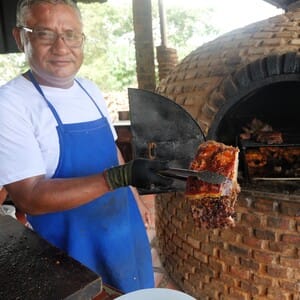
Cachapa with Queso llanero, along with Carne en Vara (grilled meat on a skewer) is served at El Fogón de IvánEl Fogón de IvánIt’s well worth stopping off at this eatery to enjoy simple, Creole fare. The roast pork is reputed to be the best, the cachapas (maize pancakes) are excellent, and the service is very attentive.
Recommended by bus drivers.
-
Address: Autopista General José Antonio Paéz, Quebrada de la Virgen, a few metres south of the turn-off for the Sanctuario de N.S. de Coromoto, Guanare, Portuguesa.
Opening Hours: daily during the day
Price: €-€€ . For non-meat-eaters, generous salads are available.
In Between
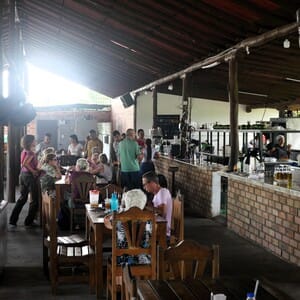
Braseros GrillBraseros GrillA long-established barbecue restaurant where, naturally, one thing reigns supreme: meat! From grilled chicken to pork cooked in a clay pot and churrasco, non-vegetarians will be in their element here. These dishes are served with yuca (steamed cassava), guasacaca (avocado sauce) and picante. The customers are delighted, the Price are affordable and the atmosphere under the churuata (thatched hut) is pleasant.
-
Address: Avenida 23 de Enero and Avenida Giraluna, Guanare, Portuguesa.
Opening Hours: Tuesday to Sunday, 11.30 am to 4 pm
Price: €€ one can relax and enjoy exquisite highland coffee.
Events
At the Tomás Montilla Cultural CentreTomás Montilla Cultural CentreThis centrally located square, with its bandstand, regularly hosts concerts and events. A highlight in 2024 was the concert by the Youth Symphony Orchestra featuring Queen classics – after all, Venezuelans are mad about this band. The varied programme is particularly popular with families.
Local craftspeople regularly showcase their products at small fairs.
-
Address: Carrera 4 and Calle 7, Guanare, Portuguesa. , concerts and cultural events take place regularly.
Shopping
Portuguesa has a vibrant arts and crafts scene. Typical products include colourful woven items such as Alpargatas (hemp or fabric sandals) and bags, carved wooden figures, and handmade musical instruments such as Maracas, Cuatro (4-string guitar) and Bandola. At the Tomás Montilla Cultural CentreTomás Montilla Cultural CentreThis centrally located square, with its bandstand, regularly hosts concerts and events. A highlight in 2024 was the concert by the Youth Symphony Orchestra featuring Queen classics – after all, Venezuelans are mad about this band. The varied programme is particularly popular with families.
Local craftspeople regularly showcase their products at small fairs.
-
Address: Carrera 4 and Calle 7, Guanare, Portuguesa. , local artisans regularly exhibit their work.
Excursions in the surrounding area
The ruins of the church San Rafael de Las GuasduasSan Rafael de Las GuasduasFifteen kilometres east of Guanare lie the ruins of the church of San Rafael de Las Guasduas. The 17th-century church remained unfinished as a yellow fever epidemic decimated the population. The village ultimately had to be abandoned. To this day, the building stands in its original state – a mighty tree grows out of one of its side walls. A magical place that transports you back to times gone by.
-
Address: San Rafael de Las Guasduas, Portuguesa (accessible only via the old country road). are a fascinating lost place, whose walls tell of a long-gone era.
To explore the Embalse de La CoromotoEmbalse de La CoromotoThis reservoir, beautifully situated at the foot of the mountains, was once a popular destination, renowned for its water sports (ranging from canoeing to angling). Apart from a few fishermen living here, the place is now largely deserted and the facilities, including a huge hotel, have been left to their own devices.
A local guide should be hired for a visit.
-
Address: Embalse de La Coromoto, 20 km west of Guanare, Portuguesa. reservoir, once a popular excursion destination, it is better to hire a local guide.
Ospino
39,200 inhabitants, 190 m altitude
OspinoOspinoPopulation: 39,200; altitude: 190 m
This small town, rich in history and natural beauty, is a paradise for nature lovers. The historic town centre features colonial architecture; the well-preserved colonial-style Church of San Fernando Rey on Plaza Bolívar is particularly charming. The town played a significant role in the War of Independence against Spanish colonial rule; the Battle of Ospino on 2 February 1814 was a major victory for the patriots against the royalist forces.
Ospino is the gateway to El Guache National Park with its lush green forests and waterfalls – a paradise for hikers and birdwatchers.
The carnival in Ospino is one of the most important events in the entire state of Portuguesa and is renowned for its large floats and colourful costumes. is one of those small towns that have preserved their colonial charm. At the same time, it is the gateway to the
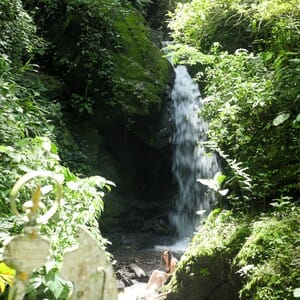
El Guache National ParkEl Guache National ParkThis national park is a hidden gem in the foothills of the Venezuelan Andes, stretching across parts of the states of Lara and Portuguesa. It was established on 5 June 1992 with the aim of protecting the sensitive headwaters of the Guache, Ospino, Toco, Morador and Are rivers, which supply water to the agriculturally important region of Portuguesa. The protected area covers an area of approximately 12,500 hectares and is managed by the Instituto Nacional de Parques (Inparques). The park is home to a diverse range of flora and fauna and serves as an important refuge for endangered species such as the Oso Frontino (spectacled bear) and the Paují Copete de Piedra. The vegetation ranges from open savannahs to evergreen mountain cloud forests, which are home to numerous tree ferns and species such as the guamo. Among the park’s natural attractions are several waterfalls, such as the Chorro Santa Bárbara, and natural pools in the Río Palmarito. Despite these attractions, the park receives relatively few visitors due to its difficult accessibility. Prior authorisation from Inparques must be obtained for activities such as birdwatching, hiking and climbing. The climate in the park is tropical and humid, with temperatures ranging between 19 °C and 26 °C. Interestingly, there are also a few small, traditional communities within the park’s boundaries, whose main livelihood is coffee farming. with its lush green forests and waterfalls – a paradise for hikers and birdwatchers.
Parque Nacional El Guache
Those who wish to explore this hidden jewel in the foothills of the Venezuelan Andes can obtain current information (and possibly a permit for certain activities) from the national park authority InparquesInparquesThe protection of Venezuela’s national parks lies in the hands of the Instituto Nacional de Parques (Inparques). This authority was founded on 3 October 1973 and reports to the Ministerio del Poder Popular para el Ecosocialismo. Its role is to implement public policy for the protection and management of the system of national parks, natural monuments and recreational parks. This system comprises 45 national parks, 38 natural monuments and 65 recreational parks – together covering more than a fifth of Venezuela’s territory, which is home to 90 per cent of the country’s drinking water sources.
The management and monitoring of the protected areas is carried out on site by a Cuerpo Civil de Guardaparques, who are happy to give curious tourists a spontaneous, informal guided tour. In this case, please have a small tip ready!
-
Address: Avenida Francisco Fajardo, Edificio Sur del Museo de Transporte, Santa Cecilia, Municipio Sucre, Miranda.
Mail: info@inparques.com . The park is very species-rich and is relatively seldom visited.
Guanarito
38,200 inhabitants, 85 metres altitude
Those seeking an authentic Llanos experience are in exactly the right place in GuanaritoGuanaritoPopulation: 38,200; altitude: 85 metres
If you’re looking for an authentic Llanos experience, this is the place to be. The town is also known as the ‘breadbasket of Venezuela’, and a visit offers the chance to gain a first-hand insight into rural life. The Finca San Francisco, run by the Instituto Universitario Jesús Obrero (IUJO), is an impressive example of modern agriculture. Visitors can observe the daily life of the Llaneros, who rise at sunrise to milk the cows, whilst the traditional harp music of the Llanos plays in the background.
Guanarito is inextricably linked to Venezuela’s most famous – and perhaps most eerie – legend: El Silbón. The story of this ghostly piper is deeply rooted in local culture and attracts visitors interested in myths and folklore. The locals certainly have plenty of stories to tell about this spectre.
-
Address: Carretera hacia Dolores, Guanarito, Portuguesa. . Several Fincas offer visitors the opportunity to gain an insight into rural life.
Biscucuy
12,800 inhabitants, 560 m altitude
The colonial village of BiscucuyBiscucuyPopulation: 12,800; altitude: 560 m
The wonderfully fresh mountain air is perfect for walks through the fragrant coffee plantations in the hills surrounding Biscucuy. Founded in 1778 as a mission station, the village has largely retained its colonial character. There are cosy little guesthouses and quietly situated, generally affordable accommodation options, all of which offer lovely views of the countryside.
The coffee harvest takes place between October and December, making this the best time to visit. Declining an invitation to have a cup of coffee is considered almost unforgivable by the locals.
Contact: Ken Alejandro Espinoza is a coffee producer himself; he arranges tours of the haciendas and can also help organise multi-day stays. is surrounded by green hills in the foothills of the Andes. It offers itself as a base for excursions into the surrounding area.
Accommodation
There are a number of simple accommodation options; our recommendation:
The Finca LisenarumFinca LisenarumOrganic coffee, cocoa and mountain idyll near Biscucuy. Just a few minutes’ drive from Biscucuy, on the road to Boconó, lies Finca Lisenarum. Guests stay in cosy chalets overlooking the mist-shrouded mountain scenery, enjoying the swimming pool and the aroma of freshly roasted organic coffee. Particularly fascinating is the on-site bean-to-bar chocolate workshop, which operates according to the philosophy: only pure cocoa, with no additives, and plenty of patience and dedication. The finca is a place of tranquillity and authenticity – ideal for anyone wishing to escape the hustle and bustle and experience the origins of coffee and cocoa.
Incidentally, the name refers not only to the family who own it, but also to a rare variety of orchid. You can find out more about this during a visit to the finca.
-
Address: Carretera nacional Biscucuy – Bocono, Portuguesa.
Price: €€ , just a few minutes from the town centre, offers organic coffee, cocoa and mountain idyll.
Food and drink
Numerous small inns invite you to stop for refreshments.
Food
A fixture for over 40 years, the Restaurante El MuroRestaurante El MuroFor over 40 years, Restaurante El Muro has been a fixture on the Biscucuy dining scene. Founded by Faustina Castellanos and Griseldina (“Chela”), the family tradition is now carried on in the kitchens by Tibisay Silva alongside her aunt. The restaurant is renowned for its traditional Venezuelan dishes – hearty, succulent and prepared with decades of experience. A particular highlight is the coffee from the highlands of Portuguesa, which is prepared here using the Japanese pour-over method – an experience that perfectly brings out the delicate flavours of the local beans. These are accompanied by refreshing malteadas (milkshakes) made with coffee or chocolate.
-
Address: Paseo Ferial, Biscucuy, Portuguesa.
Price: €€ is known for its typical Venezuelan dishes.
The restaurant Restaurant Centro Agroturistico Gran MorocotoRestaurant Centro Agroturistico Gran MorocotoHere you can enjoy typical local dishes and drinks that offer an insight into the region’s cuisine. The estate’s small lagoon provides a habitat for numerous birds, which can be observed here in peaceful surroundings. Evening boat trips at sunset are particularly charming. Ideal for anyone looking to escape the daily grind.
-
Address: On the eastern outskirts of the village, Paraíso de Chabasquén, Portuguesa.
Price: €€ is particularly beautifully situated.
La Cachama sonrienteLa Cachama sonrienteLa Cachama Sonriente is a combination of a leisure centre and a farm, specialising in sport fishing and dining. Accordingly, there are leisure activities for the whole family: boat trips on the small lagoon, guided walks and a shop selling handicrafts.
The menu features fish dishes. The cachama belongs to the characin family (which also includes piranhas, amongst others) and is a popular edible fish due to its firm, white flesh and few bones.
-
Address: Carretera Nacional Boconó – Guanare, Biscucuy, Portuguesa
Price: €€ is a mixture of gastronomy and leisure centre.
Snacks
If you want to try various speciality coffees, Troja CaféTroja CaféAnyone visiting Biscucuy who enjoys a good cup of coffee should not miss a visit to Jorge Luis Montilla’s Café Troja. Thanks to the strictest bean selection and a medium roast, enjoying coffee here becomes a scientific experience. Alongside tastings and workshops on sensory analysis, the café offers insights into Venezuela’s premium coffee culture and is a must for anyone seeking authentic speciality coffee off the beaten track.
-
Address: Basement of the Mundo Azúl building, Calle Paéz and Bolívar, Biscucuy, Portuguesa.
Price: €€ is the perfect place.
Café de Altura BiscucuyCafé de Altura BiscucuyThis charming café offers gourmet coffee specialities from the growing region around Biscucuy. It also serves a wide selection of cakes, biscuits and desserts.
-
Address: Nuevo Hotel Coromoto, Carretera 3, Guanare, Portuguesa.
Price: €€–€€€ offers, in addition to gourmet coffees, a broad selection of cakes, biscuits and desserts.
Excursions in the surrounding area
A few kilometres from the town centre lies the natural swimming pool Río Saguaz Ecological ParkRío Saguaz Ecological ParkJust seven kilometres from the sleepy town centre lies a true natural gem: the Río Saguaz. The clear, ice-cold water of this mountain river is perfect for a refreshing dip on hot days, whilst the surrounding mountain scenery, dotted with lush coffee plantations, is a feast for the eyes. Those who want to do more than just splash about can go on a short hike – ideally with a local guide – along the Quebrada Negra – a somewhat rocky path that ends at a breathtaking waterfall over 15 metres high.
To refuel, small stalls offer traditional empanadas and a particularly delicious, homemade quesillo de café. The Río Saguaz is a place of unspoilt natural beauty and an insider’s tip for anyone seeking nature away from the crowds.
-
Address: Carretera Biscucuy – Chabasquén, Portuguesa..
The quiet mountain village of Santa LucíaSanta LucíaJust five kilometres or so east of the centre of Biscucuy, this peaceful village offers a completely different perspective on the surrounding Sierra de Portuguesa. Whilst Biscucuy lies at an altitude of around 520 metres, in Santa Lucía you can already enjoy the fresh, cool mountain air – an ideal starting point for hikes or mountain bike tours along the famous coffee route. The hills around the village, such as the nearby Alto Santa Lucía, reward visitors with sweeping views over the lush green plantations.
Santa Lucía is a secluded spot for anyone seeking the authentic mountain culture and tranquillity of the Venezuelan Andean foothills.
-
Address: Carretera Biscucuy – Santa Lucía, Portuguesa. is the starting point for tours along the coffee route.
At 1,200 metres altitude, in the midst of the Montaña de los Pozuelos nature park, lies the picturesque mountain village of San José de la MontañaSan José de la MontañaAt an altitude of 1,200 metres, surrounded by green mountains, lies the picturesque village of San José de la Montaña. The village captivates visitors with its colonial architecture, cobbled lanes and an authentic atmosphere where time seems to have stood still.
The highlight of the surrounding area is the Chorro de San Juan, a waterfall standing some 55 metres high. It is situated in the Montaña de los Pozuelos Nature Reserve and forms part of a series of cascades along the Río María. A challenging hiking trail, around one kilometre long, leads to the waterfall – the walk requires a good level of fitness.
Along the way, native tree species such as guamo, bucare and yagrumo line the path, joined by numerous species of orchid. The birdlife is particularly impressive: almost 200 species have been recorded here, including toucans and parrots. Mammals such as deer, sloths and even jaguars also call this remote mountain region home..
Also known for its coffee cultivation is the village of Paraíso de ChabasquénParaíso de ChabasquénThe village of Paraíso de Chabasquén, with a population of 20,000 and situated at an altitude of 660 metres, was founded in 1767 and has retained much of its colonial charm. The climate is temperate and offers ideal conditions for coffee cultivation. The coffee is also processed locally here..