Zwischen weiten Ebenen und grünen Hügeln

Stand 27.08.2026

[lwptoc labelShow=”anzeigen” labelHide=”verbergen”]

Wer sich auf den Süden von Portuguesa einlässt, wird mit einigen Überraschungen belohnt: Auf der einen Seite die weiten Ebenen der Llanos, auf der anderen die sattgrünen Hügel der Andenausläufer. Ortschaften wie Ospino und Biscucuy haben ihren ursprünglichen, kolonialen Charme bewahrt. Vielerorts lässt sich der hervorragende [su_tooltip title=”Coffee from Portuguesa” text=”The state of Portuguesa is one of Venezuela’s most important coffee-growing regions. On the Andean slopes around Biscucuy, excellent high-altitude coffee thrives across more than 52,000 hectares – thanks to ideal altitudes and a mild climate. In the ‘Comuna San José de Saguaz’ alone, 855 families are involved in coffee production.
However, the region is not only a growing area but also a major centre for coffee processing. With 68 roasteries, a large proportion of the country’s coffee is processed here. In 2026, several producers from Portuguesa made it into the national selection of the very best – proof of the high quality of the coffee grown here. One of the better-known brands is ‘Amanecer’ coffee.
Guided tours such as the ‘Ruta Agroturística del Café’ offer a special experience. This coffee route takes visitors to old haciendas around Biscucuy and showcases the entire production chain – from planting and harvesting to preparation – “de la tierra a la taza” (from the ground to the cup).” background=”#4D4444″ font_size=”14″ max_width=”600″ shadow=”yes”]Coffee from Portuguesa[/su_tooltip] [su_icon icon=”icon: instagram” background=”#ebeaea” color=”#672109″ text_color=”#672109″ size=”16″ shape_size=”4″ radius=”12″ text_size=”14″ margin=”0px 3px 0px 3px” url=”https://www.instagram.com/cafedealturabiscucuy/”][/su_icon] verkosten. An der Grenze zum Bundesstaat Lara entpuppt sich der artenreiche und schwer zugängliche [su_tooltip title=”El Guache National Park” text=”This national park is a hidden gem in the foothills of the Venezuelan Andes, stretching across parts of the states of Lara and Portuguesa. It was established on 5 June 1992 with the aim of protecting the sensitive headwaters of the Guache, Ospino, Toco, Morador and Are rivers, which supply water to the agriculturally important region of Portuguesa. The protected area covers an area of approximately 12,500 hectares and is managed by the Instituto Nacional de Parques (Inparques). The park is home to a diverse range of flora and fauna and serves as an important refuge for endangered species such as the Oso Frontino (spectacled bear) and the Paují Copete de Piedra. The vegetation ranges from open savannahs to evergreen mountain cloud forests, which are home to numerous tree ferns and species such as the guamo. Among the park’s natural attractions are several waterfalls, such as the Chorro Santa Bárbara, and natural pools in the Río Palmarito. Despite these attractions, the park receives relatively few visitors due to its difficult accessibility. Prior authorisation from Inparques must be obtained for activities such as birdwatching, hiking and climbing. The climate in the park is tropical and humid, with temperatures ranging between 19 °C and 26 °C. Interestingly, there are also a few small, traditional communities within the park’s boundaries, whose main livelihood is coffee farming.” background=”#4D4444″ font_size=”14″ max_width=”600″ shadow=”yes”]El Guache National Park[/su_tooltip] als Paradies für Wanderer und Naturliebhaber.

Unstrittig Hauptattraktion ist jedoch das Sanctuario de [su_tooltip title=”Sanctuary of Our Lady of Coromoto” text=”Only slightly smaller than St Peter’s Basilica in Rome, this imposing modernist building, a fine example of brutalist architecture, can accommodate some 50,000 people inside. Whilst the exterior is bare concrete, the interior glows with coloured light refracted through hundreds of stained-glass windows. It is the same light that makes the surrounding land fertile and nourishes the Venezuelan people. From the roof terrace, which can be reached by lift, there is a fantastic view of the surrounding countryside, stretching as far as the Andes mountain range.
The planning and construction of the complex spanned more than twenty years, until it was finally inaugurated on 7 January 1996. More than two million worshippers attended the first Mass celebrated by Pope John Paul II in February of the same year. This sanctuary is dedicated to the patron saint of Venezuela, the Virgin of Coromoto. According to legend, the Virgin Mary is said to have appeared to the cacique Coromoto at this spot in 1652 and commanded him to lead his people to baptism.
Inside the basilica there are three altars: one in each side aisle and the high altar in the centre, with the bishop’s throne. Behind the high altar stands the throne of the Virgin, on which the image of the Virgin of Coromoto can be seen. This image is now the object of veneration. Beneath the basilica is a museum dedicated to the Virgin of Coromoto, which also displays the vestments worn by the Pope during his Mass in this basilica in 1996.
On the American continent, the Santuario de Nuestra Señora de Coromoto is regarded as the second most modern and significant basilica after the Shrine of Our Lady of Guadalupe in Mexico.

Address: Troncal 5 Guanara – Barinas, turn-off 10 km south of Guanare in Sabana de San José, Portuguesa.” background=”#4D4444″ font_size=”14″ max_width=”600″ shadow=”yes”]Sanctuary of Our Lady of Coromoto[/su_tooltip], ein architektonisches Juwel des [su_tooltip title=”Brutalismus” text=”Der Brutalismus ist ein Baustil der Moderne, der ab 1950 weltweite Verbreitung fand, und seine Hochzeit von den 1960er bis 1980er Jahren hatte. Die Bezeichnung leitet sich vom französischen Begriff des „béton brut“ (roher Beton) ab, der als Sichtbeton die Außenflächen der Gebäude dominiert. Eingeführt wurde dieser Begriff von Le Corbusier, der die sichtbar belassenen Betonflächen der von ihm konzipierten Wohngebäude in Marseille so bezeichnete.
Häufig war mit dem Stil des Brutalismus ein idealisierter Anspruch, authentisch bei Material und Konstruktion und ethisch bei den sozialen Aspekten der Architektur zu sein, verbunden. Insofern tun ihm die heutige negative Rezeptionen unrecht. Durch die Verwendung von Sichtbeton erfolgt eine Betonung der Konstruktion, ähnlich wie im Bauhausstil, die Formen sind geometrisch und eher einfach.
Caracas ist weltweit eine der Städte mit der größten Dichte an Gebäuden im Stil des Brutalismus. Besondere Perlen sind das Teatro Teresa Careño, das Gebäude der Banco Central de Venezuela und der Torre Altamira.” background=”#4D4444″ font_size=”14″ max_width=”600″ shadow=”yes”]Brutalismus[/su_tooltip] [su_icon icon=”icon: instagram” background=”#ebeaea” color=”#672109″ text_color=”#672109″ size=”16″ shape_size=”4″ radius=”12″ text_size=”14″ margin=”0px 3px 0px 3px” url=”https://www.instagram.com/cosmobrutal/”][/su_icon] von seltener Wucht, für das man ein bis zwei Stunden einplanen sollte.

Niemals ausreichend Trinkwasser, Kopfbedeckung und Sonnenschutz (LSF 50+) vergessen.

[su_image_carousel source=”media: 11546,11547,11549,11550,11551,11552,11553,11554,11555,11556,11557,11558,11559,11560,11561″ controls_style=”light” crop=”1:1″ columns=”3″ spacing=”no” align=”center” autoplay=”3″]

Guanare

240.000 Einwohner, 180 Meter Höhe

[su_tooltip title=”Guanare” text=”Population: 240,000; altitude: 180 metres
Guanare, the capital of Portuguesa State, is picturesquely situated at the foot of the Andes. Founded in 1591 – more than sixty years after the northern town of Acarigua – it has managed to preserve some of its colonial charm over the centuries.
As in the entire Llanos region, agriculture is the main source of livelihood. Whilst cereal cultivation was once the main focus, today speciality crops such as sesame, millet, tobacco, sugar cane and, towards the Andes, coffee are increasingly being grown.
When visiting Guanare, one cannot fail to pay a visit to the patron saint of Venezuela, the Virgin of Coromoto. She is venerated in two places: in the historic old cathedral in the historic centre of Guanare, the Basilica Menor Nuestra Señora de Coromoto, and in the modernist sanctuary a few kilometres outside the town. The latter was built on the spot where the chieftain Coromoto is said to have had a vision of the Virgin Mary.” background=”#4D4444″ font_size=”14″ max_width=”600″ shadow=”yes”]Guanare[/su_tooltip], die Hauptstadt des Bundesstaates Portuguesa, liegt malerisch am Fuße der Anden. Im Zentrum hat sich Guanare seinen kolonialen Charme bewahrt, unbedingt sehenswert ist die [su_tooltip title=”Basilica-Cathedral of Nuestra Señora de Coromoto” text=”The Cathedral of Guanare, elevated to the status of Basílica Menor Nuestra Señora de Coromoto, is best visited in the afternoon, when the interior is bathed in golden light from the rose window at the rear. It was here that Simón Bolívar once prayed on 22 May 1821, one month before the decisive Battle of Carabobo. The stained-glass windows were made in Germany, the tabernacle is crafted from Peruvian silver, and the altar is coated in liquid gold – whilst Monsignor José Vicente de Unda, a priest and educator, left his heart here, which is still preserved in formaldehyde to this day.

Address: Plaza Bolívar, Guanare, Portuguesa.” background=”#4D4444″ font_size=”14″ max_width=”600″ shadow=”yes”]Basilica-Cathedral of Nuestra Señora de Coromoto[/su_tooltip] an der [su_tooltip title=”Plaza Bolívar in Guanare” text=”In the centre of Plaza Bolívar stands an equestrian statue that is an exact replica of the Bolívar statue in Caracas. But that is not all: originally, the then President Rómulo Betancourt had intended this statue for Peru. However, Gonzalo Barrios, then President of the National Congress and a native of Portuguesa, ‘kidnapped’ the statue and brought it to his home state. Ever since, it has graced this shaded square in front of the small basilica and the cathedral of Guanare. In an ironic twist of fate, their tabernacles were originally crafted from Peruvian silver.

Address: Plaza Bolívar, Guanare, Portuguesa.” background=”#4D4444″ font_size=”14″ max_width=”600″ shadow=”yes”]Plaza Bolívar in Guanare[/su_tooltip]. Wenige Schritte entfernt liegt das [su_tooltip title=”Museo Inés Mercedes Gómez Alvarez” text=”The museum itself is an extraordinary colonial building dating from 1801. The distinguished priest José Vicente de Unda lived here for many years; he would later go down in history as a hero of independence and a passionate advocate of education. For years, he campaigned for the establishment of an educational institution and eventually presented his vision to Simón Bolívar – with success: on 16 May 1825, the first public secondary school was founded in Guanare, now known as the Liceo Unda – a pioneer and model for the ‘Colegios Nacionales’ (national schools) later established throughout Venezuela

Address: Carrera 3 and Calle 17, Guanare, Portuguesa.
Opening Hours: daily from 8 am to 4 pm (may vary)” background=”#4D4444″ font_size=”14″ max_width=”600″ shadow=”yes”]Museo Inés Mercedes Gómez Alvarez[/su_tooltip] [su_icon icon=”icon: instagram” background=”#ebeaea” color=”#672109″ text_color=”#672109″ size=”16″ shape_size=”4″ radius=”12″ text_size=”14″ margin=”0px 3px 0px 3px” url=”https://www.instagram.com/museoguanaremimga/”][/su_icon], wo 1825 die erste öffentliche weiterführende Schule Venezuelas eingerichtet wurde. Direkt nebenan befindet sich der [su_tooltip title=”Parque Los Samanes” text=”Just a few steps from Plaza Bolívar lies the 10.5-hectare Parque Recreacional Los Samanes – the city’s ‘green lung’ and a popular destination for families and nature lovers. It takes its name from the majestic samanes – centuries-old giant trees belonging to the mimosa family.
Simón Bolívar’s troops once rested in the shade of their wide, umbrella-shaped canopies during his campaign in 1813.
The park is criss-crossed by walking trails, children love the petting zoo, and a small hill offers a wonderful panoramic view of the town and the surrounding vast landscape of the Llanos. Refreshments are available in the newly opened café. Thanks to free Wi-Fi and completely refurbished lighting, the park is also an inviting place in the evening. At weekends and on public holidays, folklore events featuring the music and dance of the Llaneros are frequently held.

Address: Carrera 1 and Calle 16, Guanare, Portuguesa.” background=”#4D4444″ font_size=”14″ max_width=”600″ shadow=”yes”]Parque Los Samanes[/su_tooltip], die Grüne Lunge der Stadt.

Etwas außerhalb liegt die Hauptsehenswürdigkeit: das [su_tooltip title=”Sanctuary of Our Lady of Coromoto” text=”Only slightly smaller than St Peter’s Basilica in Rome, this imposing modernist building, a fine example of brutalist architecture, can accommodate some 50,000 people inside. Whilst the exterior is bare concrete, the interior glows with coloured light refracted through hundreds of stained-glass windows. It is the same light that makes the surrounding land fertile and nourishes the Venezuelan people. From the roof terrace, which can be reached by lift, there is a fantastic view of the surrounding countryside, stretching as far as the Andes mountain range.
The planning and construction of the complex spanned more than twenty years, until it was finally inaugurated on 7 January 1996. More than two million worshippers attended the first Mass celebrated by Pope John Paul II in February of the same year. This sanctuary is dedicated to the patron saint of Venezuela, the Virgin of Coromoto. According to legend, the Virgin Mary is said to have appeared to the cacique Coromoto at this spot in 1652 and commanded him to lead his people to baptism.
Inside the basilica there are three altars: one in each side aisle and the high altar in the centre, with the bishop’s throne. Behind the high altar stands the throne of the Virgin, on which the image of the Virgin of Coromoto can be seen. This image is now the object of veneration. Beneath the basilica is a museum dedicated to the Virgin of Coromoto, which also displays the vestments worn by the Pope during his Mass in this basilica in 1996.
On the American continent, the Santuario de Nuestra Señora de Coromoto is regarded as the second most modern and significant basilica after the Shrine of Our Lady of Guadalupe in Mexico.

Address: Troncal 5 Guanara – Barinas, turn-off 10 km south of Guanare in Sabana de San José, Portuguesa.” background=”#4D4444″ font_size=”14″ max_width=”600″ shadow=”yes”]Sanctuary of Our Lady of Coromoto[/su_tooltip]. Besonders lohnend ist ein nachmittäglicher Besuch zwischen Dezember und Februar, wenn die Blüten der [su_tooltip title=”Coromotano Sunflowers” text=”From December through to February or March, a sea of sunflowers transforms the path to the Basílica de Coromoto into a sea of bright yellow blossoms. On both sides of the road, along the twelve-kilometre-long Corredor Coromotano, the sunflower fields bloom, attracting visitors from across the region.
Domestic tourists in particular travel from all corners of the country to take photographs, usually combining this with a visit to the Virgen de Coromoto. In the late afternoon, when the light bathes the flowers in warm gold, the landscape is at its most beautiful. The Girasoles Coromotanos are one of the new tourist highlights of Portuguesa.

Address: Corredor Coromotano, Guanare, Portuguesa.” background=”#4D4444″ font_size=”14″ max_width=”600″ shadow=”yes”]Coromotano Sunflowers[/su_tooltip] den Weg rechts und links in warme Goldtöne tauchen.


Reisepraktische Infos

An- und Abreise

Fernbus: Von dem verkehrsgünstig gelegenen Terminal de Pasajeros de Guanare gibt es Verbindungen nach Caracas (5 – 6 Stunden), Maracaibo (8,5 – 9,5 Stunden), Valencia (3 Stunden), Barquisimeto (2,5 – 3 Stunden), Barinas (2 Stunden) und San Cristóbal (7 Stunden).

Auf der Straße: Guanare liegt an der Troncal 5 (Autopista José Antonio Páez), die Barquisimeto im Bundesstaat Lara mit San Cristobal in Táchira verbindet und bis Barinas als Autobahn ausgebaut ist. In gut einer Stunde erreicht man über die erst kürzlich instand gesetzte Local 1 die Kaffeeregion um Biscucuy.

Mit dem Flugzeug: Der Flughafen Guanare Virgen de Coromoto (IATA-Code: GUQ) ist derzeit nicht für Linienflüge in Benutzung.

Unterkünfte

In der Stadt selbst, entlang der Ausfallstraßen und im Umland gibt es reichlich Übernachtungsmöglichkeiten, unsere Empfehlungen:

Das gehobene [su_tooltip title=”Nuevo Hotel Coromoto” text=”Undoubtedly the best option for a standard hotel in Guanare, frequented by families, couples and business travellers alike. The rooms are modernly furnished; there is a restaurant and – as befits a proper accommodation in the Llanos – a garden area with a swimming pool.

Address: Carrera 3, Guanare, Portuguesa.
Price: €€” background=”#4D4444″ font_size=”14″ max_width=”600″ shadow=”yes”]Nuevo Hotel Coromoto[/su_tooltip] [su_icon icon=”icon: instagram” background=”#ebeaea” color=”#672109″ text_color=”#672109″ size=”16″ shape_size=”4″ radius=”12″ text_size=”14″ margin=”0px 3px 0px 3px” url=”https://www.instagram.com/nuevohotelcoromoto/”][/su_icon] [su_icon icon=”icon: whatsapp” background=”#ebeaea” color=”#672109″ text_color=”#672109″ size=”16″ shape_size=”4″ radius=”12″ text_size=”14″ margin=”0px 3px 0px 3px” url=”https://wa.me/+584122596333″][/su_icon] [su_icon icon=”icon: phone” background=”#ebeaea” color=”#672109″ text_color=”#672109″ size=”16″ shape_size=”4″ radius=”12″ text_size=”14″ margin=”0px 3px 0px 3px” url=”tel:+582572517480″][/su_icon] im Stadtzentrum bietet einen Pool und ein eigenes [su_tooltip title=”Posada Turistica Magic Hill” text=”This secluded spot in a rural setting guarantees peace and relaxation. Comfortable rooms, good service and excellent food ensure pure relaxation. There’s also a well-maintained swimming pool with a bar – what more could you want?
Avenida Principal, upper part of La Colonia, Guanare, Portuguesa.

Price: €€–€€€” background=”#4D4444″ font_size=”14″ max_width=”600″ shadow=”yes”]Posada Turistica Magic Hill[/su_tooltip] [su_icon icon=”icon: instagram” background=”#ebeaea” color=”#672109″ text_color=”#672109″ size=”16″ shape_size=”4″ radius=”12″ text_size=”14″ margin=”0px 3px 0px 3px” url=”https://www.instagram.com/posada.magichill/”][/su_icon] befindet sich in ländlicher Umgebung und ist für ihre traditionelle Küche bekannt.

Essen und Trinken

Die Küche der Llanos ist von (Rind-) Fleisch, Käse und der allgegenwärtigen [su_tooltip title=”Cachapa” text=”The cachapa is one of Venezuela’s most popular street snacks and can be found in every region of the country, but particularly in the Llanos. Unlike the arepa, which is made from maize flour, the cachapa is made from fresh, young maize – also known as ‘jojoto’ – which gives it a natural sweetness and a soft, slightly grainy texture.
The dough is baked on a hot iron griddle, known as a budare, until golden brown, then folded and filled with a generous portion of soft white cheese, which melts into a creamy consistency under the heat. It is often served with a knob of butter. Cachapa can be enjoyed on its own, as a side dish or with savoury fillings such as carne mechada (shredded beef) or crispy chicharrón. It was declared part of Venezuela’s intangible cultural heritage in 2019. It goes well with a freshly prepared papelón con limón – a refreshing sugarcane drink with lemon.
Recipe for Cachapa
Ingredients for around 6–8 small cachapas: 400 g fresh sweetcorn kernels (or tinned, drained); 100 ml milk; 1 egg; 1 tbsp sugar; a pinch of salt; 2 tbsp maize flour (optional, for a firmer batter); 200 g soft white cheese (e.g. queso de mano or mozzarella); butter for greasing
Method: 1.) Roughly purée the fresh sweetcorn kernels with the milk, egg, sugar and salt in a blender or food processor – the mixture should remain slightly chunky, not completely smooth. If necessary, stir in the maize flour until a thick batter forms. 2.) Grease a heavy frying pan or griddle with a little butter over a medium heat. For each cachapa, pour about one ladleful of batter into the pan and spread it out into a flat, round pancake about 1 cm thick. 3.) Cook each side for 3–4 minutes until golden brown and slightly crispy around the edges. The cachapa should remain soft and moist on the inside. 4.) Cut the soft cheese into slices or strips. Remove the cooked cachapa from the heat, place the cheese in the centre, fold one half over the top and leave to rest briefly until the cheese melts. Serve immediately – ideally with a knob of butter on top.” background=”#4D4444″ font_size=”14″ max_width=”600″ shadow=”yes”]Cachapa[/su_tooltip] geprägt. Unsere Empfehlungen:

Essen

Wer Lust auf eine klassische Arepa mit Fleisch oder Käse verspürt, dem sei die [su_tooltip title=”Arepera Nico” text=”María Nicolasa Linares de Pedroza (Nico) and her children are still happy. They open their little snack bar every day and serve arepas with carne mechada (shredded beef) – delicious and flavourful – queso de mano (white cheese) or both together. These are accompanied by freshly made juices, guayoyo coffee (roughly equivalent to German ‘Blümchen-Kaffee’) and suero (buttermilk).

Address: Callejón 1 del Barrio Coromoto, Guanare, Portuguesa.
Price: €” background=”#4D4444″ font_size=”14″ max_width=”600″ shadow=”yes”]Arepera Nico[/su_tooltip] [su_icon icon=”icon: instagram” background=”#ebeaea” color=”#672109″ text_color=”#672109″ size=”16″ shape_size=”4″ radius=”12″ text_size=”14″ margin=”0px 3px 0px 3px” url=”https://www.instagram.com/areperanico/”][/su_icon] empfohlen.

Cachapa mit Queso llanero, dazu Carne en Vara (Grillfleisch am Spieß) wird im [su_tooltip title=”El Fogón de Iván” text=”It’s well worth stopping off at this eatery to enjoy simple, Creole fare. The roast pork is reputed to be the best, the cachapas (maize pancakes) are excellent, and the service is very attentive.
Recommended by bus drivers.

Address: Autopista General José Antonio Paéz, Quebrada de la Virgen, a few metres south of the turn-off for the Sanctuario de N.S. de Coromoto, Guanare, Portuguesa.
Opening Hours: daily during the day
Price: €-€€” background=”#4D4444″ font_size=”14″ max_width=”600″ shadow=”yes”]El Fogón de Iván[/su_tooltip] [su_icon icon=”icon: instagram” background=”#ebeaea” color=”#672109″ text_color=”#672109″ size=”16″ shape_size=”4″ radius=”12″ text_size=”14″ margin=”0px 3px 0px 3px” url=”https://www.instagram.com/elfogondeivangre/”][/su_icon] [su_icon icon=”icon: whatsapp” background=”#ebeaea” color=”#672109″ text_color=”#672109″ size=”16″ shape_size=”4″ radius=”12″ text_size=”14″ margin=”0px 3px 0px 3px” url=”https://wa.me/+584245209072″][/su_icon] aufgetischt. Für Nicht-Fleischesser gibt es großzügige Salate.

Zwischendurch

Im [su_tooltip title=”Braseros Grill” text=”A long-established barbecue restaurant where, naturally, one thing reigns supreme: meat! From grilled chicken to pork cooked in a clay pot and churrasco, non-vegetarians will be in their element here. These dishes are served with yuca (steamed cassava), guasacaca (avocado sauce) and picante. The customers are delighted, the Price are affordable and the atmosphere under the churuata (thatched hut) is pleasant.

Address: Avenida 23 de Enero and Avenida Giraluna, Guanare, Portuguesa.
Opening Hours: Tuesday to Sunday, 11.30 am to 4 pm
Price: €€” background=”#4D4444″ font_size=”14″ max_width=”600″ shadow=”yes”]Braseros Grill[/su_tooltip] [su_icon icon=”icon: instagram” background=”#ebeaea” color=”#672109″ text_color=”#672109″ size=”16″ shape_size=”4″ radius=”12″ text_size=”14″ margin=”0px 3px 0px 3px” url=”https://www.instagram.com/braserosgrill.gre/”][/su_icon] kann man entspannt erlesenen Hochlandkaffee genießen.

Veranstaltungen

Im [su_tooltip title=”Tomás Montilla Cultural Centre” text=”This centrally located square, with its bandstand, regularly hosts concerts and events. A highlight in 2024 was the concert by the Youth Symphony Orchestra featuring Queen classics – after all, Venezuelans are mad about this band. The varied programme is particularly popular with families.
Local craftspeople regularly showcase their products at small fairs.

Address: Carrera 4 and Calle 7, Guanare, Portuguesa.” background=”#4D4444″ font_size=”14″ max_width=”600″ shadow=”yes”]Tomás Montilla Cultural Centre[/su_tooltip] [su_icon icon=”icon: instagram” background=”#ebeaea” color=”#672109″ text_color=”#672109″ size=”16″ shape_size=”4″ radius=”12″ text_size=”14″ margin=”0px 3px 0px 3px” url=”https://www.instagram.com/alcaldiadeguanare/reels/”][/su_icon] finden regelmäßig Konzerte und Kulturveranstaltungen statt.

Einkaufen

Portuguesa verfügt über eine lebendige Kunsthandwerkszene. Zu den typischen Erzeugnissen gehören farbenfrohe Webarbeiten wie Alpargatas (Bast- bzw. Stoffsandalen) und Taschen, geschnitzte Holzfiguren sowie handgefertigte Musikinstrumente wie Maracas, Cuatro (4-saitige Gitarre) und [su_tooltip title=”Tomás Montilla Cultural Centre” text=”This centrally located square, with its bandstand, regularly hosts concerts and events. A highlight in 2024 was the concert by the Youth Symphony Orchestra featuring Queen classics – after all, Venezuelans are mad about this band. The varied programme is particularly popular with families.
Local craftspeople regularly showcase their products at small fairs.

Address: Carrera 4 and Calle 7, Guanare, Portuguesa.” background=”#4D4444″ font_size=”14″ max_width=”600″ shadow=”yes”]Tomás Montilla Cultural Centre[/su_tooltip] [su_icon icon=”icon: instagram” background=”#ebeaea” color=”#672109″ text_color=”#672109″ size=”16″ shape_size=”4″ radius=”12″ text_size=”14″ margin=”0px 3px 0px 3px” url=”https://www.instagram.com/alcaldiadeguanare/reels/”][/su_icon] stellen Kunsthandwerker der Region regelmäßig ihre Arbeiten aus.

Ausflüge in die Umgebung

Die Ruinen der [su_tooltip title=”San Rafael de Las Guasduas” text=”Fifteen kilometres east of Guanare lie the ruins of the church of San Rafael de Las Guasduas. The 17th-century church remained unfinished as a yellow fever epidemic decimated the population. The village ultimately had to be abandoned. To this day, the building stands in its original state – a mighty tree grows out of one of its side walls. A magical place that transports you back to times gone by.

Address: San Rafael de Las Guasduas, Portuguesa (accessible only via the old country road).” background=”#4D4444″ font_size=”14″ max_width=”600″ shadow=”yes”]San Rafael de Las Guasduas[/su_tooltip] sind ein faszinierender Lost Place, dessen Gemäuer von einer längst vergangenen Zeit erzählen.

Um den [su_tooltip title=”Embalse de La Coromoto” text=”This reservoir, beautifully situated at the foot of the mountains, was once a popular destination, renowned for its water sports (ranging from canoeing to angling). Apart from a few fishermen living here, the place is now largely deserted and the facilities, including a huge hotel, have been left to their own devices.
A local guide should be hired for a visit.

Address: Embalse de La Coromoto, 20 km west of Guanare, Portuguesa.” background=”#4D4444″ font_size=”14″ max_width=”600″ shadow=”yes”]Embalse de La Coromoto[/su_tooltip], einst ein beliebtes Ausflugsziel, zu erkunden, sollte man besser einen ortskundigen Führer engagieren.


Ospino

39.200 Einwohner, 190 m Höhe

[su_tooltip title=”Ospino” text=”Population: 39,200; altitude: 190 m
This small town, rich in history and natural beauty, is a paradise for nature lovers. The historic town centre features colonial architecture; the well-preserved colonial-style Church of San Fernando Rey on Plaza Bolívar is particularly charming. The town played a significant role in the War of Independence against Spanish colonial rule; the Battle of Ospino on 2 February 1814 was a major victory for the patriots against the royalist forces.
Ospino is the gateway to El Guache National Park with its lush green forests and waterfalls – a paradise for hikers and birdwatchers.
The carnival in Ospino is one of the most important events in the entire state of Portuguesa and is renowned for its large floats and colourful costumes.” background=”#4D4444″ font_size=”14″ max_width=”600″ shadow=”yes”]Ospino[/su_tooltip] ist einer dieser kleinen Orte, die sich ihren kolonialen Charme bewahrt haben. Zugleich ist er das Eingangstor zum [su_tooltip title=”El Guache National Park” text=”This national park is a hidden gem in the foothills of the Venezuelan Andes, stretching across parts of the states of Lara and Portuguesa. It was established on 5 June 1992 with the aim of protecting the sensitive headwaters of the Guache, Ospino, Toco, Morador and Are rivers, which supply water to the agriculturally important region of Portuguesa. The protected area covers an area of approximately 12,500 hectares and is managed by the Instituto Nacional de Parques (Inparques). The park is home to a diverse range of flora and fauna and serves as an important refuge for endangered species such as the Oso Frontino (spectacled bear) and the Paují Copete de Piedra. The vegetation ranges from open savannahs to evergreen mountain cloud forests, which are home to numerous tree ferns and species such as the guamo. Among the park’s natural attractions are several waterfalls, such as the Chorro Santa Bárbara, and natural pools in the Río Palmarito. Despite these attractions, the park receives relatively few visitors due to its difficult accessibility. Prior authorisation from Inparques must be obtained for activities such as birdwatching, hiking and climbing. The climate in the park is tropical and humid, with temperatures ranging between 19 °C and 26 °C. Interestingly, there are also a few small, traditional communities within the park’s boundaries, whose main livelihood is coffee farming.” background=”#4D4444″ font_size=”14″ max_width=”600″ shadow=”yes”]El Guache National Park[/su_tooltip] mit seinen üppig-grünen Wäldern und Wasserfällen – ein Paradies für Wanderer und Vogelkundler.

[su_image_carousel source=”media: 11562,11563,11564,11565,11545,11548″ controls_style=”light” crop=”1:1″ columns=”3″ spacing=”no” align=”center” autoplay=”3″]

Parque Nacional El Guache

Wer dieses versteckte Juwel in den Ausläufern der venezolanischen Anden erkunden möchte, erhält aktuelle Informationen (und womöglich eine Genehmigung für bestimmte Aktivitäten) bei der [su_tooltip title=”Inparques” text=”The protection of Venezuela’s national parks lies in the hands of the Instituto Nacional de Parques (Inparques). This authority was founded on 3 October 1973 and reports to the Ministerio del Poder Popular para el Ecosocialismo. Its role is to implement public policy for the protection and management of the system of national parks, natural monuments and recreational parks. This system comprises 45 national parks, 38 natural monuments and 65 recreational parks – together covering more than a fifth of Venezuela’s territory, which is home to 90 per cent of the country’s drinking water sources.
The management and monitoring of the protected areas is carried out on site by a Cuerpo Civil de Guardaparques, who are happy to give curious tourists a spontaneous, informal guided tour. In this case, please have a small tip ready!

Address: Avenida Francisco Fajardo, Edificio Sur del Museo de Transporte, Santa Cecilia, Municipio Sucre, Miranda.
Mail: info@inparques.com” background=”#4D4444″ font_size=”14″ max_width=”600″ shadow=”yes”]Inparques[/su_tooltip] [su_icon icon=”icon: instagram” background=”#ebeaea” color=”#672109″ text_color=”#672109″ size=”16″ shape_size=”4″ radius=”12″ text_size=”14″ margin=”0px 3px 0px 3px” url=”https://www.instagram.com/inparquesoficial/”][/su_icon] [su_icon icon=”icon: phone” background=”#ebeaea” color=”#672109″ text_color=”#672109″ size=”16″ shape_size=”4″ radius=”12″ text_size=”14″ margin=”0px 3px 0px 3px” url=”tel:+582122732811″][/su_icon] [su_icon icon=”icon: link” background=”#ebeaea” color=”#672109″ text_color=”#672109″ size=”16″ shape_size=”4″ radius=”12″ text_size=”14″ margin=”0px 3px 0px 3px” url=”www.inparques.gob.ve”][/su_icon]. Der Park ist sehr artenreich und wird relativ selten besucht.


Guanarito

38.200 Einwohner, 85 Meter Höhe

Wer das authentische Llanos-Erlebnis sucht, ist in [su_tooltip title=”Guanarito” text=”Population: 38,200; altitude: 85 metres
If you’re looking for an authentic Llanos experience, this is the place to be. The town is also known as the ‘breadbasket of Venezuela’, and a visit offers the chance to gain a first-hand insight into rural life. The Finca San Francisco, run by the Instituto Universitario Jesús Obrero (IUJO), is an impressive example of modern agriculture. Visitors can observe the daily life of the Llaneros, who rise at sunrise to milk the cows, whilst the traditional harp music of the Llanos plays in the background.
Guanarito is inextricably linked to Venezuela’s most famous – and perhaps most eerie – legend: El Silbón. The story of this ghostly piper is deeply rooted in local culture and attracts visitors interested in myths and folklore. The locals certainly have plenty of stories to tell about this spectre.

Address: Carretera hacia Dolores, Guanarito, Portuguesa.” background=”#4D4444″ font_size=”14″ max_width=”600″ shadow=”yes”]Guanarito[/su_tooltip] [su_icon icon=”icon: instagram” background=”#ebeaea” color=”#672109″ text_color=”#672109″ size=”16″ shape_size=”4″ radius=”12″ text_size=”14″ margin=”0px 3px 0px 3px” url=”https://www.instagram.com/iujoguanarito/”][/su_icon] [su_icon icon=”icon: phone” background=”#ebeaea” color=”#672109″ text_color=”#672109″ size=”16″ shape_size=”4″ radius=”12″ text_size=”14″ margin=”0px 3px 0px 3px” url=”tel:+584143519827″][/su_icon] goldrichtig. Mehrere Fincas bieten Besuchern die Möglichkeit, einen Einblick in das Landleben zu gewinnen.


Biscucuy

12.800 Einwohner, 560 m [su_tooltip title=”Biscucuy” text=”Population: 12,800; altitude: 560 m
The wonderfully fresh mountain air is perfect for walks through the fragrant coffee plantations in the hills surrounding Biscucuy. Founded in 1778 as a mission station, the village has largely retained its colonial character. There are cosy little guesthouses and quietly situated, generally affordable accommodation options, all of which offer lovely views of the countryside.
The coffee harvest takes place between October and December, making this the best time to visit. Declining an invitation to have a cup of coffee is considered almost unforgivable by the locals.
Contact: Ken Alejandro Espinoza is a coffee producer himself; he arranges tours of the haciendas and can also help organise multi-day stays.” background=”#4D4444″ font_size=”14″ max_width=”600″ shadow=”yes”]Biscucuy[/su_tooltip] [su_icon icon=”icon: instagram” background=”#ebeaea” color=”#672109″ text_color=”#672109″ size=”16″ shape_size=”4″ radius=”12″ text_size=”14″ margin=”0px 3px 0px 3px” url=”https://www.instagram.com/kenalejandroespinoza”][/su_icon] liegt umgeben von grünen Hügeln in den Ausläufern der Anden. Der Ort bietet sich als Basis für Ausflüge in die Umgebung an.

Unterkünfte

Es gibt eine Reihe einfacher Unterkünfte, unsere [su_tooltip title=”Finca Lisenarum” text=”Organic coffee, cocoa and mountain idyll near Biscucuy. Just a few minutes’ drive from Biscucuy, on the road to Boconó, lies Finca Lisenarum. Guests stay in cosy chalets overlooking the mist-shrouded mountain scenery, enjoying the swimming pool and the aroma of freshly roasted organic coffee. Particularly fascinating is the on-site bean-to-bar chocolate workshop, which operates according to the philosophy: only pure cocoa, with no additives, and plenty of patience and dedication. The finca is a place of tranquillity and authenticity – ideal for anyone wishing to escape the hustle and bustle and experience the origins of coffee and cocoa.
Incidentally, the name refers not only to the family who own it, but also to a rare variety of orchid. You can find out more about this during a visit to the finca.

Address: Carretera nacional Biscucuy – Bocono, Portuguesa.
Price: €€” background=”#4D4444″ font_size=”14″ max_width=”600″ shadow=”yes”]Finca Lisenarum[/su_tooltip] [su_icon icon=”icon: instagram” background=”#ebeaea” color=”#672109″ text_color=”#672109″ size=”16″ shape_size=”4″ radius=”12″ text_size=”14″ margin=”0px 3px 0px 3px” url=”https://www.instagram.com/fincalisenarum/I”][/su_icon] [su_icon icon=”icon: whatsapp” background=”#ebeaea” color=”#672109″ text_color=”#672109″ size=”16″ shape_size=”4″ radius=”12″ text_size=”14″ margin=”0px 3px 0px 3px” url=”https://wa.me/+584125759210″][/su_icon] nur wenige Minuten vom Ortskern entfernt, bietet Bio-Kaffee, Kakao und Bergidylle an.

Essen und Trinken

Zahlreiche kleine Gasthäuser laden zur Einkehr ein.

Essen

Seit über 40 Jahren eine feste Größe ist das [su_tooltip title=”Restaurante El Muro” text=”For over 40 years, Restaurante El Muro has been a fixture on the Biscucuy dining scene. Founded by Faustina Castellanos and Griseldina (“Chela”), the family tradition is now carried on in the kitchens by Tibisay Silva alongside her aunt. The restaurant is renowned for its traditional Venezuelan dishes – hearty, succulent and prepared with decades of experience. A particular highlight is the coffee from the highlands of Portuguesa, which is prepared here using the Japanese pour-over method – an experience that perfectly brings out the delicate flavours of the local beans. These are accompanied by refreshing malteadas (milkshakes) made with coffee or chocolate.

Address: Paseo Ferial, Biscucuy, Portuguesa.
Price: €€” background=”#4D4444″ font_size=”14″ max_width=”600″ shadow=”yes”]Restaurante El Muro[/su_tooltip] [su_icon icon=”icon: instagram” background=”#ebeaea” color=”#672109″ text_color=”#672109″ size=”16″ shape_size=”4″ radius=”12″ text_size=”14″ margin=”0px 3px 0px 3px” url=”https://www.instagram.com/restaurantelmurobiscucuy”][/su_icon] bekannt für seine typisch venezolanischen Gerichte.

Besonders schön gelegen ist das [su_tooltip title=”Restaurant Centro Agroturistico Gran Morocoto” text=”Here you can enjoy typical local dishes and drinks that offer an insight into the region’s cuisine. The estate’s small lagoon provides a habitat for numerous birds, which can be observed here in peaceful surroundings. Evening boat trips at sunset are particularly charming. Ideal for anyone looking to escape the daily grind.

Address: On the eastern outskirts of the village, Paraíso de Chabasquén, Portuguesa.
Price: €€” background=”#4D4444″ font_size=”14″ max_width=”600″ shadow=”yes”]Restaurant Centro Agroturistico Gran Morocoto[/su_tooltip] [su_icon icon=”icon: instagram” background=”#ebeaea” color=”#672109″ text_color=”#672109″ size=”16″ shape_size=”4″ radius=”12″ text_size=”14″ margin=”0px 3px 0px 3px” url=”https://www.instagram.com/granmorocoto/”][/su_icon].

[su_tooltip title=”La Cachama sonriente” text=”La Cachama Sonriente is a combination of a leisure centre and a farm, specialising in sport fishing and dining. Accordingly, there are leisure activities for the whole family: boat trips on the small lagoon, guided walks and a shop selling handicrafts.
The menu features fish dishes. The cachama belongs to the characin family (which also includes piranhas, amongst others) and is a popular edible fish due to its firm, white flesh and few bones.

Address: Carretera Nacional Boconó – Guanare, Biscucuy, Portuguesa
Price: €€” background=”#4D4444″ font_size=”14″ max_width=”600″ shadow=”yes”]La Cachama sonriente[/su_tooltip] [su_icon icon=”icon: instagram” background=”#ebeaea” color=”#672109″ text_color=”#672109″ size=”16″ shape_size=”4″ radius=”12″ text_size=”14″ margin=”0px 3px 0px 3px” url=”https://www.instagram.com/lacachamasonriente/”][/su_icon] ist eine Mischung Gastronomie und Freizeitzentrum.

Zwischendurch

Wer verschiedene Spezialitäten-Kaffees probieren möchte, ist im [su_tooltip title=”Troja Café” text=”Anyone visiting Biscucuy who enjoys a good cup of coffee should not miss a visit to Jorge Luis Montilla’s Café Troja. Thanks to the strictest bean selection and a medium roast, enjoying coffee here becomes a scientific experience. Alongside tastings and workshops on sensory analysis, the café offers insights into Venezuela’s premium coffee culture and is a must for anyone seeking authentic speciality coffee off the beaten track.

Address: Basement of the Mundo Azúl building, Calle Paéz and Bolívar, Biscucuy, Portuguesa.
Price: €€” background=”#4D4444″ font_size=”14″ max_width=”600″ shadow=”yes”]Troja Café[/su_tooltip] [su_icon icon=”icon: instagram” background=”#ebeaea” color=”#672109″ text_color=”#672109″ size=”16″ shape_size=”4″ radius=”12″ text_size=”14″ margin=”0px 3px 0px 3px” url=”https://www.instagram.com/trojacafe”][/su_icon] [su_icon icon=”icon: whatsapp” background=”#ebeaea” color=”#672109″ text_color=”#672109″ size=”16″ shape_size=”4″ radius=”12″ text_size=”14″ margin=”0px 3px 0px 3px” url=”https://wa.me/+584245426636″][/su_icon] goldrichtig.

[su_tooltip title=”Café de Altura Biscucuy” text=”This charming café offers gourmet coffee specialities from the growing region around Biscucuy. It also serves a wide selection of cakes, biscuits and desserts.

Address: Nuevo Hotel Coromoto, Carretera 3, Guanare, Portuguesa.
Price: €€–€€€” background=”#4D4444″ font_size=”14″ max_width=”600″ shadow=”yes”]Café de Altura Biscucuy[/su_tooltip] [su_icon icon=”icon: instagram” background=”#ebeaea” color=”#672109″ text_color=”#672109″ size=”16″ shape_size=”4″ radius=”12″ text_size=”14″ margin=”0px 3px 0px 3px” url=”https://www.instagram.com/cafedealturabiscucuy”][/su_icon] bietet neben Gourmet-Kaffees eine breite Auswahl an Kuchen, Keksen und Süßspeisen.

[su_image_carousel source=”media: 11567,11568,11569,11570,11571,11572,11573,11574,11575,11576,11577,11578″ controls_style=”light” crop=”1:1″ columns=”3″ spacing=”no” align=”center” autoplay=”3″]

Ausflüge in die Umgebung

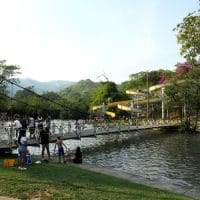
Wenige Kilometer vom Ortskern entfernt liegt das Naturschwimmbad [su_tooltip title=”Parque Ecológico Río Saguaz” text=”Nur sieben Kilometer vom verschlafenen Ortskern entfernt, verbirgt sich ein wahres Naturjuwel: der Río Saguaz. Das klare, eiskalte Wasser des Gebirgsflusses lädt an heißen Tagen zu einem erfrischenden Bad ein, während die umliegende Bergkulisse mit üppigen Kaffeepflanzungen das Auge erfreut. Wer nicht nur planschen möchte, unternimmt, am besten mit einem lokalen Führer, eine kurze Wanderung entlang der Quebrada Negra – ein etwas felsiger Pfad, der an einem atemberaubenden, über 15 Meter hohen Wasserfall endet.
Zur Stärkung bieten kleine Verkaufsstände typische Empanadas und ein besonders köstliches, hausgemachtes Quesillo de Café. Der Río Saguaz ist ein Ort purer Ursprünglichkeit und ein Geheimtipp für alle, die Natur abseits der Massen suchen.

Adresse: Carretera Biscucuy – Chabasquén, Portuguesa.” background=”#4D4444″ font_size=”14″ max_width=”600″ shadow=”yes”]Parque Ecológico Río Saguaz[/su_tooltip].

Das ruhige Bergdorf [su_tooltip title=”Santa Lucía” text=”Nur etwa fünf Kilometer östlich vom Zentrum Biscucuys entfernt, bietet dieser ruhige Ort eine völlig andere Perspektive auf die umliegende Sierra de Portuguesa. Während Biscucuy auf rund 520 Metern liegt, genießt man in Santa Lucía bereits die frische, kühle Bergluft – ein idealer Ausgangspunkt für Wanderungen oder Mountainbike-Touren entlang der berühmten Kaffee-Route. Die Anhöhen rund um das Dorf, wie der nahegelegene Alto Santa Lucía, belohnen mit weiten Blicken über die üppig grünen Plantagen.
Santa Lucía ist ein Fleckchen Abgeschiedenheit für alle, die die ursprüngliche Bergkultur und die Stille der venezolanischen Andenausläufer suchen.

Adresse: Carretera Biscucuy – Santa Lucia, Portuguesa.” background=”#4D4444″ font_size=”14″ max_width=”600″ shadow=”yes”]Santa Lucía[/su_tooltip] ist Ausgangspunkt für Touren entlang der Kaffee-Route.

Auf 1.200 Metern Höhe inmitten des Naturparks Montaña de los Pozuelos liegt das malerische Bergdorf [su_tooltip title=”San José de la Montaña” text=”Auf 1.200 Metern Höhe, umgeben von grünen Bergen, liegt das malerische Dorf San José de la Montaña. Der Ort besticht durch seine koloniale Architektur, gepflasterte Gassen und ein authentisches Ambiente, in dem die Zeit stehengeblieben zu sein scheint.
Das Highlight der Umgebung ist der Chorro de San Juan, ein gut 55 Meter hoher Wasserfall. Er liegt im Naturpark Montaña de los Pozuelos und ist Teil einer Kaskadenkette entlang des Río María. Ein rund einen Kilometer langer, anspruchsvoller Wanderweg führt zum Wasserfall – die Tour erfordert eine gute körperliche Verfassung. Unterwegs säumen heimische Baumarten wie Guamo, Bucare und Yagrumo den Pfad, dazu gesellen sich zahlreiche Orchideenarten. Besonders beeindruckend ist die Vogelwelt: Fast 200 Arten wurden hier nachgewiesen, darunter Tukane und Papageien. Auch Säugetiere wie Hirsche, Faultiere und sogar Jaguare sind in dieser abgelegenen Bergregion zu Hause.” background=”#4D4444″ font_size=”14″ max_width=”600″ shadow=”yes”]San José de la Montaña[/su_tooltip].

Bekannt für seinen Kaffeeanbau ist auch das Dorf [su_tooltip title=”Paraíso de Chabasquén” text=”Das 20.000 Einwohner-Dorf Paraíso de Chabasquén auf 660 Metern Höhe wurde 1767 gegründet und hat viel von seinem kolonialen Charme erhalten. Das Klima ist gemäßigt und bietet ideale Bedingungen für den Kaffeeanbau. Der Kaffee wird hier auch lokal verarbeitet.” background=”#4D4444″ font_size=”14″ max_width=”600″ shadow=”yes”]Paraíso de Chabasquén[/su_tooltip].
Between wide plains and green hills

As of August 27, 2026

[lwptoc]

Those who venture into the south of Portuguesa will be rewarded with several surprises: on one side the wide plains of the Llanos, on the other the lush green hills of the Andean foothills. Towns such as Ospino and Biscucuy have preserved their original, colonial charm. In many places, the excellent [su_tooltip title=”Coffee from Portuguesa” text=”The state of Portuguesa is one of Venezuela’s most important coffee-growing regions. On the Andean slopes around Biscucuy, excellent high-altitude coffee thrives across more than 52,000 hectares – thanks to ideal altitudes and a mild climate. In the ‘Comuna San José de Saguaz’ alone, 855 families are involved in coffee production.
However, the region is not only a growing area but also a major centre for coffee processing. With 68 roasteries, a large proportion of the country’s coffee is processed here. In 2026, several producers from Portuguesa made it into the national selection of the very best – proof of the high quality of the coffee grown here. One of the better-known brands is ‘Amanecer’ coffee.
Guided tours such as the ‘Ruta Agroturística del Café’ offer a special experience. This coffee route takes visitors to old haciendas around Biscucuy and showcases the entire production chain – from planting and harvesting to preparation – “de la tierra a la taza” (from the ground to the cup).” background=”#4D4444″ font_size=”14″ max_width=”600″ shadow=”yes”]Coffee from Portuguesa[/su_tooltip] [su_icon icon=”icon: instagram” background=”#ebeaea” color=”#672109″ text_color=”#672109″ size=”16″ shape_size=”4″ radius=”12″ text_size=”14″ margin=”0px 3px 0px 3px” url=”https://www.instagram.com/cafedealturabiscucuy/”][/su_icon] can be sampled. On the border with the state of Lara, the species-rich and difficult-to-access [su_tooltip title=”El Guache National Park” text=”This national park is a hidden gem in the foothills of the Venezuelan Andes, stretching across parts of the states of Lara and Portuguesa. It was established on 5 June 1992 with the aim of protecting the sensitive headwaters of the Guache, Ospino, Toco, Morador and Are rivers, which supply water to the agriculturally important region of Portuguesa. The protected area covers an area of approximately 12,500 hectares and is managed by the Instituto Nacional de Parques (Inparques). The park is home to a diverse range of flora and fauna and serves as an important refuge for endangered species such as the Oso Frontino (spectacled bear) and the Paují Copete de Piedra. The vegetation ranges from open savannahs to evergreen mountain cloud forests, which are home to numerous tree ferns and species such as the guamo. Among the park’s natural attractions are several waterfalls, such as the Chorro Santa Bárbara, and natural pools in the Río Palmarito. Despite these attractions, the park receives relatively few visitors due to its difficult accessibility. Prior authorisation from Inparques must be obtained for activities such as birdwatching, hiking and climbing. The climate in the park is tropical and humid, with temperatures ranging between 19 °C and 26 °C. Interestingly, there are also a few small, traditional communities within the park’s boundaries, whose main livelihood is coffee farming.” background=”#4D4444″ font_size=”14″ max_width=”600″ shadow=”yes”]El Guache National Park[/su_tooltip] reveals itself as a paradise for hikers and nature lovers.

However, the undisputed main attraction is the [su_tooltip title=”Sanctuary of Our Lady of Coromoto” text=”Only slightly smaller than St Peter’s Basilica in Rome, this imposing modernist building, a fine example of brutalist architecture, can accommodate some 50,000 people inside. Whilst the exterior is bare concrete, the interior glows with coloured light refracted through hundreds of stained-glass windows. It is the same light that makes the surrounding land fertile and nourishes the Venezuelan people. From the roof terrace, which can be reached by lift, there is a fantastic view of the surrounding countryside, stretching as far as the Andes mountain range.
The planning and construction of the complex spanned more than twenty years, until it was finally inaugurated on 7 January 1996. More than two million worshippers attended the first Mass celebrated by Pope John Paul II in February of the same year. This sanctuary is dedicated to the patron saint of Venezuela, the Virgin of Coromoto. According to legend, the Virgin Mary is said to have appeared to the cacique Coromoto at this spot in 1652 and commanded him to lead his people to baptism.
Inside the basilica there are three altars: one in each side aisle and the high altar in the centre, with the bishop’s throne. Behind the high altar stands the throne of the Virgin, on which the image of the Virgin of Coromoto can be seen. This image is now the object of veneration. Beneath the basilica is a museum dedicated to the Virgin of Coromoto, which also displays the vestments worn by the Pope during his Mass in this basilica in 1996.
On the American continent, the Santuario de Nuestra Señora de Coromoto is regarded as the second most modern and significant basilica after the Shrine of Our Lady of Guadalupe in Mexico.

Address: Troncal 5 Guanara – Barinas, turn-off 10 km south of Guanare in Sabana de San José, Portuguesa.” background=”#4D4444″ font_size=”14″ max_width=”600″ shadow=”yes”]Sanctuary of Our Lady of Coromoto[/su_tooltip], an architectural jewel of [su_tooltip title=”Brutalism” text=”Brutalism is an architectural style of the Modernist era that spread worldwide from 1950 onwards and reached its peak between the 1960s and 1980s. The term is derived from the French expression ‘béton brut’ (raw concrete), which, in the form of exposed concrete, dominates the exterior surfaces of buildings. The term was introduced by Le Corbusier, who used it to describe the exposed concrete surfaces of the residential buildings he designed in Marseille.
The Brutalist style was often associated with an idealised aspiration to be authentic in terms of materials and construction, and ethical in regard to the social aspects of architecture. In this respect, the negative perceptions of the style today do it an injustice. The use of exposed concrete emphasises the structure, much like in the Bauhaus style; the forms are geometric and relatively simple.
Caracas is one of the cities worldwide with the highest density of Brutalist-style buildings. Particular highlights include the Teatro Teresa Careño, the Banco Central de Venezuela building and the Torre Altamira.” background=”#4D4444″ font_size=”14″ max_width=”600″ shadow=”yes”]Brutalism[/su_tooltip] [su_icon icon=”icon: instagram” background=”#ebeaea” color=”#672109″ text_color=”#672109″ size=”16″ shape_size=”4″ radius=”12″ text_size=”14″ margin=”0px 3px 0px 3px” url=”https://www.instagram.com/cosmobrutal/”][/su_icon] of rare power, for which one should plan one to two hours.
Never forget sufficient drinking water, headgear and sun protection (SPF 50+).

[su_image_carousel source=”media: 11546,11547,11549,11550,11551,11552,11553,11554,11555,11556,11557,11558,11559,11560,11561″ controls_style=”light” crop=”1:1″ columns=”3″ spacing=”no” align=”center” autoplay=”3″]

Guanare

240,000 inhabitants, 180 metres altitude

[su_tooltip title=”Guanare” text=”Population: 240,000; altitude: 180 metres
Guanare, the capital of Portuguesa State, is picturesquely situated at the foot of the Andes. Founded in 1591 – more than sixty years after the northern town of Acarigua – it has managed to preserve some of its colonial charm over the centuries.
As in the entire Llanos region, agriculture is the main source of livelihood. Whilst cereal cultivation was once the main focus, today speciality crops such as sesame, millet, tobacco, sugar cane and, towards the Andes, coffee are increasingly being grown.
When visiting Guanare, one cannot fail to pay a visit to the patron saint of Venezuela, the Virgin of Coromoto. She is venerated in two places: in the historic old cathedral in the historic centre of Guanare, the Basilica Menor Nuestra Señora de Coromoto, and in the modernist sanctuary a few kilometres outside the town. The latter was built on the spot where the chieftain Coromoto is said to have had a vision of the Virgin Mary.” background=”#4D4444″ font_size=”14″ max_width=”600″ shadow=”yes”]Guanare[/su_tooltip], the capital of the state of Portuguesa, lies picturesquely at the foot of the Andes. In the centre, Guanare has preserved its colonial charm; the [su_tooltip title=”Basilica-Cathedral of Nuestra Señora de Coromoto” text=”The Cathedral of Guanare, elevated to the status of Basílica Menor Nuestra Señora de Coromoto, is best visited in the afternoon, when the interior is bathed in golden light from the rose window at the rear. It was here that Simón Bolívar once prayed on 22 May 1821, one month before the decisive Battle of Carabobo. The stained-glass windows were made in Germany, the tabernacle is crafted from Peruvian silver, and the altar is coated in liquid gold – whilst Monsignor José Vicente de Unda, a priest and educator, left his heart here, which is still preserved in formaldehyde to this day.

Address: Plaza Bolívar, Guanare, Portuguesa.” background=”#4D4444″ font_size=”14″ max_width=”600″ shadow=”yes”]Basilica-Cathedral of Nuestra Señora de Coromoto[/su_tooltip] at the [su_tooltip title=”Plaza Bolívar in Guanare” text=”In the centre of Plaza Bolívar stands an equestrian statue that is an exact replica of the Bolívar statue in Caracas. But that is not all: originally, the then President Rómulo Betancourt had intended this statue for Peru. However, Gonzalo Barrios, then President of the National Congress and a native of Portuguesa, ‘kidnapped’ the statue and brought it to his home state. Ever since, it has graced this shaded square in front of the small basilica and the cathedral of Guanare. In an ironic twist of fate, their tabernacles were originally crafted from Peruvian silver.

Address: Plaza Bolívar, Guanare, Portuguesa.” background=”#4D4444″ font_size=”14″ max_width=”600″ shadow=”yes”]Plaza Bolívar in Guanare[/su_tooltip] is an absolute must-see. A few steps away lies the [su_tooltip title=”Museo Inés Mercedes Gómez Alvarez” text=”The museum itself is an extraordinary colonial building dating from 1801. The distinguished priest José Vicente de Unda lived here for many years; he would later go down in history as a hero of independence and a passionate advocate of education. For years, he campaigned for the establishment of an educational institution and eventually presented his vision to Simón Bolívar – with success: on 16 May 1825, the first public secondary school was founded in Guanare, now known as the Liceo Unda – a pioneer and model for the ‘Colegios Nacionales’ (national schools) later established throughout Venezuela

Address: Carrera 3 and Calle 17, Guanare, Portuguesa.
Opening Hours: daily from 8 am to 4 pm (may vary)” background=”#4D4444″ font_size=”14″ max_width=”600″ shadow=”yes”]Museo Inés Mercedes Gómez Alvarez[/su_tooltip] [su_icon icon=”icon: instagram” background=”#ebeaea” color=”#672109″ text_color=”#672109″ size=”16″ shape_size=”4″ radius=”12″ text_size=”14″ margin=”0px 3px 0px 3px” url=”https://www.instagram.com/museoguanaremimga/”][/su_icon], where in 1825 the first public secondary school in Venezuela was established. Right next door is the [su_tooltip title=”Parque Los Samanes” text=”Just a few steps from Plaza Bolívar lies the 10.5-hectare Parque Recreacional Los Samanes – the city’s ‘green lung’ and a popular destination for families and nature lovers. It takes its name from the majestic samanes – centuries-old giant trees belonging to the mimosa family.
Simón Bolívar’s troops once rested in the shade of their wide, umbrella-shaped canopies during his campaign in 1813.
The park is criss-crossed by walking trails, children love the petting zoo, and a small hill offers a wonderful panoramic view of the town and the surrounding vast landscape of the Llanos. Refreshments are available in the newly opened café. Thanks to free Wi-Fi and completely refurbished lighting, the park is also an inviting place in the evening. At weekends and on public holidays, folklore events featuring the music and dance of the Llaneros are frequently held.

Address: Carrera 1 and Calle 16, Guanare, Portuguesa.” background=”#4D4444″ font_size=”14″ max_width=”600″ shadow=”yes”]Parque Los Samanes[/su_tooltip], the city’s green lung.

Slightly outside lies the main attraction: the [su_tooltip title=”Sanctuary of Our Lady of Coromoto” text=”Only slightly smaller than St Peter’s Basilica in Rome, this imposing modernist building, a fine example of brutalist architecture, can accommodate some 50,000 people inside. Whilst the exterior is bare concrete, the interior glows with coloured light refracted through hundreds of stained-glass windows. It is the same light that makes the surrounding land fertile and nourishes the Venezuelan people. From the roof terrace, which can be reached by lift, there is a fantastic view of the surrounding countryside, stretching as far as the Andes mountain range.
The planning and construction of the complex spanned more than twenty years, until it was finally inaugurated on 7 January 1996. More than two million worshippers attended the first Mass celebrated by Pope John Paul II in February of the same year. This sanctuary is dedicated to the patron saint of Venezuela, the Virgin of Coromoto. According to legend, the Virgin Mary is said to have appeared to the cacique Coromoto at this spot in 1652 and commanded him to lead his people to baptism.
Inside the basilica there are three altars: one in each side aisle and the high altar in the centre, with the bishop’s throne. Behind the high altar stands the throne of the Virgin, on which the image of the Virgin of Coromoto can be seen. This image is now the object of veneration. Beneath the basilica is a museum dedicated to the Virgin of Coromoto, which also displays the vestments worn by the Pope during his Mass in this basilica in 1996.
On the American continent, the Santuario de Nuestra Señora de Coromoto is regarded as the second most modern and significant basilica after the Shrine of Our Lady of Guadalupe in Mexico.

Address: Troncal 5 Guanara – Barinas, turn-off 10 km south of Guanare in Sabana de San José, Portuguesa.” background=”#4D4444″ font_size=”14″ max_width=”600″ shadow=”yes”]Sanctuary of Our Lady of Coromoto[/su_tooltip]. A late-afternoon visit between December and February is especially worthwhile, when the blossoms of the [su_tooltip title=”Coromotano Sunflowers” text=”From December through to February or March, a sea of sunflowers transforms the path to the Basílica de Coromoto into a sea of bright yellow blossoms. On both sides of the road, along the twelve-kilometre-long Corredor Coromotano, the sunflower fields bloom, attracting visitors from across the region.
Domestic tourists in particular travel from all corners of the country to take photographs, usually combining this with a visit to the Virgen de Coromoto. In the late afternoon, when the light bathes the flowers in warm gold, the landscape is at its most beautiful. The Girasoles Coromotanos are one of the new tourist highlights of Portuguesa.

Address: Corredor Coromotano, Guanare, Portuguesa.” background=”#4D4444″ font_size=”14″ max_width=”600″ shadow=”yes”]Coromotano Sunflowers[/su_tooltip] bathe the path left and right in warm golden tones.


Practical travel information

Arrival and departure

Long-distance bus: From the conveniently located Terminal de Pasajeros de Guanare, there are connections to Caracas (5 – 6 hours), Maracaibo (8.5 – 9.5 hours), Valencia (3 hours), Barquisimeto (2.5 – 3 hours), Barinas (2 hours) and San Cristóbal (7 hours).
By road: Guanare lies on the Troncal 5 (Autopista José Antonio Páez), which connects Barquisimeto in the state of Lara with San Cristóbal in Táchira and is built as a motorway as far as Barinas. In about an hour, via the recently repaired Local 1, one reaches the coffee region around Biscucuy.

By air: Guanare Virgen de Coromoto airport (IATA code: GUQ) is currently not in use for scheduled flights.

Accommodation

In the city itself, along the main roads and in the surrounding area, there are plenty of accommodation options; our recommendations:

The upscale city hotel [su_tooltip title=”Nuevo Hotel Coromoto” text=”Undoubtedly the best option for a standard hotel in Guanare, frequented by families, couples and business travellers alike. The rooms are modernly furnished; there is a restaurant and – as befits a proper accommodation in the Llanos – a garden area with a swimming pool.

Address: Carrera 3, Guanare, Portuguesa.
Price: €€” background=”#4D4444″ font_size=”14″ max_width=”600″ shadow=”yes”]Nuevo Hotel Coromoto[/su_tooltip] [su_icon icon=”icon: instagram” background=”#ebeaea” color=”#672109″ text_color=”#672109″ size=”16″ shape_size=”4″ radius=”12″ text_size=”14″ margin=”0px 3px 0px 3px” url=”https://www.instagram.com/nuevohotelcoromoto/”][/su_icon] [su_icon icon=”icon: whatsapp” background=”#ebeaea” color=”#672109″ text_color=”#672109″ size=”16″ shape_size=”4″ radius=”12″ text_size=”14″ margin=”0px 3px 0px 3px” url=”https://wa.me/+584122596333″][/su_icon] [su_icon icon=”icon: phone” background=”#ebeaea” color=”#672109″ text_color=”#672109″ size=”16″ shape_size=”4″ radius=”12″ text_size=”14″ margin=”0px 3px 0px 3px” url=”tel:+582572517480″][/su_icon] in the city centre offers a pool and its own restaurant.

The [su_tooltip title=”Posada Turistica Magic Hill” text=”This secluded spot in a rural setting guarantees peace and relaxation. Comfortable rooms, good service and excellent food ensure pure relaxation. There’s also a well-maintained swimming pool with a bar – what more could you want?
Avenida Principal, upper part of La Colonia, Guanare, Portuguesa.

Price: €€–€€€” background=”#4D4444″ font_size=”14″ max_width=”600″ shadow=”yes”]Posada Turistica Magic Hill[/su_tooltip] [su_icon icon=”icon: instagram” background=”#ebeaea” color=”#672109″ text_color=”#672109″ size=”16″ shape_size=”4″ radius=”12″ text_size=”14″ margin=”0px 3px 0px 3px” url=”https://www.instagram.com/posada.magichill/”][/su_icon] is located in a rural setting and is known for its traditional cuisine.

Food and drink

The cuisine of the Llanos is characterised by (beef) meat, cheese and the ubiquitous [su_tooltip title=”Cachapa” text=”The cachapa is one of Venezuela’s most popular street snacks and can be found in every region of the country, but particularly in the Llanos. Unlike the arepa, which is made from maize flour, the cachapa is made from fresh, young maize – also known as ‘jojoto’ – which gives it a natural sweetness and a soft, slightly grainy texture.
The dough is baked on a hot iron griddle, known as a budare, until golden brown, then folded and filled with a generous portion of soft white cheese, which melts into a creamy consistency under the heat. It is often served with a knob of butter. Cachapa can be enjoyed on its own, as a side dish or with savoury fillings such as carne mechada (shredded beef) or crispy chicharrón. It was declared part of Venezuela’s intangible cultural heritage in 2019. It goes well with a freshly prepared papelón con limón – a refreshing sugarcane drink with lemon.
Recipe for Cachapa
Ingredients for around 6–8 small cachapas: 400 g fresh sweetcorn kernels (or tinned, drained); 100 ml milk; 1 egg; 1 tbsp sugar; a pinch of salt; 2 tbsp maize flour (optional, for a firmer batter); 200 g soft white cheese (e.g. queso de mano or mozzarella); butter for greasing
Method: 1.) Roughly purée the fresh sweetcorn kernels with the milk, egg, sugar and salt in a blender or food processor – the mixture should remain slightly chunky, not completely smooth. If necessary, stir in the maize flour until a thick batter forms. 2.) Grease a heavy frying pan or griddle with a little butter over a medium heat. For each cachapa, pour about one ladleful of batter into the pan and spread it out into a flat, round pancake about 1 cm thick. 3.) Cook each side for 3–4 minutes until golden brown and slightly crispy around the edges. The cachapa should remain soft and moist on the inside. 4.) Cut the soft cheese into slices or strips. Remove the cooked cachapa from the heat, place the cheese in the centre, fold one half over the top and leave to rest briefly until the cheese melts. Serve immediately – ideally with a knob of butter on top.” background=”#4D4444″ font_size=”14″ max_width=”600″ shadow=”yes”]Cachapa[/su_tooltip]. Our recommendations:

Food

If you fancy a classic Arepa with meat or cheese, the [su_tooltip title=”Arepera Nico” text=”María Nicolasa Linares de Pedroza (Nico) and her children are still happy. They open their little snack bar every day and serve arepas with carne mechada (shredded beef) – delicious and flavourful – queso de mano (white cheese) or both together. These are accompanied by freshly made juices, guayoyo coffee (roughly equivalent to German ‘Blümchen-Kaffee’) and suero (buttermilk).

Address: Callejón 1 del Barrio Coromoto, Guanare, Portuguesa.
Price: €” background=”#4D4444″ font_size=”14″ max_width=”600″ shadow=”yes”]Arepera Nico[/su_tooltip] [su_icon icon=”icon: instagram” background=”#ebeaea” color=”#672109″ text_color=”#672109″ size=”16″ shape_size=”4″ radius=”12″ text_size=”14″ margin=”0px 3px 0px 3px” url=”https://www.instagram.com/areperanico/”][/su_icon] is recommended.

Cachapa with Queso llanero, along with Carne en Vara (grilled meat on a skewer) is served at [su_tooltip title=”El Fogón de Iván” text=”It’s well worth stopping off at this eatery to enjoy simple, Creole fare. The roast pork is reputed to be the best, the cachapas (maize pancakes) are excellent, and the service is very attentive.
Recommended by bus drivers.

Address: Autopista General José Antonio Paéz, Quebrada de la Virgen, a few metres south of the turn-off for the Sanctuario de N.S. de Coromoto, Guanare, Portuguesa.
Opening Hours: daily during the day
Price: €-€€” background=”#4D4444″ font_size=”14″ max_width=”600″ shadow=”yes”]El Fogón de Iván[/su_tooltip] [su_icon icon=”icon: instagram” background=”#ebeaea” color=”#672109″ text_color=”#672109″ size=”16″ shape_size=”4″ radius=”12″ text_size=”14″ margin=”0px 3px 0px 3px” url=”https://www.instagram.com/elfogondeivangre/”][/su_icon] [su_icon icon=”icon: whatsapp” background=”#ebeaea” color=”#672109″ text_color=”#672109″ size=”16″ shape_size=”4″ radius=”12″ text_size=”14″ margin=”0px 3px 0px 3px” url=”https://wa.me/+584245209072″][/su_icon]. For non-meat-eaters, generous salads are available.

In Between

[su_tooltip title=”Braseros Grill” text=”A long-established barbecue restaurant where, naturally, one thing reigns supreme: meat! From grilled chicken to pork cooked in a clay pot and churrasco, non-vegetarians will be in their element here. These dishes are served with yuca (steamed cassava), guasacaca (avocado sauce) and picante. The customers are delighted, the Price are affordable and the atmosphere under the churuata (thatched hut) is pleasant.

Address: Avenida 23 de Enero and Avenida Giraluna, Guanare, Portuguesa.
Opening Hours: Tuesday to Sunday, 11.30 am to 4 pm
Price: €€” background=”#4D4444″ font_size=”14″ max_width=”600″ shadow=”yes”]Braseros Grill[/su_tooltip] [su_icon icon=”icon: instagram” background=”#ebeaea” color=”#672109″ text_color=”#672109″ size=”16″ shape_size=”4″ radius=”12″ text_size=”14″ margin=”0px 3px 0px 3px” url=”https://www.instagram.com/braserosgrill.gre/”][/su_icon] one can relax and enjoy exquisite highland coffee.

Events

At the [su_tooltip title=”Tomás Montilla Cultural Centre” text=”This centrally located square, with its bandstand, regularly hosts concerts and events. A highlight in 2024 was the concert by the Youth Symphony Orchestra featuring Queen classics – after all, Venezuelans are mad about this band. The varied programme is particularly popular with families.
Local craftspeople regularly showcase their products at small fairs.

Address: Carrera 4 and Calle 7, Guanare, Portuguesa.” background=”#4D4444″ font_size=”14″ max_width=”600″ shadow=”yes”]Tomás Montilla Cultural Centre[/su_tooltip] [su_icon icon=”icon: instagram” background=”#ebeaea” color=”#672109″ text_color=”#672109″ size=”16″ shape_size=”4″ radius=”12″ text_size=”14″ margin=”0px 3px 0px 3px” url=”https://www.instagram.com/alcaldiadeguanare/reels/”][/su_icon], concerts and cultural events take place regularly.

Shopping

Portuguesa has a vibrant arts and crafts scene. Typical products include colourful woven items such as Alpargatas (hemp or fabric sandals) and bags, carved wooden figures, and handmade musical instruments such as Maracas, Cuatro (4-string guitar) and Bandola. At the [su_tooltip title=”Tomás Montilla Cultural Centre” text=”This centrally located square, with its bandstand, regularly hosts concerts and events. A highlight in 2024 was the concert by the Youth Symphony Orchestra featuring Queen classics – after all, Venezuelans are mad about this band. The varied programme is particularly popular with families.
Local craftspeople regularly showcase their products at small fairs.

Address: Carrera 4 and Calle 7, Guanare, Portuguesa.” background=”#4D4444″ font_size=”14″ max_width=”600″ shadow=”yes”]Tomás Montilla Cultural Centre[/su_tooltip] [su_icon icon=”icon: instagram” background=”#ebeaea” color=”#672109″ text_color=”#672109″ size=”16″ shape_size=”4″ radius=”12″ text_size=”14″ margin=”0px 3px 0px 3px” url=”https://www.instagram.com/alcaldiadeguanare/reels/”][/su_icon], local artisans regularly exhibit their work.

Excursions in the surrounding area

The ruins of the church [su_tooltip title=”San Rafael de Las Guasduas” text=”Fifteen kilometres east of Guanare lie the ruins of the church of San Rafael de Las Guasduas. The 17th-century church remained unfinished as a yellow fever epidemic decimated the population. The village ultimately had to be abandoned. To this day, the building stands in its original state – a mighty tree grows out of one of its side walls. A magical place that transports you back to times gone by.

Address: San Rafael de Las Guasduas, Portuguesa (accessible only via the old country road).” background=”#4D4444″ font_size=”14″ max_width=”600″ shadow=”yes”]San Rafael de Las Guasduas[/su_tooltip] are a fascinating lost place, whose walls tell of a long-gone era.

To explore the [su_tooltip title=”Embalse de La Coromoto” text=”This reservoir, beautifully situated at the foot of the mountains, was once a popular destination, renowned for its water sports (ranging from canoeing to angling). Apart from a few fishermen living here, the place is now largely deserted and the facilities, including a huge hotel, have been left to their own devices.
A local guide should be hired for a visit.

Address: Embalse de La Coromoto, 20 km west of Guanare, Portuguesa.” background=”#4D4444″ font_size=”14″ max_width=”600″ shadow=”yes”]Embalse de La Coromoto[/su_tooltip] reservoir, once a popular excursion destination, it is better to hire a local guide.


Ospino

39,200 inhabitants, 190 m altitude

[su_tooltip title=”Ospino” text=”Population: 39,200; altitude: 190 m
This small town, rich in history and natural beauty, is a paradise for nature lovers. The historic town centre features colonial architecture; the well-preserved colonial-style Church of San Fernando Rey on Plaza Bolívar is particularly charming. The town played a significant role in the War of Independence against Spanish colonial rule; the Battle of Ospino on 2 February 1814 was a major victory for the patriots against the royalist forces.
Ospino is the gateway to El Guache National Park with its lush green forests and waterfalls – a paradise for hikers and birdwatchers.
The carnival in Ospino is one of the most important events in the entire state of Portuguesa and is renowned for its large floats and colourful costumes.” background=”#4D4444″ font_size=”14″ max_width=”600″ shadow=”yes”]Ospino[/su_tooltip] is one of those small towns that have preserved their colonial charm. At the same time, it is the gateway to the [su_tooltip title=”El Guache National Park” text=”This national park is a hidden gem in the foothills of the Venezuelan Andes, stretching across parts of the states of Lara and Portuguesa. It was established on 5 June 1992 with the aim of protecting the sensitive headwaters of the Guache, Ospino, Toco, Morador and Are rivers, which supply water to the agriculturally important region of Portuguesa. The protected area covers an area of approximately 12,500 hectares and is managed by the Instituto Nacional de Parques (Inparques). The park is home to a diverse range of flora and fauna and serves as an important refuge for endangered species such as the Oso Frontino (spectacled bear) and the Paují Copete de Piedra. The vegetation ranges from open savannahs to evergreen mountain cloud forests, which are home to numerous tree ferns and species such as the guamo. Among the park’s natural attractions are several waterfalls, such as the Chorro Santa Bárbara, and natural pools in the Río Palmarito. Despite these attractions, the park receives relatively few visitors due to its difficult accessibility. Prior authorisation from Inparques must be obtained for activities such as birdwatching, hiking and climbing. The climate in the park is tropical and humid, with temperatures ranging between 19 °C and 26 °C. Interestingly, there are also a few small, traditional communities within the park’s boundaries, whose main livelihood is coffee farming.” background=”#4D4444″ font_size=”14″ max_width=”600″ shadow=”yes”]El Guache National Park[/su_tooltip] with its lush green forests and waterfalls – a paradise for hikers and birdwatchers.

[su_image_carousel source=”media: 11562,11563,11564,11565,11545,11548″ controls_style=”light” crop=”1:1″ columns=”3″ spacing=”no” align=”center” autoplay=”3″]

Parque Nacional El Guache

Those who wish to explore this hidden jewel in the foothills of the Venezuelan Andes can obtain current information (and possibly a permit for certain activities) from the national park authority [su_tooltip title=”Inparques” text=”The protection of Venezuela’s national parks lies in the hands of the Instituto Nacional de Parques (Inparques). This authority was founded on 3 October 1973 and reports to the Ministerio del Poder Popular para el Ecosocialismo. Its role is to implement public policy for the protection and management of the system of national parks, natural monuments and recreational parks. This system comprises 45 national parks, 38 natural monuments and 65 recreational parks – together covering more than a fifth of Venezuela’s territory, which is home to 90 per cent of the country’s drinking water sources.
The management and monitoring of the protected areas is carried out on site by a Cuerpo Civil de Guardaparques, who are happy to give curious tourists a spontaneous, informal guided tour. In this case, please have a small tip ready!

Address: Avenida Francisco Fajardo, Edificio Sur del Museo de Transporte, Santa Cecilia, Municipio Sucre, Miranda.
Mail: info@inparques.com” background=”#4D4444″ font_size=”14″ max_width=”600″ shadow=”yes”]Inparques[/su_tooltip] [su_icon icon=”icon: instagram” background=”#ebeaea” color=”#672109″ text_color=”#672109″ size=”16″ shape_size=”4″ radius=”12″ text_size=”14″ margin=”0px 3px 0px 3px” url=”https://www.instagram.com/inparquesoficial/”][/su_icon] [su_icon icon=”icon: phone” background=”#ebeaea” color=”#672109″ text_color=”#672109″ size=”16″ shape_size=”4″ radius=”12″ text_size=”14″ margin=”0px 3px 0px 3px” url=”tel:+582122732811″][/su_icon] [su_icon icon=”icon: link” background=”#ebeaea” color=”#672109″ text_color=”#672109″ size=”16″ shape_size=”4″ radius=”12″ text_size=”14″ margin=”0px 3px 0px 3px” url=”www.inparques.gob.ve”][/su_icon]. The park is very species-rich and is relatively seldom visited.


Guanarito

38,200 inhabitants, 85 metres altitude

Those seeking an authentic Llanos experience are in exactly the right place in [su_tooltip title=”Guanarito” text=”Population: 38,200; altitude: 85 metres
If you’re looking for an authentic Llanos experience, this is the place to be. The town is also known as the ‘breadbasket of Venezuela’, and a visit offers the chance to gain a first-hand insight into rural life. The Finca San Francisco, run by the Instituto Universitario Jesús Obrero (IUJO), is an impressive example of modern agriculture. Visitors can observe the daily life of the Llaneros, who rise at sunrise to milk the cows, whilst the traditional harp music of the Llanos plays in the background.
Guanarito is inextricably linked to Venezuela’s most famous – and perhaps most eerie – legend: El Silbón. The story of this ghostly piper is deeply rooted in local culture and attracts visitors interested in myths and folklore. The locals certainly have plenty of stories to tell about this spectre.

Address: Carretera hacia Dolores, Guanarito, Portuguesa.” background=”#4D4444″ font_size=”14″ max_width=”600″ shadow=”yes”]Guanarito[/su_tooltip] [su_icon icon=”icon: instagram” background=”#ebeaea” color=”#672109″ text_color=”#672109″ size=”16″ shape_size=”4″ radius=”12″ text_size=”14″ margin=”0px 3px 0px 3px” url=”https://www.instagram.com/iujoguanarito/”][/su_icon] [su_icon icon=”icon: phone” background=”#ebeaea” color=”#672109″ text_color=”#672109″ size=”16″ shape_size=”4″ radius=”12″ text_size=”14″ margin=”0px 3px 0px 3px” url=”tel:+584143519827″][/su_icon]. Several Fincas offer visitors the opportunity to gain an insight into rural life.


Biscucuy

12,800 inhabitants, 560 m altitude

The colonial village of [su_tooltip title=”Biscucuy” text=”Population: 12,800; altitude: 560 m
The wonderfully fresh mountain air is perfect for walks through the fragrant coffee plantations in the hills surrounding Biscucuy. Founded in 1778 as a mission station, the village has largely retained its colonial character. There are cosy little guesthouses and quietly situated, generally affordable accommodation options, all of which offer lovely views of the countryside.
The coffee harvest takes place between October and December, making this the best time to visit. Declining an invitation to have a cup of coffee is considered almost unforgivable by the locals.
Contact: Ken Alejandro Espinoza is a coffee producer himself; he arranges tours of the haciendas and can also help organise multi-day stays.” background=”#4D4444″ font_size=”14″ max_width=”600″ shadow=”yes”]Biscucuy[/su_tooltip] [su_icon icon=”icon: instagram” background=”#ebeaea” color=”#672109″ text_color=”#672109″ size=”16″ shape_size=”4″ radius=”12″ text_size=”14″ margin=”0px 3px 0px 3px” url=”https://www.instagram.com/kenalejandroespinoza”][/su_icon] is surrounded by green hills in the foothills of the Andes. It offers itself as a base for excursions into the surrounding area.

Accommodation

There are a number of simple accommodation options; our recommendation:

The [su_tooltip title=”Finca Lisenarum” text=”Organic coffee, cocoa and mountain idyll near Biscucuy. Just a few minutes’ drive from Biscucuy, on the road to Boconó, lies Finca Lisenarum. Guests stay in cosy chalets overlooking the mist-shrouded mountain scenery, enjoying the swimming pool and the aroma of freshly roasted organic coffee. Particularly fascinating is the on-site bean-to-bar chocolate workshop, which operates according to the philosophy: only pure cocoa, with no additives, and plenty of patience and dedication. The finca is a place of tranquillity and authenticity – ideal for anyone wishing to escape the hustle and bustle and experience the origins of coffee and cocoa.
Incidentally, the name refers not only to the family who own it, but also to a rare variety of orchid. You can find out more about this during a visit to the finca.

Address: Carretera nacional Biscucuy – Bocono, Portuguesa.
Price: €€” background=”#4D4444″ font_size=”14″ max_width=”600″ shadow=”yes”]Finca Lisenarum[/su_tooltip] [su_icon icon=”icon: instagram” background=”#ebeaea” color=”#672109″ text_color=”#672109″ size=”16″ shape_size=”4″ radius=”12″ text_size=”14″ margin=”0px 3px 0px 3px” url=”https://www.instagram.com/fincalisenarum/I”][/su_icon] [su_icon icon=”icon: whatsapp” background=”#ebeaea” color=”#672109″ text_color=”#672109″ size=”16″ shape_size=”4″ radius=”12″ text_size=”14″ margin=”0px 3px 0px 3px” url=”https://wa.me/+584125759210″][/su_icon], just a few minutes from the town centre, offers organic coffee, cocoa and mountain idyll.

Food and drink

Numerous small inns invite you to stop for refreshments.

Food

A fixture for over 40 years, the [su_tooltip title=”Restaurante El Muro” text=”For over 40 years, Restaurante El Muro has been a fixture on the Biscucuy dining scene. Founded by Faustina Castellanos and Griseldina (“Chela”), the family tradition is now carried on in the kitchens by Tibisay Silva alongside her aunt. The restaurant is renowned for its traditional Venezuelan dishes – hearty, succulent and prepared with decades of experience. A particular highlight is the coffee from the highlands of Portuguesa, which is prepared here using the Japanese pour-over method – an experience that perfectly brings out the delicate flavours of the local beans. These are accompanied by refreshing malteadas (milkshakes) made with coffee or chocolate.

Address: Paseo Ferial, Biscucuy, Portuguesa.
Price: €€” background=”#4D4444″ font_size=”14″ max_width=”600″ shadow=”yes”]Restaurante El Muro[/su_tooltip] [su_icon icon=”icon: instagram” background=”#ebeaea” color=”#672109″ text_color=”#672109″ size=”16″ shape_size=”4″ radius=”12″ text_size=”14″ margin=”0px 3px 0px 3px” url=”https://www.instagram.com/restaurantelmurobiscucuy”][/su_icon] is known for its typical Venezuelan dishes.

The restaurant [su_tooltip title=”Restaurant Centro Agroturistico Gran Morocoto” text=”Here you can enjoy typical local dishes and drinks that offer an insight into the region’s cuisine. The estate’s small lagoon provides a habitat for numerous birds, which can be observed here in peaceful surroundings. Evening boat trips at sunset are particularly charming. Ideal for anyone looking to escape the daily grind.

Address: On the eastern outskirts of the village, Paraíso de Chabasquén, Portuguesa.
Price: €€” background=”#4D4444″ font_size=”14″ max_width=”600″ shadow=”yes”]Restaurant Centro Agroturistico Gran Morocoto[/su_tooltip] [su_icon icon=”icon: instagram” background=”#ebeaea” color=”#672109″ text_color=”#672109″ size=”16″ shape_size=”4″ radius=”12″ text_size=”14″ margin=”0px 3px 0px 3px” url=”https://www.instagram.com/granmorocoto/”][/su_icon] is particularly beautifully situated.

[su_tooltip title=”La Cachama sonriente” text=”La Cachama Sonriente is a combination of a leisure centre and a farm, specialising in sport fishing and dining. Accordingly, there are leisure activities for the whole family: boat trips on the small lagoon, guided walks and a shop selling handicrafts.
The menu features fish dishes. The cachama belongs to the characin family (which also includes piranhas, amongst others) and is a popular edible fish due to its firm, white flesh and few bones.

Address: Carretera Nacional Boconó – Guanare, Biscucuy, Portuguesa
Price: €€” background=”#4D4444″ font_size=”14″ max_width=”600″ shadow=”yes”]La Cachama sonriente[/su_tooltip] [su_icon icon=”icon: instagram” background=”#ebeaea” color=”#672109″ text_color=”#672109″ size=”16″ shape_size=”4″ radius=”12″ text_size=”14″ margin=”0px 3px 0px 3px” url=”https://www.instagram.com/lacachamasonriente/”][/su_icon] is a mixture of gastronomy and leisure centre.

Snacks

If you want to try various speciality coffees, [su_tooltip title=”Troja Café” text=”Anyone visiting Biscucuy who enjoys a good cup of coffee should not miss a visit to Jorge Luis Montilla’s Café Troja. Thanks to the strictest bean selection and a medium roast, enjoying coffee here becomes a scientific experience. Alongside tastings and workshops on sensory analysis, the café offers insights into Venezuela’s premium coffee culture and is a must for anyone seeking authentic speciality coffee off the beaten track.

Address: Basement of the Mundo Azúl building, Calle Paéz and Bolívar, Biscucuy, Portuguesa.
Price: €€” background=”#4D4444″ font_size=”14″ max_width=”600″ shadow=”yes”]Troja Café[/su_tooltip] [su_icon icon=”icon: instagram” background=”#ebeaea” color=”#672109″ text_color=”#672109″ size=”16″ shape_size=”4″ radius=”12″ text_size=”14″ margin=”0px 3px 0px 3px” url=”https://www.instagram.com/trojacafe”][/su_icon] [su_icon icon=”icon: whatsapp” background=”#ebeaea” color=”#672109″ text_color=”#672109″ size=”16″ shape_size=”4″ radius=”12″ text_size=”14″ margin=”0px 3px 0px 3px” url=”https://wa.me/+584245426636″][/su_icon] is the perfect place.

[su_tooltip title=”Café de Altura Biscucuy” text=”This charming café offers gourmet coffee specialities from the growing region around Biscucuy. It also serves a wide selection of cakes, biscuits and desserts.

Address: Nuevo Hotel Coromoto, Carretera 3, Guanare, Portuguesa.
Price: €€–€€€” background=”#4D4444″ font_size=”14″ max_width=”600″ shadow=”yes”]Café de Altura Biscucuy[/su_tooltip] [su_icon icon=”icon: instagram” background=”#ebeaea” color=”#672109″ text_color=”#672109″ size=”16″ shape_size=”4″ radius=”12″ text_size=”14″ margin=”0px 3px 0px 3px” url=”https://www.instagram.com/cafedealturabiscucuy”][/su_icon] offers, in addition to gourmet coffees, a broad selection of cakes, biscuits and desserts.

[su_image_carousel source=”media: 11567,11568,11569,11570,11571,11572,11573,11574,11575,11576,11577,11578″ controls_style=”light” crop=”1:1″ columns=”3″ spacing=”no” align=”center” autoplay=”3″]

Excursions in the surrounding area

A few kilometres from the town centre lies the natural swimming pool [su_tooltip title=”Río Saguaz Ecological Park” text=”Just seven kilometres from the sleepy town centre lies a true natural gem: the Río Saguaz. The clear, ice-cold water of this mountain river is perfect for a refreshing dip on hot days, whilst the surrounding mountain scenery, dotted with lush coffee plantations, is a feast for the eyes. Those who want to do more than just splash about can go on a short hike – ideally with a local guide – along the Quebrada Negra – a somewhat rocky path that ends at a breathtaking waterfall over 15 metres high.
To refuel, small stalls offer traditional empanadas and a particularly delicious, homemade quesillo de café. The Río Saguaz is a place of unspoilt natural beauty and an insider’s tip for anyone seeking nature away from the crowds.

Address: Carretera Biscucuy – Chabasquén, Portuguesa.” background=”#4D4444″ font_size=”14″ max_width=”600″ shadow=”yes”]Río Saguaz Ecological Park[/su_tooltip].

The quiet mountain village of [su_tooltip title=”Santa Lucía” text=”Just five kilometres or so east of the centre of Biscucuy, this peaceful village offers a completely different perspective on the surrounding Sierra de Portuguesa. Whilst Biscucuy lies at an altitude of around 520 metres, in Santa Lucía you can already enjoy the fresh, cool mountain air – an ideal starting point for hikes or mountain bike tours along the famous coffee route. The hills around the village, such as the nearby Alto Santa Lucía, reward visitors with sweeping views over the lush green plantations.
Santa Lucía is a secluded spot for anyone seeking the authentic mountain culture and tranquillity of the Venezuelan Andean foothills.

Address: Carretera Biscucuy – Santa Lucía, Portuguesa.” background=”#4D4444″ font_size=”14″ max_width=”600″ shadow=”yes”]Santa Lucía[/su_tooltip] is the starting point for tours along the coffee route.

At 1,200 metres altitude, in the midst of the Montaña de los Pozuelos nature park, lies the picturesque mountain village of [su_tooltip title=”San José de la Montaña” text=”At an altitude of 1,200 metres, surrounded by green mountains, lies the picturesque village of San José de la Montaña. The village captivates visitors with its colonial architecture, cobbled lanes and an authentic atmosphere where time seems to have stood still.
The highlight of the surrounding area is the Chorro de San Juan, a waterfall standing some 55 metres high. It is situated in the Montaña de los Pozuelos Nature Reserve and forms part of a series of cascades along the Río María. A challenging hiking trail, around one kilometre long, leads to the waterfall – the walk requires a good level of fitness.
Along the way, native tree species such as guamo, bucare and yagrumo line the path, joined by numerous species of orchid. The birdlife is particularly impressive: almost 200 species have been recorded here, including toucans and parrots. Mammals such as deer, sloths and even jaguars also call this remote mountain region home.” background=”#4D4444″ font_size=”14″ max_width=”600″ shadow=”yes”]San José de la Montaña[/su_tooltip].

Also known for its coffee cultivation is the village of [su_tooltip title=”Paraíso de Chabasquén” text=”The village of Paraíso de Chabasquén, with a population of 20,000 and situated at an altitude of 660 metres, was founded in 1767 and has retained much of its colonial charm. The climate is temperate and offers ideal conditions for coffee cultivation. The coffee is also processed locally here.” background=”#4D4444″ font_size=”14″ max_width=”600″ shadow=”yes”]Paraíso de Chabasquén[/su_tooltip].

Willkommen im landwirtschaftlichen Herz Venezuelas

Stand 27.08.2026

[lwptoc labelShow=”anzeigen” labelHide=”verbergen”]

Nicht jedem Reisenden erschließt sich der Reiz dieser sonnenverbrannten Ebenen und kleinen Orte auf den ersten Blick – viele spüren vor allem die drückende Hitze und treiben zur Weiterfahrt. Doch wer sich Zeit für Abstecher abseits der Autopista nimmt, entdeckt ein ursprüngliches, weites Land mit interessanten Attraktionen. Dazu zählen die [su_tooltip title=”Campos de Girasoles” text=”Wer zwischen Dezember und Februar den Bundesstaat Portuguesa bereist, sollte sich das Schauspiel der blühenden Sonnenblumenfelder rund um Guanare und Turén nicht entgehen lassen. Die leuchtend gelben Blüten, die sich soweit das Auge reicht über die Landschaft der Llanos erstrecken, sind nicht nur bei Fotografen beliebt, sondern auch ein Stück lebendige Geschichte, denn die Geschichte dieser Felder ist eng mit der europäischen Einwanderung nach dem Zweiten Weltkrieg verbunden. Zwischen 1948 und 1961 wanderten allein rund 920.000 Europäer nach Venezuela aus. Viele von ihnen wurden gezielt auf dem Land angesiedelt, um die landwirtschaftlichen Anbaumethoden zu modernisieren.
Da Venezuela damals nahezu seinen gesamten Bedarf an Speiseöl importieren musste, wurden in den 1970er Jahren erste Versuche mit dem Anbau von Sonnenblumen zur Herstellung von Speiseöl unternommen. Die fruchtbaren Böden, ausreichenden Niederschläge und warmen Temperaturen in Portuguesa erwiesen sich als nahezu ideale für den Anbau, so dass sich die Region zu einem Zentrum dieser Kulturpflanze entwickelt hat.
Diese beeindruckenden Fotomotive hat seit 2023 auch der Inlandstourismus für sich entdeckt. Zur Blütezeit von Dezember bis Februar werden selbst aus Caracas Ausflüge zu den Sonnenblumenfelder rund um Turén organisiert – eine gute Gelegenheit, um Land und Leute hautnah zu erleben.
Zeitraum: Dezember bis Februar
Regionen: rund um Turén; entlang der Zufahrt zum Sanctuario de Nuestra Señora de Coromoto.” background=”#4D4444″ font_size=”14″ max_width=”600″ shadow=”yes”]Campos de Girasoles[/su_tooltip] (Blütezeit Dezember bis Februar), die jedes Jahr zehntausende inländische Besucher anziehen. Unterschätzen Sie jedoch nie die Kraft der Sonne: Reichlich Trinkwasser, Kopfbedeckung und Sonnenschutz (LSF 50+) sind hier Pflicht, keine Empfehlung.

[su_image_carousel source=”media: 11522,11523,11525,11526,11527,11528,11530,11531,11534,11535,11537,11538″ controls_style=”light” crop=”1:1″ columns=”3″ spacing=”no” align=”center” autoplay=”3″]

Acarigua-Araure

400,000 Einwohner, 200 Meter Höhe

los arroyos acariguaDie [su_tooltip title=”Acarigua-Araure” text=”400.000 Einwohner, 200 Meter Höhe
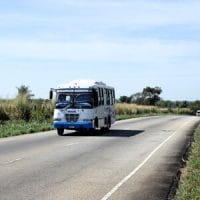
Gleichwohl Acarigua nicht Hauptstadt des Bundesstaates Portuguesa ist – diese Ehre wird Guanare zuteil – bildet es zusammen mit der Nachbargemeinde Araure das bedeutendste Wirtschafts-, Industrie- und Handelszentrum der westlichen Tieflandregion Venezuelas. Mit rund 400.000 Einwohnern ist es obendrein die bevölkerungsreichste Stadt der Llanos. Acarigua-Araure bildet das Zentrum und den Entwicklungspol einer Region, die als Kornkammer Venezuelas gilt. Neben Reis werden vor allem Zuckerrohr, Mais, Sesam, Tomaten und andere Gemüse angebaut. Extensive Weidewirtschaft bildet einen weiteren Schwerpunkt der landwirtschaftlichen Aktivitäten.
Die Stadt liegt am gleichnamigen Acarigua-Fluss, dessen Namen sich aus dem indigenen Begriff akaregua, was Ort der Kaimane bedeutet, ableitet. Erste Berichte über das Gebiet finden sich in den Aufzeichnungen des deutschen Eroberers Nicolás Federmann, der am 15. Dezember 1530 auf der Suche nach der mythischen Stadt „El Dorado“ hierher gelangte. Wenig später wurden erste Plantagenbetriebe der Eroberer verzeichnet, die jedoch bis weit in das 17. Jahrhundert hinein regelmäßigen Angriffen der Kariben-Indianer ausgesetzt waren.
Nach einer Phase des wirtschaftlichen Aufschwungs im 18. Jahrhundert führten im 19. Jahrhundert der Unabhängigkeitskrieg und die aufeinander folgenden Bürgerkriege zur Verwüstung der Region und der Stadt. Erst unter der Präsidentschaft von Antonio Guzmán Blanco ab 1877 erhielt Acarigua eine moderne öffentliche Infrastruktur. Durch den Nationalen Reisplan von 1949 und die damit verbundene Schaffung der „Unidad Agrícola de Turén“ wurde Acarigua – neben Puerto Ordáz – zur am schnellsten wachsenden Stadt des Landes.” background=”#4D4444″ font_size=”14″ max_width=”600″ shadow=”yes”]Acarigua-Araure[/su_tooltip] ist zwar nicht die Hauptstadt Portuguesas, aber unbestritten das Wirtschaftszentrum und Herz der venezolanischen Kornkammer. Sie präsentiert sich modern und sympathisch und bietet in ihrem Umland einige interessante Sehenswürdigkeiten.

Im Zentrum von Araure beeindruckt die altehrwürdige [su_tooltip title=”Iglesia Nuestra Señora del Pilar” text=”Die wunderschöne Kolonialkirche Nuestra Señora del Pilar ist das bedeutendste historische Zeugnis der gesamten Region rund um Araure. Sie zählt zu den wenigen erhaltenen Bauwerken aus dem 18. Jahrhundert und ihr Bau zog sich über vierzig Jahre hin. Heute steht sie als Nationales Historisches Denkmal unter Schutz und ist ein beeindruckendes Zeugnis der Kolonialzeit.
Besonders beeindruckend ist die authentische Architektur: Lehmwände, Holzdächer, ein historischer Glockenturm, eine Kanzel, der Chor und ein mit goldenen Blattverzierungen geschmückter Hauptaltar versetzen Besucher in eine längst vergangene Epoche. Die Fassade ist einzigartig – es gibt nur drei ähnliche in ganz Venezuela. Ein wahrhaft historisches Juwel.

Adresse: Calle 5 con Avenida 23, Araure, Portuguesa.” background=”#4D4444″ font_size=”14″ max_width=”600″ shadow=”yes”]Iglesia Nuestra Señora del Pilar[/su_tooltip], während wenige hundert Meter westlich der Plaza Bolívar von Acarigua das [su_tooltip title=”Museo de Arte Acarigua Araure (MAAA)” text=”Das MAAA wurde 1989 auf Initiative des örtlichen Club Paéz gegründet. Es befindet sich in einem modernistischen Gebäude aus dem Jahr 1955 und versteht sich als Pilot-Museum für die Region der Llanos.
Gezeigt werden wechselnde Ausstellungen zur Kultur der Llanos. Daneben dient das Museum als Veranstaltungsort für Theater-, Musik- und Tanzaufführungen sowie Lesungen.

Adresse: Avenida 15 entre 13 de junio y 5 de diciembre, Acarigua, Portuguesa.” background=”#4D4444″ font_size=”14″ max_width=”600″ shadow=”yes”]Museo de Arte Acarigua Araure (MAAA)[/su_tooltip] [su_icon icon=”icon: instagram” background=”#ebeaea” color=”#672109″ text_color=”#672109″ size=”16″ shape_size=”4″ radius=”12″ text_size=”14″ margin=”0px 3px 0px 3px” url=”https://www.instagram.com/museoaaa/”][/su_icon] mit wechselnden Ausstellungen zur Kultur der Llanos lockt. Etwas südlich erhebt sich am Kreisverkehr das monumentale [su_tooltip title=”La Espiga” text=”Wie es sich für die Kornkammer des Landes gehört, wurde hier der Ähre ein Denkmal gesetzt. Die monumentale Betonskulptur aus dem Jahr 1980 sollte ursprünglich 70 Meter hoch werden und damit sogar die Freiheitsstatue in New York übertrumpfen. Letztlich sind es „nur“ 40 Meter geworden, womit es immerhin noch zu den höchsten Skulpturen des Landes zählt.
La Espiga.

Adresse: Troncal 5 con Avenida 13 e junio, Araure, Portuguesa.” background=”#4D4444″ font_size=”14″ max_width=”600″ shadow=”yes”]La Espiga[/su_tooltip] – eine Ähre aus Beton, die an die landwirtschaftliche Prägung der Region erinnert. Knapp zwei Kilometer südöstlich des Stadtrands liegt im [su_tooltip title=”Parque Curpa” text=”Zehn Minuten vom Zentrum Acariguas nach Osten liegt der Curpa-Park, in dem sich das Geburtshaus von General José Antonio Páez, dem Helden des venezolanischen Unabhängigkeitskrieges, befindet. Inmitten des 70 Hektar großen Geländes befindet sich das Geburtshaus des Generals, in dem zahlreiche Gegenstände und Dokumente von Páez zu sehen sind. Auf einem riesigen Wandgemälde werden Szenen aus dem Leben Paez´ dargestellt.

Adresse: Via a Payara, Acarigua, Portuguesa.” background=”#4D4444″ font_size=”14″ max_width=”600″ shadow=”yes”]Parque Curpa[/su_tooltip] [su_icon icon=”icon: instagram” background=”#ebeaea” color=”#672109″ text_color=”#672109″ size=”16″ shape_size=”4″ radius=”12″ text_size=”14″ margin=”0px 3px 0px 3px” url=”https://www.instagram.com/museopaez/”][/su_icon] [su_icon icon=”icon: envelope” background=”#ebeaea” color=”#672109″ text_color=”#672109″ size=”16″ shape_size=”4″ radius=”12″ text_size=”14″ margin=”0px 3px 0px 3px” url=”mailto:museojap@gmail.com”][/su_icon] das Geburtshaus von [su_tooltip title=”José Antonio Páez” text=”José Antonio Páez (1790-1873) ist einer der bedeutendsten Militärführer und Politiker Venezuelas. Geboren in Curpa bei Acarigua im heutigen Bundesstaat Portuguesa, stammte er aus einfachen Verhältnissen und arbeitete als Viehhirte, bevor er sich 1810 den Unabhängigkeitstruppen anschloss.
Als charismatischer Anführer der Llaneros – der berittenen Hirten der weiten Ebenen – erwarb er sich den Beinamen El Centauro de los Llanos. Mit seiner Kavallerie entschied er maßgeblich die Schlacht von Carabobo (1821), die den spanischen Widerstand in Venezuela brach. Simón Bolívar beförderte ihn noch auf dem Schlachtfeld zum Oberbefehlshaber.
Doch während Bolívar von einer geeinten Nation Gran Colombia träumte, strebte Páez nach Eigenständigkeit für Venezuela. 1826 löste eine Anklage gegen ihn, die so genannte La Cosiata, eine Krise aus, die schließlich 1829/30 zur Loslösung Venezuelas von der Union führte. Páez wurde 1830 erster Präsident des neuen Staates und regierte – mit Unterbrechungen – bis 1843. Später, im Bürgerkrieg der 1860er-Jahre, übernahm er noch einmal diktatorische Vollmachten, scheiterte jedoch und ging ins Exil nach New York, wo er 1873 starb. 1888 wurden seine Gebeine ins venezolanische Pantheon überführt.
Für Reisende in Portuguesa ist Páez mehr als eine historische Figur – er ist der Sohn dieser Region. Seine Lebensgeschichte zeigt, wie aus den weiten, sonnenverbrannten Ebenen ein Mann hervorging, der die Geschicke eines ganzen Landes prägte. Acarigua, heute eine geschäftige Stadt, bewahrt die Erinnerung an diesen ungewöhnlichen Aufstieg vom Viehhirten zum Staatslenker.” background=”#4D4444″ font_size=”14″ max_width=”600″ shadow=”yes”]José Antonio Páez[/su_tooltip], dem ersten Staatspräsidenten Venezuelas.


Reisepraktische Infos

An- und Abreise

bus roas llanos portuguesaFernbus: Der Busbahnhof „Terminal de Pasajeros de Acarigua-Araure” liegt zweihundert Meter südlich des Einkaufszentrums Llano Mall. Es gibt täglich mehrere Verbindungen nach Caracas (4 – 5 Stunden), Maracaibo (6,5 – 7,5 Stunden), Valencia (2 Stunden), Barquisimeto (1,5 – 2 Stunden), Barinas (3 Stunden) und San Cristóbal (8 Stunden).
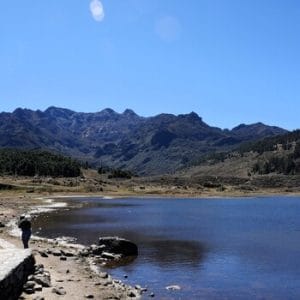
Auf der Straße: Acarigua-Araure liegt an der Troncal 5 (Autopista José Antonio Páez), die Barquisimeto im Bundesstaat Lara mit San Cristobal in Táchira verbindet und bis Barinas als Autobahn ausgebaut ist. Die Verbindung nach Valencia ist bis San Carlos als Autobahn ausgebaut, ab dort führt eine gut ausgebaute Landstraße über das Campo Carabobo nach Valencia.

Unterkünfte

Entlang der Fernstraßen aber auch im Stadtzentrum gibt es eine große Auswahl an Unterkünften verschiedenster Kategorien. Unsere Empfehlung:

Praktisch gelegen, mit Pool und Restaurant, nicht nur für die [su_tooltip title=”Hotel GEO Inn” text=”Strategisch günstig am Ortseingang aus Richtung Barquisimeto kommend gelegen bietet das Eco Inn geräumige Zimmer, einen Pool und ein Restaurant mit italienischer Küche.

Adresse: Avenida Vencedores de Araure, entrada a autopista General Paéz, salida a Barquisimeto, Araure, Portuguesa.
Preise: €€-€€€” background=”#4D4444″ font_size=”14″ max_width=”600″ shadow=”yes”]Hotel GEO Inn[/su_tooltip] [su_icon icon=”icon: whatsapp” background=”#ebeaea” color=”#672109″ text_color=”#672109″ size=”16″ shape_size=”4″ radius=”12″ text_size=”14″ margin=”0px 3px 0px 3px” url=”https://wa.me/584245879680″][/su_icon] [su_icon icon=”icon: instagram” background=”#ebeaea” color=”#672109″ text_color=”#672109″ size=”16″ shape_size=”4″ radius=”12″ text_size=”14″ margin=”0px 3px 0px 3px” url=”https://www.instagram.com/hotelgeoinn/”][/su_icon].

Essen und Trinken

Die Küche der Llanos ist von (Rind-) Fleisch, Käse und der allgegenwärtigen [su_tooltip title=”Cachapa” text=”Die Cachapa ist einer der beliebtesten Straßensnacks Venezuelas und in allen Regionen des Landes zu finden, besonders aber in den Llanos. Im Gegensatz zur Arepa, die aus Maismehl hergestellt wird, besteht die Cachapa aus frischem, jungen Mais – auch Jojoto genannt -, was ihr eine natürliche Süße und eine weiche, leicht stückige Textur verleiht. Der Teig wird auf einer heißen Eisenplatte, dem Budare, goldgelb gebacken und anschließend gefaltet mit einer großzügigen Portion weißem, weichem Käse gefüllt, der durch die Hitze cremig schmilzt. Häufig wird sie zusätzlich mit einem Stück Butter serviert. Die Cachapa kann pur, als Beilage oder mit herzhaften Füllungen wie Carne mechada (fasriges Rindfleisch) oder knusprigem Chicharrón genossen werden. Sie wurde 2019 zum immateriellen Kulturerbe Venezuelas erklärt. Dazu passt eine frisch zubereitete Papelón con Limón – ein erfrischendes Zuckerrohrgetränk mit Zitrone.
Rezept für Cachapa
Zutaten für etwa 6-8 kleine Cachapas: 400 g frische Maiskörner (alternativ Dose, abgetropft); 100 ml Milch; 1 Ei; 1 EL Zucker; 1 Prise Salz; 2 EL Maismehl (optional, für festeren Teig); 200 g weißer, weicher Käse (z. B. Queso de mano oder Mozzarella); Butter zum Einfetten
Zubereitung: 1.) Die frischen Maiskörner mit Milch, Ei, Zucker und Salz in einem Mixer oder einer Küchenmaschine grob pürieren – die Masse sollte leicht stückig bleiben, nicht völlig glatt. Bei Bedarf das Maismehl unterrühren, bis ein dickflüssiger Teig entsteht. 2.) Eine schwere Pfanne oder Grillplatte bei mittlerer Hitze mit etwas Butter einfetten. Für jede Cachapa etwa eine Kelle Teig in die Pfanne geben und zu einem flachen, runden Pfannkuchen von etwa 1 cm Dicke verstreichen. 3.) Jede Seite 3-4 Minuten backen, bis sie goldbraun und an den Rändern leicht knusprig ist. Die Cachapa sollte innen weich und saftig bleiben. 4.) Den weichen Käse in Scheiben oder Streifen schneiden. Die fertige Cachapa vom Herd nehmen, den Käse in die Mitte legen, die Hälfte darüber klappen und kurz ruhen lassen, bis der Käse schmilzt. Sofort servieren – am besten mit einem Stück Butter obendrauf.” background=”#4D4444″ font_size=”14″ max_width=”600″ shadow=”yes”]Cachapa[/su_tooltip] geprägt. Unsere Empfehlungen:

Essen

Das [su_tooltip title=”Linda Barinas” text=”Dieses Grillrestaurant gilt als Botschafterin der Llanero-Kultur. An den Wochenenden sorgt häufiger Livemusik für eine lebendige Atmosphäre. Der Service wird durchgehend als hervorragend beschrieben, und kulinarisch dreht sich alles um gegrillte und auf den Punkt gegarte Fleischstücke.
Authentische Küche zu erschwinglichen Preisen, sehr zu empfehlen.

Adresse: Avenida Rotaria con avenida 21, Acarigua, Portuguesa.
Öffnungszeiten: dienstags bis sonntags, ab 11 Uhr
Preise: €€” background=”#4D4444″ font_size=”14″ max_width=”600″ shadow=”yes”]Linda Barinas[/su_tooltip] [su_icon icon=”icon: whatsapp” background=”#ebeaea” color=”#672109″ text_color=”#672109″ size=”16″ shape_size=”4″ radius=”12″ text_size=”14″ margin=”0px 3px 0px 3px” url=”https://wa.me/584245375377″][/su_icon] [su_icon icon=”icon: instagram” background=”#ebeaea” color=”#672109″ text_color=”#672109″ size=”16″ shape_size=”4″ radius=”12″ text_size=”14″ margin=”0px 3px 0px 3px” url=”https://www.instagram.com/lindabarinass/”][/su_icon] ist ein für die Region typisches Grillrestaurant.

Typische Kost serviert ebenfalls das kleine [su_tooltip title=”Palma Cachorra” text=”Was einst als kleiner Verkauf an der Straße begann, um die Behandlung der kranken Tochter der Eigentümer zu finanzieren, hat sich zu einem wunderbaren Restaurant unter Mangobäumen entwickelt, in dem mit viel Hingabe gekocht wird.
Frische Zutaten und großzügige Portionen – ein Muss in den Llanos – überzeugen die Kundschaft. Zum Grillfleisch – sehr gelobt werden die geräucherten Rippchen – gibt es gedämpfte Yuca (Maniok) und eiskalte, erfrischende Getränke.

Adresse: Avenida 32 entre calle 34 y 35, Acarigua, Portuguesa.
Öffnungszeiten: täglich 11 bis 23 Uhr
Preise: €-€€” background=”#4D4444″ font_size=”14″ max_width=”600″ shadow=”yes”]Palma Cachorra[/su_tooltip] [su_icon icon=”icon: whatsapp” background=”#ebeaea” color=”#672109″ text_color=”#672109″ size=”16″ shape_size=”4″ radius=”12″ text_size=”14″ margin=”0px 3px 0px 3px” url=”https://wa.me/584145739900″][/su_icon] [su_icon icon=”icon: instagram” background=”#ebeaea” color=”#672109″ text_color=”#672109″ size=”16″ shape_size=”4″ radius=”12″ text_size=”14″ margin=”0px 3px 0px 3px” url=”https://www.instagram.com/palmacachorra”][/su_icon].

Hausgemachte Burger im hausgemachten Briochebrot, dazu frisch gepresste Säfte und Limonaden gibt es bei [su_tooltip title=”La 316 Burger” text=”Hier kommen Burger im Brioche-Brot – beides hausgemacht – mit allem was dazu gehört auf den Tisch. Dazu gibt es frisch gepresste Säfte und Limonaden, auch die Desserts werden gelobt.

Adresse: Avenida Los Malavares, Centro Comercial Las Villas, Nivel PB, Local 10, Araure, Portuguesa.
Öffnungszeiten: montags bis sonntags 9 bis 22 Uhr
Preise: €-€€” background=”#4D4444″ font_size=”14″ max_width=”600″ shadow=”yes”]La 316 Burger[/su_tooltip] [su_icon icon=”icon: instagram” background=”#ebeaea” color=”#672109″ text_color=”#672109″ size=”16″ shape_size=”4″ radius=”12″ text_size=”14″ margin=”0px 3px 0px 3px” url=”https://www.instagram.com/la316burger/”][/su_icon]

Arabische Küche in modernem Ambiente bietet das [su_tooltip title=”Barakas” text=”Beim Barakas stehen arabische Spezialitäten, wie Mezze, Salate, Falafel und Shawarmas, auf der Karte. Die Küche wird allgemein gelobt, das Ambiente ist modern, die Preise sind moderat.

Adresse: Avenida Los Malavares, Centro Comercial Las Villas, Nivel PB, Local 1, Araure, Portuguesa.
Öffnungszeiten: montags bis sonntags 11 bis 22 Uhr
Preise: €-€€” background=”#4D4444″ font_size=”14″ max_width=”600″ shadow=”yes”]Barakas[/su_tooltip] [su_icon icon=”icon: instagram” background=”#ebeaea” color=”#672109″ text_color=”#672109″ size=”16″ shape_size=”4″ radius=”12″ text_size=”14″ margin=”0px 3px 0px 3px” url=”https://www.instagram.com/barakasvzla/”][/su_icon].

Das [su_tooltip title=”India Verana Asador” text=”Im historischen Zentrum von Araure, in einem über 300 Jahre alten Haus, liegt dieses außergewöhnliche Restaurant. Man kann drinnen oder draußen, in einem wunderschönen Innenhof sitzen und sich kulinarisch verwöhnen lassen.
Kreativer Kopf ist Chef Óscar Rodríguez, der auf 27 Jahre Erfahrung zurückblickt. Er begeistert mit traditionellen Fleischgerichten ebenso wie mit Spezialitäten wie dem cremigen Asopado de Mariscos, ein cremiger Reis-Eintopf mit Fischfond, Langustinen-Brisqué und einer Mischung aus Meeresfrüchten, oder einem innovativen Pastel de Cachapa, ein Maispfannkuchen serviert mit Sahnespiegel, Käse und confiertem Schweinefleisch. Besonders die legendären Desserts, allen voran das perfekte Mango-Gelee und die gegrillte Ananas mit Vanilleeis, sind unbedingt probierenswert.
Eine absolute Empfehlung für alle, die Wert auf gute und authentische Gastronomie mit regionalem Bezug legen.

Adresse: Calle 3 entre avenida 24 y 25, Araure, Portuguesa.
Öffnungszeiten: täglich 12 bis 23:30 Uhr
Preise: €€-€€€” background=”#4D4444″ font_size=”14″ max_width=”600″ shadow=”yes”]India Verana Asador[/su_tooltip] [su_icon icon=”icon: whatsapp” background=”#ebeaea” color=”#672109″ text_color=”#672109″ size=”16″ shape_size=”4″ radius=”12″ text_size=”14″ margin=”0px 3px 0px 3px” url=”https://wa.me/584126020394″][/su_icon] [su_icon icon=”icon: instagram” background=”#ebeaea” color=”#672109″ text_color=”#672109″ size=”16″ shape_size=”4″ radius=”12″ text_size=”14″ margin=”0px 3px 0px 3px” url=”https://www.instagram.com/greenloungeve/”][/su_icon] ist für seine modernen Interpretationen regionaler Spezialitäten bekannt.

Zwischendurch

Im [su_tooltip title=”Amanecer Coffee Experience” text=”Moderner Kaffeeladen des bekannten Kaffeerösters Amanecer. Es gibt eine breite Auswahl verschiedenster Kaffeegetränke, frisch gepresste Säfte und eine sehr große Auswahl süßer wie herzhafter Kleinigkeiten. Es versteht sich, dass der Kaffee aus Venezuela stammt.

Adresse: Centro Comercial Plaza Mayor, Araure, Portuguesa.
Öffnungszeiten: täglich 7 bis 23 Uhr
Preise: €€” background=”#4D4444″ font_size=”14″ max_width=”600″ shadow=”yes”]Amanecer Coffee Experience[/su_tooltip] [su_icon icon=”icon: whatsapp” background=”#ebeaea” color=”#672109″ text_color=”#672109″ size=”16″ shape_size=”4″ radius=”12″ text_size=”14″ margin=”0px 3px 0px 3px” url=”https://wa.me/584245722963″][/su_icon] [su_icon icon=”icon: instagram” background=”#ebeaea” color=”#672109″ text_color=”#672109″ size=”16″ shape_size=”4″ radius=”12″ text_size=”14″ margin=”0px 3px 0px 3px” url=”https://www.instagram.com/amanecercoffexperience/”][/su_icon] bietet eine breite Auswahl venezolanischer Kaffees und anderer Getränke, Häppchen für den kleinen Hunger.

Selbst gebackenes Brot und vegetarische Sandwiches bietet die [su_tooltip title=”Green Lounge” text=”Dieses kleine vegetarisch-vegane Restaurant wird seit über 20 Jahren von der taiwanesisch-stämmigen Familie Huang betrieben. Auf der Speisekarte stehen leckere Sandwiches, Salate, herzhafte und süße Crêpes und vegetarische Burger. Das Brot kommt aus der eigenen Bäckerei und wird mit Sauerteig hergestellt.

Adresse: Avenida 13 de junio entre avenida 33 y 34, Araure, Portuguesa.
Preise: €€” background=”#4D4444″ font_size=”14″ max_width=”600″ shadow=”yes”]Green Lounge[/su_tooltip] [su_icon icon=”icon: whatsapp” background=”#ebeaea” color=”#672109″ text_color=”#672109″ size=”16″ shape_size=”4″ radius=”12″ text_size=”14″ margin=”0px 3px 0px 3px” url=”https://wa.me/584126765930″][/su_icon] [su_icon icon=”icon: instagram” background=”#ebeaea” color=”#672109″ text_color=”#672109″ size=”16″ shape_size=”4″ radius=”12″ text_size=”14″ margin=”0px 3px 0px 3px” url=”https://www.instagram.com/greenloungeve/”][/su_icon]

Einkaufen

Im Einkaufszentrum Llano Mall finden regelmäßig Ausstellungen lokaler Kunsthandwerker statt – mit handgefertigten Stücken aus Leder, Holz, Metall und Edelsteinen sowie Malerei und Skulpturen zu moderaten Preisen. Darüber hinaus bietet das Center das übliche Shopping-Angebot, Gastronomie und Unterhaltung.

Ein besonderer Tipp ist sind die handwerklich hergestellten Pralinen und Schokoladen von [su_tooltip title=”Violet Chocolates” text=”Bei Violeta werden aus regionalem Kakao mit viel Liebe zum Detail feine Schokoladen und Pralinen hergestellt. Die cremige Ziegenmilch-Schokolade ist ein echter Bestseller, und die Kombination aus Mango und Schokolade sorgt für eine fruchtig-exotische Überraschung. Es gibt Pralinen mit Salzkaramell, Maracuja, Kokos oder roten Beeren. Auch die Verbindung von Kakao mit Kurkuma – einem „Superfood“ – begeistert die Kundschaft. Von der Bohne bis zur Tafel alles handgemacht und mit Leidenschaft gefertigt.
Übrigens: Der wissenschaftliche Name von Kakao lautet Theobroma cacao und bedeutet wörtlich übersetzt „Speise der Götter“.

Adresse: Urbanisación La Hacienda, Calle 1, Casa 13, Araure, Portuguesa.
Öffnungszeiten: montags bis freitags, 8 bis 17 Uhr.” background=”#4D4444″ font_size=”14″ max_width=”600″ shadow=”yes”]Violet Chocolates[/su_tooltip] [su_icon icon=”icon: instagram” background=”#ebeaea” color=”#672109″ text_color=”#672109″ size=”16″ shape_size=”4″ radius=”12″ text_size=”14″ margin=”0px 3px 0px 3px” url=”https://www.instagram.com/violetschocolates”][/su_icon].

Ausflüge in die Umgebung

Nur wenige Kilometer nordöstlich von Araure, direkt an der Autopista in Richtung San Carlos, liegt der [su_tooltip title=”Parque Recreacional Los Arroyos” text=”Knapp zehn Kilometer nordöstlich von Araure, in der Ortschaft Agua Blanca, liegt unmittelbar an der Troncal 5 dieses Freizeitzentrum mit dem größten natürlichen Freibad Lateinamerikas, kleinen Wasserfällen und Höhlen. Auf dem 32 Hektar großen Gelände gibt es Wanderwege einen Kletter- und Abseilpark sowie weitere Sportangebote. Geht man ein paar hundert Meter weit ins Gelände hinein, findet sich meist ein ruhiges, schattiges Plätzchen.

Adresse: Agua Blanca, Autopista Los Llanos, via Araure – San Carlos, Portuguesa.” background=”#4D4444″ font_size=”14″ max_width=”600″ shadow=”yes”]Parque Recreacional Los Arroyos[/su_tooltip] – das größte natürliche Freibad Südamerikas.

Westlich der Stadt, in den sanften Hügeln, wartet die anspruchsvolle Wanderung zu den [su_tooltip title=”7 Cascadas de Camburito” text=”Wenige Kilometer nordwestlich von Araure, von dem Weiler Camburito aus, kann man eine landschaftlich schöne, aber anspruchsvolle Wanderung zu den 7 Kaskaden unternehmen. Bereits nach einer halben Stunde erreicht man den ersten der sieben Wasserfälle, die direkt übereinander liegen. Trittsicherheit, rutschfeste Schuhe und vor allem keine Höhenangst sollte man haben. An den einzelnen Wasserbecken tummeln sich unzählige bunt-schillernde Schmetterlinge. Es empfiehlt sich, einen ortskundigen Führer zu engagieren.

Adresse: Caserio (= Weiler) Camburito, Araure, Portuguesa.” background=”#4D4444″ font_size=”14″ max_width=”600″ shadow=”yes”]7 Cascadas de Camburito[/su_tooltip]. Der Weg führt entlang eines kühlen Flusses, der an mehreren Stellen zum Baden einlädt. In unmittelbarer Nähe befindet sich zudem die [su_tooltip title=”El Establo Ecuestre” text=”Diese Pferderanch bietet Reitsportmöglichkeiten für Jung und Alt. Das regelmäßige Programm umfasst Reitstunden für Anfänger wie Fortgeschrittene, Gruppen- und Einzelwettkämpfe, Rodeos sowie die beliebte Yoga-Einheit mit Pferden.
Ein besonderer Höhepunkt sind die Cabalgatas (= geführten Ausritte) an Wochenenden und Feiertagen, bei denen man gemeinsam in einer kleinen Gruppe die atemberaubende Schönheit der Landschaft erkunden kann.

Adresse: Centro Ecuestre El Establo, Via a Camburito, Araure, Portuguesa.” background=”#4D4444″ font_size=”14″ max_width=”600″ shadow=”yes”]El Establo Ecuestre[/su_tooltip] [su_icon icon=”icon: whatsapp” background=”#ebeaea” color=”#672109″ text_color=”#672109″ size=”16″ shape_size=”4″ radius=”12″ text_size=”14″ margin=”0px 3px 0px 3px” url=”https://wa.me/584145310915″][/su_icon] [su_icon icon=”icon: instagram” background=”#ebeaea” color=”#672109″ text_color=”#672109″ size=”16″ shape_size=”4″ radius=”12″ text_size=”14″ margin=”0px 3px 0px 3px” url=”https://www.instagram.com/establoecuestre”][/su_icon]. Wer die Hügel weiter hinaufsteigt, gelangt zur [su_tooltip title=”Hacienda Las Taparas” text=”Westlich von Araure, eingebettet in die sanften Berghänge des Río-Guache-Tals, liegt die Hacienda Las Taparas – eine einfache, familiengeführte Kaffeefinca. Hier gedeiht Robusta-Kaffee (Canephora) bester Qualität, dessen kräftiger, leicht herber Geschmack vor allem Liebhaber intensiver Röstungen begeistert. Mit etwa der doppelten Koffeinmenge im Vergleich zur Arabica-Bohne ist Robusta-Kaffee ein echter Muntermacher.
Ein Besuch lohnt sich besonders zur Zeit der Kaffeeblüte im April und Mai, wenn ein betörender Vanilleduft über den Plantagen hängt, oder ab November und Dezember, wenn die Erntezeit beginnt. Der Betrieb lebt von harter Arbeit und der Leidenschaft für exzellenten Kaffee. Ein lohnendes Ziel für alle, die echten venezolanischen Kaffeegenuss erleben möchten.

Adresse: Hacienda Las Taparas, Guache de Garabote, Portuguesa.” background=”#4D4444″ font_size=”14″ max_width=”600″ shadow=”yes”]Hacienda Las Taparas[/su_tooltip] [su_icon icon=”icon: instagram” background=”#ebeaea” color=”#672109″ text_color=”#672109″ size=”16″ shape_size=”4″ radius=”12″ text_size=”14″ margin=”0px 3px 0px 3px” url=”https://www.instagram.com/haciendalastaparas/”][/su_icon], wo Robusta-Kaffee bester Qualität angebaut wird.

Nordwestlich von Araure, auf der Troncal 5 in Richtung Barquisimeto, locken [su_tooltip title=”Los Jacuzzis de la Lucia” text=”Etwa zehn Kilometer von Acarigua in Richtung Barquisimeto befindet sich diese wild-romantische Badestelle im Rio Auro. Der sechs Kilometer lange Weg ist teilweise steil und anspruchsvoll, doch es soll sich lohnen. Den Wanderer erwarten Kaskaden und natürliche Badestellen im erfrischenden Gebirgsfluss.
Noch mit dem Fahrzeug erreichbar ist „El Rincón del Senderista“, deren Suppen in den höchsten Tönen gelobt werden.

Adresse: Troncal 4 a Barquisimeto, Los Jacuzzis, Portuguesa.” background=”#4D4444″ font_size=”14″ max_width=”600″ shadow=”yes”]Los Jacuzzis de la Lucia[/su_tooltip] – kleine Wasserfälle mit traumhaften Badestellen. Zur Einkehr vor oder nach einer Wanderung bietet sich [su_tooltip title=”El Rincón del Senderista” text=”Dieses schön in der Natur gelegene, einfache Restaurant wird für seine Suppen und Eintöpfe in den höchsten Tönen gelobt. Es liegt wenige Meter abseits der Troncal 4, die nach Barquisimeto führt.

Adresse: La Lucia, Entrada a los Yacuzis, Troncal 4 a Barquisimeto, Portuguesa.
Preise: €” background=”#4D4444″ font_size=”14″ max_width=”600″ shadow=”yes”]El Rincón del Senderista[/su_tooltip] [su_icon icon=”icon: whatsapp” background=”#ebeaea” color=”#672109″ text_color=”#672109″ size=”16″ shape_size=”4″ radius=”12″ text_size=”14″ margin=”0px 3px 0px 3px” url=”https://wa.me/584125530479″][/su_icon] an. Weiter entlang derselben Straße gelangt man zu den [su_tooltip title=”Destilerias Unidas S.A.” text=”In der kleinen Ortschaft La Miel, etwa zwanzig Kilometer nördlich von Acarigua in Richtung Barquisimeto gelegen, wird einer der besten Rums der Welt produziert: Rón Diplomático. Bei der Herstellung werden ehemalige Whiskey-Fässer aus weißer Eiche verwendet, das Ergebnis ist ein traditioneller Rum mit schweren und warmen Tönen. Bei internationalen Wettbewerben gewinnt der Diplomático, der als Reserva Exclusiva (12 Jahre Durchschnittsalter), Reserva (8 Jahre) und Añejo (7 Jahre) angeboten wird, regelmäßig Goldmedaillen.
In Deutschland wird Ron Diplomático unter dem Namen Botucal vertrieben. Hintergrund ist ein Markenschreit mit dem Discounter Aldi, der einen Billig-Weinbrand namens Diplomat im Sortiment hat. Aldi zog gegen den Diplomático der Destilerias Unidas zu Felde und gewann den Markenstreit. Fortan heißt Diplómatico in Deutschland Botucal, der Name leitet sich von der Hacienda, auf der er produziert ab, und heißt so viel wie Grüner Hügel.
Die Destilerias Unidas stellen die ebenfalls sehr ordentlichen Rumsorten Cacique und Pampero her.
Eine Besichtigung der Produktionsanlagen ist möglich und man soll im dortigen Restaurant auch ganz ordentlich speisen können.

Adresse: Carretera Barquisimeto Acarigua, km 44, La Miel, Lara.
Öffnungszeiten: montags bis freitags, 8 bis 15:30 Uhr.” background=”#4D4444″ font_size=”14″ max_width=”600″ shadow=”yes”]Destilerias Unidas S.A.[/su_tooltip] [su_icon icon=”icon: instagram” background=”#ebeaea” color=”#672109″ text_color=”#672109″ size=”16″ shape_size=”4″ radius=”12″ text_size=”14″ margin=”0px 3px 0px 3px” url=”https://www.instagram.com/rondiplomatico/”][/su_icon], wo der berühmte [su_tooltip title=”Ron Diplomático” text=”Hinter diesem Namen verbirgt sich einer der bekanntesten Premium-Rums der Welt: Ron Diplomático. Während die Marke international unter dem Namen Diplomático firmiert, wird sie in Deutschland aus markenrechtlichen Gründen als Botucal vertrieben, denn der Name Diplomático war bereits für einen Cognac des Discounters Aldi vergeben und somit geschützt. Der Name Botucal leitet sich von der Region ab, aus der das verwendete Zuckerrohr stammt, und bedeutet so viel wie grüner Hügel – an der herausragenden Qualität hat die Umbenennung nichts geändert.
Das Sortiment von Ron Diplómatico / Botucal ist vielfältig und in mehrere Linien gegliedert. Flaggschiff ist die Reserva Exclusiva, ein Blend aus bis zu zwölf Jahre in kleinen Eichenfässern gereiften Destillaten mit Aromen von Karamell, Vanille, Schokolade und Pflaumenmarmelade. Die Tradition Range umfasst außerdem den weißen Planas und den vollmundigen Mantuano.
Eine Prestige Range bietet limitierte Abfüllungen wie den Single Vintage, ein Blend aus Destillaten eines einzigen Jahrgangs mit Noten von dunkler Schokolade und Trockenfrüchten, und als Krönung den Ambassador, der nach der Bourbon-Fassreifung zusätzlich in Pedro-Ximénez-Sherryfässern veredelt wird.
Die Qualität der Rums von Diplómatico / Botucal wird durch zahlreiche internationale Auszeichnungen belegt. Der Reserva Exclusiva gewann Goldmedaillen beim International Sugar Cane Spirits, beim UK Rumfest in London, beim Rum XP in Miami – wo er 2012 zusätzlich als Best in Class ausgezeichnet wurde – sowie bereits 1996 beim St. John´s International Rum Festival in Kanada. Der Rum Howler vergab für den Reserva Exclusiva zudem herausragende 97 Punkte. Was die meisten Käufer in Deutschland nicht wissen: Sie genießen hier einen der weltweit am höchsten prämierten Rums – nur unter anderem Namen.” background=”#4D4444″ font_size=”14″ max_width=”600″ shadow=”yes”]Ron Diplomático[/su_tooltip] produziert wird.

[su_image_carousel source=”media: 11539,11536,11533,11532,11529,11524,11521,11520″ controls_style=”light” crop=”1:1″ columns=”3″ spacing=”no” align=”center” autoplay=”3″]

Turén

56.200 Einwohner, 90 Meter Höhe

Gut eine Stunde östlich von Acarigua-Araure liegt [su_tooltip title=”Turén” text=”56.200 Einwohner, 90 Meter Höhe
Die Region um Turén ist das Herz der venezolanischen Agrarwirtschaft. Dank des flachen Geländes und des tropischen Klimas mit Durchschnittstemperaturen um 27 °C gedeihen hier Reis, Baumwolle, Sesam, Mais, Sorghum und Zuckerrohr. Besonders beeindruckend sind die Sonnenblumenfelder, die von Dezember bis Februar in voller Blüte stehen – ein leuchtend gelbes Meer, das Besucher aus dem ganzen Land anlockt.
Ein prägendes Kapitel der jüngeren Geschichte ist die Colonia Agrícola de Turén: In den 1940er und 1950er Jahren brachte dieses agro-industrielle Siedlungsprojekt Tausende europäische Einwanderer – vor allem Italiener und Deutschstämmige aus Rumänien – in die Region. Sie kamen, um den Schrecken und der Not der Nachkriegszeit zu entfliehen und fanden hier auf den fruchtbaren Böden eine neue Heimat. Ihre Nachkommen bewirtschaften noch heute dieselben Felder.
Bis heute spiegeln sich in der lokalen Kultur diese europäischen Wurzeln wider: Familiennamen und Architektur erinnern an Italien und Deutschland, und kulinarisch begeistern selbstgemachte Pasta und Käsespezialitäten. Wer die Region besucht, taucht nicht nur in eine faszinierende Landschaft ein, sondern auch in eine bewegende Geschichte von Aufbruch, Neuanfang und gelebter Tradition.” background=”#4D4444″ font_size=”14″ max_width=”600″ shadow=”yes”]Turén[/su_tooltip] – ein Ort, der auf den ersten Blick unscheinbar wirkt, bei näherem Hinsehen jedoch Geschichten von ganz eigenem Gewicht erzählt. Wer die Zeit für einen Abstecher findet, wird mit einem Stück lebendiger Siedlungsgeschichte belohnt. Denn seit etwa 1840, in den ersten Jahrzehnten nach der Unabhängigkeit, wurden europäische Siedler – vor allem aus Deutschland und Italien – in dieses fruchtbare Land gelockt, um die Region landwirtschaftlich zu erschließen. Bis heute zeugt davon die ursprünglich deutsche [su_tooltip title=”Iglesia Evangélica Luterana de Turén” text=”Mitten in der Colonia Agricola de Turén steht ein kleines Stück europäischer Geschichte: die Evangelisch-Lutherische Kirche. Sie ist die einzige lutherische Gemeinde der Region und ein lebendiges Zeugnis der deutschen Siedlungsgeschichte. Sie gehört zur Iglesia Luterana de Venezuela (ILV) und ist fest im Dorfleben verankert. Ihre Gottesdienste finden jeden dritten Sonntag im Monat um 10:00 Uhr statt – eine feste Routine, die Einheimische und Nachfahren der europäischen Siedler gleichermaßen zusammenbringt. Neben den Gottesdiensten pflegt die Kirche soziale Aktivitäten wie das alljährliche Almuerzo Navideño (Weihnachtsessen).

Adresse: Calle 6 N° 88, Colonia Turén, Portuguesa.” background=”#4D4444″ font_size=”14″ max_width=”600″ shadow=”yes”]Iglesia Evangélica Luterana de Turén[/su_tooltip] [su_icon icon=”icon: phone” background=”#ebeaea” color=”#672109″ text_color=”#672109″ size=”16″ shape_size=”4″ radius=”12″ text_size=”14″ margin=”0px 3px 0px 3px” url=”tel:+582512542204″][/su_icon], ein stilles Zeugnis dieser oft vergessenen Einwanderungsepoche der [su_tooltip title=”Colonia Agricola de Turén” text=”Nach dem Unabhängigkeitskrieg gegen Spanien und der Loslösung von Großkolumbien fehlten in Venezuela dringend Arbeitskräfte, um die landwirtschaftliche Produktion anzukurbeln und die Grenzen abzusichern. Ab den 1840er Jahren warb man deshalb gezielt europäische Siedler an. So entstand 1843 bei Caracas die Colonia Tovar, 1849 folgte die Colonia Turén – beide mit deutschen Siedlern.
Rund hundert Jahre später gewann das Projekt neue Dynamik: Europa lag nach dem Zweiten Weltkrieg in Trümmern, während Venezuela im Zuge des Erdölbooms dringend qualifizierte Arbeitskräfte benötigte. Die Regierung unter dem Diktator Pérez Jiménez setzte auf eine Politik der offenen Grenzen und gezielter Anwerbung von Europäern, um die Landwirtschaft zu modernisieren.
1952 traf das erste große Kontingent italienischer Familien ein, später folgten deutsche Siedler aus Rumänien. Jede Familie erhielt 24 Hektar Land, ein Haus, Maschinen und Kredite. Die Kolonie entwickelte sich rasch zum bedeutenden Produzenten von Reis, Sisal, Sesam und Bananen und verfügte über eine moderne Rinderzucht. In den 1960er und 1970er Jahren erlebte sie ihre wirtschaftliche Blüte und erzeugte zeitweise ein Drittel der landwirtschaftlichen Produktion des gesamten Bundesstaates Portuguesa.” background=”#4D4444″ font_size=”14″ max_width=”600″ shadow=”yes”]Colonia Agricola de Turén[/su_tooltip]. Vielerorts gibt es [su_tooltip title=”Petroglyphen” text=”Die Region der venezolanischen Llanos, zu der auch der Bundesstaat Portuguesa gehört, war bereits in präkolumbianischer Zeit besiedelt. Die ältesten bekannten menschlichen Spuren in den Ebenen von Portuguesa und Barinas datieren auf etwa 300 bis 600 v. Chr.
Diese frühen Bewohner hinterließen zahlreiche Petroglyphen – Felsgravuren mit geometrischen, anthropomorphen (menschenähnlichen) und zoomorphen (tierähnlichen) Motiven. Die Region zeichnet sich durch eine beachtliche Konzentration dieser Felszeichnungen aus, die im gesamten Llanos-Vorland der Bundesstaaten Cojedes, Portuguesa und Barinas zu finden sind. Sie gelten als fundamentale Zeugnisse der indigenen Ethnien, die das Gebiet bewohnten.
Neben den Felsgravuren errichteten die präkolumbischen Kulturen ein komplexes Netzwerk aus Dämmen und Wegen zur Bewässerung und Kontrolle des Wassers sowie Erdhügel, die möglicherweise als Überwachungsposten, Begräbnisstätten oder Zufluchtsorte bei Überschwemmungen dienten. Diese Hinterlassenschaften sind Teil eines größeren archäologischen Kontextes, der die frühe Besiedlungsgeschichte der Llanos eindrucksvoll belegt.” background=”#4D4444″ font_size=”14″ max_width=”600″ shadow=”yes”]Petroglyphen[/su_tooltip], als Zeugnisse einer noch viel älteren Besiedelung. Entlang der Flüsse, den ehemaligen Hauptverkehrsadern, finden sich vereinzelt Überbleibsel aus der Zeit der Binnenschifffahrt auf den [su_tooltip title=”Rutas fluviales” text=”Die Erschließung der Llanos war untrennbar mit der Schiffbarmachung ihrer großen Flüsse verbunden. Über das weit verzweigte Wassernetz gelangten Waren aus den Anden und den Llanos – Kaffee, Tabak, Häute und Federn – zu den Exporthäfen am Orinoco wie Angostura (heute Ciudad Bolívar) oder Puerto de Tablas (heute San Félix). Ab etwa 1830 intensivierte sich die Nutzung der Orinoco-Nebenflüsse. Der Río Apure und sein Zufluss Río Portuguesa entwickelten sich zur Lebensader der Region und verbanden das agrarische Hinterland mit den internationalen Schifffahrtswegen. Transportiert wurde zunächst mit Bongos und flachen Lanchas, die für die oft seichten Flüsse ideal waren.
Der Einsatz von Dampfschiffen ab der zweiten Hälfte des 19. Jahrhunderts löste eine regelrechte Mobilitäts-Revolution aus. Am 27. Juni 1884 traf das Dampfschiff „Apure’ aus Trinidad ein, das speziell für die Navigation auf dem Río Apure gebaut worden war. Das beeindruckende Schiff besaß einen Stahlrumpf, 250 Tonnen Tragfähigkeit, ein Heckrad, eine 150 PS starke Dampfmaschine und erreichte 12 Meilen pro Stunde. Es diente gleichermaßen dem Warentransport wie dem Personenverkehr. Die Bedeutung des Flusshandels lässt sich daran ablesen, dass 1858 in Puerto Nutrias im benachbarten Bundesstaat Barinas neun ausländische Konsulate ansässig waren – ein eindrucksvolles Zeugnis für die wirtschaftliche Dynamik dieser Wasserstraßen.
Bis weit in die dritte Dekade des 20. Jahrhunderts hinein waren die Flüsse der Llanos die unangefochtenen Verkehrswege der Region und prägten eine ganze Ära des Handels und der Mobilität. Doch mit dem Aufkommen des Straßenverkehrs gerieten die Wasserwege zunehmend in Vergessenheit. Die fehlende Instandhaltung, allen voran das Ausbleiben regelmäßiger Ausbaggerungen, führte zur fortschreitenden Versandung der Fahrrinnen. So verschwanden die großen Dampfschiffe nach und nach, bis die Flüsse für die kommerzielle Schifffahrt letztlich unpassierbar wurden – das leise Ende einer glanzvollen Epoche.
Noch heute zeugen große, alte Eisenketten von jener längst vergangenen Zeit. Unter den Namen ‘Las Cadenas de El Baúl’ oder ‘Las Cadenas del Socorro’ bekannt, ranken sich um sie unterschiedliche Erzählungen: Die offizielle Version besagt, dass sie um 1936 zum Roden von Buschland hierhergebracht wurden. Doch viele Einheimische sind fest davon überzeugt, dass es sich in Wahrheit um Ankerketten der Dampfschiffe handelt – und damit um letzte Zeugen einer Ära, in der die Flüsse die Straßen der Llanos waren.” background=”#4D4444″ font_size=”14″ max_width=”600″ shadow=”yes”]Rutas fluviales[/su_tooltip]. Wer sich hier auf Spurensuche begeben möchte, kann sich an [su_tooltip title=”Mauricio Knobelsdorf” text=”Der deutsch-polnisch-stämmige Mauricio Knobelsdorf ist bestens in der Geschichte Turéns bewandert.” background=”#4D4444″ font_size=”14″ max_width=”600″ shadow=”yes”]Mauricio Knobelsdorf[/su_tooltip] [su_icon icon=”icon: whatsapp” background=”#ebeaea” color=”#672109″ text_color=”#672109″ size=”16″ shape_size=”4″ radius=”12″ text_size=”14″ margin=”0px 3px 0px 3px” url=”https://wa.me/584245830094″][/su_icon] wenden.

Doch Turén birgt auch dunkle Erinnerungen: 1952 ereignete sich hier das Massacre de Turén, eines der grausamsten Kapitel der Militärdiktatur von [su_tooltip title=”Marcos Pérez Jiménez” text=”Marcos Evangelista Pérez Jiménez (1914-2001) war ein venezolanischer Militär und von 1952 bis 1958 Diktator des Landes. Der im Grenzstaat Táchira geborene Absolvent der Militärakademie beteiligte sich 1945 und 1948 an Staatsstreichen und gehörte nach dem zweiten Putsch der regierenden Militärjunta an. Die Junta rief für 1952 Wahlen aus. Als erste Ergebnisse einen Sieg der Opposition zeigten, brach die Junta die Auszählung ab und erklärte sich selbst zum Sieger. Am 2. Dezember 1952 wurde Pérez Jiménez provisorischer Präsident, im April 1953 formell zum Präsidenten gewählt – eine Verfassung gab ihm diktatorische Vollmachten.
Seine Regierungszeit war zwiespältig: Mit Einnahmen aus dem Ölgeschäft startete er ein ambitioniertes Infrastrukturprogramm – Autobahnen, Brücken, Staudämme, öffentliche Gebäude und der Bau des berühmten Humboldt-Hotels in Caracas entstanden in dieser Zeit. Die Wirtschaft entwickelte sich rasch, und Venezuela erlebte eine Modernisierungswelle.
Doch die Kehrseite war die brutale Unterdrückung der Opposition. Seine Geheimpolizei Dirección de Seguridad Nacional verfolgte Kritiker, politische Parteien wurden verboten, die Universität geschlossen und die Presse zum Schweigen gebracht. Pérez Jiménez und seine Gefolgsleute bereicherten sich an den öffentlichen Bauprojekten.
Massive Proteste und der Widerstand von Kirche, Arbeitern und Teilen des Militärs führten am 23. Januar 1958 zu seinem Sturz. Er floh in die USA, wurde 1963 nach Venezuela ausgeliefert und wegen Veruntreuung zu vier Jahren Haft verurteilt. Nach seiner Freilassung 1968 lebte er im Exil in Spanien, wo er 2001 starb.” background=”#4D4444″ font_size=”14″ max_width=”600″ shadow=”yes”]Marcos Pérez Jiménez[/su_tooltip] – ein Ort des Gedenkens, der die Schattenseiten venezolanischer Geschichte nicht vergessen lässt.

Ganz anders der Zauber, der alljährlich zwischen Dezember und Februar Tausende von inländischen Besuchern anzieht: Dann verwandeln die [su_tooltip title=”Campos de Girasoles” text=”Wer zwischen Dezember und Februar den Bundesstaat Portuguesa bereist, sollte sich das Schauspiel der blühenden Sonnenblumenfelder rund um Guanare und Turén nicht entgehen lassen. Die leuchtend gelben Blüten, die sich soweit das Auge reicht über die Landschaft der Llanos erstrecken, sind nicht nur bei Fotografen beliebt, sondern auch ein Stück lebendige Geschichte, denn die Geschichte dieser Felder ist eng mit der europäischen Einwanderung nach dem Zweiten Weltkrieg verbunden. Zwischen 1948 und 1961 wanderten allein rund 920.000 Europäer nach Venezuela aus. Viele von ihnen wurden gezielt auf dem Land angesiedelt, um die landwirtschaftlichen Anbaumethoden zu modernisieren.
Da Venezuela damals nahezu seinen gesamten Bedarf an Speiseöl importieren musste, wurden in den 1970er Jahren erste Versuche mit dem Anbau von Sonnenblumen zur Herstellung von Speiseöl unternommen. Die fruchtbaren Böden, ausreichenden Niederschläge und warmen Temperaturen in Portuguesa erwiesen sich als nahezu ideale für den Anbau, so dass sich die Region zu einem Zentrum dieser Kulturpflanze entwickelt hat.
Diese beeindruckenden Fotomotive hat seit 2023 auch der Inlandstourismus für sich entdeckt. Zur Blütezeit von Dezember bis Februar werden selbst aus Caracas Ausflüge zu den Sonnenblumenfelder rund um Turén organisiert – eine gute Gelegenheit, um Land und Leute hautnah zu erleben.
Zeitraum: Dezember bis Februar
Regionen: rund um Turén; entlang der Zufahrt zum Sanctuario de Nuestra Señora de Coromoto.” background=”#4D4444″ font_size=”14″ max_width=”600″ shadow=”yes”]Campos de Girasoles[/su_tooltip] die Felder rund um Turén in ein leuchtend gelbes Blütenmeer – ein Naturschauspiel von seltener Schönheit, welches die weite Landschaft Portuguesas in ein einzigartiges Licht taucht.


San Rafael de Onoto

Im äußersten Nordosten von Portuguesa liegt [su_tooltip title=”San Rafael de Onoto” text=”21.500 Einwohner, 160 Meter Höhe
San Rafael de Onoto liegt im Nordosten Portuguesas, am Ostufer des Embalse Las Majaguas. Gegründet wurde der Ort im Jahr 1726 von spanischen und portugiesischen Franziskanermönchen, die hier eine Mission errichteten. Die Stadt befindet sich auf 175 Metern Höhe und wird von einem feucht-tropischen Klima geprägt; bei einem Jahresmittel von 26,5 °C liegen die durchschnittlichen Tageshöchstwerte zwischen 31 und 35 Grad.
Vom Stausee aus eröffnet sich ein weiter Blick über die sanften Ausläufer der Anden, die sich im Wasser spiegeln – ein Ort von ruhiger, fast meditativer Atmosphäre. Ein lokaler Anbieter verleiht Kanus, sodass Besucher die Stille des Wassers selbst erkunden können. Bis heute ist die Region landwirtschaftlich geprägt – der Anbau von Mais und Zuckerrohr sowie die Viehzucht bilden das wirtschaftliche Rückgrat der Gemeinde.” background=”#4D4444″ font_size=”14″ max_width=”600″ shadow=”yes”]San Rafael de Onoto[/su_tooltip], eine kleine, beschauliche Gemeinde an den Ausläufern der Anden direkt am [su_tooltip title=”Embalse Las Majaguas” text=”Der 1963 erbaute Stausee Las Majaguas ist mit seiner Kapazität von 1,2 Milliarden Kubikmetern ein gewaltiges Süßwasserreservoir, das die landwirtschaftlichen Flächen der Region bewässert. Er beherbergt über 20 Inseln, die bei Niedrigwasser sichtbar werden, und bietet Platz für Bootsfahrten, Angeln und Baden. Die Artenvielfalt ist beachtlich: Wasserpflanzen wie La Bora und Wassersalat, Vögel wie Gallitos de Laguna und Königsfischer sowie Fische wie der Pavón – eine geschützte Art, die nur ab 35 Zentimetern gefangen werden darf.

Adresse: San Rafael de Onoto, Portuguesa.” background=”#4D4444″ font_size=”14″ max_width=”600″ shadow=”yes”]Embalse Las Majaguas[/su_tooltip]. Der örtliche [su_tooltip title=”Parque Leonardo Hernández” text=”Am Ufer des Stausees Las Majaguas liegt der Parque Leonardo Hernández, eine kleine grüne Oase, die dank des unermüdlichen Einsatzes einer Gruppe von Senioren aus dem Dornröschenschlaf erwacht ist. Der Park ist nach seinem ersten und langjährigen Wärter Leonardo Hernández benannt – sein Sohn führt das Engagement seines Vaters für den Erhalt des Geländes heute fort.
Zuvor war der Park jahrelang verwildert und dem Verfall preisgegeben. Die einst für Besucher errichteten Hütten drohten einzustürzen. Im Mai 2021 gründete sich eine Initiative bestehend aus 25 Männer und Frauen im Rentenalter, viele von ihnen ehemalige Arbeiter, die sich als „Guardianes del Parque Leonardo Hernández’ organisierten. Mit viel freiwilliger Arbeit befreiten sie den Park inklusive Uferrampe von Gestrüpp – heute starten dort die Boote der Touristen.
Die Senioren arbeiten unentgeltlich und finanzieren ihre Arbeit durch den Verkauf von Suppen und anderen Speisen an Besucher. Ihr Engagement hat aus einem vergessenen Ort wieder einen lebendigen Treffpunkt für Familien und Naturliebhaber gemacht.

Adresse: San Rafael de Onoto, Portuguesa.” background=”#4D4444″ font_size=”14″ max_width=”600″ shadow=”yes”]Parque Leonardo Hernández[/su_tooltip] wurde von einer engagierten Gruppe älterer Bürger liebevoll restauriert und lädt heute zum Verweilen ein.

Nur wenige Minuten außerhalb des Ortes stürzt sich die [su_tooltip title=”Cascada Las Tucuraguas” text=”Der Wasserfall Las Tucuraguas liegt nur wenige Minuten von San Rafael de Onoto entfernt und gilt als der höchste Wasserfall in den Llanos. Ein drei Kilometer langer Wanderweg führt dorthin, der auch für weniger Geübte gut zu bewältigen ist. Auf einigen Abschnitten folgt der Pfad den Spuren der historischen Route, die Simón Bolívar einst auf dem Weg zur Schlacht von Araure nahm.
Entlang des Weges säumen mehrere natürliche Wasserbecken den Pfad und laden zum Baden ein. Der bekannteste unter ihnen ist der Pozo Azul, an dem sich ein gleichnamiges Camp befindet. Üppige Vegetation, Helikonien und zahlreiche Vogelarten begleiten den Besucher auf seinem Weg.

Adresse: San Rafael de Onoto, Portuguesa.” background=”#4D4444″ font_size=”14″ max_width=”600″ shadow=”yes”]Cascada Las Tucuraguas[/su_tooltip] – der höchste Wasserfall der gesamten Llanos – in die Tiefe und bietet zugleich erfrischende Badestellen.

Welcome to the agricultural heart of Venezuela

As of August 27, 2026

[lwptoc]

Not every traveller grasps the appeal of these sun-scorched plains and small towns at first glance – many feel mainly the oppressive heat and push on. But those who take time for detours along the Autopista discover an unspoilt, vast land with interesting attractions. Such as the [su_tooltip title=”Campos de Girasoles” text=”Anyone travelling through the state of Portuguesa between December and February should not miss the spectacular sight of the blooming sunflower fields around Guanare and Turén. The bright yellow flowers, which stretch as far as the eye can see across the landscape of the Llanos, are not only popular with photographers but also a living piece of history, as the history of these fields is closely linked to European immigration following the Second World War. Between 1948 and 1961, some 920,000 Europeans alone emigrated to Venezuela. Many of them were specifically settled in rural areas to modernise agricultural practices.
As Venezuela had to import almost all of its cooking oil at the time, the first attempts were made in the 1970s to cultivate sunflowers for the production of cooking oil. The fertile soil, ample rainfall and warm temperatures in Portuguesa proved to be almost ideal for cultivation, with the result that the region has developed into a centre for this crop.
Since 2023, domestic tourism has also discovered these impressive photo opportunities. During the flowering season from December to February, excursions to the sunflower fields around Turén are organised even from Caracas – a great opportunity to experience the country and its people at first hand.
Period: December to February
Regions: around Turén; along the access road to the Santuario de Nuestra Señora de Coromoto.” background=”#4D4444″ font_size=”14″ max_width=”600″ shadow=”yes”]Campos de Girasoles[/su_tooltip] (flowering season December to February), which attract tens of thousands of domestic visitors every year. However, never underestimate the power of the sun: plenty of drinking water, headgear and sun protection (SPF 50+) are mandatory here, not a recommendation.

[su_image_carousel source=”media: 11522,11523,11525,11526,11527,11528,11530,11531,11534,11535,11537,11538″ controls_style=”light” crop=”1:1″ columns=”3″ spacing=”no” align=”center” autoplay=”3″]

Acarigua-Araure

400,000 inhabitants, 200 metres altitude

los arroyos acariguaThe twin city of [su_tooltip title=”Acarigua-Araure” text=”Population: 400,000; altitude: 200 metres
Although Acarigua is not the capital of Portuguesa State – that honour falls to Guanare – together with the neighbouring municipality of Araure, it forms the most important economic, industrial and commercial centre of Venezuela’s western lowlands. With a population of around 400,000, it is also the most populous town in the Llanos. Acarigua-Araure forms the centre and the driving force behind the development of a region regarded as the breadbasket of Venezuela. In addition to rice, the main crops grown are sugar cane, maize, sesame, tomatoes and other vegetables. Extensive pastoral farming is another key aspect of agricultural activity.
The town lies on the Acarigua River, from which it takes its name; this derives from the indigenous term ‘akaregua’, meaning ‘place of the caimans’. The first reports of the area can be found in the records of the German conquistador Nicolás Federmann, who arrived here on 15 December 1530 whilst searching for the mythical city of ‘El Dorado’. Shortly afterwards, the first plantations established by the conquistadors were recorded; however, these were subject to regular attacks by the Carib Indians well into the 17th century.
Following a period of economic prosperity in the 18th century, the War of Independence and the successive civil wars of the 19th century led to the devastation of the region and the town. It was not until the presidency of Antonio Guzmán Blanco, from 1877 onwards, that Acarigua acquired a modern public infrastructure. Thanks to the National Rice Plan of 1949 and the associated creation of the ‘Unidad Agrícola de Turén’, Acarigua – alongside Puerto Ordáz – became the fastest-growing town in the country.” background=”#4D4444″ font_size=”14″ max_width=”600″ shadow=”yes”]Acarigua-Araure[/su_tooltip] is not the capital of Portuguesa, but without question the economic centre and heart of Venezuela’s breadbasket. It presents itself as modern and likeable and offers some interesting sights in its surroundings.

In the centre of Araure, the venerable [su_tooltip title=”Iglesia Nuestra Señora del Pilar” text=”The beautiful colonial church of Nuestra Señora del Pilar is the most significant historical monument in the entire region surrounding Araure. It is one of the few surviving 18th-century buildings, and its construction took over forty years. Today, it is protected as a National Historic Monument and stands as a living testament to the colonial era.
The authentic architecture is particularly impressive: mud-brick walls, wooden roofs, a historic bell tower, a pulpit, the choir and a high altar adorned with gold leaf decorations transport visitors back to a bygone era. The façade is unique – there are only three similar ones in the whole of Venezuela. A true historical gem.

Address: Calle 5 and Avenida 23, Araure, Portuguesa.” background=”#4D4444″ font_size=”14″ max_width=”600″ shadow=”yes”]Iglesia Nuestra Señora del Pilar[/su_tooltip] is impressive, while in the centre of Acarigua the [su_tooltip title=”Museo de Arte Acarigua Araure (MAAA)” text=”The MAAA was founded in 1989 on the initiative of the local Club Paéz. It is housed in a modernist building dating from 1955 and sees itself as a pilot museum for the Llanos region.
It hosts changing exhibitions on the culture of the Llanos. The museum also serves as a venue for theatre, music and dance performances, as well as readings.

Address: Avenida 15 between 13 de junio and 5 de diciembre, Acarigua, Portuguesa.
Opening Hours: See Instagram” background=”#4D4444″ font_size=”14″ max_width=”600″ shadow=”yes”]Museo de Arte Acarigua Araure (MAAA)[/su_tooltip] [su_icon icon=”icon: instagram” background=”#ebeaea” color=”#672109″ text_color=”#672109″ size=”16″ shape_size=”4″ radius=”12″ text_size=”14″ margin=”0px 3px 0px 3px” url=”https://www.instagram.com/museoaaa/”][/su_icon] tempts visitors with changing exhibitions on the culture of the Llanos. Slightly to the south, at the roundabout, rises the monumental monument [su_tooltip title=”La Espiga” text=”As befits the country’s breadbasket, a monument has been erected here to the ear of corn. The monumental concrete sculpture, dating from 1980, was originally intended to be 70 metres high, thereby even surpassing the Statue of Liberty in New York. Ultimately, it stands at ‘only’ 40 metres, which still makes it one of the tallest sculptures in the country.

Address: Troncal 5 at the junction with Avenida 13 de Junio, Araure, Portuguesa.” background=”#4D4444″ font_size=”14″ max_width=”600″ shadow=”yes”]La Espiga[/su_tooltip] – a concrete ear of corn that commemorates the agricultural character of the region. Just under two kilometres south-east of the city outskirts, in the [su_tooltip title=”Curpa Park” text=”Ten minutes’ drive east of the centre of Acarigua lies Curpa Park, home to the birthplace of General José Antonio Páez, the hero of the Venezuelan War of Independence. Set amidst the 70-hectare grounds is the general’s birthplace, where numerous artefacts and documents belonging to Páez are on display. A huge mural depicts scenes from Páez’s life.

Address: Via a Payara, Acarigua, Portuguesa.” background=”#4D4444″ font_size=”14″ max_width=”600″ shadow=”yes”]Curpa Park[/su_tooltip] [su_icon icon=”icon: envelope” background=”#ebeaea” color=”#672109″ text_color=”#672109″ size=”16″ shape_size=”4″ radius=”12″ text_size=”14″ margin=”0px 3px 0px 3px” url=”mailto:museojap@gmail.com”] [su_icon icon=”icon: instagram” background=”#ebeaea” color=”#672109″ text_color=”#672109″ size=”16″ shape_size=”4″ radius=”12″ text_size=”14″ margin=”0px 3px 0px 3px” url=”https://www.instagram.com/museopaez/”][/su_icon] , lies the birthplace of [su_tooltip title=”José Antonio Páez” text=”José Antonio Páez (1790–1873) was one of Venezuela’s most significant military leaders and politicians. Born in Curpa near Acarigua in what is now the state of Portuguesa, he came from a humble background and worked as a cattle herder before joining the independence forces in 1810.
As a charismatic leader of the Llaneros – the mounted herders of the vast plains – he earned the nickname El Centauro de los Llanos. With his cavalry, he played a decisive role in the Battle of Carabobo (1821), which broke Spanish resistance in Venezuela. Simón Bolívar promoted him to commander-in-chief whilst they were still on the battlefield.
However, whilst Bolívar dreamt of a united nation, Gran Colombia, Páez strove for Venezuela’s independence. In 1826, charges brought against him, known as La Cosiata, triggered a crisis that ultimately led to Venezuela’s secession from the union in 1829–30. Páez became the first president of the new state in 1830 and ruled – with interruptions – until 1843. Later, during the civil war of the 1860s, he once again assumed dictatorial powers, but failed and went into exile in New York, where he died in 1873. In 1888, his remains were transferred to the Venezuelan Pantheon.
For travellers in Portuguesa, Páez is more than just a historical figure – he is the son of this region. His life story shows how, from the vast, sun-scorched plains, a man emerged who shaped the destiny of an entire country. Acarigua, now a bustling town, preserves the memory of this extraordinary rise from cattle herder to head of state.” background=”#4D4444″ font_size=”14″ max_width=”600″ shadow=”yes”]José Antonio Páez[/su_tooltip], the first president of Venezuela.


Practical travel information

Arrival and departure

bus roas llanos portuguesaLong-distance bus: The bus station Terminal de Pasajeros de Acarigua-Araure is located two hundred metres south of the Llano Mall shopping centre. There are several daily connections to Caracas (4 – 5 hours), Maracaibo (6.5 – 7.5 hours), Valencia (2 hours), Barquisimeto (1.5 – 2 hours), Barinas (3 hours) and San Cristóbal (8 hours).

By road: Acarigua-Araure lies on the Troncal 5 (Autopista José Antonio Páez), which connects Barquisimeto in the state of Lara with San Cristóbal in Táchira and is built as a motorway as far as Barinas. The connection to Valencia is built as a motorway as far as San Carlos; from there a well-developed country road leads via Campo Carabobo to Valencia.

Accommodation

Along the main roads but also in the city centre there is a wide selection of accommodation in various categories. Our recommendation:

Conveniently located, with pool and restaurant, not just for passing through: [su_tooltip title=”Hotel GEO Inn” text=”Strategically situated at the entrance to the town when approaching from Barquisimeto, the Eco Inn offers spacious rooms, a swimming pool and a restaurant serving Italian cuisine.

Address: Avenida Vencedores de Araure, entrance to the General Paéz motorway, exit for Barquisimeto, Araure, Portuguesa.
Price: €€–€€€” background=”#4D4444″ font_size=”14″ max_width=”600″ shadow=”yes”]Hotel GEO Inn[/su_tooltip] [su_icon icon=”icon: instagram” background=”#ebeaea” color=”#672109″ text_color=”#672109″ size=”16″ shape_size=”4″ radius=”12″ text_size=”14″ margin=”0px 3px 0px 3px” url=”https://www.instagram.com/hotelgeoinn/”][/su_icon] [su_icon icon=”icon: whatsapp” background=”#ebeaea” color=”#672109″ text_color=”#672109″ size=”16″ shape_size=”4″ radius=”12″ text_size=”14″ margin=”0px 3px 0px 3px” url=”https://wa.me/+584245879680″][/su_icon].

Food and drink

The cuisine of the Llanos is characterised by (beef) meat, cheese and the ubiquitous [su_tooltip title=”Cachapa” text=”The cachapa is one of Venezuela’s most popular street snacks and can be found in every region of the country, but particularly in the Llanos. Unlike the arepa, which is made from maize flour, the cachapa is made from fresh, young maize – also known as ‘jojoto’ – which gives it a natural sweetness and a soft, slightly grainy texture.
The dough is baked on a hot iron griddle, known as a budare, until golden brown, then folded and filled with a generous portion of soft white cheese, which melts into a creamy consistency under the heat. It is often served with a knob of butter. Cachapa can be enjoyed on its own, as a side dish or with savoury fillings such as carne mechada (shredded beef) or crispy chicharrón. It was declared part of Venezuela’s intangible cultural heritage in 2019. It goes well with a freshly prepared papelón con limón – a refreshing sugarcane drink with lemon.
Recipe for Cachapa
Ingredients for around 6–8 small cachapas: 400 g fresh sweetcorn kernels (or tinned, drained); 100 ml milk; 1 egg; 1 tbsp sugar; a pinch of salt; 2 tbsp maize flour (optional, for a firmer batter); 200 g soft white cheese (e.g. queso de mano or mozzarella); butter for greasing
Method: 1.) Roughly purée the fresh sweetcorn kernels with the milk, egg, sugar and salt in a blender or food processor – the mixture should remain slightly chunky, not completely smooth. If necessary, stir in the maize flour until a thick batter forms. 2.) Grease a heavy frying pan or griddle with a little butter over a medium heat. For each cachapa, pour about one ladleful of batter into the pan and spread it out into a flat, round pancake about 1 cm thick. 3.) Cook each side for 3–4 minutes until golden brown and slightly crispy around the edges. The cachapa should remain soft and moist on the inside. 4.) Cut the soft cheese into slices or strips. Remove the cooked cachapa from the heat, place the cheese in the centre, fold one half over the top and leave to rest briefly until the cheese melts. Serve immediately – ideally with a knob of butter on top.” background=”#4D4444″ font_size=”14″ max_width=”600″ shadow=”yes”]Cachapa[/su_tooltip]. Our recommendations:

Food

The [su_tooltip title=”Linda Barinas” text=”This barbecue restaurant is regarded as an ambassador for Llanero culture. At weekends, live music often creates a lively atmosphere. The service is consistently described as excellent, and the cuisine centres on grilled cuts of meat cooked to perfection.
Authentic cuisine at affordable Price – highly recommended.

Address: Avenida Rotaria and Avenida 21, Acarigua, Portuguesa.
Opening Hours: Tuesdays to Sundays, from 11.00 am
Price: €€” background=”#4D4444″ font_size=”14″ max_width=”600″ shadow=”yes”]Linda Barinas[/su_tooltip] [su_icon icon=”icon: instagram” background=”#ebeaea” color=”#672109″ text_color=”#672109″ size=”16″ shape_size=”4″ radius=”12″ text_size=”14″ margin=”0px 3px 0px 3px” url=”https://www.instagram.com/lindabarinass/”][/su_icon] [su_icon icon=”icon: whatsapp” background=”#ebeaea” color=”#672109″ text_color=”#672109″ size=”16″ shape_size=”4″ radius=”12″ text_size=”14″ margin=”0px 3px 0px 3px” url=”https://wa.me/+584245375377″][/su_icon] is a typical grill restaurant for the region.
Traditional fare is also served by the small street restaurant [su_tooltip title=”Palma Cachorra” text=”What once began as a small roadside stall to fund treatment for the owners’ sick daughter has developed into a wonderful restaurant beneath mango trees, where the food is prepared with great dedication.
Fresh ingredients and generous portions – a must in the Llanos – win over the customers. The grilled meat – the smoked ribs are highly praised – is served with steamed yuca (cassava) and ice-cold, refreshing drinks.

Address: Avenida 32 between Calle 34 and 35, Acarigua, Portuguesa.
Opening Hours: daily from 11 am to 11 pm
Price: €-€€” background=”#4D4444″ font_size=”14″ max_width=”600″ shadow=”yes”]Palma Cachorra[/su_tooltip] [su_icon icon=”icon: instagram” background=”#ebeaea” color=”#672109″ text_color=”#672109″ size=”16″ shape_size=”4″ radius=”12″ text_size=”14″ margin=”0px 3px 0px 3px” url=”https://www.instagram.com/palmacachorra”][/su_icon] [su_icon icon=”icon: whatsapp” background=”#ebeaea” color=”#672109″ text_color=”#672109″ size=”16″ shape_size=”4″ radius=”12″ text_size=”14″ margin=”0px 3px 0px 3px” url=”https://wa.me/+584145739900″][/su_icon].

Homemade burgers on homemade brioche buns, along with freshly squeezed juices and lemonades, are available at [su_tooltip title=”La 316 Burger” text=”Here, burgers are served on brioche buns – both homemade – with all the trimmings. They’re served with freshly squeezed juices and lemonades, and the desserts are also highly praised.

Address: Avenida Los Malavares, Las Villas Shopping Centre, Ground Floor, Unit 10, Araure, Portuguesa.
Opening Hours: Monday to Sunday, 9 am to 10 pm
Price: €-€€” background=”#4D4444″ font_size=”14″ max_width=”600″ shadow=”yes”]La 316 Burger[/su_tooltip] [su_icon icon=”icon: instagram” background=”#ebeaea” color=”#672109″ text_color=”#672109″ size=”16″ shape_size=”4″ radius=”12″ text_size=”14″ margin=”0px 3px 0px 3px” url=”https://www.instagram.com/la316burger/”][/su_icon].

Arabic cuisine in a modern ambience is offered by [su_tooltip title=”Barakas” text=”At Barakas, the menu features Arabic specialities such as mezze, salads, falafel and shawarma. The cuisine is widely praised, the atmosphere is modern, and the Price are reasonable.

Address: Avenida Los Malavares, Las Villas Shopping Centre, Ground Floor, Unit 1, Araure, Portuguesa.
Opening Hours: Monday to Sunday, 11 am to 10 pm
Price: €-€€” background=”#4D4444″ font_size=”14″ max_width=”600″ shadow=”yes”]Barakas[/su_tooltip] [su_icon icon=”icon: instagram” background=”#ebeaea” color=”#672109″ text_color=”#672109″ size=”16″ shape_size=”4″ radius=”12″ text_size=”14″ margin=”0px 3px 0px 3px” url=”https://www.instagram.com/barakasvzla/”][/su_icon].

The [su_tooltip title=”India Verana Asador” text=”This exceptional restaurant is situated in the historic centre of Araure, in a house over 300 years old. You can sit indoors or outdoors in a beautiful courtyard and treat yourself to a culinary delight.
The creative force behind the restaurant is chef Óscar Rodríguez, who has 27 years’ experience. He delights diners with traditional meat dishes as well as specialities such as the creamy ‘Asopado de Mariscos’ – a creamy rice stew with fish stock, langoustine brisqué and a medley of seafood – or an innovative ‘Pastel de Cachapa’, a maize pancake served with a dollop of cream, cheese and confit pork. The legendary desserts in particular – above all the perfect mango jelly and the grilled pineapple with vanilla ice cream – are definitely worth trying.
Highly recommended for anyone who values good, authentic cuisine with a regional focus.

Address: Calle 3 between Avenida 24 and 25, Araure, Portuguesa.
Opening Hours: daily from 12 noon to 11.30 pm
Price: €€–€€€” background=”#4D4444″ font_size=”14″ max_width=”600″ shadow=”yes”]India Verana Asador[/su_tooltip] [su_icon icon=”icon: instagram” background=”#ebeaea” color=”#672109″ text_color=”#672109″ size=”16″ shape_size=”4″ radius=”12″ text_size=”14″ margin=”0px 3px 0px 3px” url=”https://www.instagram.com/greenloungeve/”][/su_icon] [su_icon icon=”icon: whatsapp” background=”#ebeaea” color=”#672109″ text_color=”#672109″ size=”16″ shape_size=”4″ radius=”12″ text_size=”14″ margin=”0px 3px 0px 3px” url=”https://wa.me/+584126020394″][/su_icon] is known for its modern interpretations of regional specialities.

In Between

[su_tooltip title=”Amanecer Coffee Experience” text=”A modern coffee shop run by the well-known coffee roaster Amanecer. It offers a wide selection of coffee drinks, freshly squeezed juices and a very large choice of sweet and savoury treats. It goes without saying that the coffee comes from Venezuela.

Address: Centro Comercial Plaza Mayor, Araure, Portuguesa.
Opening Hours: daily from 7 am to 11 pm
Price: €€” background=”#4D4444″ font_size=”14″ max_width=”600″ shadow=”yes”]Amanecer Coffee Experience[/su_tooltip] [su_icon icon=”icon: instagram” background=”#ebeaea” color=”#672109″ text_color=”#672109″ size=”16″ shape_size=”4″ radius=”12″ text_size=”14″ margin=”0px 3px 0px 3px” url=”https://www.instagram.com/amanecercoffexperience/”][/su_icon] [su_icon icon=”icon: whatsapp” background=”#ebeaea” color=”#672109″ text_color=”#672109″ size=”16″ shape_size=”4″ radius=”12″ text_size=”14″ margin=”0px 3px 0px 3px” url=”https://wa.me/+584245722963″][/su_icon] offers a broad selection of Venezuelan coffees and other drinks, as well as snacks for a small appetite.

Home-baked bread and vegetarian sandwiches are offered by the [su_tooltip title=”Green Lounge” text=”This small vegetarian and vegan restaurant has been run by the Huang family, who are of Taiwanese origin, for over 20 years. The menu features delicious sandwiches, salads, savoury and sweet crêpes, and vegetarian burgers. The bread comes from their own bakery and is made with sourdough.

Address: Avenida 13 de junio between Avenida 33 and 34, Araure, Portuguesa.
Price: €€” background=”#4D4444″ font_size=”14″ max_width=”600″ shadow=”yes”]Green Lounge[/su_tooltip] [su_icon icon=”icon: instagram” background=”#ebeaea” color=”#672109″ text_color=”#672109″ size=”16″ shape_size=”4″ radius=”12″ text_size=”14″ margin=”0px 3px 0px 3px” url=”https://www.instagram.com/greenloungeve/”][/su_icon] [su_icon icon=”icon: whatsapp” background=”#ebeaea” color=”#672109″ text_color=”#672109″ size=”16″ shape_size=”4″ radius=”12″ text_size=”14″ margin=”0px 3px 0px 3px” url=”https://wa.me/+584126765930″][/su_icon].

Shopping

At the Llano Mall shopping centre, exhibitions by local artisans take place regularly – with handmade pieces from leather, wood, metal and gemstones, as well as paintings and sculptures at moderate prices. In addition, the centre offers the usual shopping, dining and entertainment.

A special tip is the handcrafted pralines and chocolates from [su_tooltip title=”Violet Chocolates” text=”At Violeta, fine chocolates and pralines are crafted from locally sourced cocoa with great attention to detail. The creamy goat’s milk chocolate is a real bestseller, and the combination of mango and chocolate offers a fruity, exotic surprise. There are pralines with salted caramel, passion fruit, coconut or red berries. The combination of cocoa with turmeric – a ‘superfood’ – is also a hit with customers. From bean to bar, everything is handmade and crafted with passion.
By the way: The scientific name for cocoa is Theobroma cacao, which literally translates as ‘food of the gods’.

Address: Urbanisación La Hacienda, Calle 1, Casa 13, Araure, Portuguesa.
Opening Hours: Monday to Friday, 8 am to 5 pm.” background=”#4D4444″ font_size=”14″ max_width=”600″ shadow=”yes”]Violet Chocolates[/su_tooltip] [su_icon icon=”icon: instagram” background=”#ebeaea” color=”#672109″ text_color=”#672109″ size=”16″ shape_size=”4″ radius=”12″ text_size=”14″ margin=”0px 3px 0px 3px” url=”https://www.instagram.com/violetschocolates”][/su_icon].

Excursions in the surrounding area

Just a few kilometres north-east of Araure, directly on the Autopista towards San Carlos, lies the [su_tooltip title=”Los Arroyos Leisure Park” text=”Just under ten kilometres north-east of Araure, in the village of Agua Blanca, lies this leisure centre right next to the Troncal 5 road, featuring Latin America’s largest natural outdoor swimming pool, small waterfalls and caves. The 32-hectare site features walking trails, a climbing and abseiling park, and other sporting facilities. If you walk a few hundred metres into the grounds, you’ll usually find a quiet, shady spot.

Address: Agua Blanca, Los Llanos Motorway, via Araure – San Carlos, Portuguesa.” background=”#4D4444″ font_size=”14″ max_width=”600″ shadow=”yes”]Los Arroyos Leisure Park[/su_tooltip] – the largest natural outdoor swimming pool in South America.

West of the city, in the gentle hills, awaits the challenging hike to the [su_tooltip title=”7 Cascadas de Camburito” text=”A few kilometres north-west of Araure, starting from the hamlet of Camburito, you can undertake a scenic but challenging hike to the 7 Cascadas. After just half an hour, you reach the first of the seven waterfalls, which are situated directly one above the other. You should be sure-footed, wear non-slip shoes and, above all, have no fear of heights. Countless colourful, iridescent butterflies flit about the individual pools. It is advisable to hire a guide who knows the area well.

Address: Caserio (= hamlet) Camburito, Araure, Portuguesa.” background=”#4D4444″ font_size=”14″ max_width=”600″ shadow=”yes”]7 Cascadas de Camburito[/su_tooltip]. The path leads along a cool river that invites swimming at several points. In the immediate vicinity is also the horse ranch [su_tooltip title=”El Establo Ecuestre” text=”This horse ranch offers riding activities for all ages. The regular programme includes riding lessons for beginners and advanced riders alike, group and individual competitions, rodeos and the popular yoga session with horses.
A particular highlight are the cabalgatas (= guided horse rides) at weekends and on public holidays, where you can explore the breathtaking beauty of the countryside together in a small group.

Address: Centro Ecuestre El Establo, Via a Camburito, Araure, Portuguesa.” background=”#4D4444″ font_size=”14″ max_width=”600″ shadow=”yes”]El Establo Ecuestre[/su_tooltip] [su_icon icon=”icon: instagram” background=”#ebeaea” color=”#672109″ text_color=”#672109″ size=”16″ shape_size=”4″ radius=”12″ text_size=”14″ margin=”0px 3px 0px 3px” url=”https://www.instagram.com/establoecuestre”][/su_icon] [su_icon icon=”icon: whatsapp” background=”#ebeaea” color=”#672109″ text_color=”#672109″ size=”16″ shape_size=”4″ radius=”12″ text_size=”14″ margin=”0px 3px 0px 3px” url=”https://wa.me/+584145310915″][/su_icon]. Those who climb further up into the hills will reach the [su_tooltip title=”Hacienda Las Taparas” text=”To the west of Araure, nestled in the gentle mountain slopes of the Río Guache valley, lies Hacienda Las Taparas – a simple, family-run coffee finca. Here, top-quality Robusta coffee (Canephora) thrives, its strong, slightly bitter flavour particularly appealing to lovers of intense roasts.
With roughly twice the caffeine content of the Arabica bean, Robusta coffee is a real pick-me-up.
A visit is particularly worthwhile during the coffee blossom season in April and May, when a beguiling scent of vanilla hangs over the plantations, or from November and December onwards, when the harvest begins. The farm thrives on hard work and a passion for excellent coffee. A worthwhile destination for anyone wishing to experience authentic Venezuelan coffee.

Address: Hacienda Las Taparas, Guache de Garabote, Portuguesa.” background=”#4D4444″ font_size=”14″ max_width=”600″ shadow=”yes”]Hacienda Las Taparas[/su_tooltip] [su_icon icon=”icon: instagram” background=”#ebeaea” color=”#672109″ text_color=”#672109″ size=”16″ shape_size=”4″ radius=”12″ text_size=”14″ margin=”0px 3px 0px 3px” url=”https://www.instagram.com/haciendalastaparas/”][/su_icon], where Robusta coffee of the finest quality is grown.

North-west of Araure, on the Troncal 5 towards [su_tooltip title=”Los Jacuzzis de la Lucia” text=”About ten kilometres from Acarigua towards Barquisimeto lies this wild and romantic swimming spot on the Rio Auro. The six-kilometre-long trail is steep and challenging in places, but it’s said to be well worth the effort. Hikers can look forward to cascades and natural swimming spots in the refreshing mountain river.
The restaurant El Rincón del Senderista is still accessible by car; its soups are highly praised.

Address: Troncal 4 to Barquisimeto, Los Jacuzzis, Portuguesa.” background=”#4D4444″ font_size=”14″ max_width=”600″ shadow=”yes”]Los Jacuzzis de la Lucia[/su_tooltip] beckon – small waterfalls with dreamlike swimming spots. For refreshments before or after a hike, [su_tooltip title=”El Rincón del Senderista” text=”This simple restaurant, beautifully situated in the countryside, is highly praised for its soups and stews. It is located just a few metres off Troncal 4, the road leading to Barquisimeto.

Address: La Lucia, Entrada a los Yacuzis, Troncal 4 to Barquisimeto, Portuguesa.
Price: €” background=”#4D4444″ font_size=”14″ max_width=”600″ shadow=”yes”]El Rincón del Senderista[/su_tooltip] [su_icon icon=”icon: whatsapp” background=”#ebeaea” color=”#672109″ text_color=”#672109″ size=”16″ shape_size=”4″ radius=”12″ text_size=”14″ margin=”0px 3px 0px 3px” url=”https://wa.me/+584125530479″][/su_icon] is a good choice. Further along the same road one reaches the [su_tooltip title=”Destilerias Unidas S.A,” text=”In the small village of La Miel, situated about twenty kilometres north of Acarigua towards Barquisimeto, one of the world’s finest rums is produced: Rón Diplomático. The production process utilises former white oak whisky casks, resulting in a traditional rum with rich and warm notes. Diplomático, which is available as Reserva Exclusiva (average age 12 years), Reserva (8 years) and Añejo (7 years), regularly wins gold medals at international competitions.
In Germany, Ron Diplomático is marketed under the name Botucal. This is due to a trademark dispute with the discount retailer Aldi, which stocks a low-cost brandy called Diplomat. Aldi took legal action against Destilerias Unidas’ Diplomático and won the trademark dispute. From then on, Diplomático has been known as Botucal in Germany; the name is derived from the hacienda where it is produced and means ‘Green Hill’.
Destilerias Unidas also produce the equally fine rum varieties Cacique and Pampero.
Visits to the production facilities are possible, and the on-site restaurant is said to serve quite decent meals.

Address: Carretera Barquisimeto Acarigua, km 44, La Miel, Lara.
Opening Hours: Monday to Friday, 8 am to 3.30 pm.” background=”#4D4444″ font_size=”14″ max_width=”600″ shadow=”yes”]Destilerias Unidas S.A,[/su_tooltip] [su_icon icon=”icon: instagram” background=”#ebeaea” color=”#672109″ text_color=”#672109″ size=”16″ shape_size=”4″ radius=”12″ text_size=”14″ margin=”0px 3px 0px 3px” url=”https://www.instagram.com/rondiplomatico/”][/su_icon], where the famous [su_tooltip title=”Ron Diplomático” text=”Behind this name lies one of the world’s best-known premium rums: Ron Diplomático. Whilst the brand operates internationally under the name Diplomático, it is marketed in Germany as Botucal for trade mark reasons, as the name Diplomático was already in use for a cognac sold by the discount retailer Aldi and was therefore protected. The name Botucal is derived from the region where the sugar cane used is grown, and roughly translates as ‘green hill’ – the rebranding has not affected the outstanding quality in any way.
The Ron Diplómatico / Botucal range is diverse and divided into several lines. The flagship is the Reserva Exclusiva, a blend of distillates matured for up to twelve years in small oak casks, with aromas of caramel, vanilla, chocolate and plum jam. The Tradition Range also includes the white Planas and the full-bodied Mantuano.
A Prestige Range offers limited-edition bottlings such as the Single Vintage, a blend of distillates from a single vintage with notes of dark chocolate and dried fruit, and, as the crowning glory, the Ambassador, which, following ageing in bourbon casks, is further refined in Pedro Ximénez sherry casks.
The quality of Diplómatico / Botucal rums is attested to by numerous international awards. The Reserva Exclusiva has won gold medals at the International Sugar Cane Spirits competition, the UK Rumfest in London, Rum XP in Miami – where it was also named ‘Best in Class’ in 2012 – and, as far back as 1996, at the St John’s International Rum Festival in Canada. The rum magazine *Howler* also awarded the Reserva Exclusiva an outstanding 97 points. What most buyers in Germany do not realise is that they are enjoying one of the world’s most highly acclaimed rums – just under a different name.” background=”#4D4444″ font_size=”14″ max_width=”600″ shadow=”yes”]Ron Diplomático[/su_tooltip] is produced.

[su_image_carousel source=”media: 11539,11536,11533,11532,11529,11524,11521,11520″ controls_style=”light” crop=”1:1″ columns=”3″ spacing=”no” align=”center” autoplay=”3″]

Turén

56,200 inhabitants, 90 metres altitude

About an hour east of Acarigua-Araure lies [su_tooltip title=”Turén” text=”Population: 56,200, altitude: 90 metres
The region around Turén is the heart of Venezuela’s agricultural economy. Thanks to the flat terrain and the tropical climate, with average temperatures of around 27 °C, rice, cotton, sesame, maize, sorghum and sugar cane thrive here. The sunflower fields are particularly impressive; they are in full bloom from December to February – a sea of bright yellow that attracts visitors from all over the country.
A defining chapter in the region’s recent history is the Colonia Agrícola de Turén: in the 1940s and 1950s, this agro-industrial settlement project brought thousands of European immigrants – mainly Italians and people of German descent from Romania – to the region. They came to escape the horrors and hardships of the post-war period and found a new home here on the fertile soil. Their descendants still farm the same fields today.
To this day, these European roots are reflected in the local culture: surnames and architecture are reminiscent of Italy and Germany, whilst the cuisine delights with homemade pasta and cheese specialities. Visitors to the region are immersed not only in a fascinating landscape, but also in a moving history of new beginnings, fresh starts and living traditions.” background=”#4D4444″ font_size=”14″ max_width=”600″ shadow=”yes”]Turén[/su_tooltip] – a place that appears unremarkable at first glance, but on closer inspection tells stories of considerable weight. Those who find the time for a detour will be rewarded with a piece of living settlement history. From around 1840, in the first decades after independence, European settlers – especially from Germany and Italy – were drawn to this fertile land to develop the region agriculturally. To this day, this is evidenced by the originally [su_tooltip title=”Evangelical Lutheran Church of Turén” text=”In the heart of the Colonia Agrícola de Turén stands a small piece of European history: the Evangelical Lutheran Church. It is the only Lutheran congregation in the region and a living testament to the history of German settlement. It belongs to the Iglesia Luterana de Venezuela (ILV) and is firmly rooted in village life. Services are held every third Sunday of the month at 10.00 am – a regular fixture that brings together locals and descendants of the European settlers alike. In addition to church services, the church organises social activities such as the annual Almuerzo Navideño (Christmas lunch).

Address: Calle 6 No. 88, Colonia Turén, Portuguesa.” background=”#4D4444″ font_size=”14″ max_width=”600″ shadow=”yes”]Evangelical Lutheran Church of Turén[/su_tooltip] [su_icon icon=”icon: phone” background=”#ebeaea” color=”#672109″ text_color=”#672109″ size=”16″ shape_size=”4″ radius=”12″ text_size=”14″ margin=”0px 3px 0px 3px” url=”tel:+582512542204″][/su_icon], a quiet testament to this often-forgotten immigration era of the [su_tooltip title=”Colonia Agrícola de Turén” text=”Following the War of Independence against Spain and the separation from Gran Colombia, Venezuela was in desperate need of labour to boost agricultural production and secure its borders. From the 1840s onwards, the country therefore actively recruited European settlers. This led to the establishment of Colonia Tovar near Caracas in 1843, followed by Colonia Turén in 1849 – both settled by Germans.
Around a hundred years later, the project gained new momentum: Europe lay in ruins after the Second World War, whilst Venezuela urgently needed skilled labour in the wake of the oil boom. The government under the dictator Pérez Jiménez pursued a policy of open borders and the targeted recruitment of Europeans to modernise agriculture.
In 1952, the first large contingent of Italian families arrived, later followed by German settlers from Romania. Each family was given 24 hectares of land, a house, machinery and loans. The colony rapidly developed into a major producer of rice, sisal, sesame and bananas and boasted a modern cattle-breeding programme. In the 1960s and 1970s, it experienced an economic boom, at times accounting for a third of the agricultural output of the entire state of Portuguesa.” background=”#4D4444″ font_size=”14″ max_width=”600″ shadow=”yes”]Colonia Agrícola de Turén[/su_tooltip]. There are [su_tooltip title=”Petroglyphs” text=”The Venezuelan Llanos region, which includes the state of Portuguesa, was already inhabited in pre-Columbian times. The oldest known traces of human settlement in the plains of Portuguesa and Barinas date from around 300 to 600 BC.
These early inhabitants left behind numerous petroglyphs – rock carvings featuring geometric, anthropomorphic (human-like) and zoomorphic (animal-like) motifs. The region is characterised by a remarkable concentration of these rock carvings, which can be found throughout the Llanos foothills of the states of Cojedes, Portuguesa and Barinas. They are regarded as fundamental evidence of the indigenous ethnic groups that inhabited the area.
In addition to the rock carvings, the pre-Columbian cultures constructed a complex network of dams and paths for irrigation and water management, as well as earth mounds that may have served as watchtowers, burial sites or places of refuge during floods. These remains form part of a wider archaeological context that provides compelling evidence of the early settlement history of the Llanos.” background=”#4D4444″ font_size=”14″ max_width=”600″ shadow=”yes”]Petroglyphs[/su_tooltip] in many places, as evidence of an even older settlement. Along the rivers, the former main transport routes, scattered remnants from the era of inland navigation can be found on the [su_tooltip title=”The Age of River Transport” text=”The development of the Llanos was inextricably linked to making its major rivers navigable. Via the extensive network of waterways, goods from the Andes and the Llanos – coffee, tobacco, hides and feathers – reached the export ports on the Orinoco, such as Angostura (now Ciudad Bolívar) or Puerto de Tablas (now San Félix). From around 1830, the use of the Orinoco’s tributaries intensified. The Río Apure and its tributary, the Río Portuguesa, became the lifeblood of the region, linking the agricultural hinterland with international shipping routes. Initially, transport was carried out using bongos and flat-bottomed lanchas, which were ideal for the often shallow rivers.
The introduction of steamships from the second half of the 19th century onwards triggered a veritable revolution in mobility. On 27 June 1884, the steamship ‘Apure’, which had been specially built for navigation on the Río Apure, arrived from Trinidad. The impressive vessel had a steel hull, a load capacity of 250 tonnes, a stern wheel, a 150 PS steam engine and could reach speeds of 12 miles per hour. It was used for both the transport of goods and passenger travel. The importance of river trade is evident from the fact that, in 1858, there were nine foreign consulates based in Puerto Nutrias in the neighbouring state of Barinas – a striking testament to the economic dynamism of these waterways.
Well into the third decade of the 20th century, the rivers of the Llanos remained the region’s undisputed transport routes and shaped an entire era of trade and mobility. However, with the advent of road transport, the waterways were increasingly forgotten. A lack of maintenance – above all, the absence of regular dredging – led to the progressive silting up of the navigation channels. Thus, the large steamships gradually disappeared until the rivers ultimately became impassable for commercial shipping – the quiet end to a glorious era.
Even today, large, old iron chains bear witness to that long-gone era. Known as ‘Las Cadenas de El Baúl’ or ‘Las Cadenas del Socorro’, various stories surround them: The official version states that they were brought here around 1936 to clear scrubland. Yet many locals are firmly convinced that they are in fact the anchor chains of the steamships – and thus the last remaining witnesses to an era when the rivers were the roads of the Llanos.” background=”#4D4444″ font_size=”14″ max_width=”600″ shadow=”yes”]The Age of River Transport[/su_tooltip]. Anyone wishing to go on a search for traces here can contact [su_tooltip title=”Mauricio Knobelsdorf” text=”Mauricio Knobelsdorf, who is of German and Polish descent, is extremely well-versed in the history of Turén.” background=”#4D4444″ font_size=”14″ max_width=”600″ shadow=”yes”]Mauricio Knobelsdorf[/su_tooltip] [su_icon icon=”icon: whatsapp” background=”#ebeaea” color=”#672109″ text_color=”#672109″ size=”16″ shape_size=”4″ radius=”12″ text_size=”14″ margin=”0px 3px 0px 3px” url=”https://wa.me/+584245830094″][/su_icon].

But Turén also harbours dark memories: in 1952, the Massacre de Turén took place here, one of the cruelest chapters of the military dictatorship of [su_tooltip title=”Marcos Pérez Jiménez” text=”Marcos Evangelista Pérez Jiménez (1914–2001) was a Venezuelan military officer and the country’s dictator from 1952 to 1958. Born in the border state of Táchira, this graduate of the military academy took part in coups d’état in 1945 and 1948 and, following the second coup, became a member of the ruling military junta. The junta called for elections in 1952. When the initial results indicated a victory for the opposition, the junta halted the count and declared itself the winner. On 2 December 1952, Pérez Jiménez became provisional president and was formally elected president in April 1953 – a constitution granted him dictatorial powers.
His reign was a mixed bag: using revenue from the oil industry, he launched an ambitious infrastructure programme – motorways, bridges, dams, public buildings and the construction of the famous Humboldt Hotel in Caracas were all built during this period. The economy developed rapidly, and Venezuela experienced a wave of modernisation.
However, the flip side was the brutal suppression of the opposition. His secret police, the Dirección de Seguridad Nacional, persecuted critics; political parties were banned, the university was closed, and the press was silenced. Pérez Jiménez and his henchmen enriched themselves through public construction projects.
Massive protests and resistance from the Church, workers and sections of the military led to his overthrow on 23 January 1958. He fled to the USA, was extradited to Venezuela in 1963 and sentenced to four years’ imprisonment for embezzlement. After his release in 1968, he lived in exile in Spain, where he died in 2001.” background=”#4D4444″ font_size=”14″ max_width=”600″ shadow=”yes”]Marcos Pérez Jiménez[/su_tooltip] – a place of remembrance that does not let one forget the dark sides of Venezuelan history.

Quite different is the magic that attracts thousands of domestic visitors every year between December and February: then the [su_tooltip title=”Campos de Girasoles” text=”Anyone travelling through the state of Portuguesa between December and February should not miss the spectacular sight of the blooming sunflower fields around Guanare and Turén. The bright yellow flowers, which stretch as far as the eye can see across the landscape of the Llanos, are not only popular with photographers but also a living piece of history, as the history of these fields is closely linked to European immigration following the Second World War. Between 1948 and 1961, some 920,000 Europeans alone emigrated to Venezuela. Many of them were specifically settled in rural areas to modernise agricultural practices.
As Venezuela had to import almost all of its cooking oil at the time, the first attempts were made in the 1970s to cultivate sunflowers for the production of cooking oil. The fertile soil, ample rainfall and warm temperatures in Portuguesa proved to be almost ideal for cultivation, with the result that the region has developed into a centre for this crop.
Since 2023, domestic tourism has also discovered these impressive photo opportunities. During the flowering season from December to February, excursions to the sunflower fields around Turén are organised even from Caracas – a great opportunity to experience the country and its people at first hand.
Period: December to February
Regions: around Turén; along the access road to the Santuario de Nuestra Señora de Coromoto.” background=”#4D4444″ font_size=”14″ max_width=”600″ shadow=”yes”]Campos de Girasoles[/su_tooltip] transform the fields around Turén into a radiant yellow sea of blossoms – a natural spectacle of rare beauty that bathes the wide landscape of Portuguesa in a unique light.


San Rafael de Onoto

In the far north-east of Portuguesa lies [su_tooltip title=”San Rafael de Onoto” text=”Population: 21,500; altitude: 160 metres
San Rafael de Onoto is situated in north-eastern Portugal, on the eastern shore of the Embalse Las Majaguas reservoir. The town was founded in 1726 by Spanish and Portuguese Franciscan monks, who established a mission here. The town lies at an altitude of 175 metres and has a humid tropical climate; with an annual average of 26.5 °C, average daily maximum temperatures range between 31 and 35 degrees.
From the reservoir, there is a sweeping view across the gentle foothills of the Andes, which are reflected in the water – a place with a tranquil, almost meditative atmosphere. A local operator hires out canoes, allowing visitors to explore the tranquillity of the water for themselves. To this day, the region remains predominantly agricultural – the cultivation of maize and sugar cane, as well as livestock farming, form the economic backbone of the community.” background=”#4D4444″ font_size=”14″ max_width=”600″ shadow=”yes”]San Rafael de Onoto[/su_tooltip], a small, tranquil municipality at the foothills of the Andes directly on the [su_tooltip title=”Las Majaguas Reservoir” text=”Built in 1963, the Las Majaguas Reservoir, with a capacity of 1.2 billion cubic metres, is a vast freshwater reservoir that irrigates the region’s agricultural land. It is home to over 20 islands, which become visible at low water, and offers opportunities for boat trips, fishing and swimming. The biodiversity is remarkable: aquatic plants such as La Bora and water lettuce, birds such as the Gallitos de Laguna and kingfishers, and fish such as the Pavón – a protected species that may only be caught if it measures 35 centimetres or more.

Address: San Rafael de Onoto, Portuguesa.” background=”#4D4444″ font_size=”14″ max_width=”600″ shadow=”yes”]Las Majaguas Reservoir[/su_tooltip] reservoir. The local [su_tooltip title=”Parque Leonardo Hernández” text=”On the banks of the Las Majaguas reservoir lies Parque Leonardo Hernández, a small green oasis that has been roused from its slumber thanks to the tireless efforts of a group of senior citizens. The park is named after its first and long-serving caretaker, Leonardo Hernández – his son now carries on his father’s commitment to preserving the site.
For years beforehand, the park had been left to run wild and fall into disrepair. The huts, once built for visitors, were in danger of collapsing. In May 2021, an initiative was launched comprising 25 men and women of retirement age, many of them former workers, who organised themselves as the “Guardianes del Parque Leonardo Hernández”. Through a great deal of voluntary work, they cleared the park – including the jetty – of undergrowth; today, tourist boats set off from there.
The senior citizens work for free and fund their efforts by selling soups and other food to visitors. Their dedication has transformed a forgotten place back into a vibrant meeting place for families and nature lovers.

Address: San Rafael de Onoto, Portuguesa.” background=”#4D4444″ font_size=”14″ max_width=”600″ shadow=”yes”]Parque Leonardo Hernández[/su_tooltip] has been lovingly restored by a committed group of elderly citizens and today invites visitors to linger.

Just a few minutes outside the town, the [su_tooltip title=”Las Tucuraguas Waterfall” text=”The Las Tucuraguas waterfall is a refreshing dip just a few minutes’ drive from San Rafael de Onoto and is considered the highest waterfall in the Llanos. A three-kilometre-long footpath leads there, which is easily manageable even for less experienced walkers.
In some sections, the path follows the traces of the historic route that Simón Bolívar once took on his way to the Battle of Araure.
Along the way, several natural pools line the path, inviting visitors to take a dip. The best known of these is the Pozo Azul, where a camp of the same name is located. Lush vegetation, heliconias and numerous bird species accompany visitors on their way.

Address: San Rafael de Onoto, Portuguesa.” background=”#4D4444″ font_size=”14″ max_width=”600″ shadow=”yes”]Las Tucuraguas Waterfall[/su_tooltip] – the highest waterfall in the entire Llanos – plunges into the depths and at the same time offers refreshing swimming spots.

Call for Donations

The German Protestant congregation of San Miguel in Caracas (Venezuela) is working alongside other churches to alleviate the acute hardship faced by those affected by the earthquake. We are providing support in the form of food, hygiene products and medicines, as well as practical assistance by taking in and providing accommodation for people who have lost their homes or are unable to return to them.

  • Payee: Congregación San Miguel
  • IBAN: DE40 3506 0190 2116 6190 19
  • BIC: GENODED1DKD
  • Bank für Kirche und Diakonie (KD-Bank)
  • Reference: Diakonie Earthquake Venezuela

Donations are tax-deductible in Germany. For amounts up to 300 euros, the bank transfer receipt or bank statement is sufficient.

Donors of larger amounts are welcome to request a donation receipt. Please contact: Cornelia Leiter – Email: congr.sanmiguel@gmail.com – WhatsApp: +58-414-2611747

Spendenaufruf

Die deutsche evangelische Gemeinde San Miguel in Caracas (Venezuela) hilft, zusammen mit anderen Kirchen, um die akute Not der vom Erdbeben betroffenen Personen zu lindern. Wir unterstützen mit Lebensmitteln, Hygieneartikeln und Medikamenten sowie auch ganz praktisch durch Aufnahme und Unterbringung von Personen, die ihre Wohnung verloren haben bzw. nicht in ihre Wohnung dürfen.

  • Empfänger: Congregación San Miguel
  • IBAN: DE40 3506 0190 2116 6190 19
  • BIC: GENODED1DKD
  • Bank für Kirche und Diakonie (KD-Bank)
  • Verwendungszweck: Diakonie Earthquake Venezuela

Die Spenden sind in Deutschland steuerlich absetzbar. Für Beträge bis 300,- Euro genügt der Überweisungsbeleg / Kontoauszug.

Spenderinnen größerer Beträge erhalten auf Wunsch gerne eine Spendenbescheinigung und wenden sich hierzu an: Cornelia Leiter – Mail: congr.sanmiguel@gmail.comWhatsApp: +58-414-2611747

Wo der Andenkondor seine Kreise zieht

Stand 15.07.2026

[lwptoc labelShow=”anzeigen” labelHide=”verbergen”]

Wenn Sie Mérida verlassen und nach Osten fahren, schlängeln Sie sich durch malerische Andendörfer, während rechts und links Wanderwege durch den [su_tooltip title=”Der venezolanische Páramo” text=”Der Páramo erstreckt sich in den venezolanischen Anden zwischen 3.000 und 4.300 Metern Höhe über die Bundesstaaten Mérida, Táchira und Trujillo. Dieses Hochgebirgsökosystem oberhalb der Baumgrenze fungiert als zentraler Wasserspeicher: Die organischen Böden nehmen Niederschläge auf und geben sie kontinuierlich an tiefere Lagen ab – essenziell für Städte, Landwirtschaft und Wasserkraft.
Das Klima ist extrem: Tagsüber über 20°C, nachts Frost. Wetterwechsel mit Schnee, Nebel, Regen und Sonne sind häufig.
Charakteristisch sind die Frailejones (Espeletia), deren behaarte Blätter Wärme und Feuchtigkeit speichern. Daneben prägen Grasbüschel, Sträucher und Moortürme die Vegetation. Zu den bekanntesten Tieren zählen Brillenbär, Andenfuchs, Weißwedelhirsch und Andenkondor. Die Amphibienfauna ist stark gefährdet, die Jambato-Kröte vielerorts verschwunden.
Bedroht wird der Páramo durch Landwirtschaft, Viehzucht, Bergbau und Klimawandel. Offiziell stehen 77 % unter Schutz, doch die Bewirtschaftung dauert an. Das Tambor-Projekt der Universität der Anden bindet lokale Gemeinschaften ein – mit Umweltbildung, Wiederaufforstung und Schutzgebieten auf Privatgrundstücken.
Beste Reisezeit: Trockenzeit Dezember bis April; Frailejones-Blüte September bis Oktober. Ausrüstung: mehrschichtige Kleidung, wasserdichte Schuhe, Mütze, Handschuhe, Sonnencreme (LSF 50+) und Sonnenbrille. Bitte Wege nicht verlassen und Abfälle mitnehmen.” background=”#4D4444″ font_size=”14″ max_width=”600″ shadow=”yes”]Der venezolanische Páramo[/su_tooltip] und die Nebelwälder sowie heiße Quellen locken. Die Routen sind keineswegs einfach, und Sie sollten für den Rückweg immer reichlich Zeit einplanen. Sobald es dunkel wird, kann es bitterkalt werden, und ein Vorrat an Wasser sowie Sonnenschutz (LSF 50 oder höher) sind unerlässlich.

[su_image_carousel source=”media: 10572,10573,10574,10576,10577,10578″ controls_style=”light” crop=”1:1″ columns=”3″ spacing=”no” align=”center” autoplay=”3″]

Valle de San Javier

Ein Abstecher in das Seitental [su_tooltip title=”Valle de San Javier und La Culata” text=”Nordöstlich von Mérida zweigt in der Ortschaft San Benito eine eindrucksvolle Panoramastraße von der Trasandina ab und erschließt das grüne Valle de San Javier, das bis zum Páramo La Culata auf über 3.000 Meter Höhe führt. Die Region ist ein Paradies für Naturliebhaber und bietet spektakuläre Wanderungen durch den mystischen Bosque Sagrado oder die einzigartige Hochmoorlandschaft des Páramo La Culata. Ein besonderes Erlebnis ist der Besuch der Casa del Colibri, wo Kolibris einen lautlos umschwirren.
Entlang der Route bieten Familienbetriebe hausgemachte Marmeladen und frische ‘Fresas con Crema’ (Erdbeeren mit Sahne) an. Die touristische Infrastruktur folgt einem nachhaltigen Ansatz mit charmanten, privat geführten Unterkünften wie der Posada Nidal del Rio oder den Cabañas El Angelus. Für kulinarische Abwechslung sorgt die Tramonto Pizzeria mit authentischer italienischer Küche.
Praktischer Hinweis: Das Tal eignet sich ideal für einen Tagesausflug ab Mérida inklusive einer Wanderung. Für einen längeren Aufenthalt in der Stille der Berge ist eine Reservierung der Unterkünfte empfehlenswert. Die Anfahrt ist kurvenreich und bietet großartige Ausblicke auf die Sierra Nevada.” background=”#4D4444″ font_size=”14″ max_width=”600″ shadow=”yes”]Valle de San Javier und La Culata[/su_tooltip] und den angrenzenden [su_tooltip title=”Páramo La Culata” text=”Das Páramo La Culata, Teil des gleichnamigen Nationalparks, bietet ursprüngliche Wandererfahrungen, die sowohl für Anfänger wie für Erfahrene geeignet sind. Die karge, hochalpine Landschaft erstreckt sich über weite Täler und moosbewachsene Hügel, die von meterhohen Frailejones geprägt sind.
Der Parkplatz am Ende der Asphaltstraße liegt auf 3.000 Metern Höhe, von hier aus führt ein leicht ansteigender Weg zur Station der Nationalpark-Ranger. Diese Stelle markiert den offiziellen Parkeingang, an dem Sie sich registrieren müssen.
Die klassische Hauptroute folgt etwa 5 Kilometer lang einem kleinen Gebirgsbach und führt Sie stetig bergauf. Sie überwinden 600 Höhenmeter, bis Sie Ihr Ziel erreicht haben: die Laguna de Tapada (3-4 Stunden hin und zurück). Dieser stille Hochgebirgssee liegt eingebettet in die surreale Landschaft der riesigen Frailejones.
Für erfahrene und gut akklimatisierte Wanderer bietet sich von der Laguna aus die Königsetappe an: der Aufstieg zum Gipfel des Pico Pan de Azúcar. Diese anspruchsvolle Etappe fordert weitere 6,5 Kilometer und rund 1.000 Höhenmeter (8-10 Stunden, hin und zurück). Vom Gipfelkreuz auf 4.654 Metern wird die Mühe mit atemberaubenden Panoramablicken über die gesamte Region belohnt.
Praktische Hinweise: Am Parkplatz gibt es ein Lokal mit Kiosk. Es stehen Pferde und Maultiere sowie erfahrene Führer bereit. Der Páramo La Culata ist kein Freizeitpark, sondern ein raues und wunderschönes Schutzgebiet. Hinterlassen Sie keine Spuren, verlassen Sie nicht die markierten Wege und nehmen Sie Ihren Müll mit.
Ausrüstung & Vorbereitung: stabile Wanderschuhe, warme Schichtung (da es auch im Sommer plötzlich kalt und windig werden kann), Regen-/Windjacke, Sonnenschutz, ausreichend Wasser und Proviant.” background=”#4D4444″ font_size=”14″ max_width=”600″ shadow=”yes”]Páramo La Culata[/su_tooltip] bietet Wanderungen durch Nebelwald und Hochmoor. Der [su_tooltip title=”Bosque Sagrado” text=”Im Bosque Sagrado (Heiliger Wald) hat der Holzschnitzer William Marcano über Jahrzehnte mit behutsamer Hand die Gesichter von Gottheiten, Sagengestalten und Andenbewohnern in die Rinden lebender Bäume gezeichnet. So ist ein magischer Ort entstanden, an dem sich das Göttliche mit dem Irdischen verbindet. Was als persönliches Gelübde begann, ist heute ein beeindruckendes Freiluftatelier – eine natürliche Galerie, in der sich Mythos und Wirklichkeit in moosbewachsenen Zügen vermischen.
Der Wald ist ein Refugium der Stille und lädt zu kontemplativen Spaziergängen ein. Ein kleines Restaurant bietet Stärkung, und für Gäste, die länger in der mystischen Atmosphäre verweilen möchten, werden auch einfache Zimmer angeboten.
Ein einzigartiges Erlebnis für alle, die abseits der ausgetretenen Pfade Kunst, Spiritualität und unberührte Natur verbinden möchten.” background=”#4D4444″ font_size=”14″ max_width=”600″ shadow=”yes”]Bosque Sagrado[/su_tooltip] [su_icon icon=”icon: phone” background=”#ebeaea” color=”#672109″ text_color=”#672109″ size=”16″ shape_size=”4″ radius=”12″ text_size=”14″ margin=”0px 3px 0px 3px” url=”tel:584161130842″][/su_icon] [su_icon icon=”icon: whatsapp” background=”#ebeaea” color=”#672109″ text_color=”#672109″ size=”16″ shape_size=”4″ radius=”12″ text_size=”14″ margin=”0px 3px 0px 3px” url=”https://wa.me/584161130842″][/su_icon] [su_icon icon=”icon: instagram” background=”#ebeaea” color=”#672109″ text_color=”#672109″ size=”16″ shape_size=”4″ radius=”12″ text_size=”14″ margin=”0px 3px 0px 3px” url=”https://www.instagram.com/bosquesagrado.merida”][/su_icon] mit seinen Baumschnitzereien ist ebenso einen Zwischenstopp wert wie die [su_tooltip title=”Casa de Colibrí – Angel del Sol” text=”Im Herzen des Nebelwaldes bei San Javier del Valle haben Michelle und Pascual ihr Zuhause in ein privates Refugium für Kolibris verwandelt. Hier erleben Sie eine einzigartige und unmittelbare Interaktion mit den schillernden Vögeln, die Sie in Schwärmen umflattern werden. Das Angebot verbindet sanfte Naturbeobachtung mit Abenteuer: Neben der geführten Wanderung durch den mystischen Wald können Sie die Perspektive der Kolibris auf einer dreiteiligen Zipline („Vuelo del Colibrí“) einnehmen.
Mit dem Criollo-Gourmet-Menü oder einem süßen Frühstück inmitten des summenden Gartens werden auch kulinarische Highlights geboten (vorherige Reservierung erforderlich).
Die Betreiber sind zudem Ko-Autoren des faszinierenden Bildbands „Colibríes de los Andes de Mérida“, der die Vielfalt dieser einzigartigen Vögel porträtiert. (Das Buch ist vor Ort erhältlich.)

Adresse: San Javier del Valle, Mérida” background=”#4D4444″ font_size=”14″ max_width=”600″ shadow=”yes”]Casa de Colibrí – Angel del Sol[/su_tooltip] [su_icon icon=”icon: phone” background=”#ebeaea” color=”#672109″ text_color=”#672109″ size=”16″ shape_size=”4″ radius=”12″ text_size=”14″ margin=”0px 3px 0px 3px” url=”tel:584164759441″][/su_icon] [su_icon icon=”icon: whatsapp” background=”#ebeaea” color=”#672109″ text_color=”#672109″ size=”16″ shape_size=”4″ radius=”12″ text_size=”14″ margin=”0px 3px 0px 3px” url=”https://wa.me/584166740108″][/su_icon] [su_icon icon=”icon: instagram” background=”#ebeaea” color=”#672109″ text_color=”#672109″ size=”16″ shape_size=”4″ radius=”12″ text_size=”14″ margin=”0px 3px 0px 3px” url=”https://www.instagram.com/casa_del_colibri_angel_del_sol”][/su_icon], wo man [su_tooltip title=”Kolibris” text=”Kolibris – in Venezuela Tucusito genannt – sind die fliegenden Juwelen der Anden. In indigenen Kulturen gelten sie als Boten zwischen den Welten, als Überbringer von Gebeten und Träumen.
Venezuela ist ein Kolibri-Paradies: Von über 300 amerikanischen Arten sind etwa 150 hier heimisch – eine der artenreichsten Regionen weltweit. Die meisten leben in Regen- und Nebelwäldern, doch auch in Städten und im Páramo sind sie anzutreffen.
Zu den bemerkenswerten Arten zählen der Rubinkolibri, der Méridakolibri (in Bergwäldern zwischen 1.500 und 3.000 Metern) und der Schwertschnabelkolibri, dessen Schnabel länger ist als sein Körper.
Ihre Flugfähigkeiten sind einzigartig: Sie schweben auf der Stelle, fliegen rückwärts, seitwärts und senkrecht. Mit 40-80 Flügelschlägen pro Sekunde erzeugen sie das typische Surren. Ihr Herz schlägt im Flug bis zu 1.200-mal pro Minute.
Täglich besucht ein Kolibri bis zu 2.000 Blüten und trinkt das Vier- bis Fünffache seines Körpergewichts an Nektar. In kalten Nächten fallen sie in Torpidität – eine Kältestarre zum Energiesparen.
Mit ihren spezialisierten Schnäbeln sind Kolibris perfekte Bestäuber. Über 7.000 Pflanzenarten sind auf sie angewiesen. Der Schwertschnabelkolibri und die Passionsblume Passiflora mixta sind ein Paradebeispiel dieser Koevolution: Nur er erreicht den Nektar, nur sie wird bestäubt.” background=”#4D4444″ font_size=”14″ max_width=”600″ shadow=”yes”]Kolibris[/su_tooltip] beim Herumflitzen beobachten kann. Ein idealer Tagesausflug ab Mérida.

Unterkünfte

Entlang der Hauptroute durch das Tal gibt es eine große Auswahl an Unterkünften; wir empfehlen die [su_tooltip title=”Posada Nidal del Río” text=”Diese Unterkunft ist eine besondere Empfehlung: Wunderschöne Cabañas (Holzhütten) mit Kamin, Dachboden und warmen Wolldecken, inklusive eines gemütlichen Bettchens direkt am Feuer. Das langsam und entspannend plätschernde Flüsschen vervollständigt die Idylle. Der Besitzer Julián Calderón ist Architekt und hat diesen Platz mit großer Hingabe zum Detail gestaltet.
Ein echtes Highlight ist der Nachbar Arcelio Avendaño, bei dem Sie Ihre eigene Forelle fangen und gleich zubereiten lassen können – frischer geht es nicht!

Adresse: Sector La Caña, La Culata, Mérida
Preise: €€” background=”#4D4444″ font_size=”14″ max_width=”600″ shadow=”yes”]Posada Nidal del Río[/su_tooltip] [su_icon icon=”icon: phone” background=”#ebeaea” color=”#672109″ text_color=”#672109″ size=”16″ shape_size=”4″ radius=”12″ text_size=”14″ margin=”0px 3px 0px 3px” url=”tel:584147400741″][/su_icon] [su_icon icon=”icon: whatsapp” background=”#ebeaea” color=”#672109″ text_color=”#672109″ size=”16″ shape_size=”4″ radius=”12″ text_size=”14″ margin=”0px 3px 0px 3px” url=”https://wa.me/584247472809″][/su_icon] [su_icon icon=”icon: instagram” background=”#ebeaea” color=”#672109″ text_color=”#672109″ size=”16″ shape_size=”4″ radius=”12″ text_size=”14″ margin=”0px 3px 0px 3px” url=”https://www.instagram.com/posadanidaldelrio”][/su_icon] [su_icon icon=”icon: envelope” background=”#ebeaea” color=”#672109″ text_color=”#672109″ size=”16″ shape_size=”4″ radius=”12″ text_size=”14″ margin=”0px 3px 0px 3px” url=”mailto:posadanidaldelrio@gmail.com”][/su_icon] und die [su_tooltip title=”Cabañas El Angelus” text=”Diese Unterkunft ist ein Zufluchtsort für Ruhesuchende und Familien: Wunderschöne, hervorragend ausgestattete Cabañas für 5 bis 9 Personen mit einem atemberaubenden Blick auf die Berge. Das Angebot der Familie Hernández ist einfach: Stille und Frieden, makellose Sauberkeit, freundliche Aufmerksamkeit und solidarische Preise. Die persönliche Betreuung durch die Gastgeber Margarita, Francisco und ihre Kinder macht den Aufenthalt besonders herzlich.

Adresse: Carretera vía El Valle, sector Los Pinos (Militar), Villa El Angelus, Mérida
Preis: €-€€” background=”#4D4444″ font_size=”14″ max_width=”600″ shadow=”yes”]Cabañas El Angelus[/su_tooltip] [su_icon icon=”icon: phone” background=”#ebeaea” color=”#672109″ text_color=”#672109″ size=”16″ shape_size=”4″ radius=”12″ text_size=”14″ margin=”0px 3px 0px 3px” url=”tel:584141797871″][/su_icon] [su_icon icon=”icon: whatsapp” background=”#ebeaea” color=”#672109″ text_color=”#672109″ size=”16″ shape_size=”4″ radius=”12″ text_size=”14″ margin=”0px 3px 0px 3px” url=”https://wa.me/584141797871″][/su_icon] [su_icon icon=”icon: instagram” background=”#ebeaea” color=”#672109″ text_color=”#672109″ size=”16″ shape_size=”4″ radius=”12″ text_size=”14″ margin=”0px 3px 0px 3px” url=”https://www.instagram.com/posadaelangelus”][/su_icon] [su_icon icon=”icon: envelope” background=”#ebeaea” color=”#672109″ text_color=”#672109″ size=”16″ shape_size=”4″ radius=”12″ text_size=”14″ margin=”0px 3px 0px 3px” url=”mailto:posadaelangelus@gmail.com”][/su_icon].

Essen und Trinken

Es gibt zahlreiche Imbissbuden und Stände, die Erdbeeren mit Sahne, hausgemachte Marmeladen und selbstgebackene Kekse anbieten. Leckere Pizzen und frische, gefüllte Nudeln kann man bei dem Italiener [su_tooltip title=”Tramonto Trattoria” text=”Dieses Restaurant bietet unglaublich authentische italienische Küche: Sowohl die Pizzen als auch die Nudelgerichte lassen keine Wünsche offen, sind exzellent. Für die hausgemachten Kuchen sollte man sich Platz lassen.\nDie angenehme und gemütliche Atmosphäre wird durch den sehr netten Besitzer perfekt abgerundet. Ein echter Geheimtipp für einen rundum gelungenen kulinarischen Abend.\n-\nAdresse: Carretera vía El Valle, Esquina del Arado B, Sector San Javier del Valle, Mérida\nPreise: €-€€\n*Tipp: empfehlenswert die Panzerotti!” background=”#4D4444″ font_size=”14″ max_width=”600″ shadow=”yes”]Tramonto Trattoria[/su_tooltip] [su_icon icon=”icon: phone” background=”#ebeaea” color=”#672109″ text_color=”#672109″ size=”16″ shape_size=”4″ radius=”12″ text_size=”14″ margin=”0px 3px 0px 3px” url=”tel:584144232027″][/su_icon] [su_icon icon=”icon: whatsapp” background=”#ebeaea” color=”#672109″ text_color=”#672109″ size=”16″ shape_size=”4″ radius=”12″ text_size=”14″ margin=”0px 3px 0px 3px” url=”https://wa.me/584144232027″][/su_icon] [su_icon icon=”icon: instagram” background=”#ebeaea” color=”#672109″ text_color=”#672109″ size=”16″ shape_size=”4″ radius=”12″ text_size=”14″ margin=”0px 3px 0px 3px” url=”https://www.instagram.com/tramonto.trattoria”][/su_icon] verspeisen.

Wenn man Mérida auf der Troncal 7 in Richtung Osten verlässt und die Abzweigung zum Valle de San Javier passiert hat, kommt man nacheinander zu folgenden Dörfern


Tabay – Tor zum Nationalpark Sierra Nevada

Die ruhige Kleinstadt [su_tooltip title=”Tabay” text=”Tabay ist eine ruhige Kleinstadt,die auf einer Hochebene am Ufer des Río Chama auf etwa 1.700 Metern Höhe liegt. Nur zwölf Kilometer nordöstlich von Mérida gelegen, ist Tabay Teil des städtischen Einzugsgebiets, hat sich aber seinen beschaulichen, andinen Dorfcharakter bewahrt.
Die Stadt fungiert vor allem als wichtiger Ausgangspunkt für Trekkingtouren und Bergbesteigungen im angrenzenden Nationalpark Sierra Nevada. Die berühmte mehrtägige Hochgebirgswanderung, “La Travesía”, zu Gipfeln wie dem Pico Bolívar oder dem Pico Humboldt, beginnt im nahegelegenen Parque La Mucuy.
Abseits der Bergpfade bietet Tabay ein charmantes historisches Zentrum mit der Plaza Bolívar und der im frühen 20. Jahrhundert wiederaufgebauten Kirche San Antonio de Padua. Der Ort ist zudem ein ausgezeichneter Ort, um die andine Küche und das lokale Handwerk kennenzulernen. Hier finden sich von Familien betriebene Forellenzuchten wie die Truchicultura El Paraiso, traditionelle Hersteller des berühmten Räucherkäses und beliebte Restaurants für regionale Spezialitäten wie Cachapas.
In Tabay verbinden sich Natur, Kultur und Genuss. Perfekt, um die Andenlandschaft zu erkunden und dabei das authentische, ländliche Venezuela kennenzulernen. Ein besonderer Tipp für einen Aufenthalt ist die Estancia von Xinia und Peter, die mit exzellenter Andenküche und herzlicher Gastfreundschaft überzeugt.” background=”#4D4444″ font_size=”14″ max_width=”600″ shadow=”yes”]Tabay[/su_tooltip] ist ein beliebter Ausgangspunkt für Wandertouren im Nationalpark Sierra Nevada.

Unterkünfte

Wir empfehlen die [su_tooltip title=”Estancia Xinia y Peter” text=”Die Estancia Xinia y Peter liegt in La Mucuy Baja bei Tabay, nur wenige Autominuten von Merida entfernt. Seit 28 Jahren fuehren Xinia und Peter diese Unterkunft mit grosser Hingabe. Aus bescheidenen Anfaengen ist ein gut gefuehrtes Gaestehaus mit persoenlicher Atmosphaere entstanden.
Die Unterkunft besticht durch ihre durchdachte Einrichtung und viele persoenliche Details. Es gibt eine Bibliothek und eine kleine Kapelle. Die hausgemachten Mahlzeiten werden von Gaesten besonders geschaetzt. Der Ort bietet Ruhe und die Naehe zur Natur.

Adresse: La Mucuy Baja, Qta. Xinia y Peter, Tabay, Merida
Preis: €€” background=”#4D4444″ font_size=”14″ max_width=”600″ shadow=”yes”]Estancia Xinia y Peter[/su_tooltip] [su_icon icon=”icon: phone” background=”#ebeaea” color=”#672109″ text_color=”#672109″ size=”16″ shape_size=”4″ radius=”12″ text_size=”14″ margin=”0px 3px 0px 3px” url=”tel:584149746178″][/su_icon] [su_icon icon=”icon: whatsapp” background=”#ebeaea” color=”#672109″ text_color=”#672109″ size=”16″ shape_size=”4″ radius=”12″ text_size=”14″ margin=”0px 3px 0px 3px” url=”https://wa.me/584247463151″][/su_icon] [su_icon icon=”icon: envelope” background=”#ebeaea” color=”#672109″ text_color=”#672109″ size=”16″ shape_size=”4″ radius=”12″ text_size=”14″ margin=”0px 3px 0px 3px” url=”mailto:xiniaypeter@gmail.com”][/su_icon] [su_icon icon=”icon: link” background=”#ebeaea” color=”#672109″ text_color=”#672109″ size=”16″ shape_size=”4″ radius=”12″ text_size=”14″ margin=”0px 3px 0px 3px” url=”http://www.xiniaypeter.com”][/su_icon] [su_icon icon=”icon: instagram” background=”#ebeaea” color=”#672109″ text_color=”#672109″ size=”16″ shape_size=”4″ radius=”12″ text_size=”14″ margin=”0px 3px 0px 3px” url=”https://www.instagram.com/estancia_xinia_y_peter”][/su_icon].

Essen und Trinken

Das [su_tooltip title=”Callejón de la Cachapa” text=”Besucher sind sich einig: Dieses Restaurant verdient die drei ‘B’ – bueno, bonito y bien precio (schön, gut und günstig). Immer wieder als einer der besten Orte für Cachapas in Mérida genannt, überzeugt das Callejón de la Cachapa in Tabay mit authentischem Geschmack, großzügigen Portionen und der typisch herzlichen Art des andinen Service.
Gäste schätzen die dicken Maispfannkuchen (Cachapas), die köstliche andine Chicha und auch die weiteren Gerichte wie Suppen und frittiertes Schweinefleisch (Cochino frito). Das Restaurant bietet einen einfachen, angenehmen Rahmen für eine schnelle Mahlzeit ohne lange Wartezeit.

Adresse: Tabay, Mérida
Öffnungszeiten: täglich von 12:00 bis 20:00 Uhr
Preise: €-€€” background=”#4D4444″ font_size=”14″ max_width=”600″ shadow=”yes”]Callejón de la Cachapa[/su_tooltip]  [su_icon icon=”icon: phone” background=”#ebeaea” color=”#672109″ text_color=”#672109″ size=”16″ shape_size=”4″ radius=”12″ text_size=”14″ margin=”0px 3px 0px 3px” url=”tel:584147428259″][/su_icon] [su_icon icon=”icon: whatsapp” background=”#ebeaea” color=”#672109″ text_color=”#672109″ size=”16″ shape_size=”4″ radius=”12″ text_size=”14″ margin=”0px 3px 0px 3px” url=”https://wa.me/584147428259″][/su_icon] [su_icon icon=”icon: instagram” background=”#ebeaea” color=”#672109″ text_color=”#672109″ size=”16″ shape_size=”4″ radius=”12″ text_size=”14″ margin=”0px 3px 0px 3px” url=”https://www.instagram.com/callejondelacachapa”][/su_icon] ist legendär; ebenfalls empfehlenswert ist [su_tooltip title=”La Casa del Viento” text=”Das Restaurant La Casa del Viento befindet sich im malerischen Sektor La Joya (Loma de los Suspiros) in La Mucuy. Es handelt sich um das Zuhause von Diana Garrido und Juan Lugo, die ihren Patio mit herrlicher Aussicht in einen kleinen, persönlichen Gastraum mit etwa drei bis vier Tischen verwandelt haben.
Das kulinarische Konzept ist persönlich und hausgemacht. Der erste Gang ist eine Degustation der eigenen, in Gläsern eingemachten Spezialitäten wie eingelegte Auberginen (berenjenas en escabeche), Chimichurri und verschiedene Antipasti. Die Gerichte der Hauptgänge werden nach Möglichkeit mit Zutaten aus dem eigenen Garten zubereitet. Das Angebot umfasst Vorspeisen, Hauptgerichte und Desserts.

Adresse: Loma de Los Suspiros, Sector La Joya, La Mucuy.
Preise: €-€€” background=”#4D4444″ font_size=”14″ max_width=”600″ shadow=”yes”]La Casa del Viento[/su_tooltip] [su_icon icon=”icon: phone” background=”#ebeaea” color=”#672109″ text_color=”#672109″ size=”16″ shape_size=”4″ radius=”12″ text_size=”14″ margin=”0px 3px 0px 3px” url=”tel:584147460261″][/su_icon] [su_icon icon=”icon: whatsapp” background=”#ebeaea” color=”#672109″ text_color=”#672109″ size=”16″ shape_size=”4″ radius=”12″ text_size=”14″ margin=”0px 3px 0px 3px” url=”https://wa.me/584147460261″][/su_icon] [su_icon icon=”icon: link” background=”#ebeaea” color=”#672109″ text_color=”#672109″ size=”16″ shape_size=”4″ radius=”12″ text_size=”14″ margin=”0px 3px 0px 3px” url=”https://linktr.ee/DianaGarrido”][/su_icon] [su_icon icon=”icon: instagram” background=”#ebeaea” color=”#672109″ text_color=”#672109″ size=”16″ shape_size=”4″ radius=”12″ text_size=”14″ margin=”0px 3px 0px 3px” url=”https://www.instagram.com/lacasadelviento”][/su_icon].

Einkaufen

Kunsthandwerk: [su_tooltip title=”Taller Mis Principios” text=”In Tabay, in der Gemeinschaft Mucuy Baja, befindet sich in der Hauptstraße, Haus Nr. 0-19, das besondere Kunsthandwerksatelier von Mariano Rangel. Hier widmet sich die gesamte Familie – Mariano, seine Ehefrau und die Kinder – mit Leidenschaft der Holzschnitzkunst. Ihre Spezialität sind religiöse Figuren wie Engel, Madonnen und Christusdarstellungen sowie geschnitzte Porträts von Nationalhelden und historischen Persönlichkeiten. Doch wie Cecília, eine der Töchter, betont, fertigen sie auf Kundenwunsch fast jede gewünschte Figur an.
Wer einen Einblick in ihre Arbeit erhalten möchte, findet diesen im Blog „Artesanos de Venezuela‘. Interessierte können zudem direkt über Instagram Kontakt aufnehmen.

Adresse: calle principal, Casa nro. 0-19, Mucuy Baja, Tabay, Mérida
Öffnungszeiten: täglich 8:00 bis 21:00 Uhr” background=”#4D4444″ font_size=”14″ max_width=”600″ shadow=”yes”]Taller Mis Principios[/su_tooltip] [su_icon icon=”icon: phone” background=”#ebeaea” color=”#672109″ text_color=”#672109″ size=”16″ shape_size=”4″ radius=”12″ text_size=”14″ margin=”0px 3px 0px 3px” url=”tel:584126545766″][/su_icon] [su_icon icon=”icon: instagram” background=”#ebeaea” color=”#672109″ text_color=”#672109″ size=”16″ shape_size=”4″ radius=”12″ text_size=”14″ margin=”0px 3px 0px 3px” url=”https://www.instagram.com/taller_misprincipios”][/su_icon].
Ein Besuch lohnt sich auch bei der Forellenzucht [su_tooltip title=”Truchicultura El Paraíso” text=”Die Forelennzucht El Paraíso in Mucunután hat eine lange Tradition. Sie wurde von der Familie León gegründet, die zu den Pionieren der Forellenzucht in Mérida in den 1950er Jahren gehörte. Heute führt Myriam León Mujica den Betrieb und setzt das Vermächtnis ihres Vaters fort. Trotz schwieriger Zeiten hat die Zucht niemals geschlossen und produziert weiterhin hochwertige Forellen.
Der Betrieb legt Wert auf erstklassige Produkte, zu denen auch Forellen in Lachs-Optik (‘salmonadas’) gehören. Die Mitarbeiter sind stolz auf ihre Arbeit und die gepflegten Anlagen. Die Familie León steht für den beharrlichen Aufbau und die Fortführung eines wichtigen kulinarischen Erbes der Region.

Adresse: Mucunután, Mérida” background=”#4D4444″ font_size=”14″ max_width=”600″ shadow=”yes”]Truchicultura El Paraíso[/su_tooltip]
[su_icon icon=”icon: phone” background=”#ebeaea” color=”#672109″ text_color=”#672109″ size=”16″ shape_size=”4″ radius=”12″ text_size=”14″ margin=”0px 3px 0px 3px” url=”tel:+582742830139″][/su_icon] [su_icon icon=”icon: whatsapp” background=”#ebeaea” color=”#672109″ text_color=”#672109″ size=”16″ shape_size=”4″ radius=”12″ text_size=”14″ margin=”0px 3px 0px 3px” url=”https://wa.me/+582742830139″][/su_icon] [su_icon icon=”icon: envelope” background=”#ebeaea” color=”#672109″ text_color=”#672109″ size=”16″ shape_size=”4″ radius=”12″ text_size=”14″ margin=”0px 3px 0px 3px” url=”mailto:ventas@truchiculturaelparaiso.com”][/su_icon] [su_icon icon=”icon: instagram” background=”#ebeaea” color=”#672109″ text_color=”#672109″ size=”16″ shape_size=”4″ radius=”12″ text_size=”14″ margin=”0px 3px 0px 3px” url=”https://www.instagram.com/truchicultura.paraiso”][/su_icon].


Mucurubá

Das Dorf [su_tooltip title=”Mucurubá” text=”Eingebettet in die Ausläufer der Sierra Nevada de Mérida auf 2.407 Metern Höhe liegt das ruhige Andendorf Mucurubá, nur etwa 32 Kilometer von der Stadt Mérida entfernt. Sein kühles, trockenes Klima (Durchschnitt 16,5 °C) und die fruchtbaren Böden bilden die Grundlage für eine reiche Landwirtschaft, die Umgebung und Ortsbild prägt.
Für kulinarische Entdecker ist das auf der anderen Flussseite gelegene KQT Bistro ein absoluter Geheimtipp. Hier können die regionalen Produkte direkt vor Ort probiert werden. Als Unterkunft für einen erholsamen Aufenthalt bietet sich die Estancia La Cañada an. Wer es aktiver mag, ist in der Casa Kuruba genau richtig.
Ein Höhepunkt im Jahreskalender ist die eindrucksvolle Tradition ‘Las Velas de Mucurubá’ am 8. Dezember. Zu Ehren der Schutzpatronin, der Inmaculada Concepción, erleuchten die Einwohner dann die Straßen und die Plaza mit über 15.000 Kerzen – ein einzigartiges Schauspiel von Gemeinschaftsgeist und Andacht, das seit 1974 jedes Jahr Besucher anzieht.” background=”#4D4444″ font_size=”14″ max_width=”600″ shadow=”yes”]Mucurubá[/su_tooltip] ist bekannt für seine Landwirtschaft und das jährliche Kerzenfest „Las Velas de Mucurubá“ (8. Dezember).

Unterkünfte

[su_tooltip title=”Estancia La Cañada” text=”Die Estancia La Cañada ist mehr als eine Unterkunft: Sie ist ein mit großer Hingabe geschaffenes Zuhause in den Bergen. Die familiär geführte Anlage beeindruckt durch ihre gemütlichen, aus Stein und Holz erbauten Zimmer und Cabañas, eingebettet in üppige Gärten vor der ikonischen Kulisse des Nationalparks Sierra Nevada. Die ruhige Lage und die warme Gastfreundschaft schaffen eine perfekte Atmosphäre zum Abschalten.
Ein besonderes Highlight sind die gemeinsamen Momente am knisternden Kaminfeuer am Abend sowie die herzhaften Abendessen und reichhaltigen Frühstücke.

Adresse: Carretera Trasandina, Escagüey, zwischen Cacute und Mucurubá, Mérida
Preise: €€” background=”#4D4444″ font_size=”14″ max_width=”600″ shadow=”yes”]Estancia La Cañada[/su_tooltip]  [su_icon icon=”icon: phone” background=”#ebeaea” color=”#672109″ text_color=”#672109″ size=”16″ shape_size=”4″ radius=”12″ text_size=”14″ margin=”0px 3px 0px 3px” url=”tel:584141294308″][/su_icon] [su_icon icon=”icon: whatsapp” background=”#ebeaea” color=”#672109″ text_color=”#672109″ size=”16″ shape_size=”4″ radius=”12″ text_size=”14″ margin=”0px 3px 0px 3px” url=”https://wa.me/584141294308″][/su_icon] [su_icon icon=”icon: instagram” background=”#ebeaea” color=”#672109″ text_color=”#672109″ size=”16″ shape_size=”4″ radius=”12″ text_size=”14″ margin=”0px 3px 0px 3px” url=”https://www.instagram.com/estancialacanada.ve”][/su_icon] und [su_tooltip title=”Casa Kuruba” text=”Die Casa Kuruba ist eine charmante Unterkunft im Páramo. Das Haus besticht durch seine exzellente Lage zwischen den faszinierenden Hochgebirgslandschaften und der Stadt Mérida, seine elegante und gepflegte Inneneinrichtung sowie einen tadellosen Service. Die Kombination aus einer gemütlichen Atmosphäre und erstklassigem Essen macht den Aufenthalt zu einem rundum gelungenen Erlebnis.
Als etablierter Touranbieter ist es zudem eine der ersten Anlaufstellen für Aktivurlauber, die geführte Erlebnistouren in die umliegende Bergwelt unternehmen möchten.

Adresse: Escagüey 5129, Mérida
Preise: €€” background=”#4D4444″ font_size=”14″ max_width=”600″ shadow=”yes”]Casa Kuruba[/su_tooltip]  [su_icon icon=”icon: phone” background=”#ebeaea” color=”#672109″ text_color=”#672109″ size=”16″ shape_size=”4″ radius=”12″ text_size=”14″ margin=”0px 3px 0px 3px” url=”tel:+584125535557″][/su_icon] [su_icon icon=”icon: whatsapp” background=”#ebeaea” color=”#672109″ text_color=”#672109″ size=”16″ shape_size=”4″ radius=”12″ text_size=”14″ margin=”0px 3px 0px 3px” url=”https://wa.me/+584125535557″][/su_icon] [su_icon icon=”icon: instagram” background=”#ebeaea” color=”#672109″ text_color=”#672109″ size=”16″ shape_size=”4″ radius=”12″ text_size=”14″ margin=”0px 3px 0px 3px” url=”https://www.instagram.com/casa_kuruba”][/su_icon] (auch Reiseveranstalter)

Essen und Trinken

[su_tooltip title=”KQT Bistro” text=”Das KQT Bistro ist mehr als ein Restaurant: Es ist ein kulinarisches Herzensprojekt der Familie Machado. Das Bistro, das sich in ihrem eigenen Haus befindet, punktet mit authentischer, hausgemachter Küche und gemütlicher Atmosphäre auf hochprofessionellem Niveau. Hier werden regionale Zutaten auf liebevolle Weise zu Gerichten wie Risottos, Lamm und saftigen Desserts verarbeitet. Voranmeldung erforderlich.
Viele der eigenen Produkte werden auch zum Verkauf angeboten. Von gereiften und frischen Käsesorten über Marmeladen und einem unwiderstehlichen Dulce de Leche bis hin zu kreativ aromatisierten Senfspezialitäten ist alles ein Genuss.

Adresse: Cacute, direkt nach dem Ortseingang, den Bogen passieren und die Brücke überqueren.
Preise: €€” background=”#4D4444″ font_size=”14″ max_width=”600″ shadow=”yes”]KQT Bistro[/su_tooltip]  [su_icon icon=”icon: phone” background=”#ebeaea” color=”#672109″ text_color=”#672109″ size=”16″ shape_size=”4″ radius=”12″ text_size=”14″ margin=”0px 3px 0px 3px” url=”tel:584262031569″][/su_icon] [su_icon icon=”icon: whatsapp” background=”#ebeaea” color=”#672109″ text_color=”#672109″ size=”16″ shape_size=”4″ radius=”12″ text_size=”14″ margin=”0px 3px 0px 3px” url=”https://wa.me/584262031569″][/su_icon] [su_icon icon=”icon: instagram” background=”#ebeaea” color=”#672109″ text_color=”#672109″ size=”16″ shape_size=”4″ radius=”12″ text_size=”14″ margin=”0px 3px 0px 3px” url=”https://www.instagram.com/alimentoskqt”][/su_icon] [su_icon icon=”icon: link” background=”#ebeaea” color=”#672109″ text_color=”#672109″ size=”16″ shape_size=”4″ radius=”12″ text_size=”14″ margin=”0px 3px 0px 3px” url=”http://linktr.ee/alimentoskqt”][/su_icon] (nur nach vorheriger Absprache)


Mucuchies

[su_tooltip title=”Mucuchíes: Ein idealer Stopp auf der Andenroute” text=”Der Ort auf rund 3.000 Metern Höhe zählt zu den bekanntesten Etappen an der Trasandina. Mucuchíes besticht durch seine malerischen Gassen und seine besondere Architektur – dazu gehoert das mittelalterlich anmutende Hotel Castillo San Ignazio am Ortseingang. Sehenswert ist auch die Iglesia de Santa Lucia (1887) an der Plaza Bolivar. Fuer eine typisch andine Mahlzeit lohnt der Besuch im familiengefuehrten Restaurant La Toscana – seit 1963 eine kulinarische Institution.
In der Umgebung liegen mehrere Nationalpaerke sowie die Aguas Termales La Musui, ein beliebtes Ausflugsziel. Als Unterkunft mit Panoramablick bieten sich die Balcones de la Musui an.
Von geschichtlicher Bedeutung ist das Monumento al Perro Nevado, von Merida kommend linker Hand an der Trasandina liegend. Es erinnert an den treuen vierbeinigen Begleiter Simon Bolivars – einen Hund der Rasse Mucuchies, die traditionell als unermuedliche Hirtenhunde in den venezolanischen Anden eingesetzt wird und 1964 offiziell zum Nationalhund Venezuelas erklaert wurde. Der Name der Rasse und der Region leitet sich dabei aus der indigenen Sprache ab: aus den Woertern ‘Mucu’ (Ort) und ‘Chia’, der Goettin des Mondes.
Ein besonderes kulturelles Erlebnis bietet die Fiesta de San Benito de Palermo am 29. Dezember. Das Fest verbindet andine Tradition mit lebendiger Volksfroemmigkeit: Trommelrhythmen (chimbaenguele), Taenze, Prozessionen und das traditionelle Abfeuern von Vorderladergewehren (trabucos) durch als ‘Negros’ gekleidete Glaeubige fuellen die Strassen mit energiegeladener Atmosphaere.” background=”#4D4444″ font_size=”14″ max_width=”600″ shadow=”yes”]Mucuchíes: Ein idealer Stopp auf der Andenroute[/su_tooltip] ist ein weiteres beschauliches Andendorf mit einer sehenswerten Kirche, der „Iglesia de Santa Lucía“. Am Rande des Dorfes steht das [su_tooltip title=”Monumento al Perro Nevado” text=”An der Trasandina, unweit von Mérida, steht dieses bewegende Denkmal für Nevado – den treuen vierbeinigen Gefährten Simón Bolívars im Kampf für die Unabhängigkeit. Der Hund der andinen Rasse Mucuchíes, 1813 zum Geschenk gemacht, begleitete den Libertador durch zahlreiche Schlachten und fand am 24. Juni 1821 in der Entscheidungsschlacht von Carabobo den Tod. Seine Rasse wurde 1964 zum Nationalhund Venezuelas erklärt.
Die lebensgroße Skulptur zeigt den Hund Nevado an der Seite des Bauern Vicente Pino, der ihn einst Bolívar übergab. Das mehrstufig angelegte Monument mit seiner kleinen Plaza und den steinernen Sitzbänken lädt zum Verweilen ein und ehrt nicht nur einen Hund, sondern die zeitlosen Werte der Treue und Hingabe.

Adresse: Carretera Trasandina, Sector Moconoque, Mérida
Eintritt: Frei zugänglich” background=”#4D4444″ font_size=”14″ max_width=”600″ shadow=”yes”]Monumento al Perro Nevado[/su_tooltip]. Eine 45-minütige Wanderung führt zu den heißen Quellen der [su_tooltip title=”Aguas Termales La Musui” text=”Eines der absoluten touristischen Highlights der Region ist dieses Thermalbad, das oberhalb von Mucubají im Páramo gelegen ist. Es ist nur zu Fuß erreichbar; der rund 45-minütige, stetig ansteigende Pfad ist anstrengend, lohnt sich aber: Am Ziel erwarten den Besucher drei natürliche Thermalbecken mit einer Temperatur von etwa 42 °C.
Neben einem familiär geführten Restaurant umfasst das Angebot Campingmöglichkeiten und Aktivitäten wie Reiten und Paragliding. Das Unternehmen legt Wert auf verantwortungsvollen Tourismus und ist für sein soziales Engagement in der lokalen Gemeinschaft bekannt.
Termales La Musui wurde 2024 mit dem „Premio Frailejón de Oro“ für sein ökologisches und soziales Engagement ausgezeichnet

Adresse: Páramo de Mérida, La Musui, Mérida
Preise: €-€€” background=”#4D4444″ font_size=”14″ max_width=”600″ shadow=”yes”]Aguas Termales La Musui[/su_tooltip] [su_icon icon=”icon: phone” background=”#ebeaea” color=”#672109″ text_color=”#672109″ size=”16″ shape_size=”4″ radius=”12″ text_size=”14″ margin=”0px 3px 0px 3px” url=”tel:584241409037″][/su_icon] [su_icon icon=”icon: whatsapp” background=”#ebeaea” color=”#672109″ text_color=”#672109″ size=”16″ shape_size=”4″ radius=”12″ text_size=”14″ margin=”0px 3px 0px 3px” url=”https://wa.me/584241409037″][/su_icon] [su_icon icon=”icon: instagram” background=”#ebeaea” color=”#672109″ text_color=”#672109″ size=”16″ shape_size=”4″ radius=”12″ text_size=”14″ margin=”0px 3px 0px 3px” url=”https://www.instagram.com/termaleslamusui”][/su_icon] [su_icon icon=”icon: link” background=”#ebeaea” color=”#672109″ text_color=”#672109″ size=”16″ shape_size=”4″ radius=”12″ text_size=”14″ margin=”0px 3px 0px 3px” url=”https://termaleslamusui.com/”][/su_icon].

Unterkünfte

Das [su_tooltip title=”Hotel Castillo San Ignazio de Mérida” text=”Das Hotel hebt sich durch seine markante Architektur hervor: Inspiriert vom italienischen Schloss Marostica dominiert das mittelalterlich anmutende den Ortseingang von Mucuchíes.
Das 1990 fertiggestellte Anwesen bietet heute 30 Zimmer, ein Restaurant, weitläufige Grünflächen und einen Veranstaltungssaal. Die Atmosphäre ist durch die Verbindung von rustikaler Gemütlichkeit und ungewöhnlicher Bauweise geprägt.

Adresse: Av. Carabobo, Entrando a Mucuchíes, Mérida 5130
Preise: €€-€€€” background=”#4D4444″ font_size=”14″ max_width=”600″ shadow=”yes”]Hotel Castillo San Ignazio de Mérida[/su_tooltip]  [su_icon icon=”icon: phone” background=”#ebeaea” color=”#672109″ text_color=”#672109″ size=”16″ shape_size=”4″ radius=”12″ text_size=”14″ margin=”0px 3px 0px 3px” url=”tel:584124462944″][/su_icon] [su_icon icon=”icon: whatsapp” background=”#ebeaea” color=”#672109″ text_color=”#672109″ size=”16″ shape_size=”4″ radius=”12″ text_size=”14″ margin=”0px 3px 0px 3px” url=”https://wa.me/584121328393″][/su_icon] [su_icon icon=”icon: instagram” background=”#ebeaea” color=”#672109″ text_color=”#672109″ size=”16″ shape_size=”4″ radius=”12″ text_size=”14″ margin=”0px 3px 0px 3px” url=”https://www.instagram.com/castillosanignazio”][/su_icon] bietet Unterkünfte in einem Schloss.
Die [su_tooltip title=”Balcones de la Musui” text=”Die Unterkunft verfügt über 18 Zimmer und bietet einen Panoramablick auf die Berglandschaft. Zur Ausstattung gehören Gemeinschaftsbereiche wie ein Tanzsaal, ein Billardtisch, eine Boule-Bahn und eine Grillstelle. Pferde stehen für Ausritte bereit und Thermalquellen befinden sich in der Nähe.

Adresse: Carretera Trasandina, sector La Musui, zwischen Mucuchíes und Mucurubá.
Preise: €€” background=”#4D4444″ font_size=”14″ max_width=”600″ shadow=”yes”]Balcones de la Musui[/su_tooltip] [su_icon icon=”icon: phone” background=”#ebeaea” color=”#672109″ text_color=”#672109″ size=”16″ shape_size=”4″ radius=”12″ text_size=”14″ margin=”0px 3px 0px 3px” url=”tel:584248848726″][/su_icon] [su_icon icon=”icon: whatsapp” background=”#ebeaea” color=”#672109″ text_color=”#672109″ size=”16″ shape_size=”4″ radius=”12″ text_size=”14″ margin=”0px 3px 0px 3px” url=”https://wa.me/584248848726″][/su_icon] [su_icon icon=”icon: envelope” background=”#ebeaea” color=”#672109″ text_color=”#672109″ size=”16″ shape_size=”4″ radius=”12″ text_size=”14″ margin=”0px 3px 0px 3px” url=”mailto:balconeslamusui@gmail.com”][/su_icon] [su_icon icon=”icon: instagram” background=”#ebeaea” color=”#672109″ text_color=”#672109″ size=”16″ shape_size=”4″ radius=”12″ text_size=”14″ margin=”0px 3px 0px 3px” url=”https://www.instagram.com/balconesdelamusui”][/su_icon] liegen direkt neben den heißen Quellen.

Essen und Trinken

Das Restaurant [su_tooltip title=”La Toscana” text=”Seit 1963 ist dieses Familienrestaurant eine zuverlässige Institution an der Trasandina in Mucuchíes. Gegründet von der Mutter der heutigen Betreiberin Renata, wird es heute in dritter Generation geführt.
Die traditionelle andine Kueche, einst von den legendaeren Koechinnen Enedina und Ernesta zubereitet, wird hier mit gleicher Hingabe weitergefuehrt und bietet Wanderern und Reisenden eine authentische, herzliche Einkehr.

Adresse: Calle Independencia, Mucuchies, Merida.
Preise: €-€€” background=”#4D4444″ font_size=”14″ max_width=”600″ shadow=”yes”]La Toscana[/su_tooltip] [su_icon icon=”icon: phone” background=”#ebeaea” color=”#672109″ text_color=”#672109″ size=”16″ shape_size=”4″ radius=”12″ text_size=”14″ margin=”0px 3px 0px 3px” url=”tel:584125349860″][/su_icon] [su_icon icon=”icon: whatsapp” background=”#ebeaea” color=”#672109″ text_color=”#672109″ size=”16″ shape_size=”4″ radius=”12″ text_size=”14″ margin=”0px 3px 0px 3px” url=”https://wa.me/584147172313″][/su_icon] [su_icon icon=”icon: instagram” background=”#ebeaea” color=”#672109″ text_color=”#672109″ size=”16″ shape_size=”4″ radius=”12″ text_size=”14″ margin=”0px 3px 0px 3px” url=”https://www.instagram.com/latoscana1963″][/su_icon] serviert seit 1963 traditionelle andine Küche.


Gavidia

Das abgelegene Dorf [su_tooltip title=”Gavidia: Im Hochland der Anden” text=”Auf über 3.200 Metern in der Sierra Nevada von Mérida liegt das Dorf Gavidia. Als eine der höchstgelegenen Siedlungen Venezuelas bietet es Einblick in das traditionelle Leben im andinen Hochland, dem Páramo. Die Gemeinde lebt vor allem von der Landwirtschaft, mit Viehzucht (Kühe, Schafe, Ziegen) und dem Anbau von Kartoffeln, Möhren, Knoblauch, Weizen und Gerste.
Ein beliebtes Ausflugsziel ist die Laguna Negra de Gavidia, die nach einem etwa einstündigen Spaziergang vom Dorf aus erreichbar ist. Die Wanderung führt durch eine charakteristische Landschaft mit Frailejones (Riesenkräuter, Wasserspeicher und Wahrzeichen des Páramo). Im Ortsteil Mirachache befindet sich die Grundschule (Escuela Básica Nacional Gavidia), die höchstgelegene des ganzen Landes. Ein wichtiges landwirtschaftliches Projekt zur Erhaltung der Biodiversität ist Zucht und Saatgutvermehrung autochthoner Kartoffelsorten (pápas nativas) im Ortsteil Los Chispiaderos, ein Projekt, das vom venezolanischen Landwirtschaftsministerium gefördert wird.
Für Wanderungen oder Ausritte in der Hochebene wird die Begleitung durch einen lokalen Führer empfohlen. Ein erfahrener Ansprechpartner ist Navor Balsa vom Refugio Mitanti, der auch in verschiedene Dorfprojekte involviert ist.
Gavidia ist über eine kurvenreiche Schotterpiste erreichbar. Der Abzweig von der Hauptstraße liegt bei Mucumpate, etwa 5 km östlich von Mucuchíes. Von dort sind es noch circa 20 Minuten Fahrzeit. Ein geländegängiges Fahrzeug ist ratsam.
Übernachtungsmöglichkeiten bieten das familiengeführte Refugio Mitanti und die Mucuposada Michicabá. Unbedingt im Voraus reservieren!” background=”#4D4444″ font_size=”14″ max_width=”600″ shadow=”yes”]Gavidia: Im Hochland der Anden[/su_tooltip] auf einer Höhe von rund 3.200 Metern ist über eine Schotterstraße zu erreichen. Die Laguna Negra de Gavidia eignet sich ideal für eine Wanderung, und das Dorf ist bekannt für seine traditionell hergestellten [su_tooltip title=”Quesos Ahumados” text=”In Gavidia stellen Marino und Ana auf traditionelle Art den berühmten geräucherten Käse der Anden (queso ahumado) her. Täglich melken sie ihre acht Kühe und verarbeiten die Milch zu Hause weiter. Der Käsebruch wird einen Tag lang mit Steinen gepresst und in Blätter der Frailejón-Pflanzen eingewickelt.
Die eigentliche Räucherung erfolgt über einem Holzfeuer ebenfalls aus Frailejónes in einem speziellen Räucherhäuschen im Hof. Die Käselaibe werden so lange geräuchert, bis sie eine charakteristische goldgelbe Farbe annehmen. Der fertige Rauchkäse wird traditionell mit Weizenarepas (arepitas de trigo) serviert.” background=”#4D4444″ font_size=”14″ max_width=”600″ shadow=”yes”]Quesos Ahumados[/su_tooltip] (= Räucherkäse).

Unterkünfte

Das [su_tooltip title=”Refugio Mitanti” text=”Der Besitzer Navor Balsa ist aktiv in der Dorfgemeinschaft und bestens vernetzt. Er kennt die Zone wie seine Westentasche. Das Refugio liegt schon am Hang mit direktem Blick ins Tal und auf die Berge. Die Verpflegung ist reichhaltig, alles sehr lecker und naturlich hausgemacht. Mehrere Doppelzimmer liegen in einem separaten Gebäudeteil.

Adresse: Gavidia
Preise: €-€” background=”#4D4444″ font_size=”14″ max_width=”600″ shadow=”yes”]Refugio Mitanti[/su_tooltip] [su_icon icon=”icon: phone” background=”#ebeaea” color=”#672109″ text_color=”#672109″ size=”16″ shape_size=”4″ radius=”12″ text_size=”14″ margin=”0px 3px 0px 3px” url=”tel:584166743561″][/su_icon] [su_icon icon=”icon: whatsapp” background=”#ebeaea” color=”#672109″ text_color=”#672109″ size=”16″ shape_size=”4″ radius=”12″ text_size=”14″ margin=”0px 3px 0px 3px” url=”https://wa.me/584166743561″][/su_icon] und die [su_tooltip title=”Mucuposada Michicabá” text=”María Rosalía Hernández ist die Besitzerin und eine fröhliche, vorbildliche Gastgeberin. Der Fluss fließt ruhig und langsam vor dem Haus vorbei, das Wasser ist klar und eiskalt. Hinter dem Haus und an den Seiten sieht man nur Berge. Es ist ein Andental mit klarem Himmel und Frailejones in der Ferne. Köstliches Essen, das nie wiederholt wird, alles gesund, lecker, hausgemacht und im Esszimmer ihres Hauses serviert. Kleine Hütten nebenan mit den Zimmern.

Adresse:
Gavidia
Preise: €” background=”#4D4444″ font_size=”14″ max_width=”600″ shadow=”yes”]Mucuposada Michicabá[/su_tooltip] [su_icon icon=”icon: phone” background=”#ebeaea” color=”#672109″ text_color=”#672109″ size=”16″ shape_size=”4″ radius=”12″ text_size=”14″ margin=”0px 3px 0px 3px” url=”tel:584166743561″][/su_icon] [su_icon icon=”icon: whatsapp” background=”#ebeaea” color=”#672109″ text_color=”#672109″ size=”16″ shape_size=”4″ radius=”12″ text_size=”14″ margin=”0px 3px 0px 3px” url=”https://wa.me/584166743561″][/su_icon] sind kleine, familiengeführte Unterkünfte, die auch Mahlzeiten anbieten. Eine Voranmeldung wird empfohlen.


San Rafael de Mucuchies

Weiter entlang der Hauptstraße ist die nächste Station [su_tooltip title=”San Rafael de Mucuchíes – Das höchstgelegene Dorf Venezuelas” text=”Auf 3140 Metern Höhe, eingebettet in die beeindruckende Sierra de Santo Domingo, liegt San Rafael de Mucuchíes – offiziell der höchstgelegene Ort Venezuelas. Die kleine Siedlung erstreckt sich auf einer fruchtbaren Hochebene entlang der Transandina und wird vom klaren Wasser des Río Chama durchflossen. Umgeben von schneebedeckten Gipfeln und glitzernden Lagunen ist der Ort vor allem wegen der malerischen Capilla de Piedra ein beliebter Zwischenstopp. Direkt in ihrer Nähe werden oft junge Mucuchíes-Welpen angeboten – jene berühmte Hunderasse, die schon Simón Bolívar auf seinen Feldzügen begleitete und zum Nationalhund Venezuelas erklärt wurden.
Ein Jubiläum der besonderen Art feiert die Natur nördlich von San Rafael: Majestätische Kondore, deren Anblick in den venezolanischen Anden über fünf Jahrzehnte verwehrt blieb, haben sich wieder in den Gipfelregionen angesiedelt. Hinter der stillen Laguna La Cura, am Fuß des markanten Pico Pan de Azúcar, ziehen sie nun wieder ihre Kreise am Himmel – ein unvergessliches Schauspiel für Wanderer und Naturliebhaber.” background=”#4D4444″ font_size=”14″ max_width=”600″ shadow=”yes”]San Rafael de Mucuchíes – Das höchstgelegene Dorf Venezuelas[/su_tooltip], berühmt für seine [su_tooltip title=”Capilla de Piedra” text=”Am östlichen Ortsausgang von San Rafael de Mucuchies, auf dem Weg nach Apartaderos, verbirgt sich eines der beruehrendsten Kunstwerke Venezuelas: die Capilla de Piedra. Die kleine Kapelle wirkt, als sei sie direkt dem Andenboden entwachsen – und genau das ist sie auch.
Erbaut wurde sie zwischen 1980 und 1984 von Juan Felix Sanchez (1900-1997), einem im Ort geborenen Kuenstler und Mystiker, der Zeit seines Lebens die Traditionen seiner Heimat bewahrte. Ohne Bauplaene, nur mit Steinen aus dem Fluss, Muscheln, Korallen und einer eisernen Willenskraft schuf er gemeinsam mit Epifania Gil und Bewohnern von San Rafael und El Tisure dieses einzigartige Gotteshaus. Jeder Stein ist von Hand gesetzt – ein Werk von schlichter Schoenheit und tiefer Spiritualitaet. Am 18. Februar 1984 wurde sie eingeweiht und gilt heute als venezolanisches Kulturerbe.
Direkt neben der Kapelle steht das Museo de Los Andes ‘Benigno y Vicenta Sanchez’, das im ehemaligen Wohnhaus von Juan Felix Sanchez untergebracht ist. Es bewahrt persoenliche Gegenstaende, Fotografien und einen Grossanteil seines kuenstlerischen Schaffens.
Wer San Rafael besucht, sollte sich Zeit nehmen fuer diesen stillen Ort.” background=”#4D4444″ font_size=”14″ max_width=”600″ shadow=”yes”]Capilla de Piedra[/su_tooltip]. In unmittelbarer Nähe, entlang der Hauptstraße, werden Welpen der berühmten [su_tooltip title=”Mucuchíes” text=”Der Mucuchíes, benannt nach dem Ort Mucuchíes in Mérida, ist die einzige anerkannte Hunderasse Venezuelas und seit 1964 offizieller Nationalhund. Diese robusten Berg- und Hirtenhunde wurden über Generationen gezüchtet, um Herden zu hüten und Höfe zu bewachen – wachsam, aber sanft.
Berühmt wurde die Rasse durch Simón Bolívars treuen Begleiter Nevado. Der Libertador erhielt den Hund 1813 während der Campaña Admirable geschenkt. Nevado begleitete Bolívar in Schlachten, rettete ihm einmal das Leben – ihm zu Ehren steht das Monumento al Perro Nevado an der Transandina.
Mucuchíes sind groß (55–72 cm, 30–50 kg), kräftig und imposant. Ihr dichtes Fell ist meist weiß mit schwarzen oder honigfarbenen Flecken. Sie gelten als intelligent und anhänglich gegenüber ihren Besitzern, Fremden gegenüber reserviert.
Im 20. Jahrhundert sank der Bestand stark – durch den Ölboom, der Menschen in die Städte zog und die traditionelle Landwirtschaft schrumpfen ließ. Seit 1961 kümmern sich die „Freunde der Mucuchíes“ mit Zuchtstationen in Caracas und Mérida um den Erhalt. 2023 wurden erstmals wieder reinrassige Mucuchíes von der Federación Canina de Venezuela zertifiziert.
*Tipp: In San Rafael de Mucuchíes, direkt an der Capilla de Piedra, werden oft Welpen angeboten – eine einmalige Gelegenheit. Treten Sie ruhig näher und fragen Sie die Besitzer, bevor Sie die Kleinen streicheln.” background=”#4D4444″ font_size=”14″ max_width=”600″ shadow=”yes”]Mucuchíes[/su_tooltip] zum Verkauf angeboten. Nördlich des Dorfes wurde im Jahr 2025 der [su_tooltip title=”Andenkondor” text=”Der Andenkondor (Vultur gryphus) ist mehr als nur ein Vogel – er ist Symbol der indigenen Identität und stiller Wächter der Natur. Mit bis zu 320 cm Spannweite und 15 kg Gewicht zählt er zu den größten flugfähigen Vögeln der Welt. Weibchen sind leichter (8–11 kg). In Freiheit werden sie über 50 Jahre alt.
Für die Andenvölker, darunter die Timoto-Cuicas, war der Kondor seit Jahrtausenden heilig: als Vermittler zwischen Erde und Himmel, der Seelen ins Jenseits trägt. Zusammen mit Puma (Erde) und Schlange (Unterwelt) bildet er die heilige Kosmologie der Anden.
Im 20. Jahrhundert brach der Bestand dramatisch ein – in Venezuela galt die Art zeitweise als verschwunden. Hauptgründe: illegale Bejagung durch Viehzüchter (die Kondore fälschlich für Nutztierräuber hielten), Vergiftung durch ausgelegte Köder (ein Kadaver kann ganze Gruppen töten) und Lebensraumzerstörung durch Landwirtschaft, Brandrodung und Agrochemikalien.
Seit den 1990ern gibt es Aufzuchtstationen, etwa im Tal von Mifafi und im Parque Zoológico Chorros de Milla, mit dem Ziel der Wiederansiedlung. Der Erfolg gab ihnen recht: 2025 wurden erstmals seit über 50 Jahren wieder wilde Kondore in den venezolanischen Anden gesichtet – nördlich von San Rafael de Mucuchíes. Eine Rückkehr, die Hoffnung schenkt.” background=”#4D4444″ font_size=”14″ max_width=”600″ shadow=”yes”]Andenkondor[/su_tooltip] erfolgreich in die Wildnis wiederangesiedelt.


Hato del Llano

[su_tooltip title=”Hato del Llano” text=”Das kleine Dorf Hato del Llano liegt auf etwa 3.400 Metern Höhe und ist der letzte Ort vor dem Observatorium. Es besteht aus wenigen einfachen Häusern, die sich entlang der einzigen Straße reihen, und wirkt wie aus der Zeit gefallen. Die dünne Luft und die karge Landschaft mit ihrer typischen Páramo-Vegetation prägen das Bild. Hier leben die Menschen vor allem von der Landwirtschaft und dem wachsenden Tourismus, der durch die Nähe zur Sternenwarte ins Dorf kommt.
Ein kurzer Abstecher lohnt sich, um die ruhige, fast meditative Atmosphäre dieses hochgelegenen Andendorfs zu erleben.” background=”#4D4444″ font_size=”14″ max_width=”600″ shadow=”yes”]Hato del Llano[/su_tooltip] ist das letzte Dorf vor dem berühmten [su_tooltip title=”Observatorio Astronómico Nacional Llano del Hato” text=”Diese wunderschön in den Anden gelegene Sternenwarte ist eine besondere Empfehlung für alle, die sich für die Geheimnisse des Universums begeistern: Das Observatorio Astronómico Nacional de Llano del Hato, oft auch einfach als Astrofísico de Mérida bezeichnet. Auf 3.600 Metern Höhe in den venezolanischen Anden gelegen, ist es eines der höchstgelegenen Observatorien der Welt. Seine einzigartige Lage nahe dem Äquator ermöglicht einen seltenen Blick auf den Himmel beider Hemisphären, der Nord- und Südhalbkugel.
Ein echtes Highlight ist die technische Ausstattung: Das Observatorium verfügt über vier Kuppeln mit historischen und hochpräzisen Teleskopen, darunter ein großer Refraktor (65 cm Öffnung) und ein Reflektor (1 Meter Durchmesser) – beides Geräte der renommierten deutschen Firma Carl Zeiss. Der absolute Höhepunkt ist eine nächtliche Beobachtungstour. Wenn die Dunkelheit über die Anden hereinbricht (ab ca. 18:30 Uhr) und der Himmel über dir in einem atemberaubenden Sternenmeer erstrahlt, vergisst du für einen Moment die dünne, klare Höhenluft. Durch die gigantischen Teleskope zu blicken und die Saturnringe oder den Jupiter mit eigenen Augen zu sehen, ist ein unvergessliches Gefühl. Die Temperaturen fallen nachts auf 5 bis 12 Grad – also unbedingt warme Kleidung einpacken!
Öffnungszeiten: Donnerstag bis Samstag, 15:00 – 19:00 Uhr (nach 19:00 Uhr ist kein Einlass mehr möglich)
Preise: Eintritt 8 USD für Erwachsene, Ermäßigungen für Kinder und Senioren (Stand Februar 2026)
Für alle, die das besondere Erlebnis suchen besteht die Möglichkeit, im Observatorium zu übernachten. Eine vorherige Reservierung ist zwingend erforderlich.

Adresse: Llano del Hato, Via Apartaderos-Puerto Nuevo, Mérida.” background=”#4D4444″ font_size=”14″ max_width=”600″ shadow=”yes”]Observatorio Astronómico Nacional Llano del Hato[/su_tooltip] [su_icon icon=”icon: phone” background=”#ebeaea” color=”#672109″ text_color=”#672109″ size=”16″ shape_size=”4″ radius=”12″ text_size=”14″ margin=”0px 3px 0px 3px” url=”tel:584146189345″][/su_icon] [su_icon icon=”icon: whatsapp” background=”#ebeaea” color=”#672109″ text_color=”#672109″ size=”16″ shape_size=”4″ radius=”12″ text_size=”14″ margin=”0px 3px 0px 3px” url=”https://wa.me/584146189345″][/su_icon] [su_icon icon=”icon: instagram” background=”#ebeaea” color=”#672109″ text_color=”#672109″ size=”16″ shape_size=”4″ radius=”12″ text_size=”14″ margin=”0px 3px 0px 3px” url=”https://www.instagram.com/fundacioncida”][/su_icon] auf einer Höhe von 3.600 Metern. Auf dem Programm stehen Führungen, nächtliche Beobachtungen und ein interaktives Museum (MACE).

Unterkünfte

Übernachtungen sind im [su_tooltip title=”Observatorio Astronómico Nacional Llano del Hato” text=”Diese wunderschön in den Anden gelegene Sternenwarte ist eine besondere Empfehlung für alle, die sich für die Geheimnisse des Universums begeistern: Das Observatorio Astronómico Nacional de Llano del Hato, oft auch einfach als Astrofísico de Mérida bezeichnet. Auf 3.600 Metern Höhe in den venezolanischen Anden gelegen, ist es eines der höchstgelegenen Observatorien der Welt. Seine einzigartige Lage nahe dem Äquator ermöglicht einen seltenen Blick auf den Himmel beider Hemisphären, der Nord- und Südhalbkugel.
Ein echtes Highlight ist die technische Ausstattung: Das Observatorium verfügt über vier Kuppeln mit historischen und hochpräzisen Teleskopen, darunter ein großer Refraktor (65 cm Öffnung) und ein Reflektor (1 Meter Durchmesser) – beides Geräte der renommierten deutschen Firma Carl Zeiss. Der absolute Höhepunkt ist eine nächtliche Beobachtungstour. Wenn die Dunkelheit über die Anden hereinbricht (ab ca. 18:30 Uhr) und der Himmel über dir in einem atemberaubenden Sternenmeer erstrahlt, vergisst du für einen Moment die dünne, klare Höhenluft. Durch die gigantischen Teleskope zu blicken und die Saturnringe oder den Jupiter mit eigenen Augen zu sehen, ist ein unvergessliches Gefühl. Die Temperaturen fallen nachts auf 5 bis 12 Grad – also unbedingt warme Kleidung einpacken!
Öffnungszeiten: Donnerstag bis Samstag, 15:00 – 19:00 Uhr (nach 19:00 Uhr ist kein Einlass mehr möglich)
Preise: Eintritt 8 USD für Erwachsene, Ermäßigungen für Kinder und Senioren (Stand Februar 2026)
Für alle, die das besondere Erlebnis suchen besteht die Möglichkeit, im Observatorium zu übernachten. Eine vorherige Reservierung ist zwingend erforderlich.

Adresse: Llano del Hato, Via Apartaderos-Puerto Nuevo, Mérida.” background=”#4D4444″ font_size=”14″ max_width=”600″ shadow=”yes”]Observatorio Astronómico Nacional Llano del Hato[/su_tooltip] [su_icon icon=”icon: phone” background=”#ebeaea” color=”#672109″ text_color=”#672109″ size=”16″ shape_size=”4″ radius=”12″ text_size=”14″ margin=”0px 3px 0px 3px” url=”tel:584146189345″][/su_icon] [su_icon icon=”icon: whatsapp” background=”#ebeaea” color=”#672109″ text_color=”#672109″ size=”16″ shape_size=”4″ radius=”12″ text_size=”14″ margin=”0px 3px 0px 3px” url=”https://wa.me/584146189345″][/su_icon] [su_icon icon=”icon: instagram” background=”#ebeaea” color=”#672109″ text_color=”#672109″ size=”16″ shape_size=”4″ radius=”12″ text_size=”14″ margin=”0px 3px 0px 3px” url=”https://www.instagram.com/fundacioncida”][/su_icon] nach vorheriger Buchung möglich.


Aufstieg in die Anden – von Barinitas nach Apartaderos

Die kurvenreiche [su_tooltip title=”Carretera Trasandina (Barinas – Apartaderos)” text=”Die rund 100 km lange Carretera Trasandina von Barinas hinauf nach Apartaderos ist mehr als nur eine Hauptverkehrsstraße – sie ist eine atemberaubende Reise, bei der über 3.000 Höhenmeter überwunden werden und sich die Landschaften vom tropischen Tiefland bis hin zum kühlen, mystischen Páramo wandeln. Diese klassische venezolanische Route ist ideal, um die Anden authentisch zu erkunden.
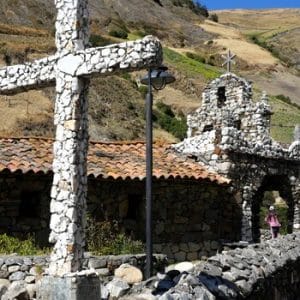
Die Fahrt beginnt in Barinas, führt über Barinitas und geht dann in eine kurvenreiche, gut asphaltierte Bergstraße über, die den natürlichen Konturen der Hügel folgt. Hinter jeder Kurve offenbaren sich Wasserfälle, dramatisches Licht auf den Hängen, bebaute Felder und schließlich die ersten einsamen Frailejones – ein Zeichen dafür, dass man den Páramo erreicht hat.
Nach etwa 60 km lädt die Cascada El Velo de la Novia zu einem erfrischenden Bad ein. Kurz danach bietet der Mirador Las Piedras einen perfekten Rastplatz mit atemberaubender Aussicht. In der Nähe der Abzweigung nach Las Piedras liegen die empfehlenswerten Cabañas Mi Querencia.
Die Straße steigt hinauf nach Santo Domingo (2.000 m), das über eine gute touristische Infrastruktur verfügt. Von hier aus steigt die Route steil an und führt über den Pass auf etwa 3.500 Metern, wo eine Abzweigung zur Laguna de Mucubají führt – ein Highlight. Probieren Sie im Restaurant am Seeufer die ausgezeichnete ‘Pisca andina’ und die herzhaften ‘pastelitos andinos’.
Anschließend erreichen Sie Apartaderos, einen praktischen Ausgangspunkt für Ausflüge ins Hochland. In der Nähe betreibt Marcus Tobía, ein venezolanischer Everest-Bezwinger, die Bergschule ‘Escuela De Montaña Sagarmatha’, die Unterkünfte und geführte Bergtouren anbietet.
Praktische Tipps: Planen Sie mindestens 3 Stunden Fahrzeit plus 2–3 Stunden für Zwischenstopps ein. Ein normales Auto reicht aus, aber ein wendiges Fahrzeug ist in den Kurven von Vorteil. Fahren Sie ruhig und ohne Eile.
Die Temperaturen sinken stark – ziehen Sie sich in Schichten an und nehmen Sie eine warme Jacke, eine Mütze und Handschuhe mit. Gewöhnen Sie sich an die Höhe, trinken Sie viel Wasser und vermeiden Sie in den ersten Stunden in großer Höhe anstrengende Aktivitäten und Alkohol.” background=”#4D4444″ font_size=”14″ max_width=”600″ shadow=”yes”]Carretera Trasandina (Barinas – Apartaderos)[/su_tooltip] verbindet das Tiefland der Llanos mit dem Páramo und überwindet auf einer Strecke von knapp 100 km einen Höhenunterschied von über 3.000 Metern. Entlang der Strecke gibt es mehrere lohnenswerte Zwischenstopps, wie den Wasserfall [su_tooltip title=”Cascada El Velo de la Novia” text=”Dieser malerische Wasserfall – ‘Der Schleier der Braut’ – an der Straße von Barinitas nach Mérida ist ein beliebter und leicht erreichbarer Stopp auf der Fahrt hinauf in das Andenhochland. Sein Name geht auf eine tragische Legende zurück: Ein spanischer Eroberer entführte die Prinzessin Nube Blanca vom Volk der Miyois. Sie verliebte sich in ihn, doch ihr Volk holte sie zurück, da es die Verbindung nicht akzeptierte. Aus Verzweiflung nahm sie sich am Wasserfall das Leben. Noch heute, so sagt man, formt das herabfallende Wasser den weißen Schleier der unglücklichen Braut.
Der etwa 50 Meter hohe, schmale Wasserfall stürzt über eine Felswand und vernebelt die umliegende Luft mit seinem erfrischenden Sprühregen. Das eiskalte Bergwasser, die frische Luft und die satte Vegetation der bewaldeten Zone schaffen eine einladende Atmosphäre. Das Gebiet ist sauber und gepflegt, weshalb es sich perfekt für eine kurze Rast oder einen Spaziergang eignet.
Praktische Hinweise: Der Zugang zum Aussichtspunkt ist einfach, allerdings sollte man Vorsicht walten lassen, da zuletzt Teile der Geländer an den Treppen fehlten. Es besteht eine Bademöglichkeit im kühlen Becken des Wasserfalls.
Wer länger verweilen möchte, findet wenige Kilometer weiter in Richtung Las Piedras eine Unterkunft, beispielsweise in den Cabañas mi Querencia.
Auch wenn der Wasserfall nicht zu den allerhöchsten zählt, ist der Besuch ein lohnenswertes und angenehmes Erlebnis, um die Natur dieser typischen Bergregion zu genießen.” background=”#4D4444″ font_size=”14″ max_width=”600″ shadow=”yes”]Cascada El Velo de la Novia[/su_tooltip], den Aussichtspunkt [su_tooltip title=”Mirador Las Piedras” text=”Für eine Verschnaufpause mit spektakulärem Ausblick eignet sich dieser Aussichtspunkt perfekt. Weniger als 60 km hinter Barinas und nur etwa einen Kilometer hinter der Cascada El Velo de la Novia gelegen, lädt er mit einfachen Kiosken zu einer Rast ein. Der Panoramablick gilt als einer der Höhepunkte der gesamten Strecke.
Im Zentrum der Aussicht liegt der smaragdgrüne Stausee von Santo Domingo (Represa José Antonio Páez), eingebettet in das tiefe Tal des gleichnamigen Flusses. Die umliegenden Hochtäler und Bergdörfer – wie das malerische Las Piedras – fügen sich zu einem typischen Andenpanorama zusammen.

Special Feature: Praktischer Tipp: Das Auto kann hier problemlos geparkt werden. Wer länger in der Gegend verweilen möchte, findet in der Nähe, am Abzweig nach Las Piedras, die empfehlenswerte Unterkunft Cabañas Mi Querencia.” background=”#4D4444″ font_size=”14″ max_width=”600″ shadow=”yes”]Mirador Las Piedras[/su_tooltip] und als Highlight die [su_tooltip title=”Laguna de Mucubají” text=”Auf 3.540 Metern Höhe liegt die Laguna de Mucubají – eine der größten und zugänglichsten Gletscherlagunen der venezolanischen Anden. Ihr Name bedeutet in der Sprache der Ureinwohner ‘Ort des großen Wassers’, und der Besuch ist ein absolutes Muss auf jeder Andenreise. Ein Ort urtümlicher Schönheit, der die majestätische Kraft dieser Gebirgslandschaft spüren lässt.
Die Lagune ist ein Überbleibsel der letzten Eiszeit und etwa 10.000 Jahre alt. Das smaragdgrüne Wasser, umrahmt von der kargen, surrealen Schönheit des Páramo und den charakteristischen Frailejones (‘Mönchspflanzen’), bietet ein atemberaubendes Fotomotiv. Die Luft ist hier stets frisch, oft kalt und windig; warme Kleidung ist unabdingbar.
Ein einfacher, gut markierter Rundweg (ca. 45 Minuten) führt direkt um das Gewässer und ist für jeden machbar. Für Abenteurer gibt es anspruchsvollere Trails, etwa zur höher gelegenen Laguna Negra oder gar zur Besteigung des Pico Mucuñuque (4.609 m). Von der Ostseite der Lagune aus können geführte Ausflüge mit dem Pferd oder Maultier unternommen werden.
Ein besonderes Erlebnis ist die Forellenfischerei. Die Fische wurden in den 1930er Jahren ausgesetzt, und in der Saison (16. März bis 30. September) kann man hier mit gültigem Angelschein sein eigenes Abendessen fangen. Im Refugio Mucubají erwartet Sie die typische Andenküche: Pisca Andina, Pastelitos Andinos und heiße Schokolade. Gleich nebenan, im Parador Turístico, befindet sich ein Souvenirladen – wer noch eine Mütze, Handschuhe oder gar eine warme Jacke braucht, kann hier fündig werden.
Praktische Hinweise: Die Lagune liegt direkt an der Trasandina, etwa auf halbem Weg zwischen Santo Domingo und Apartaderos. Ein kleiner Parkplatz befindet sich nur wenige Meter vom Ufer entfernt. Für die Einfahrt wird eine geringe Nationalparkgebühr erhoben.
Akklimatisierung: Da die Höhe spürbar ist, sollten alle Aktivitäten langsam angegangen werden. Ausreichend Wasser trinken und auf den Körper hören.
Ausstattung: Feste Schuhe, wind- und wasserdichte Jacke, Mütze und Sonnenschutz sind empfehlenswert. Die Sonne in dieser Höhe ist intensiv (mindestens LSF 50 verwenden).” background=”#4D4444″ font_size=”14″ max_width=”600″ shadow=”yes”]Laguna de Mucubají[/su_tooltip] (45-minütiger Rundweg). In Santo Domingo gibt es eine große Auswahl an Restaurants und Unterkünften.

Unterkünfte

Das beliebte [su_tooltip title=”Hotel Trucha Azúl” text=”Dieses Hotel ist mehr als nur eine Unterkunft: Die weitläufige Anlage – inklusive Restaurant, Diskothek und Veranstaltungssalons – ist wunderschön und lädt mit ihren herrlichen Gärten, der traumhaften Aussicht und dem angenehm frischen Klima zum Verweilen ein. Die Zimmer sind geräumig und ansprechend gestaltet, die ruhige Lage ist sehr angenehm.
Ein absolutes Highlight ist die Küche mit ihren köstlichen Forellenspezialitäten aus der Region.

Adresse: Carretera Nacional Barinas – Merida, Santo Domingo, Mérida.
Preise: €€-€€€” background=”#4D4444″ font_size=”14″ max_width=”600″ shadow=”yes”]Hotel Trucha Azúl[/su_tooltip] [su_icon icon=”icon: phone” background=”#ebeaea” color=”#672109″ text_color=”#672109″ size=”16″ shape_size=”4″ radius=”12″ text_size=”14″ margin=”0px 3px 0px 3px” url=”tel:582748988066″][/su_icon] [su_icon icon=”icon: whatsapp” background=”#ebeaea” color=”#672109″ text_color=”#672109″ size=”16″ shape_size=”4″ radius=”12″ text_size=”14″ margin=”0px 3px 0px 3px” url=”https://wa.me/584244598992″][/su_icon] [su_icon icon=”icon: instagram” background=”#ebeaea” color=”#672109″ text_color=”#672109″ size=”16″ shape_size=”4″ radius=”12″ text_size=”14″ margin=”0px 3px 0px 3px” url=”https://www.instagram.com/latruchaazul”][/su_icon] [su_icon icon=”icon: link” background=”#ebeaea” color=”#672109″ text_color=”#672109″ size=”16″ shape_size=”4″ radius=”12″ text_size=”14″ margin=”0px 3px 0px 3px” url=”http://www.latruchaazul.com”][/su_icon] im Zentrum von Santo Domingo hat immer ein Zimmer frei.

Essen und Trinken

Im [su_tooltip title=”Refugio Mucubají” text=”Dieses Restaurant am Eingang zur Laguna Mucubají bietet seit 1959 traditionelle venezolanische Bergküche in uriger Atmosphäre. Besonders zu empfehlen sind die kräftigende Pisca andina, als kleiner Snack die Pastelitos andinos und die heiße Schokolade.
Das Angebot reicht von klassischen Gerichten wie frischer Forelle (Trucha), knusprigem Cochino frito (Schweinebraten) und herzhaftem Sancocho cruzado (Suppeneintopf) bis hin zum kompletten Mittagsmenü mit Suppe, Hauptgericht, Saft und Dessert.
Zum Mitnehmen oder als Geschenk bieten sich die typisch merideñischen Süßigkeiten an, sowie die geräucherte, vakuumverpackte Forelle – die besondere Spezialität des Hauses.

Adresse: En la entrada a La Laguna Mucubaji, Mérida
Preise: €-€€” background=”#4D4444″ font_size=”14″ max_width=”600″ shadow=”yes”]Refugio Mucubají[/su_tooltip] [su_icon icon=”icon: instagram” background=”#ebeaea” color=”#672109″ text_color=”#672109″ size=”16″ shape_size=”4″ radius=”12″ text_size=”14″ margin=”0px 3px 0px 3px” url=”https://www.instagram.com/refugiomucubaji”][/su_icon] warten knusprige [su_tooltip title=”Pastelitos Andinos” text=”Diese würzig gefüllten Teigtaschen sind in der gesamten Andenregion Venezuelas beliebt, insbesondere in den Bundesstaaten Mérida, Táchira und Trujillo. Die genaue Füllung kann von Ort zu Ort variieren.
Grundbestandteile sind eine Hülle aus Weizenteig und eine pikante Füllung aus gewürztem Hackfleisch, Hähnchen oder Käse. Je nach Region und Vorliebe werden der Füllung noch Zutaten wie Paprika, Zwiebeln, Rosinen oder Oliven hinzugefügt.
Pastelitos Andinos sind ein vielseitiger Snack, der zu jeder Tageszeit gegessen wird – als herzhaftes Frühstück, schneller Mittagssnack oder abendliche Tapas. Sie werden typischerweise frittiert und heiß, oft mit einer scharfen Sauce wie ‘salsa picante’ oder ‘salsa de ajo’, serviert.” background=”#4D4444″ font_size=”14″ max_width=”600″ shadow=”yes”]Pastelitos Andinos[/su_tooltip] und eine wärmende [su_tooltip title=”Pisca Andina” text=”Diese herzhafte Milchsuppe ist in der gesamten Andenregion beliebt, insbesondere in den Bundesstaaten Mérida, Táchira und Trujillo. Die genauen Zutaten variieren von Region zu Region. Die Grundzutaten sind eine möglichst kräftige Brühe, Milch, Ei und weißer, ungesalzener Käse. Je nach Region werden dann Kartoffeln oder Reis hinzugefügt. Pisca Andina kann zu jeder Tageszeit gegessen werden, besonders morgens, wenn die Temperaturen in den Bergen noch niedrig sind. Sie ist eine gute Proteinquelle und vegetarisch. Dazu passt eine (Weizen-)Arepa.
Rezept für Pisca Andina
Zutaten für vier Personen: 1 l kräftige Brühe; 4 Kartoffeln; 200 g weißer, ungesalzener Käse; 1 Frühlingszwiebel; 3 Knoblauchzehen; 2 EL Butter; 1 l Vollmilch; 2 Zweige frischer Koriander; Salz; Pfeffer; 4 Eier
Zubereitung: 1.) Kartoffeln und Käse fein würfeln, Knoblauch und Koriander sehr fein hacken und die Frühlingszwiebel in dünne Ringe schneiden. 2.) Die Brühe über die Kartoffelwürfel gießen und kochen, bis die Kartoffeln weich sind, dann die Flüssigkeit etwas einkochen lassen. In der Zwischenzeit die Frühlingszwiebel und den Knoblauch anbraten. 3.) Die Milch hinzufügen, unter gutem Rühren zum Kochen bringen. Den gewürfelten Käse, die Frühlingszwiebel und den Knoblauch hinzufügen. Die Eier aufschlagen, verquirlen und in die Suppe geben. Mit Salz und Pfeffer abschmecken, in Schüsseln füllen und mit Koriander garnieren.” background=”#4D4444″ font_size=”14″ max_width=”600″ shadow=”yes”]Pisca Andina[/su_tooltip] auf Sie.


Apartaderos

Der Straßenort [su_tooltip title=”Apartaderos – Praktischer Stützpunkt im Herzen der Anden” text=”Apartaderos, auf etwa 3.300 Metern Höhe gelegen, ist ein Knotenpunkt für jeden Reisenden in den Anden. Der Ort präsentiert sich weniger als idyllisches Bergdorf, sondern vielmehr als funktionales Straßendorf entlang der legendären Trasandina. Hier finden sich alle essenziellen Versorgungsmöglichkeiten für die Weiterreise, inklusive einer Tankstelle.
Mehrere einfache, oft mit Heizung und reichlich Wolldecken (nachts können die Temperaturen auf unter null Grad absinken) ausgestattete Unterkünfte, große Souvenirläden mit typischen Andenprodukten sowie rustikale Restaurants sind reichlich vorhanden. Ein besonders beliebter und nicht zu verfehlender Stopp ist Embutidos El Águila, wo leckere hausgemachte Wurst- und Käsespezialitäten direkt an der Straße probiert und gekauft werden können.
Die eigentliche Faszination liegt jedoch in der atemberaubenden Hochgebirgsumgebung. Eingebettet in die einzigartige Vegetation des Páramo und an der Wasserscheide dreier großer Täler gelegen, bietet die Landschaft rund um Apartaderos eine raue Schönheit. Von hier aus sind Ausflüge zum nahegelegenen nationalen Observatorium von Llano del Hato eine tolle Gelegenheit für nächtliche Himmelsbeobachtungen in kristallklarer Luft. Zugleich dient der Ort als Ausgangspunkt für Trekkingtouren. Für ambitionierte Bergsteiger und Wanderer bietet die Escuela de Montaña Sagarmatha nicht nur Organisation und Führung, sondern auch eigene Übernachtungsmöglichkeiten an.” background=”#4D4444″ font_size=”14″ max_width=”600″ shadow=”yes”]Apartaderos – Praktischer Stützpunkt im Herzen der Anden[/su_tooltip] ist Verkehrsknotenpunkt und regionales Versorgungszentrum. Neben unzähligen Souvenirläden, Restaurants und Posadas gibt es hier auch eine Tankstelle. Die Fahrzeit nach Mérida beträgt etwa drei Stunden.

Unterkünfte

Die [su_tooltip title=”Escuela De Montaña Sagarmatha” text=”Die auf 3.550 Metern Höhe gelegene Bergschule wurde vom Everest-Bezwinger und Architekten Marcus Tobía gegründet und dient als Ausbildungsstätte für Kinder und Erwachsene. Das gesamte Camp, von den Holzmöbeln bis zur Architektur, wurde von ihm eigenhändig entworfen und gebaut. Die Ausstattung ist funktional und zweckmäßig: solide Matratzen, warme Schlafsäcke, gemeinschaftliche Bäder mit zuverlässig warmem Wasser und eine gut ausgestattete Küche. Das exzellente Köchinnen, die lokale Spezialitäten zubereiten.
Das Programm konzentriert sich auf alpine Erziehung, Teamarbeit und das Überwinden persönlicher Grenzen. Zum Gelände gehören Zeltplätze zwischen Frailejones sowie Möglichkeiten für Wanderungen und Mountainbike-Touren. Der Betrieb wird von einem respektvollen Team geführt, das auch für die Verpflegung zuständig ist. Die Lage ermöglicht Ausblicke auf die Schneefelder der Águilas Blancas und direkten Zugang zum Hochgebirge.
Besonders geeignet für motivierte Individualreisende und Gruppen, die ein praxisorientiertes Bergerlebnis suchen.

Adresse: Apartaderos, Mérida.
Preise: €€” background=”#4D4444″ font_size=”14″ max_width=”600″ shadow=”yes”]Escuela De Montaña Sagarmatha[/su_tooltip] [su_icon icon=”icon: phone” background=”#ebeaea” color=”#672109″ text_color=”#672109″ size=”16″ shape_size=”4″ radius=”12″ text_size=”14″ margin=”0px 3px 0px 3px” url=”tel:584123251648″][/su_icon] [su_icon icon=”icon: whatsapp” background=”#ebeaea” color=”#672109″ text_color=”#672109″ size=”16″ shape_size=”4″ radius=”12″ text_size=”14″ margin=”0px 3px 0px 3px” url=”https://wa.me/584247562573″][/su_icon] [su_icon icon=”icon: whatsapp” background=”#ebeaea” color=”#672109″ text_color=”#672109″ size=”16″ shape_size=”4″ radius=”12″ text_size=”14″ margin=”0px 3px 0px 3px” url=”https://wa.me/584242753999″][/su_icon] [su_icon icon=”icon: instagram” background=”#ebeaea” color=”#672109″ text_color=”#672109″ size=”16″ shape_size=”4″ radius=”12″ text_size=”14″ margin=”0px 3px 0px 3px” url=”https://www.instagram.com/sagarmathacamp”][/su_icon] [su_icon icon=”icon: envelope” background=”#ebeaea” color=”#672109″ text_color=”#672109″ size=”16″ shape_size=”4″ radius=”12″ text_size=”14″ margin=”0px 3px 0px 3px” url=”mailto:sagarmathacampame@gmail.com”][/su_icon] ist nicht nur eine Unterkunft, sondern genießt auch weit über die Region hinaus einen guten Ruf als Wander- und Trekkingzentrum. Der Besitzer ist ein bekannter Bergsteiger und hat unter anderem den Mount Everest bezwungen.


Der Kondorpass – : Höhepunkt der Andenstraße

Der [su_tooltip title=”Collado del Cóndor” text=”Der Kondorpass, auch Pico El Águila genannt, ist mit 4.118 Metern der höchste Punkt der befestigten Carretera Trasandina in Venezuela. Er liegt im Nationalpark der Sierra de La Culata und ist ein obligatorischer Haltepunkt für alle Reisenden.
Ein bronzenes Kondor-Denkmal von 1925 erinnert an Simón Bolívars heldenhaften Gewaltmarsch durch das unwirtliche Hochgebirge, die Campaña Admirable, im Jahr 1813, auf dem er Mérida, Trujillo und Caracas kampflos einnehmen konnte. Es symbolisiert den ‘Atem der Freiheit’, der – wie die Inschrift sagt – über diese Berge zog, um das Land zu befreien.
Vor Ort bieten kleine Kioske und einfache Restaurants warme Getränke (heiße Schokolade) und regionale Snacks (Räucherkäse, Wurstwaren, Süßigkeiten) an – eine willkommene Stärkung bei den kühlen Temperaturen, die im Durchschnitt bei etwa 5°C liegen und im Winter bis unter den Gefrierpunkt fallen können. Feste Kleidung ist aufgrund des windigen, oft nebligen Klimas unbedingt zu empfehlen. Aufgrund des geringen Sauerstoffgehalts in dieser Höhe sollten körperliche Anstrengungen vermieden werden.
Dieser Punkt ist zugleich der Ausgangspunkt für die höchste Straße des Landes, die spektakuläre Nebenstrecke in das malerische Piñango: Die Strecke gewinnt auf bis zu 4.300 Meter an Höhe, erschließt atemberaubende Blicke auf das Páramo La Culata und endet schließlich in Piñango auf gut 2.300 Metern.” background=”#4D4444″ font_size=”14″ max_width=”600″ shadow=”yes”]Collado del Cóndor[/su_tooltip], mit 4.118 m der höchste Punkt der Transandina, liegt im Nationalpark Sierra de La Culata. Dort gibt es Kioske, an denen Snacks und heiße Getränke (chocolate caliente) verkauft werden. Hier zweigt die Route [su_tooltip title=”vom Kondorpass nach Piñango” text=”Auf dem Dach Venezuelas: eine Fahrt vom Kondorpass nach Piñango
Am Kondorpass beginnt eine der spektakulärsten Straßenfahrten des Landes. Von hier startet die etwa 40 Kilometer lange Route auf der höchsten mit einem ‘normalen’ Pkw befahrbaren Straße Venezuelas durch den Nationalpark der Sierra de La Culata. Für die Fahrt bis zum Endpunkt Piñango sollten Sie eine reine Fahrzeit von zwei Stunden veranschlagen. Der Scheitelpunkt der Strecke, der auf knapp über 4.300 Metern liegt, wird bereits nach einer halben Stunde erreicht. Die Route führt durch die charakteristische Hochlandlandschaft des Páramos mit schroffen Felsformationen und häufigem Nebel.
Erster Stopp: Mirador El Domo de La Culata
Auf stolzen 4.300 Metern befindet sich der höchste befahrbare Punkt Venezuelas. Der Aussichtspunkt bietet einen tollen Blick auf das Páramo La Culata. Besonders zwischen Juni und September kann es hier zu stärkeren Schneefällen kommen. Vom Parkplatz aus führt ein einfacher Wanderweg zum stillen Domo de Mifafi. Der Wanderweg ist zwar relativ eben, doch angesichts der dünnen Höhenluft sollte man es gemächlich angehen lassen. Mit etwas Glück sehen Sie hier wilde Andenkondore kreisen.
Zweiter Stopp: Santo Cristo de los Páramos de Piñango
Wenige Kilometer weiter, ebenfalls noch auf über 4.000 Metern, steht die wohl höchstgelegene Christusstatue des Landes, die mit dem Auto erreichbar ist. Sie wurde 2016 von einem lokalen Künstler aufgestellt und fügt sich nahtlos in die einsame Landschaft des Hochgebirges ein. Schöner Panoramablick.
Dritter Stopp: Piñango
Am Ende der Abfahrt liegt das Dorf Piñango auf 2.320 Metern. Der Kontrast könnte größer nicht sein: Aus der kargen Hochgebirgswelt tauchen Sie ein in ein grünes, von Landwirtschaft geprägtes Tal. Der Ort, einst ein wichtiger Umschlagplatz für Salz, markiert den Endpunkt dieser außergewöhnlichen Strecke.
Praktische Hinweise: Aufgrund des windigen und oft nebligen Klimas ist feste, warme Kleidung obligatorisch. Zudem sollte man in der Höhe über 4.000 Meter körperliche Anstrengungen unbedingt vermeiden. Die Straße ist unbefestigt, aber mit einem robusten Pkw befahrbar. Sie erfordert eine vorsichtige Fahrweise. Vorräte an Verpflegung und Treibstoff sollten in Apartaderos besorgt werden. In Piñango gibt es weder Unterkünfte noch zuverlässige Verpflegungsmöglichkeiten.” background=”#4D4444″ font_size=”14″ max_width=”600″ shadow=”yes”]vom Kondorpass nach Piñango[/su_tooltip] ab.


Refugio del Cóndor

Kurz vor dem Collado del Cóndor zweigt ein asphaltierter Weg zum [su_tooltip title=”Refugio del Cóndor” text=”Hoch im Páramo de Mifafí liegt das Refugio del Cóndor, eine Schutzstation zur Aufzucht und Wiederansiedlung des Andenkondors – dem größten flugfähigen Vogel der Welt. Lange Zeit gab es in Venezuela keine wild lebenden Kondore mehr. Doch seit 2025 ist hier in der Region wieder ein wildes Kondor-Pärchen heimisch – ein großer Erfolg für die Schutzbemühungen. Zusätzlich leben im Refugio etwa zehn weitere Exemplare wie „El Combatiente“ (der Kämpfer), ein stattliches, 17 Jahre altes Männchen.
Der Anblick der Vögel aus nächster Nähe ist beeindruckend – und vielleicht entdeckt man ja das freie Pärchen am Himmel kreisen.
Die Station ist leicht erreichbar und tagsüber geöffnet. Das Personal der Nationalparkbehörde erklärt gerne vor Ort seine Arbeit.” background=”#4D4444″ font_size=”14″ max_width=”600″ shadow=”yes”]Refugio del Cóndor[/su_tooltip], einer Zuchtstation für den [su_tooltip title=”Andenkondor” text=”Der Andenkondor (Vultur gryphus) ist mehr als nur ein Vogel – er ist Symbol der indigenen Identität und stiller Wächter der Natur. Mit bis zu 320 cm Spannweite und 15 kg Gewicht zählt er zu den größten flugfähigen Vögeln der Welt. Weibchen sind leichter (8–11 kg). In Freiheit werden sie über 50 Jahre alt.
Für die Andenvölker, darunter die Timoto-Cuicas, war der Kondor seit Jahrtausenden heilig: als Vermittler zwischen Erde und Himmel, der Seelen ins Jenseits trägt. Zusammen mit Puma (Erde) und Schlange (Unterwelt) bildet er die heilige Kosmologie der Anden.
Im 20. Jahrhundert brach der Bestand dramatisch ein – in Venezuela galt die Art zeitweise als verschwunden. Hauptgründe: illegale Bejagung durch Viehzüchter (die Kondore fälschlich für Nutztierräuber hielten), Vergiftung durch ausgelegte Köder (ein Kadaver kann ganze Gruppen töten) und Lebensraumzerstörung durch Landwirtschaft, Brandrodung und Agrochemikalien.
Seit den 1990ern gibt es Aufzuchtstationen, etwa im Tal von Mifafi und im Parque Zoológico Chorros de Milla, mit dem Ziel der Wiederansiedlung. Der Erfolg gab ihnen recht: 2025 wurden erstmals seit über 50 Jahren wieder wilde Kondore in den venezolanischen Anden gesichtet – nördlich von San Rafael de Mucuchíes. Eine Rückkehr, die Hoffnung schenkt.” background=”#4D4444″ font_size=”14″ max_width=”600″ shadow=”yes”]Andenkondor[/su_tooltip] ab.


Vom Collado del Cóndor nach Piñango

Die spektakuläre, 40 km lange Strecke [su_tooltip title=”vom Kondorpass nach Piñango” text=”Auf dem Dach Venezuelas: eine Fahrt vom Kondorpass nach Piñango
Am Kondorpass beginnt eine der spektakulärsten Straßenfahrten des Landes. Von hier startet die etwa 40 Kilometer lange Route auf der höchsten mit einem ‘normalen’ Pkw befahrbaren Straße Venezuelas durch den Nationalpark der Sierra de La Culata. Für die Fahrt bis zum Endpunkt Piñango sollten Sie eine reine Fahrzeit von zwei Stunden veranschlagen. Der Scheitelpunkt der Strecke, der auf knapp über 4.300 Metern liegt, wird bereits nach einer halben Stunde erreicht. Die Route führt durch die charakteristische Hochlandlandschaft des Páramos mit schroffen Felsformationen und häufigem Nebel.
Erster Stopp: Mirador El Domo de La Culata
Auf stolzen 4.300 Metern befindet sich der höchste befahrbare Punkt Venezuelas. Der Aussichtspunkt bietet einen tollen Blick auf das Páramo La Culata. Besonders zwischen Juni und September kann es hier zu stärkeren Schneefällen kommen. Vom Parkplatz aus führt ein einfacher Wanderweg zum stillen Domo de Mifafi. Der Wanderweg ist zwar relativ eben, doch angesichts der dünnen Höhenluft sollte man es gemächlich angehen lassen. Mit etwas Glück sehen Sie hier wilde Andenkondore kreisen.
Zweiter Stopp: Santo Cristo de los Páramos de Piñango
Wenige Kilometer weiter, ebenfalls noch auf über 4.000 Metern, steht die wohl höchstgelegene Christusstatue des Landes, die mit dem Auto erreichbar ist. Sie wurde 2016 von einem lokalen Künstler aufgestellt und fügt sich nahtlos in die einsame Landschaft des Hochgebirges ein. Schöner Panoramablick.
Dritter Stopp: Piñango
Am Ende der Abfahrt liegt das Dorf Piñango auf 2.320 Metern. Der Kontrast könnte größer nicht sein: Aus der kargen Hochgebirgswelt tauchen Sie ein in ein grünes, von Landwirtschaft geprägtes Tal. Der Ort, einst ein wichtiger Umschlagplatz für Salz, markiert den Endpunkt dieser außergewöhnlichen Strecke.
Praktische Hinweise: Aufgrund des windigen und oft nebligen Klimas ist feste, warme Kleidung obligatorisch. Zudem sollte man in der Höhe über 4.000 Meter körperliche Anstrengungen unbedingt vermeiden. Die Straße ist unbefestigt, aber mit einem robusten Pkw befahrbar. Sie erfordert eine vorsichtige Fahrweise. Vorräte an Verpflegung und Treibstoff sollten in Apartaderos besorgt werden. In Piñango gibt es weder Unterkünfte noch zuverlässige Verpflegungsmöglichkeiten.” background=”#4D4444″ font_size=”14″ max_width=”600″ shadow=”yes”]vom Kondorpass nach Piñango[/su_tooltip] ist die höchstgelegene Straße in Venezuela, die mit einem „normalen“ Auto befahren werden kann. Mit etwas Glück kann man hier am nördlichen Rand des Páramo La Culata den [su_tooltip title=”Andenkondor” text=”Der Andenkondor (Vultur gryphus) ist mehr als nur ein Vogel – er ist Symbol der indigenen Identität und stiller Wächter der Natur. Mit bis zu 320 cm Spannweite und 15 kg Gewicht zählt er zu den größten flugfähigen Vögeln der Welt. Weibchen sind leichter (8–11 kg). In Freiheit werden sie über 50 Jahre alt.
Für die Andenvölker, darunter die Timoto-Cuicas, war der Kondor seit Jahrtausenden heilig: als Vermittler zwischen Erde und Himmel, der Seelen ins Jenseits trägt. Zusammen mit Puma (Erde) und Schlange (Unterwelt) bildet er die heilige Kosmologie der Anden.
Im 20. Jahrhundert brach der Bestand dramatisch ein – in Venezuela galt die Art zeitweise als verschwunden. Hauptgründe: illegale Bejagung durch Viehzüchter (die Kondore fälschlich für Nutztierräuber hielten), Vergiftung durch ausgelegte Köder (ein Kadaver kann ganze Gruppen töten) und Lebensraumzerstörung durch Landwirtschaft, Brandrodung und Agrochemikalien.
Seit den 1990ern gibt es Aufzuchtstationen, etwa im Tal von Mifafi und im Parque Zoológico Chorros de Milla, mit dem Ziel der Wiederansiedlung. Der Erfolg gab ihnen recht: 2025 wurden erstmals seit über 50 Jahren wieder wilde Kondore in den venezolanischen Anden gesichtet – nördlich von San Rafael de Mucuchíes. Eine Rückkehr, die Hoffnung schenkt.” background=”#4D4444″ font_size=”14″ max_width=”600″ shadow=”yes”]Andenkondor[/su_tooltip] kreisen sehen.


Timotes

Wenn man vom Collado del Cóndor aus weiter nach Osten fährt, erreicht man das Bauerndorf [su_tooltip title=”Timotes: das heimliche Paradies der Anden” text=”Wer von Mérida in Richtung Valera und Trujillo weiterreist, durchquert das heimliche Paradies der Anden: Timotes. Als charmantes, authentisches Bauerndorf mit etwa 18.000 Einwohnern bietet es einen direkten Einblick in die Lebensweise und jährlichen Feste dieser speziellen Region Venezuelas. Auf einer Höhe von 2.025 Metern gelegen, herrscht hier ein ganzjährig angenehmes, kühles Klima mit durchschnittlich 16 °C.
Hier, im Herzen der venezolanischen Anden, wird das Leben von einer eigenständigen und stolzen Bauerngemeinschaft geprägt. Bereits lange vor der Ankunft der Europäer (Mitte des 16. Jahrhunderts) wurde hier im Hochgebirge von dem Volk der Timoto eine hoch entwickelte Landwirtschaft betrieben. Auf Terrassenfeldern an den Berghängen der wurden Mais, Kartoffeln und Baumwolle angebaut.
Heute bauen die Menschen hier auf kleinen Parzellen eine beeindruckende Vielfalt von Gemüse- und Obstsorten an: grünen Spargel, Artischocken, Pfirsiche, Brokkoli, Salate, Karotten, Blumenkohl, Zucchini und vieles mehr. Die Luft in den umliegenden Bergen duftet nach frischem Gemüse und ehrlicher Arbeit. Es ist eine Welt, in der die Menschen ihre Ochsen beim Namen rufen und ihren Lebensunterhalt direkt von den Erträgen der Erde bestreiten.
Ein zentrales Ereignis im Jahr ist das Fest zu Ehren des Schutzpatrons San Isidro, das jedes Jahr um den 15. Mai stattfindet. Dabei schmücken die Bauern ihre Ochsenkarren mit Erntegaben und ziehen in einer großen Prozession durch den Ort. Diese Tradition verdeutlicht die tiefe Verbundenheit der Gemeinschaft mit ihrem Land und ihrer Kultur.
Für Besucher bietet das Maktub Café Gerichte mit lokal angebautem Gemüse, wie gefüllte Zucchini oder Blumenkohl. Eine praktische Übernachtungsmöglichkeit ist die Unterkunft Entre Nubes.” background=”#4D4444″ font_size=”14″ max_width=”600″ shadow=”yes”]Timotes: das heimliche Paradies der Anden[/su_tooltip].

Unterkünfte

Hoch über dem Dorf gelegen und mit atemberaubender Aussicht befindet sich das [su_tooltip title=”Entre Nubes – Zwischen den Wolken” text=”Diese Unterkunft besteht aus einer Gruppe wunderschöner Häuser hoch über Timotes, die einen atemberaubenden Panoramablick in die Berge bieten. Die gemütlichen Zimmer mit Kamin laden zum Entspannen ein, während der unvergessliche Service – inklusive frisch gebackener pastelitos andinos zum Frühstück – für ein rundum verwöhntes Gefühl sorgt. Die Gastgeber Melisa und Benito sind leidenschaftliche Kenner der Region und organisieren gerne Touren zu den nahegelegenen Lagunen, Páramos und Bergpfaden.
Ein echtes Highlight ist die perfekte Mischung aus absoluter Ruhe, der majestätischen Natur direkt vor der Tür und der herzlichen Gastfreundschaft der Besitzer, die Ihnen die authentische Kultur und die freundlichen Menschen der Anden näherbringen.

Adresse: Casa Mesa Alta, Timotes, Mérida
Preise: €€” background=”#4D4444″ font_size=”14″ max_width=”600″ shadow=”yes”]Entre Nubes – Zwischen den Wolken[/su_tooltip] [su_icon icon=”icon: instagram” background=”#ebeaea” color=”#672109″ text_color=”#672109″ size=”16″ shape_size=”4″ radius=”12″ text_size=”14″ margin=”0px 3px 0px 3px” url=”https://www.instagram.com/meridaentrenubes”][/su_icon] (= zwischen den Wolken).

Essen und Trinken

Kreative Köstlichkeiten aus regionalen Zutaten gibt es im [su_tooltip title=”Maktub Café Timotes” text=”Hier serviert Yenni selbstgemachte Köstlichkeiten, die die Seele der andinen Hausmannskost einfangen. Ihre Spezialität sind die wunderbar gefüllten Zucchini – ‘calabacines’ – mit einem saftigen Hackfleischragout, serviert mit frischem Salat und überbackenem Blumenkohl. Für den süßen Abschluss sorgen hausgemachte Desserts wie Passionsfrucht-Chips (‘cascos de parchita’) oder feine Feigen-Pralinen, die man auch perfekt mitnehmen kann.
Ein echtes Highlight ist die persönliche, herzliche Atmosphäre und die Leidenschaft, mit der Yenni ihre Gerichte zubereitet – hier schmeckt man die Liebe zum Detail in jedem Bissen.

Adresse: Centro Comercial Miranda, Timotes, Mérida
Preise: €€” background=”#4D4444″ font_size=”14″ max_width=”600″ shadow=”yes”]Maktub Café Timotes[/su_tooltip] [su_icon icon=”icon: phone” background=”#ebeaea” color=”#672109″ text_color=”#672109″ size=”16″ shape_size=”4″ radius=”12″ text_size=”14″ margin=”0px 3px 0px 3px” url=”tel:584247195646″][/su_icon] [su_icon icon=”icon: instagram” background=”#ebeaea” color=”#672109″ text_color=”#672109″ size=”16″ shape_size=”4″ radius=”12″ text_size=”14″ margin=”0px 3px 0px 3px” url=”https://www.instagram.com/maktubcaferest”][/su_icon].

East of Mérida: Travel Guide: Where the Andean condor soars


As of July 15, 2026

[lwptoc]

Leaving Mérida and heading east, you wind your way through picturesque Andean villages, whilst to the right and left hiking trails through [su_tooltip title=”The Venezuelan Páramo” text=”In the high altitudes of the Venezuelan Andes, between approximately 3,000 and 4,300 metres, lies the Páramo – a unique high-mountain ecosystem above the tree line. It stretches across the states of Mérida, Táchira and Trujillo and plays a central role as a water reservoir for the country. The deep, organic soils act as natural water reservoirs. They absorb rainfall and meltwater and continuously release it to the lower-lying areas. This function is essential for the water supply of Andean towns, agriculture and hydroelectric power stations.
The most characteristic plants are the Frailejones (Espeletia), a genus of the Asteraceae family comprising over 200 species. Among the best-known animal species are the spectacled bear (Tremarctos ornatus), the only bear species in South America, the Andean fox, the white-tailed deer and the Andean condor. The amphibian fauna of the páramo is highly endangered; in particular, the once common Jambato toad (Atelopus ignescens) has disappeared from large areas.
The dry season from December to April offers the most stable travel conditions. From September to October, the frailejones bloom, turning the landscape yellow. Essential kit: layered warm clothing, waterproof hiking boots, a hat, gloves, sun cream (SPF 50+) and sunglasses. Visitors are asked to stay on the paths and take their rubbish with them.” background=”#4D4444″ font_size=”14″ max_width=”600″ shadow=”yes”]The Venezuelan Páramo[/su_tooltip] and cloud forests, as well as hot springs, beckon. The routes are by no means easy, and you should always allow plenty of time for the return journey. Once darkness falls, it can get bitterly cold, and a supply of water and sun protection (SPF 50 or higher) are essential.

[su_image_carousel source=”media: 10572,10573,10574,10576,10577,10578″ controls_style=”light” crop=”1:1″ columns=”3″ spacing=”no” align=”center” autoplay=”3″]

Valle de San Javier

[su_tooltip title=”Valle de San Javier and La Culata: mountain air and a hiker’s paradise” text=”North-east of Mérida, in the village of San Benito, an impressive panoramic road branches off from the Trasandina and leads into the green Valle de San Javier, which extends up to the Páramo La Culata at an altitude of over 3,000 metres. The region is a paradise for nature lovers and offers spectacular hikes through the mystical Bosque Sagrado or the unique high moorland landscape of the Páramo La Culata. A special experience is a visit to the Casa del Colibri, where hummingbirds flit silently around you.
Along the route, family-run businesses offer homemade jams and fresh ‘Fresas con Crema’ (strawberries with cream). The tourist infrastructure follows a sustainable approach with charming, privately run accommodation.

*Tip: The valley is ideal for a day trip from Mérida, including a hike. For a longer stay in the tranquillity of the mountains, booking accommodation in advance is recommended. The drive is winding and offers magnificent views of the Sierra Nevada.” background=”#4D4444″ font_size=”14″ max_width=”600″ shadow=”yes”]Valle de San Javier and La Culata: mountain air and a hiker’s paradise[/su_tooltip]:
A detour into the side valley of [su_tooltip title=”Valle de San Javier and La Culata: mountain air and a hiker’s paradise” text=”North-east of Mérida, in the village of San Benito, an impressive panoramic road branches off from the Trasandina and leads into the green Valle de San Javier, which extends up to the Páramo La Culata at an altitude of over 3,000 metres. The region is a paradise for nature lovers and offers spectacular hikes through the mystical Bosque Sagrado or the unique high moorland landscape of the Páramo La Culata. A special experience is a visit to the Casa del Colibri, where hummingbirds flit silently around you.
Along the route, family-run businesses offer homemade jams and fresh ‘Fresas con Crema’ (strawberries with cream). The tourist infrastructure follows a sustainable approach with charming, privately run accommodation.

*Tip: The valley is ideal for a day trip from Mérida, including a hike. For a longer stay in the tranquillity of the mountains, booking accommodation in advance is recommended. The drive is winding and offers magnificent views of the Sierra Nevada.” background=”#4D4444″ font_size=”14″ max_width=”600″ shadow=”yes”]Valle de San Javier and La Culata: mountain air and a hiker’s paradise[/su_tooltip] and the adjacent [su_tooltip title=”Páramo La Culata” text=”Into the Realm of the Frailejones: Hiking Páramo La Culata
Páramo La Culata, part of the national park of the same name, offers authentic hiking in the Venezuelan Andes, suitable for beginners and experienced trekkers alike. Located 40 minutes northeast of Mérida, this high-alpine landscape features wide valleys and hills dominated by iconic, meter-tall frailejones – endemic plants of the tropical high Andes.
The trailhead at 3,000 meters is the starting point. A short path leads to the ranger station, where registration is required. The classic 5 km route follows a mountain stream, gaining 600 meters in elevation to reach Laguna de Tapada at 3,600 meters – a serene glacial lake surrounded by giant frailejones.
For well-acclimatized hikers, the summit of Pico Pan de Azúcar (4,654 m) is a challenging extension: another 6.5 km and 1,000 meters of ascent, rewarding with panoramic views. Shorter walks also offer a fine impression of the paramo landscape.
Practical Info: Parking is available at the road’s end near a small settlement. Supplies and meals can be found at ‘Rincón Andino.’ Horses or mules with guides can be arranged.
Timing: Allow 3–4 hours round trip for the lagoon. The full summit tour takes 8–10 hours and requires experience and proper acclimatization.
Best Season: Dry season (December to March); frailejones bloom yellow in November–December.
Gear: Sturdy boots, warm layers, rain/wind jacket, sun protection, sufficient water and food. Acclimatize in Mérida and hike slowly.
This is a protected area – leave no trace, stay on marked trails, and pack out all trash.” background=”#4D4444″ font_size=”14″ max_width=”600″ shadow=”yes”]Páramo La Culata[/su_tooltip] offers hikes through cloud forest and high moorland. The [su_tooltip title=”Bosque Sagrado: Mystical sculptures in the Andean forest” text=”In the Bosque Sagrado (Sacred Forest), woodcarver William Marcano has spent decades carefully carving the faces of deities, mythical figures and Andean inhabitants into the bark of living trees. The result is a magical place where the divine merges with the earthly. What began as a personal vow is now an impressive open-air studio – a natural gallery where myth and reality blend amidst moss-covered features.
The forest is a haven of tranquillity and invites visitors to take contemplative walks. A small restaurant offers refreshments, and simple rooms are also available for guests who wish to linger longer in the mystical atmosphere.
A unique experience for anyone wishing to combine art, spirituality and unspoilt nature off the beaten track.

Address: Sector El Playon Alto, Zona Militar, Urb. Los Pinos, Casa Bosque Sagrado El Valle, Merida” background=”#4D4444″ font_size=”14″ max_width=”600″ shadow=”yes”]Bosque Sagrado: Mystical sculptures in the Andean forest[/su_tooltip] [su_icon icon=”icon: phone” background=”#ebeaea” color=”#672109″ text_color=”#672109″ size=”16″ shape_size=”4″ radius=”12″ text_size=”14″ margin=”0px 3px 0px 3px” url=”tel:584161130842″][/su_icon] [su_icon icon=”icon: whatsapp” background=”#ebeaea” color=”#672109″ text_color=”#672109″ size=”16″ shape_size=”4″ radius=”12″ text_size=”14″ margin=”0px 3px 0px 3px” url=”https://wa.me/584161130842″][/su_icon] [su_icon icon=”icon: instagram” background=”#ebeaea” color=”#672109″ text_color=”#672109″ size=”16″ shape_size=”4″ radius=”12″ text_size=”14″ margin=”0px 3px 0px 3px” url=”https://www.instagram.com/bosquesagrado.merida”][/su_icon] with its tree carvings is just as much worth a stop as the [su_tooltip title=”Casa de Colibrí – Angel del Sol” text=”In the heart of the cloud forest near San Javier del Valle, Michelle and Pascual have transformed their home into a private sanctuary for hummingbirds. Here you can experience a unique and intimate interaction with the iridescent birds, which will flutter around you in swarms. The experience combines gentle nature observation with adventure: alongside a guided hike through the mystical forest, you can take on the hummingbirds’ perspective on a three-part zipline (‘Vuelo del Colibrí’).
Culinary highlights are also on offer with the Criollo gourmet menu or a sweet breakfast amidst the buzzing garden (advance booking required).
The operators are also co-authors of the fascinating illustrated book ‘Colibríes de los Andes de Mérida’, which portrays the diversity of these unique birds. (The book is available on site.)

Address: San Javier del Valle, Mérida
*Tip: Opening hours: Thursday to Sunday, 9.30 am – 4.30 pm (subject to change)” background=”#4D4444″ font_size=”14″ max_width=”600″ shadow=”yes”]Casa de Colibrí – Angel del Sol[/su_tooltip] [su_icon icon=”icon: phone” background=”#ebeaea” color=”#672109″ text_color=”#672109″ size=”16″ shape_size=”4″ radius=”12″ text_size=”14″ margin=”0px 3px 0px 3px” url=”tel:584166740108″][/su_icon] [su_icon icon=”icon: phone” background=”#ebeaea” color=”#672109″ text_color=”#672109″ size=”16″ shape_size=”4″ radius=”12″ text_size=”14″ margin=”0px 3px 0px 3px” url=”tel:584164759441″][/su_icon] [su_icon icon=”icon: whatsapp” background=”#ebeaea” color=”#672109″ text_color=”#672109″ size=”16″ shape_size=”4″ radius=”12″ text_size=”14″ margin=”0px 3px 0px 3px” url=”https://wa.me/584166740108″][/su_icon] [su_icon icon=”icon: whatsapp” background=”#ebeaea” color=”#672109″ text_color=”#672109″ size=”16″ shape_size=”4″ radius=”12″ text_size=”14″ margin=”0px 3px 0px 3px” url=”https://wa.me/584164759441″][/su_icon] [su_icon icon=”icon: instagram” background=”#ebeaea” color=”#672109″ text_color=”#672109″ size=”16″ shape_size=”4″ radius=”12″ text_size=”14″ margin=”0px 3px 0px 3px” url=”https://www.instagram.com/casa_del_colibri_angel_del_sol”][/su_icon], where you can watch [su_tooltip title=”Hummingbirds” text=”Hardly any other bird captures the magic of the Venezuelan mountains quite like the hummingbirds – those flying jewels with their iridescent plumage and breathtaking flight. Their name originates from the Caribbean; in Venezuela, they are known by the melodious name Tucusito. Hummingbirds hold a special place in the indigenous cultures of Venezuela and throughout the Americas. It is widely believed that they are messengers between the worlds – messengers of the gods, bearers of prayers and dreams.
Venezuela is a true hummingbird paradise: of the more than 300 American species, around 150 are native here – an impressive diversity that makes the northern Andes one of the most species-rich hummingbird regions in the world. Most species live in the tropical rainforests and cloud forests, but they can also be found in cities, and even in the barren landscape of the páramo.
Notable species include the Ruby-throated Hummingbird (Chrysolampis mosquitus), which is widespread across much of Venezuela, the Mérida Hummingbird (Coeligena conradii), which lives in humid mountain cloud forests between 1,500 and 3,000 metres, and the Sword-billed Hummingbird (Ensifera ensifera), whose beak grows to over ten centimetres in length – longer than its entire body.” background=”#4D4444″ font_size=”14″ max_width=”600″ shadow=”yes”]Hummingbirds[/su_tooltip] flitting about.

Accommodation

There is a whole range of accommodation along the main route through the valley; we recommend [su_tooltip title=”Posada Nidal del Río” text=”This accommodation comes highly recommended: beautiful cabañas (log cabins) with a fireplace, a loft and warm woollen blankets, including a cosy little bed right by the fire. The owner, Julián Calderón, is an architect and has designed this place with great attention to detail.
A real highlight is the neighbour, Arcelio Avendaño, where you can catch your own trout and have it cooked straight away – it doesn’t get any fresher than that!

Address: Sector La Caña, La Culata, Mérida
Price: €€” background=”#4D4444″ font_size=”14″ max_width=”600″ shadow=”yes”]Posada Nidal del Río[/su_tooltip] [su_icon icon=”icon: phone” background=”#ebeaea” color=”#672109″ text_color=”#672109″ size=”16″ shape_size=”4″ radius=”12″ text_size=”14″ margin=”0px 3px 0px 3px” url=”tel:584147400741″][/su_icon] [su_icon icon=”icon: phone” background=”#ebeaea” color=”#672109″ text_color=”#672109″ size=”16″ shape_size=”4″ radius=”12″ text_size=”14″ margin=”0px 3px 0px 3px” url=”tel:584247472809″][/su_icon] [su_icon icon=”icon: whatsapp” background=”#ebeaea” color=”#672109″ text_color=”#672109″ size=”16″ shape_size=”4″ radius=”12″ text_size=”14″ margin=”0px 3px 0px 3px” url=”https://wa.me/584147400741″][/su_icon] [su_icon icon=”icon: whatsapp” background=”#ebeaea” color=”#672109″ text_color=”#672109″ size=”16″ shape_size=”4″ radius=”12″ text_size=”14″ margin=”0px 3px 0px 3px” url=”https://wa.me/584247472809″][/su_icon] [su_icon icon=”icon: instagram” background=”#ebeaea” color=”#672109″ text_color=”#672109″ size=”16″ shape_size=”4″ radius=”12″ text_size=”14″ margin=”0px 3px 0px 3px” url=”https://www.instagram.com/posadanidaldelrio”][/su_icon] [su_icon icon=”icon: envelope” background=”#ebeaea” color=”#672109″ text_color=”#672109″ size=”16″ shape_size=”4″ radius=”12″ text_size=”14″ margin=”0px 3px 0px 3px” url=”mailto:posadanidaldelrio@gmail.com”][/su_icon] and [su_tooltip title=”Cabañas El Angelus” text=”This accommodation is a haven for those seeking peace and quiet and for families: beautiful, superbly equipped cabins for 5 to 9 people with breathtaking views of the mountains. The Hernández family’s offering is simple: peace and quiet, spotless cleanliness, friendly service and reasonable prices. The personal attention provided by the hosts, Margarita, Francisco and their children, makes for a particularly warm stay.

Address: Carretera vía El Valle, sector Los Pinos (Militar), Villa El Angelus, Mérida
Price: €-€€” background=”#4D4444″ font_size=”14″ max_width=”600″ shadow=”yes”]Cabañas El Angelus[/su_tooltip] [su_icon icon=”icon: phone” background=”#ebeaea” color=”#672109″ text_color=”#672109″ size=”16″ shape_size=”4″ radius=”12″ text_size=”14″ margin=”0px 3px 0px 3px” url=”tel:584141797871″][/su_icon] [su_icon icon=”icon: whatsapp” background=”#ebeaea” color=”#672109″ text_color=”#672109″ size=”16″ shape_size=”4″ radius=”12″ text_size=”14″ margin=”0px 3px 0px 3px” url=”https://wa.me/584141797871″][/su_icon] [su_icon icon=”icon: instagram” background=”#ebeaea” color=”#672109″ text_color=”#672109″ size=”16″ shape_size=”4″ radius=”12″ text_size=”14″ margin=”0px 3px 0px 3px” url=”https://www.instagram.com/posadaelangelus”][/su_icon] [su_icon icon=”icon: envelope” background=”#ebeaea” color=”#672109″ text_color=”#672109″ size=”16″ shape_size=”4″ radius=”12″ text_size=”14″ margin=”0px 3px 0px 3px” url=”mailto:posadaelangelus@gmail.com”][/su_icon].

Food and drink

There are plenty of snack bars and stalls; the [su_tooltip title=”Tramonto Trattoria” text=”This restaurant offers incredibly good, authentic Italian cuisine: both the pizzas and the pasta dishes (tip: the panzerotti!) leave nothing to be desired and are excellent. You should save room for the homemade cakes.
The pleasant and cosy atmosphere is perfectly complemented by the very friendly owner. A real insider tip for a thoroughly enjoyable culinary evening.

Address: Carretera vía El Valle, Esquina del Arado B, Sector San Javier del Valle, Mérida
Price: €-€€” background=”#4D4444″ font_size=”14″ max_width=”600″ shadow=”yes”]Tramonto Trattoria[/su_tooltip] [su_icon icon=”icon: phone” background=”#ebeaea” color=”#672109″ text_color=”#672109″ size=”16″ shape_size=”4″ radius=”12″ text_size=”14″ margin=”0px 3px 0px 3px” url=”tel:584144232027″][/su_icon] [su_icon icon=”icon: whatsapp” background=”#ebeaea” color=”#672109″ text_color=”#672109″ size=”16″ shape_size=”4″ radius=”12″ text_size=”14″ margin=”0px 3px 0px 3px” url=”https://wa.me/584144232027″][/su_icon] [su_icon icon=”icon: instagram” background=”#ebeaea” color=”#672109″ text_color=”#672109″ size=”16″ shape_size=”4″ radius=”12″ text_size=”14″ margin=”0px 3px 0px 3px” url=”https://www.instagram.com/tramonto.trattoria”][/su_icon].

Leaving Mérida on the Troncal 7 heading east, and having passed the turn-off to the Valle de San Javier, you will come to the following villages in succession


Tabay

[su_tooltip title=”Tabay – Gateway to the Sierra Nevada National Park” text=”Tabay is a quiet little town situated on a plateau on the banks of the Río Chama at an altitude of around 1,700 metres. Located just twelve kilometres north-east of Mérida, Tabay is part of the urban catchment area but has retained its tranquil, Andean village character.
The town serves primarily as an important starting point for trekking tours and mountain climbs in the adjacent Sierra Nevada National Park. The famous multi-day high-altitude hike, ‘La Travesía’, to peaks such as Pico Bolívar or Pico Humboldt, begins in the nearby Parque La Mucuy.
Away from the mountain trails, Tabay offers a charming historic centre with Plaza Bolívar and the Church of San Antonio de Padua, rebuilt in the early 20th century. The town is also an excellent place to discover Andean cuisine and local crafts. Here you’ll find family-run trout farms such as Truchicultura El Paraiso, traditional producers of the famous smoked cheese and popular restaurants serving regional specialities such as cachapas.” background=”#4D4444″ font_size=”14″ max_width=”600″ shadow=”yes”]Tabay – Gateway to the Sierra Nevada National Park[/su_tooltip]
a popular starting point for trekking tours in the Sierra Nevada National Park.

Accommodation

We recommend the [su_tooltip title=”Estancia Xinia y Peter” text=”Estancia Xinia y Peter is located in La Mucuy Baja near Tabay, just a few minutes’ drive from Mérida. Xinia and Peter have been running this accommodation with great dedication for 28 years. From humble beginnings, it has developed into a well-run guesthouse with a personal atmosphere.
The guesthouse impresses with its thoughtful furnishings and many personal touches. There is a library and a small chapel. The home-cooked meals are particularly appreciated by guests. The location offers peace and quiet and proximity to nature.

Address: La Mucuy Baja, Qta. Xinia y Peter, Tabay, Mérida
Price: €€” background=”#4D4444″ font_size=”14″ max_width=”600″ shadow=”yes”]Estancia Xinia y Peter[/su_tooltip] [su_icon icon=”icon: phone” background=”#ebeaea” color=”#672109″ text_color=”#672109″ size=”16″ shape_size=”4″ radius=”12″ text_size=”14″ margin=”0px 3px 0px 3px” url=”tel:584149746178″][/su_icon] [su_icon icon=”icon: phone” background=”#ebeaea” color=”#672109″ text_color=”#672109″ size=”16″ shape_size=”4″ radius=”12″ text_size=”14″ margin=”0px 3px 0px 3px” url=”tel:584247463151″][/su_icon] [su_icon icon=”icon: whatsapp” background=”#ebeaea” color=”#672109″ text_color=”#672109″ size=”16″ shape_size=”4″ radius=”12″ text_size=”14″ margin=”0px 3px 0px 3px” url=”https://wa.me/584149746178″][/su_icon] [su_icon icon=”icon: whatsapp” background=”#ebeaea” color=”#672109″ text_color=”#672109″ size=”16″ shape_size=”4″ radius=”12″ text_size=”14″ margin=”0px 3px 0px 3px” url=”https://wa.me/584247463151″][/su_icon] [su_icon icon=”icon: instagram” background=”#ebeaea” color=”#672109″ text_color=”#672109″ size=”16″ shape_size=”4″ radius=”12″ text_size=”14″ margin=”0px 3px 0px 3px” url=”https://www.instagram.com/estancia_xinia_y_peter”][/su_icon] [su_icon icon=”icon: link” background=”#ebeaea” color=”#672109″ text_color=”#672109″ size=”16″ shape_size=”4″ radius=”12″ text_size=”14″ margin=”0px 3px 0px 3px” url=”http://www.xiniaypeter.com”][/su_icon] [su_icon icon=”icon: envelope” background=”#ebeaea” color=”#672109″ text_color=”#672109″ size=”16″ shape_size=”4″ radius=”12″ text_size=”14″ margin=”0px 3px 0px 3px” url=”mailto:xiniaypeter@gmail.com”][/su_icon].

Food and drink

The [su_tooltip title=”Callejón de la Cachapa” text=”Visitors all agree: this restaurant deserves the three ‘B’s’ – bueno, bonito y bien precio (delicious, attractive and good value). Consistently cited as one of the best places for cachapas in Mérida, Callejón de la Cachapa in Tabay impresses with its authentic flavours, generous portions and the typically warm Andean hospitality.
Guests appreciate the thick corn pancakes (cachapas), the delicious Andean chicha and other dishes such as soups and fried pork (cochino frito). The restaurant offers a simple, pleasant setting for a quick meal without long waiting times.

Address: Tabay, Mérida
Opening hours: daily from 12:00 to 20:00
Price: €-€€” background=”#4D4444″ font_size=”14″ max_width=”600″ shadow=”yes”]Callejón de la Cachapa[/su_tooltip] [su_icon icon=”icon: phone” background=”#ebeaea” color=”#672109″ text_color=”#672109″ size=”16″ shape_size=”4″ radius=”12″ text_size=”14″ margin=”0px 3px 0px 3px” url=”tel:584147428259″][/su_icon] [su_icon icon=”icon: whatsapp” background=”#ebeaea” color=”#672109″ text_color=”#672109″ size=”16″ shape_size=”4″ radius=”12″ text_size=”14″ margin=”0px 3px 0px 3px” url=”https://wa.me/584147428259″][/su_icon] [su_icon icon=”icon: instagram” background=”#ebeaea” color=”#672109″ text_color=”#672109″ size=”16″ shape_size=”4″ radius=”12″ text_size=”14″ margin=”0px 3px 0px 3px” url=”https://www.instagram.com/callejondelacachapa”][/su_icon] is legendary; [su_tooltip title=”La Casa del Viento” text=”The restaurant La Casa del Viento is located in the picturesque La Joya district (Loma de los Suspiros) in La Mucuy. It is the home of Diana Garrido and Juan Lugo, who have transformed their patio with its magnificent views into a small, intimate dining area with around three to four tables.
The culinary concept is personal and homemade. The first course is a tasting of their own specialities, preserved in jars, such as pickled aubergines (berenjenas en escabeche), chimichurri and various antipasti. Where possible, the main courses are prepared using ingredients from their own garden. The menu includes starters, main courses and desserts.

Address: Loma de Los Suspiros, Sector La Joya, La Mucuy.
Price: €-€€” background=”#4D4444″ font_size=”14″ max_width=”600″ shadow=”yes”]La Casa del Viento[/su_tooltip] [su_icon icon=”icon: phone” background=”#ebeaea” color=”#672109″ text_color=”#672109″ size=”16″ shape_size=”4″ radius=”12″ text_size=”14″ margin=”0px 3px 0px 3px” url=”tel:584147460261″][/su_icon] [su_icon icon=”icon: whatsapp” background=”#ebeaea” color=”#672109″ text_color=”#672109″ size=”16″ shape_size=”4″ radius=”12″ text_size=”14″ margin=”0px 3px 0px 3px” url=”https://wa.me/584147460261″][/su_icon] [su_icon icon=”icon: link” background=”#ebeaea” color=”#672109″ text_color=”#672109″ size=”16″ shape_size=”4″ radius=”12″ text_size=”14″ margin=”0px 3px 0px 3px” url=”https://linktr.ee/DianaGarrido”][/su_icon] [su_icon icon=”icon: instagram” background=”#ebeaea” color=”#672109″ text_color=”#672109″ size=”16″ shape_size=”4″ radius=”12″ text_size=”14″ margin=”0px 3px 0px 3px” url=”https://www.instagram.com/lacasadelviento”][/su_icon] is also recommended.

Shopping

Handicrafts: [su_tooltip title=”Taller Mis Principios” text=”In Tabay, in the municipality of Mucuy Baja, Mariano Rangel’s unique arts and crafts workshop is located at No. 0-19 on the main street. Here, the whole family – Mariano, his wife and their children – are passionately dedicated to the art of woodcarving. Their speciality is religious figures such as angels, Madonnas and depictions of Christ, as well as carved portraits of national heroes and historical figures. However, as Cecilia, one of the daughters, points out, they can produce almost any figure requested by a customer.
Anyone wishing to gain an insight into their work can do so on the blog ‘Artesanos de Venezuela’. Those interested can also get in touch directly via Instagram.

Address: Calle Principal, House No. 0-19, Mucuy Baja, Tabay, Merida
Opening hours: daily from 8:00 am to 9:00 pm” background=”#4D4444″ font_size=”14″ max_width=”600″ shadow=”yes”]Taller Mis Principios[/su_tooltip] [su_icon icon=”icon: phone” background=”#ebeaea” color=”#672109″ text_color=”#672109″ size=”16″ shape_size=”4″ radius=”12″ text_size=”14″ margin=”0px 3px 0px 3px” url=”tel:584126545766″][/su_icon] [su_icon icon=”icon: instagram” background=”#ebeaea” color=”#672109″ text_color=”#672109″ size=”16″ shape_size=”4″ radius=”12″ text_size=”14″ margin=”0px 3px 0px 3px” url=”https://www.instagram.com/taller_misprincipios”][/su_icon].
Well worth a visit is the trout farm [su_tooltip title=”El Paraíso Trout Farm” text=”The El Paraíso trout farm in Mucunutan has a long tradition. It was founded by the Leon family, who were among the pioneers of trout farming in Merida in the 1950s. Today, Myriam Leon Mujica runs the business and continues her father’s legacy. Despite difficult times, the farm has never closed and continues to produce high-quality trout.
The farm prides itself on first-class products, including trout with a salmon-like appearance (‘salmonadas’). The staff take pride in their work and the well-maintained facilities. The Leon family stands for the steadfast development and continuation of an important culinary heritage of the region.

Address: Mucunutan, Merida” background=”#4D4444″ font_size=”14″ max_width=”600″ shadow=”yes”]El Paraíso Trout Farm[/su_tooltip] [su_icon icon=”icon: phone” background=”#ebeaea” color=”#672109″ text_color=”#672109″ size=”16″ shape_size=”4″ radius=”12″ text_size=”14″ margin=”0px 3px 0px 3px” url=”tel:582742830139″][/su_icon] [su_icon icon=”icon: whatsapp” background=”#ebeaea” color=”#672109″ text_color=”#672109″ size=”16″ shape_size=”4″ radius=”12″ text_size=”14″ margin=”0px 3px 0px 3px” url=”https://wa.me/582742830139″][/su_icon] [su_icon icon=”icon: envelope” background=”#ebeaea” color=”#672109″ text_color=”#672109″ size=”16″ shape_size=”4″ radius=”12″ text_size=”14″ margin=”0px 3px 0px 3px” url=”mailto:ventas@truchiculturaelparaiso.com”][/su_icon] [su_icon icon=”icon: instagram” background=”#ebeaea” color=”#672109″ text_color=”#672109″ size=”16″ shape_size=”4″ radius=”12″ text_size=”14″ margin=”0px 3px 0px 3px” url=”https://www.instagram.com/truchicultura.paraiso”][/su_icon]


Mucurubá

The village of [su_tooltip title=”Mucurubá” text=”Nestled in the foothills of the Sierra Nevada de Mérida at an altitude of 2,407 metres lies the peaceful Andean village of Mucurubá, just around 32 kilometres from the city of Mérida. Its cool, dry climate (average 16.5 °C) and fertile soils form the basis for a rich agricultural tradition that shapes the surrounding landscape and the village itself.
For culinary explorers, the KQT Bistro, situated on the other side of the river, is an absolute insider’s tip. Here, regional produce can be sampled right on the spot. The Estancia La Cañada is the perfect choice for a relaxing stay. Those who prefer a more active holiday will find Casa Kuruba the perfect choice.
A highlight of the annual calendar is the impressive tradition of ‘Las Velas de Mucurubá’ on 8 December. In honour of the patron saint, the Inmaculada Concepción, the locals light up the streets and the plaza with over 15,000 candles – a unique spectacle of community spirit and devotion that has attracted visitors every year since 1974.
Mucurubá is a worthwhile destination for travellers seeking authentic Andean culture, culinary delights and scenic beauty off the beaten track.” background=”#4D4444″ font_size=”14″ max_width=”600″ shadow=”yes”]Mucurubá[/su_tooltip] is known for its agriculture and the annual candle festival ‘Las Velas de Mucurubá’ (8 December).

Accommodation

[su_tooltip title=”Estancia La Cañada” text=”Estancia La Cañada is more than just accommodation: it is a home in the mountains created with great dedication. The family-run establishment impresses with its cosy rooms and cabañas, built from stone and wood, nestled in lush gardens against the iconic backdrop of the Sierra Nevada National Park. The peaceful setting and warm hospitality create the perfect atmosphere for unwinding.
A particular highlight is spending time together by the crackling open fire in the evening, as well as the hearty dinners and generous breakfasts.

Address: Carretera Trasandina, Escagüey, between Cacute and Mucurubá, Mérida
Price: €€” background=”#4D4444″ font_size=”14″ max_width=”600″ shadow=”yes”]Estancia La Cañada[/su_tooltip] [su_icon icon=”icon: phone” background=”#ebeaea” color=”#672109″ text_color=”#672109″ size=”16″ shape_size=”4″ radius=”12″ text_size=”14″ margin=”0px 3px 0px 3px” url=”tel:584141294308″][/su_icon] [su_icon icon=”icon: whatsapp” background=”#ebeaea” color=”#672109″ text_color=”#672109″ size=”16″ shape_size=”4″ radius=”12″ text_size=”14″ margin=”0px 3px 0px 3px” url=”https://wa.me/584141294308″][/su_icon] [su_icon icon=”icon: instagram” background=”#ebeaea” color=”#672109″ text_color=”#672109″ size=”16″ shape_size=”4″ radius=”12″ text_size=”14″ margin=”0px 3px 0px 3px” url=”https://www.instagram.com/estancialacanada.ve”][/su_icon] and [su_tooltip title=”Casa Kuruba” text=”Casa Kuruba is a charming accommodation in the Páramo. The house impresses with its excellent location between the fascinating high-mountain landscapes and the city of Mérida, its elegant and well-maintained interior, and impeccable service. The combination of a cosy atmosphere and first-class food makes for an all-round successful stay.
As an established tour operator, it is also one of the first ports of call for active holidaymakers wishing to undertake guided adventure tours in the surrounding mountains.

Address: Escagüey 5129, Mérida
Price: €€” background=”#4D4444″ font_size=”14″ max_width=”600″ shadow=”yes”]Casa Kuruba[/su_tooltip] [su_icon icon=”icon: phone” background=”#ebeaea” color=”#672109″ text_color=”#672109″ size=”16″ shape_size=”4″ radius=”12″ text_size=”14″ margin=”0px 3px 0px 3px” url=”tel:584125535557″][/su_icon] [su_icon icon=”icon: whatsapp” background=”#ebeaea” color=”#672109″ text_color=”#672109″ size=”16″ shape_size=”4″ radius=”12″ text_size=”14″ margin=”0px 3px 0px 3px” url=”https://wa.me/584125535557″][/su_icon] [su_icon icon=”icon: instagram” background=”#ebeaea” color=”#672109″ text_color=”#672109″ size=”16″ shape_size=”4″ radius=”12″ text_size=”14″ margin=”0px 3px 0px 3px” url=”https://www.instagram.com/casa_kuruba”][/su_icon] (also tour operators)

Food and drink

[su_tooltip title=”KQT Bistro” text=”The KQT Bistro is more than just a restaurant: it is a culinary labour of love for the Machado family. Located in their own home, the bistro impresses with authentic, home-cooked cuisine and a cosy atmosphere, all delivered to a highly professional standard. Here, regional ingredients are lovingly transformed into dishes such as risottos, lamb and succulent desserts. Advance booking required.
Many of their own products are also available for purchase. From mature and fresh cheeses to jams and an irresistible dulce de leche, right through to creatively flavoured mustard specialities, everything is a delight.

Address: Cacute, immediately after entering the village, go through the arch and cross the bridge.
Price: €€” background=”#4D4444″ font_size=”14″ max_width=”600″ shadow=”yes”]KQT Bistro[/su_tooltip] [su_icon icon=”icon: phone” background=”#ebeaea” color=”#672109″ text_color=”#672109″ size=”16″ shape_size=”4″ radius=”12″ text_size=”14″ margin=”0px 3px 0px 3px” url=”tel:584262031569″][/su_icon] [su_icon icon=”icon: whatsapp” background=”#ebeaea” color=”#672109″ text_color=”#672109″ size=”16″ shape_size=”4″ radius=”12″ text_size=”14″ margin=”0px 3px 0px 3px” url=”https://wa.me/584262031569″][/su_icon] [su_icon icon=”icon: instagram” background=”#ebeaea” color=”#672109″ text_color=”#672109″ size=”16″ shape_size=”4″ radius=”12″ text_size=”14″ margin=”0px 3px 0px 3px” url=”https://www.instagram.com/alimentoskqt”][/su_icon] [su_icon icon=”icon: link” background=”#ebeaea” color=”#672109″ text_color=”#672109″ size=”16″ shape_size=”4″ radius=”12″ text_size=”14″ margin=”0px 3px 0px 3px” url=”http://linktr.ee/alimentoskqt”][/su_icon] (by prior arrangement only)


Mucuchíes

[su_tooltip title=”Mucuchíes: An ideal stop on the Andean route” text=”Situated at an altitude of around 3,000 metres, the village is one of the most famous stops along the Trasandina route. Mucuchíes charms visitors with its picturesque narrow streets and distinctive architecture – including the medieval-style Hotel Castillo San Ignazio at the entrance to the village. Also worth seeing is the Iglesia de Santa Lucía (1887) on Plaza Bolívar. For a typical Andean meal, it’s well worth a visit to the family-run restaurant La Toscana – a culinary institution since 1963.
The surrounding area is home to several national parks as well as the Aguas Termales La Musui, a popular destination for day trips. For accommodation with panoramic views, the Balcones de la Musui is an excellent choice. Of historical significance is the Monumento al Perro Nevado, situated on the left-hand side of the Trasandina road when coming from Mérida. It commemorates Simón Bolívar’s faithful four-legged companion – a dog of the Mucuchíes breed, traditionally used as tireless herding dogs in the Venezuelan Andes and officially declared Venezuela’s national dog in 1964. The name of the breed and the region derives from the indigenous language: from the words ‘Mucu’ (place) and ‘Chía’, the goddess of the moon.
Mucuchíes is ideal as a stopover on the Andean route, for nature and hiking activities, and for travellers interested in culture and architecture.” background=”#4D4444″ font_size=”14″ max_width=”600″ shadow=”yes”]Mucuchíes: An ideal stop on the Andean route[/su_tooltip]. Another tranquil Andean village with a church well worth seeing, the Iglesia de Santa Lucía. On the outskirts of the village stands the [su_tooltip title=”Monument to Nevado” text=”On the Trasandina, not far from Merida, stands this moving monument to Nevado – Simon Bolivar’s faithful four-legged companion in the struggle for independence. The dog, a Mucuchi of the Andean breed, was given as a gift in 1813 and accompanied the Liberator through numerous battles, meeting his death on 24 June 1821 in the decisive Battle of Carabobo. His breed was declared the national dog of Venezuela in 1964.
The life-size sculpture depicts the dog Nevado at the side of the farmer Vicente Pino, who once gave him to Bolivar. The multi-tiered monument, with its small plaza and stone benches, invites visitors to linger and honours not only a dog, but the timeless values of loyalty and devotion.

Price: Free” background=”#4D4444″ font_size=”14″ max_width=”600″ shadow=”yes”]Monumento al Perro Nevado[/su_tooltip]. A 45-minute hike takes you to the hot springs of [su_tooltip title=”Aguas Termales La Musui” text=”One of the region’s absolute tourist highlights is this thermal spa, situated above Mucubají in the páramo. It is only accessible on foot; the roughly 45-minute, steadily ascending path is strenuous but well worth the effort: at the end of the trail, visitors are greeted by three natural thermal pools with a temperature of around 42 °C.
In addition to a family-run restaurant, the site offers camping facilities and activities such as horse riding and paragliding. The company places great emphasis on responsible tourism and is known for its social commitment to the local community.
Termales La Musui was awarded the “Premio Frailejón de Oro” in 2024 for its environmental and social commitment

Address: Páramo de Mérida, La Musui, Mérida
Price: €-€€” background=”#4D4444″ font_size=”14″ max_width=”600″ shadow=”yes”]Aguas Termales La Musui[/su_tooltip].

Accommodation

The [su_tooltip title=”Hotel Castillo San Ignazio de Mérida” text=”The hotel stands out for its striking architecture: inspired by the Italian castle of Marostica, this medieval-style building dominates the entrance to the village of Mucuchíes.
Completed in 1990, the property now offers 30 rooms, a restaurant, extensive green spaces and an event hall. The atmosphere is characterised by a blend of rustic cosiness and unusual architecture.

Address: Av. Carabobo, on the way into Mucuchíes, Mérida 5130
Price: €€-€€€” background=”#4D4444″ font_size=”14″ max_width=”600″ shadow=”yes”]Hotel Castillo San Ignazio de Mérida[/su_tooltip] [su_icon icon=”icon: phone” background=”#ebeaea” color=”#672109″ text_color=”#672109″ size=”16″ shape_size=”4″ radius=”12″ text_size=”14″ margin=”0px 3px 0px 3px” url=”tel:584124462944″][/su_icon] [su_icon icon=”icon: phone” background=”#ebeaea” color=”#672109″ text_color=”#672109″ size=”16″ shape_size=”4″ radius=”12″ text_size=”14″ margin=”0px 3px 0px 3px” url=”tel:584121328393″][/su_icon] [su_icon icon=”icon: whatsapp” background=”#ebeaea” color=”#672109″ text_color=”#672109″ size=”16″ shape_size=”4″ radius=”12″ text_size=”14″ margin=”0px 3px 0px 3px” url=”https://wa.me/584124462944″][/su_icon] [su_icon icon=”icon: whatsapp” background=”#ebeaea” color=”#672109″ text_color=”#672109″ size=”16″ shape_size=”4″ radius=”12″ text_size=”14″ margin=”0px 3px 0px 3px” url=”https://wa.me/584121328393″][/su_icon] [su_icon icon=”icon: instagram” background=”#ebeaea” color=”#672109″ text_color=”#672109″ size=”16″ shape_size=”4″ radius=”12″ text_size=”14″ margin=”0px 3px 0px 3px” url=”https://www.instagram.com/castillosanignazio”][/su_icon] offers accommodation in a castle.

The [su_tooltip title=”Balcones de la Musui” text=”The accommodation has 18 rooms and offers panoramic views of the mountain landscape. Facilities include communal areas such as a dance hall, a pool table, a boules court and a barbecue area. Horses are available for rides and thermal springs are located nearby.

Address: Carretera Trasandina, sector La Musui, between Mucuchíes and Mucurubá
Price: €€” background=”#4D4444″ font_size=”14″ max_width=”600″ shadow=”yes”]Balcones de la Musui[/su_tooltip] [su_icon icon=”icon: phone” background=”#ebeaea” color=”#672109″ text_color=”#672109″ size=”16″ shape_size=”4″ radius=”12″ text_size=”14″ margin=”0px 3px 0px 3px” url=”tel:+584248848726″][/su_icon] [su_icon icon=”icon: whatsapp” background=”#ebeaea” color=”#672109″ text_color=”#672109″ size=”16″ shape_size=”4″ radius=”12″ text_size=”14″ margin=”0px 3px 0px 3px” url=”https://wa.me/+584248848726″][/su_icon] [su_icon icon=”icon: envelope” background=”#ebeaea” color=”#672109″ text_color=”#672109″ size=”16″ shape_size=”4″ radius=”12″ text_size=”14″ margin=”0px 3px 0px 3px” url=”mailto:balconeslamusui@gmail.com”][/su_icon] [su_icon icon=”icon: instagram” background=”#ebeaea” color=”#672109″ text_color=”#672109″ size=”16″ shape_size=”4″ radius=”12″ text_size=”14″ margin=”0px 3px 0px 3px” url=”https://www.instagram.com/balconesdelamusui”][/su_icon] is situated right next to the hot springs.

Food and drink

The restaurant [su_tooltip title=”La Toscana” text=”Since 1963, this family-run restaurant has been a trusted institution on the Trasandina in Mucuchíes. Founded by the mother of the current owner, Renata, it is now run by the third generation.
The traditional Andean cuisine, once prepared by the legendary cooks Enedina and Ernesta, is continued here with the same dedication, offering hikers and travellers an authentic, warm welcome.

Address: Calle Independencia, Mucuchíes, Mérida
Price: €-€€” background=”#4D4444″ font_size=”14″ max_width=”600″ shadow=”yes”]La Toscana[/su_tooltip] [su_icon icon=”icon: phone” background=”#ebeaea” color=”#672109″ text_color=”#672109″ size=”16″ shape_size=”4″ radius=”12″ text_size=”14″ margin=”0px 3px 0px 3px” url=”tel:584125349860″][/su_icon] [su_icon icon=”icon: phone” background=”#ebeaea” color=”#672109″ text_color=”#672109″ size=”16″ shape_size=”4″ radius=”12″ text_size=”14″ margin=”0px 3px 0px 3px” url=”tel:584147172313″][/su_icon] [su_icon icon=”icon: instagram” background=”#ebeaea” color=”#672109″ text_color=”#672109″ size=”16″ shape_size=”4″ radius=”12″ text_size=”14″ margin=”0px 3px 0px 3px” url=”https://www.instagram.com/latoscana1963″][/su_icon] has been serving traditional Andean cuisine since 1963.


Gavidia

[su_tooltip title=”Gavidia: In the highlands of the Andes” text=”The village of Gavidia lies at over 3,200 metres in the Sierra Nevada de Mérida. As one of the highest settlements in Venezuela, it offers an insight into traditional life in the Andean highlands, the Páramo. The community lives mainly from agriculture, with livestock farming (cows, sheep, goats) and the cultivation of potatoes, carrots, garlic, wheat and barley.
A popular destination is the Laguna Negra de Gavidia, which can be reached after a walk of about an hour from the village. The hike leads through a characteristic landscape featuring frailejones. The primary school, the highest in the whole country, is located in the hamlet of Mirachache. An important agricultural project for the conservation of biodiversity is the cultivation and seed propagation of native potato varieties (pápas nativas) in the hamlet of Los Chispiaderos. An experienced contact is Navor Balsa from Refugio Mitanti, who is also involved in various village projects.
Accommodation is available at the family-run Refugio Mitanti and the Mucuposada Michicabá. Be sure to book in advance!” background=”#4D4444″ font_size=”14″ max_width=”600″ shadow=”yes”]Gavidia: In the highlands of the Andes[/su_tooltip]. This secluded village, situated at an altitude of around 3,200 metres, can be reached via a gravel track. The Laguna Negra de Gavidia is ideal for a hike, and the village is renowned for its traditionally produced [su_tooltip title=”Smoked Cheeses” text=”In Gavidia, Marino and Ana produce the famous smoked cheese of the Andes (queso ahumado) using traditional methods. Every day they milk their eight cows and process the milk at home. The curd is pressed with stones for a day and wrapped in leaves from the Frailejón plants.
The actual smoking takes place over a wood fire, also made from Frailejón wood, in a special smoking hut in the courtyard. The cheese wheels are smoked until they take on a characteristic golden-yellow colour. The finished smoked cheese is traditionally served with wheat arepas (arepitas de trigo).” background=”#4D4444″ font_size=”14″ max_width=”600″ shadow=”yes”]Smoked Cheeses (queso ahumado)[/su_tooltip].

Accommodation

The [su_tooltip title=”Refugio Mitanti” text=”The owner, Navor Balsa, is actively involved in the village community and has an excellent network of contacts. He knows the area like the back of his hand. The refuge is beautifully situated on a hillside with direct views of the valley and the mountains. The food is plentiful, all very tasty and, of course, homemade. Several double rooms are located in a separate part of the building.

Address: Gavidia” background=”#4D4444″ font_size=”14″ max_width=”600″ shadow=”yes”]Refugio Mitanti[/su_tooltip] [su_icon icon=”icon: phone” background=”#ebeaea” color=”#672109″ text_color=”#672109″ size=”16″ shape_size=”4″ radius=”12″ text_size=”14″ margin=”0px 3px 0px 3px” url=”tel:584166743561″][/su_icon] [su_icon icon=”icon: whatsapp” background=”#ebeaea” color=”#672109″ text_color=”#672109″ size=”16″ shape_size=”4″ radius=”12″ text_size=”14″ margin=”0px 3px 0px 3px” url=”https://wa.me/584166743561″][/su_icon] and the [su_tooltip title=”Mucuposada Michicába” text=”María Rosalía Hernández is the owner and a cheerful, exemplary hostess. The river flows calmly and slowly past the house; the water is clear and ice-cold. Behind the house and to the sides, all you can see are mountains. It is an Andean valley with clear skies and Frailejones in the distance. Delicious food that is never repeated, all healthy, tasty, homemade and served in the dining room of her house. Small cottages next door with the rooms.

Address: Gavidia” background=”#4D4444″ font_size=”14″ max_width=”600″ shadow=”yes”]Mucuposada Michicába[/su_tooltip] [su_icon icon=”icon: phone” background=”#ebeaea” color=”#672109″ text_color=”#672109″ size=”16″ shape_size=”4″ radius=”12″ text_size=”14″ margin=”0px 3px 0px 3px” url=”tel:584166743561″][/su_icon] [su_icon icon=”icon: whatsapp” background=”#ebeaea” color=”#672109″ text_color=”#672109″ size=”16″ shape_size=”4″ radius=”12″ text_size=”14″ margin=”0px 3px 0px 3px” url=”https://wa.me/584166743561″][/su_icon] are small, family-run establishments that also offer meals. Advance booking is recommended.


San Rafael de Mucuchíes

[su_tooltip title=”San Rafael de Mucuchíes – Venezuela’s highest village” text=”At an altitude of 3,140 metres, nestled in the impressive Sierra de Santo Domingo, lies San Rafael de Mucuchíes – officially the highest settlement in Venezuela. The small settlement stretches across a fertile plateau along the Transandina and is traversed by the clear waters of the Río Chama. Surrounded by snow-capped peaks and glistening lagoons, the village is a popular stopover, particularly due to the picturesque Capilla de Piedra. Young Mucuchíes puppies are often on sale right nearby – that famous breed of dog which accompanied Simón Bolívar on his campaigns and has been declared the national dog of Venezuela.
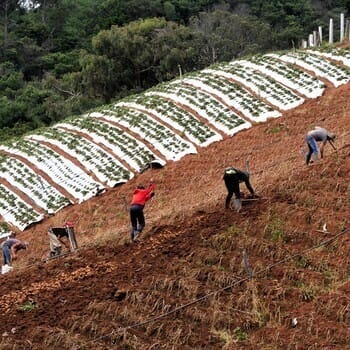
Nature north of San Rafael is celebrating a very special anniversary: majestic condors, which had not been seen in the Venezuelan Andes for over five decades, have once again settled in the high mountain regions. Behind the tranquil Laguna La Cura, at the foot of the striking Pico Pan de Azúcar, they are now once again circling the skies – an unforgettable spectacle for hikers and nature lovers.” background=”#4D4444″ font_size=”14″ max_width=”600″ shadow=”yes”]San Rafael de Mucuchíes – Venezuela’s highest village[/su_tooltip]. Continuing along the main road, the next stop is San Rafael de Mucuchíes, famous for its [su_tooltip title=”Capilla de Piedra – The stone heart of the páparamo” text=”On the eastern outskirts of San Rafael de Mucuchíes, on the road to Apartaderos, lies one of Venezuela’s most moving works of art: the Capilla de Piedra. The small chapel appears as though it has grown directly out of the Andean soil – and that is precisely what it is.
It was built between 1980 and 1984 by Juan Félix Sánchez (1900-1997), a local-born artist and mystic who preserved the traditions of his homeland throughout his life. Without any building plans, using only stones from the river, shells, coral and sheer determination, he created this unique place of worship together with Epifanía Gil and residents of San Rafael and El Tisure. Every stone was laid by hand – a work of simple beauty and deep spirituality. It was consecrated on 18 February 1984 and is now considered a Venezuelan cultural heritage site.
Right next to the chapel stands the Museo de Los Andes ‘Benigno y Vicenta Sánchez’, housed in the former home of Juan Félix Sánchez. It preserves personal belongings, photographs and a large part of his artistic oeuvre.
Anyone visiting San Rafael should take the time to visit this peaceful spot.” background=”#4D4444″ font_size=”14″ max_width=”600″ shadow=”yes”]Capilla de Piedra – The stone heart of the páparamo[/su_tooltip] [su_icon icon=”icon: instagram” background=”#ebeaea” color=”#672109″ text_color=”#672109″ size=”16″ shape_size=”4″ radius=”12″ text_size=”14″ margin=”0px 3px 0px 3px” url=”https://www.instagram.com/museodelosandes/”][/su_icon]. In the immediate vicinity, along the main road, [su_tooltip title=”The Mucuchíes – Venezuela’s loyal national dog” text=”The Mucuchíes, named after the town of Mucuchíes in the state of Mérida, is Venezuela’s only recognised dog breed and was officially declared the national dog in 1964. These robust, imposing dogs are typical mountain and herding dogs: for generations they have been bred in the Venezuelan Andes to herd livestock and guard farms – a task that is still evident today in their watchful yet gentle nature. The breed became famous above all through Simón Bolívar’s faithful companion, Nevado. The Liberator was given the dog as a gift by a farmer in San Rafael de Mucuchíes during the Campaña Admirable (1813). Nevado accompanied Bolívar into numerous battles and once saved his life by resolutely fending off an attacker.
Mucuchíes dogs are large (55-72 cm, 30-50 kg), sturdy and have a pleasantly imposing appearance. Their thick coat is usually white with black or honey-coloured markings. They are considered intelligent and affectionate towards their owners, but remain reserved towards strangers – a natural protective instinct that reflects their origins as herding and guard dogs.
In the 20th century, the Mucuchí population was seriously threatened. The cause was the Venezuelan oil boom, which drew many people from the Andes to the cities and led to a decline in traditional agriculture with its herds – and with it the demand for herding dogs. To save the breed from extinction, the ‘Friends of the Mucuchí’ have been working to preserve it since 1961, with breeding stations in Caracas and Mérida. In 2023, purebred Mucuchíes were certified by the Federación Canina de Venezuela (FCV) for the first time in many years.” background=”#4D4444″ font_size=”14″ max_width=”600″ shadow=”yes”]The Mucuchíes puppies[/su_tooltip] are offered for sale. North of the village, the [su_tooltip title=”The Condor – Majestic Guardian of the Andes” text=”The Andean condor (Vultur gryphus) is far more than a bird – it is a sacred symbol for indigenous peoples and a silent guardian of nature. With a wingspan of up to 320 cm and a weight of 15 kg (females 8-11 kg), it is one of the world’s largest flying birds and the heaviest bird of prey, living over 50 years in the wild. For millennia, it has been revered by Andean cultures, including the Timoto-Cuicas, as a mediator between earth and heaven – connecting the human realm (Kay Pacha) with the divine (Hanan Pacha) and carrying souls to the afterlife. Alongside the puma (earth) and the snake (underworld), it completes Andean cosmology.
In the 20th century, condor populations collapsed sharply – in Venezuela, the species was even thought extinct. The main cause, then and now, is illegal hunting by farmers who falsely believe condors attack livestock; in truth, they are harmless scavengers. Poisoning from baited carcasses and habitat loss also contributed. However, since the 1990s, breeding centres like those in the Mifafi Valley and Parque Zoológico Chorros de Milla have worked on reintroduction. Their efforts paid off: in 2025, wild condors were sighted in the Venezuelan Andes for the first time in over fifty years – a hopeful return that proves the protection of these sacred birds is worthwhile.” background=”#4D4444″ font_size=”14″ max_width=”600″ shadow=”yes”]The Andean Condor[/su_tooltip] was successfully reintroduced into the wild in 2025.


Hato del Llano

[su_tooltip title=”Hato del Llano” text=”The small village of Hato del Llano lies at an altitude of around 3,400 metres and is the last settlement before the observatory. It consists of a few simple houses lined up along the only road and seems as if it has been left behind by time. The thin air and the barren landscape with its typical páramo vegetation characterise the scene. Here, people live mainly from agriculture and the growing tourism that comes to the village due to its proximity to the observatory.
It is well worth a short detour to experience the peaceful, almost meditative atmosphere of this high-altitude Andean village.” background=”#4D4444″ font_size=”14″ max_width=”600″ shadow=”yes”]Hato del Llano[/su_tooltip]. The last village before the famous [su_tooltip title=”Llano del Hato National Astronomical Observatory” text=”This observatory, beautifully situated in the Andes, comes highly recommended for anyone fascinated by the mysteries of the universe: the Observatorio Astronómico Nacional de Llano del Hato, often simply referred to as the Astrofísico de Mérida. Situated at an altitude of 3,600 metres in the Venezuelan Andes, it is one of the highest observatories in the world. Its unique location near the equator offers a rare view of the skies of both hemispheres, the Northern and Southern Hemispheres.
A real highlight is the technical equipment: the observatory has four domes housing historic and high-precision telescopes, including a large refractor (65 cm aperture) and a reflector (1 metre diameter) – both instruments from the renowned German firm Carl Zeiss. The absolute highlight is a night-time observation tour. When darkness falls over the Andes and the sky above you glows with a breathtaking sea of stars, you’ll forget for a moment the thin, clear mountain air. Looking through the gigantic telescopes and seeing Saturn’s rings or Jupiter with your own eyes is an unforgettable feeling. Temperatures drop to between 5 and 12 degrees at night – so be sure to pack warm clothes!

Address: Llano del Hato, Via Apartaderos-Puerto Nuevo, Mérida
Opening hours: Thursday to Saturday, 3 pm – 7 pm (no entry after 7 pm)” background=”#4D4444″ font_size=”14″ max_width=”600″ shadow=”yes”]Observatorio Astronómico Nacional Llano del Hato[/su_tooltip] [su_icon icon=”icon: phone” background=”#ebeaea” color=”#672109″ text_color=”#672109″ size=”16″ shape_size=”4″ radius=”12″ text_size=”14″ margin=”0px 3px 0px 3px” url=”tel:584146189345″][/su_icon] [su_icon icon=”icon: whatsapp” background=”#ebeaea” color=”#672109″ text_color=”#672109″ size=”16″ shape_size=”4″ radius=”12″ text_size=”14″ margin=”0px 3px 0px 3px” url=”https://wa.me/584146189345″][/su_icon] [su_icon icon=”icon: instagram” background=”#ebeaea” color=”#672109″ text_color=”#672109″ size=”16″ shape_size=”4″ radius=”12″ text_size=”14″ margin=”0px 3px 0px 3px” url=”https://www.instagram.com/fundacioncida”][/su_icon] at an altitude of 3,600 metres. Guided tours, night-time observations and an interactive museum (MACE) are on the programme.

Accommodation

Overnight stays are possible at the [su_tooltip title=”Llano del Hato National Astronomical Observatory” text=”This observatory, beautifully situated in the Andes, comes highly recommended for anyone fascinated by the mysteries of the universe: the Observatorio Astronómico Nacional de Llano del Hato, often simply referred to as the Astrofísico de Mérida. Situated at an altitude of 3,600 metres in the Venezuelan Andes, it is one of the highest observatories in the world. Its unique location near the equator offers a rare view of the skies of both hemispheres, the Northern and Southern Hemispheres.
A real highlight is the technical equipment: the observatory has four domes housing historic and high-precision telescopes, including a large refractor (65 cm aperture) and a reflector (1 metre diameter) – both instruments from the renowned German firm Carl Zeiss. The absolute highlight is a night-time observation tour. When darkness falls over the Andes and the sky above you glows with a breathtaking sea of stars, you’ll forget for a moment the thin, clear mountain air. Looking through the gigantic telescopes and seeing Saturn’s rings or Jupiter with your own eyes is an unforgettable feeling. Temperatures drop to between 5 and 12 degrees at night – so be sure to pack warm clothes!

Address: Llano del Hato, Via Apartaderos-Puerto Nuevo, Mérida
Opening hours: Thursday to Saturday, 3 pm – 7 pm (no entry after 7 pm)” background=”#4D4444″ font_size=”14″ max_width=”600″ shadow=”yes”]Llano del Hato National Astronomical Observatory[/su_tooltip] [su_icon icon=”icon: phone” background=”#ebeaea” color=”#672109″ text_color=”#672109″ size=”16″ shape_size=”4″ radius=”12″ text_size=”14″ margin=”0px 3px 0px 3px” url=”tel:584146189345″][/su_icon] [su_icon icon=”icon: whatsapp” background=”#ebeaea” color=”#672109″ text_color=”#672109″ size=”16″ shape_size=”4″ radius=”12″ text_size=”14″ margin=”0px 3px 0px 3px” url=”https://wa.me/584146189345″][/su_icon] [su_icon icon=”icon: instagram” background=”#ebeaea” color=”#672109″ text_color=”#672109″ size=”16″ shape_size=”4″ radius=”12″ text_size=”14″ margin=”0px 3px 0px 3px” url=”https://www.instagram.com/fundacioncida”][/su_icon] subject to prior booking.


Trasandina (Barinas – Apartaderos)

[su_tooltip title=”San Rafael de Mucuchíes – Venezuela’s highest village” text=”At an altitude of 3,140 metres, nestled in the impressive Sierra de Santo Domingo, lies San Rafael de Mucuchíes – officially the highest settlement in Venezuela. The small settlement stretches across a fertile plateau along the Transandina and is traversed by the clear waters of the Río Chama. Surrounded by snow-capped peaks and glistening lagoons, the village is a popular stopover, particularly due to the picturesque Capilla de Piedra. Young Mucuchíes puppies are often on sale right nearby – that famous breed of dog which accompanied Simón Bolívar on his campaigns and has been declared the national dog of Venezuela.
Nature north of San Rafael is celebrating a very special anniversary: majestic condors, which had not been seen in the Venezuelan Andes for over five decades, have once again settled in the high mountain regions. Behind the tranquil Laguna La Cura, at the foot of the striking Pico Pan de Azúcar, they are now once again circling the skies – an unforgettable spectacle for hikers and nature lovers.” background=”#4D4444″ font_size=”14″ max_width=”600″ shadow=”yes”]San Rafael de Mucuchíes – Venezuela’s highest village[/su_tooltip]

The Carretera [su_tooltip title=”Trasandina (Barinas – Apartaderos)” text=”A Winding Symphony: The Trasandina Route from Lowlands to Highlands
The roughly 100 km of the Carretera Trasandina from Barinas up to Apartaderos are more than just a major road – it is a breathtaking journey conquering over 3,000 meters of elevation, with landscapes shifting from tropical lowlands to the cool, mystical páramo. This classic Venezuelan route is a must for exploring the Andes authentically.
The drive starts in Barinas, straight to Barinitas, then turns into a winding, well-paved mountain road that follows the natural contours of the hills. Each bend reveals waterfalls, dramatic light on the slopes, cultivated fields, and eventually the first solitary frailejones – signaling arrival in the páramo.
About 60 km in, Cascada El Velo de la Novia invites for a refreshing dip. Shortly after, Mirador Las Piedras offers a perfect rest stop with stunning views. Near the Las Piedras turnoff lies the recommended Cabañas Mi Querencia.
The road climbs to Santo Domingo (2,000 m), which offers good tourist infrastructure. From here, the route rises steeply, passing the pass at about 3,500 meters, where a turnoff leads to Laguna de Mucubají – a highlight. At the lakeside restaurant, try the excellent Pisca andina and hearty pastelitos andinos.
You then reach Apartaderos, a practical base for highland excursions. Nearby, Marcus Tobía, a Venezuelan Everest summiteer, runs Escuela De Montaña Sagarmatha, offering accommodation and guided mountain tours.
Practical Tips: Allow at least 3 hours driving time plus 2–3 hours for stops. A standard car suffices, but a nimble vehicle helps on the curves. Drive calmly and don’t rush.
Temperatures drop sharply – dress in layers and bring a warm jacket, hat, and gloves. Acclimatize to the altitude, drink plenty of water, and avoid strenuous activity and alcohol during the first hours at high elevation.” background=”#4D4444″ font_size=”14″ max_width=”600″ shadow=”yes”]Trasandina (Barinas – Apartaderos)[/su_tooltip] connects the lowlands of the Llanos with the Páramo, climbing over 3,000 metres in altitude over a distance of just under 100 km. Along the route there are several worthwhile stops, such as the [su_tooltip title=”Cascada El Velo de la Novia” text=”This picturesque waterfall – ‘The Bride’s Veil’ – on the road from Barinitas to Mérida is a popular and easily accessible stop on the journey up into the Andean highlands. Its name stems from a tragic legend: a Spanish conquistador abducted Princess Nube Blanca from the Miyoi people. She fell in love with him, but her people brought her back, as they did not accept the union. In despair, she took her own life at the waterfall. Even today, it is said, the falling water forms the white veil of the unfortunate bride.
The narrow waterfall, some 50 metres high, plunges over a rock face and fills the surrounding air with a refreshing mist. The ice-cold mountain water, the fresh air and the lush vegetation of the wooded area create an inviting atmosphere. The area is clean and well-maintained, making it perfect for a short break or a stroll.
Practical information: Access to the viewpoint is easy, though caution is advised as parts of the handrails on the steps were recently missing. There is an opportunity to swim in the cool pool at the base of the waterfall.
Those wishing to stay longer will find accommodation a few kilometres further on towards Las Piedras, for example at the Cabañas mi Querencia.
Even though the waterfall is not one of the very highest, a visit is a worthwhile and pleasant experience for enjoying the natural beauty of this typical mountain region.” background=”#4D4444″ font_size=”14″ max_width=”600″ shadow=”yes”]Cascada El Velo de la Novia[/su_tooltip], the [su_tooltip title=”Mirador Las Piedras” text=”This viewpoint is perfect for a breather with spectacular views. Located less than 60 km past Barinas and just about a kilometre past the Cascada El Velo de la Novia, it invites you to take a break with its simple kiosks. The panoramic view is considered one of the highlights of the entire route.
At the centre of the view lies the emerald-green Santo Domingo reservoir (Represa José Antonio Páez), nestled in the deep valley of the river of the same name. The surrounding high valleys and mountain villages – such as the picturesque Las Piedras – come together to form a typical Andean panorama.
*Tip: You can park your car here without any problems. If you’d like to stay in the area for longer, you’ll find the highly recommended accommodation Cabañas Mi Querencia nearby, at the turn-off to Las Piedras.” background=”#4D4444″ font_size=”14″ max_width=”600″ shadow=”yes”]Mirador Las Piedras[/su_tooltip] and, as a highlight, the [su_tooltip title=”Laguna de Mucubají” text=”At an altitude of 3,540 metres lies Laguna de Mucubají – one of the largest and most accessible glacial lagoons in the Venezuelan Andes. Its name means ‘place of great water’ in the indigenous language, and a visit is an absolute must on any trip to the Andes. A place of unspoilt beauty that allows you to feel the majestic power of this mountain landscape.
The lagoon is a remnant of the last ice age and is around 10,000 years old. The emerald-green water, framed by the barren, surreal beauty of the páramo and the characteristic frailejones (‘monk plants’), offers a breathtaking photo opportunity. The air here is always fresh, often cold and windy; warm clothing is essential.
An easy, well-marked circular trail (approx. 45 minutes) leads directly around the lake and is suitable for everyone. For the more adventurous, there are more challenging trails, such as the route to the higher-altitude Laguna Negra or even the ascent of Pico Mucuñuque (4,609 m). From the eastern side of the lagoon, guided excursions on horseback or by mule can be undertaken.” background=”#4D4444″ font_size=”14″ max_width=”600″ shadow=”yes”]Laguna de Mucubají[/su_tooltip] (45-minute circular walk). In [su_tooltip title=”Santo Domingo” text=”Santo Domingo lies at an altitude of around 2,100 metres, a central location on the Trasandina and the ideal stop for acclimatisation. As the main town of the Municipality of Cardenal Quintero, the village offers a well-developed tourist infrastructure and serves as an important agricultural centre for the region.
Life here revolves around two main activities: tourism and agriculture. Santo Domingo is known as the ‘capital of trout’ (Trucha), and a dish featuring freshly farmed trout – often combined with the region’s mushrooms – is a culinary must. The fertile slopes and valleys also provide a large proportion of the national potato harvest, as well as various vegetables and berries.
With its mild climate (average ~16 °C) and a wide selection of family-run posadas as well as comfortable hotels such as the Trucha Azúl, Santo Domingo is the perfect base for travellers. From here, you can set off on excursions into the surrounding countryside. The emerald-green Santo Domingo reservoir (Represa José Antonio Páez), fed by the river of the same name, dominates the landscape and can be admired from the nearby Mirador Las Piedras.
Visitors here at the end of September can experience the colourful festival in honour of the patron saint San Jerónimo, a tradition dating back to the 17th century. For an overnight stay away from the higher páramo areas, Santo Domingo is the best choice.” background=”#4D4444″ font_size=”14″ max_width=”600″ shadow=”yes”]Santo Domingo[/su_tooltip] there is a wide selection of restaurants and accommodation.

Accommodation

The popular [su_tooltip title=”Hotel Trucha Azúl” text=”This hotel is more than just a place to stay: the spacious complex – including a restaurant, nightclub and function rooms – is beautiful and, with its magnificent gardens, stunning views and pleasantly cool climate, invites you to linger. The rooms are spacious and attractively designed, and the quiet location is very pleasant.
An absolute highlight is the cuisine, featuring delicious trout specialities from the region.

Address: Carretera Nacional Barinas – Merida, Santo Domingo, Mérida” background=”#4D4444″ font_size=”14″ max_width=”600″ shadow=”yes”]Hotel Trucha Azúl[/su_tooltip] [su_icon icon=”icon: phone” background=”#ebeaea” color=”#672109″ text_color=”#672109″ size=”16″ shape_size=”4″ radius=”12″ text_size=”14″ margin=”0px 3px 0px 3px” url=”tel:584244598992″][/su_icon] [su_icon icon=”icon: phone” background=”#ebeaea” color=”#672109″ text_color=”#672109″ size=”16″ shape_size=”4″ radius=”12″ text_size=”14″ margin=”0px 3px 0px 3px” url=”tel:582748988066″][/su_icon] [su_icon icon=”icon: whatsapp” background=”#ebeaea” color=”#672109″ text_color=”#672109″ size=”16″ shape_size=”4″ radius=”12″ text_size=”14″ margin=”0px 3px 0px 3px” url=”https://wa.me/584244598992″][/su_icon] [su_icon icon=”icon: instagram” background=”#ebeaea” color=”#672109″ text_color=”#672109″ size=”16″ shape_size=”4″ radius=”12″ text_size=”14″ margin=”0px 3px 0px 3px” url=”https://www.instagram.com/latruchaazul”][/su_icon] [su_icon icon=”icon: link” background=”#ebeaea” color=”#672109″ text_color=”#672109″ size=”16″ shape_size=”4″ radius=”12″ text_size=”14″ margin=”0px 3px 0px 3px” url=”https://latruchaazul.com”][/su_icon] in the centre of Santo Domingo always has a room available.

Food and drink

At the [su_tooltip title=”Refugio Mucubají” text=”This restaurant at the entrance to Laguna Mucubají has been serving traditional Venezuelan mountain cuisine in a rustic atmosphere since 1959. We particularly recommend the hearty Pisca andina, the Pastelitos andinos as a light snack, and the hot chocolate.
The menu ranges from classic dishes such as fresh trout (Trucha), crispy Cochino frito (roast pork) and hearty Sancocho cruzado (stew) to a full lunch menu with soup, a main course, juice and dessert. Typical Merida sweets are ideal to take away or as a gift, as is the smoked, vacuum-packed trout – the house speciality.

Address: At the entrance to La Laguna Mucubaji, Mérida
Price: €-€€” background=”#4D4444″ font_size=”14″ max_width=”600″ shadow=”yes”]Refugio Mucubají[/su_tooltip] [su_icon icon=”icon: instagram” background=”#ebeaea” color=”#672109″ text_color=”#672109″ size=”16″ shape_size=”4″ radius=”12″ text_size=”14″ margin=”0px 3px 0px 3px” url=”https://www.instagram.com/refugiomucubaji”][/su_icon], [su_tooltip title=”Pastelitos Andinos” text=”These savoury pastries are popular throughout the Andean region of Venezuela, particularly in the states of Mérida, Táchira and Trujillo. The exact filling can vary from place to place.
The basic components are a wheat pastry shell and a savoury filling made from seasoned minced meat, chicken or cheese. Depending on the region and personal preference, ingredients such as peppers, onions, raisins or olives are added to the filling.
Pastelitos Andinos are a versatile snack enjoyed at any time of day – as a hearty breakfast, a quick midday snack or evening tapas. They are typically deep-fried and served hot, often with a spicy sauce such as ‘salsa picante’ or ‘salsa de ajo’.” background=”#4D4444″ font_size=”14″ max_width=”600″ shadow=”yes”]Pastelitos Andinos[/su_tooltip] and a warming [su_tooltip title=”Pisca Andina” text=”This hearty milk soup is popular throughout the Andean region, particularly in the states of Mérida, Táchira and Trujillo. The exact ingredients vary from region to region. The basic ingredients are a broth as rich as possible, milk, egg and white, unsalted cheese. Depending on the region, potatoes or rice are then added. Pisca Andina can be eaten at any time of day, especially in the morning when temperatures in the mountains are still low. It is a good source of protein and is vegetarian. It goes well with a (wheat) arepa.
Pisca Andina recipe
Ingredients for four people: 1 l strong stock; 4 potatoes; 200 g white, unsalted cheese; 1 spring onion; 3 garlic cloves; 2 tbsp butter; 1 l whole milk; 2 sprigs of fresh coriander; salt; pepper; 4 eggs
Method: 1.) Finely dice the potatoes and cheese, chop the garlic and coriander very finely, and slice the spring onion thinly. 2.) Pour the stock over the diced potatoes and cook until the potatoes are soft, then reduce slightly. Meanwhile, sauté the spring onions and garlic. 3.) Add the milk, bring to the boil, stirring well. Add the diced cheese, spring onions and garlic. Crack the eggs, whisk them and add to the soup. Season to taste with salt and pepper, ladle into bowls and garnish with the coriander.” background=”#4D4444″ font_size=”14″ max_width=”600″ shadow=”yes”]Pisca Andina[/su_tooltip] await.


Apartaderos

[su_tooltip title=”Apartaderos – A practical base in the heart of the Andes” text=”Apartaderos, situated at an altitude of around 3,300 metres, is a hub for any traveller in the Andes. The place presents itself less as an idyllic mountain village and more as a functional roadside town along the legendary Trasandina. Here you will find all the essential amenities for continuing your journey, including a petrol station.
There are several simple lodgings, often equipped with heating and plenty of woollen blankets (as temperatures can drop below freezing at night), as well as large souvenir shops selling typical Andean products and rustic restaurants. A particularly popular and unmissable stop is Embutidos El Águila, where excellent homemade sausage and cheese specialities can be sampled and purchased right by the roadside.
The real fascination, however, lies in the breathtaking high-mountain surroundings. Nestled within the unique vegetation of the páramo and situated at the watershed of three major valleys, the landscape around Apartaderos offers a rugged beauty. From here, trips to the nearby Llano del Hato National Observatory are a must for night-time stargazing in crystal-clear air. At the same time, the village serves as an ideal starting point for trekking tours. For ambitious mountaineers and hikers, the Escuela de Montaña Sagarmatha offers not only organisation and guidance, but also its own accommodation facilities.” background=”#4D4444″ font_size=”14″ max_width=”600″ shadow=”yes”]Apartaderos – A practical base in the heart of the Andes[/su_tooltip] serves as a sort of transport hub and regional supply centre in this part of the Andes. Alongside countless souvenir shops, restaurants and posadas, there is also a petrol station here. The journey time to Mérida from here is around three hours.

Accommodation

The [su_tooltip title=”Escuela De Montaña Sagarmatha” text=”Situated at an altitude of 3,550 metres, this mountaineering school was founded by Everest conqueror and architect Marcus Tobía and serves as a training centre for children and adults. The entire camp, from the wooden furniture to the architecture, was designed and built by him personally. The facilities are functional and practical: sturdy mattresses, warm sleeping bags, shared bathrooms with a reliable hot water supply and a well-equipped kitchen. The excellent cooks prepare local specialities.
The programme focuses on alpine education, teamwork and pushing personal boundaries. The site includes camping areas around Frailejones, as well as opportunities for hiking and mountain biking. The centre is run by a friendly team, who also provide the catering. The location offers views of the snowfields of the Águilas Blancas and direct access to the high mountains.
Particularly suitable for motivated independent travellers and groups seeking a hands-on mountain experience.

Address: Apartaderos, Mérida
Price: €€” background=”#4D4444″ font_size=”14″ max_width=”600″ shadow=”yes”]Escuela De Montaña Sagarmatha[/su_tooltip] [su_icon icon=”icon: phone” background=”#ebeaea” color=”#672109″ text_color=”#672109″ size=”16″ shape_size=”4″ radius=”12″ text_size=”14″ margin=”0px 3px 0px 3px” url=”tel:584123251648″][/su_icon] [su_icon icon=”icon: whatsapp” background=”#ebeaea” color=”#672109″ text_color=”#672109″ size=”16″ shape_size=”4″ radius=”12″ text_size=”14″ margin=”0px 3px 0px 3px” url=”https://wa.me/584247562573″][/su_icon] [su_icon icon=”icon: whatsapp” background=”#ebeaea” color=”#672109″ text_color=”#672109″ size=”16″ shape_size=”4″ radius=”12″ text_size=”14″ margin=”0px 3px 0px 3px” url=”https://wa.me/584242753999″][/su_icon] [su_icon icon=”icon: instagram” background=”#ebeaea” color=”#672109″ text_color=”#672109″ size=”16″ shape_size=”4″ radius=”12″ text_size=”14″ margin=”0px 3px 0px 3px” url=”https://www.instagram.com/sagarmathacamp”][/su_icon] [su_icon icon=”icon: envelope” background=”#ebeaea” color=”#672109″ text_color=”#672109″ size=”16″ shape_size=”4″ radius=”12″ text_size=”14″ margin=”0px 3px 0px 3px” url=”mailto:sagarmathacampame@gmail.com”][/su_icon] is not merely accommodation, but also has a reputation as a hiking and trekking centre far beyond the region.


Collado del Cóndor

[su_tooltip title=”The Collado del Cóndor: the highlight of the Andean Road” text=”The Condor Pass, also known as Pico El Aguila, is the highest point on the paved Carretera Trasandina in Venezuela at 4,118 metres. It is situated in the Sierra de La Culata National Park and is a must-see stop for all travellers.
A bronze condor monument from 1925 commemorates Simon Bolivar’s heroic forced march through the inhospitable high mountains, the Campaña Admirable, in 1813, during which he was able to capture Merida, Trujillo and Caracas without a fight. It symbolises the ‘breath of freedom’ which – as the inscription states – swept over these mountains to liberate the country.
On site, small kiosks and simple restaurants offer hot drinks (hot chocolate) and regional snacks (smoked cheese, sausages, sweets) – a welcome pick-me-up in the cool temperatures, which average around 5°C and can drop below freezing in winter. Sturdy clothing is highly recommended due to the windy, often foggy climate. Due to the low oxygen levels at this altitude, strenuous physical activity should be avoided.
This spot is also the starting point for the country’s highest road, the spectacular side road leading to picturesque Pinango: the route climbs to an altitude of up to 4,300 metres, offering breathtaking views of the Paramo La Culata, and finally ends in Pinango at a good 2,300 metres.” background=”#4D4444″ font_size=”14″ max_width=”600″ shadow=”yes”]The Collado del Cóndor: the highlight of the Andean Road[/su_tooltip]. The Condor Pass, at 4,118 m the highest point of the Transandina, lies in the Sierra de La Culata National Park. There are kiosks selling snacks and hot drinks (chocolate caliente). Here the route branches off towards Piñango, where the [su_tooltip title=”Refugio de Cóndor” text=”Refugio del Cóndor
High in the Páramo de Mifafí lies the Refugio del Cóndor, a conservation station dedicated to breeding and reintroducing the Andean condor – the largest flying bird in the world. For a long time, there were no wild condors left in Venezuela. However, since 2025, a wild condor pair has made this region their home again – a major success for conservation efforts. In addition, about ten other specimens live at the refuge, including ‘El Combatiente’ (The Fighter), a majestic 17-year-old male.
Seeing these birds up close is impressive – and you might even spot the free-flying pair circling in the sky.
The station is easy to reach and open during daytime hours. Staff from the national park authority are happy to explain their work on site.
Getting there: From the INPARQUES national park administration post on the main road between Apartaderos and the Condor Pass, turn off toward Mifafí. After about five minutes on a paved road, you will reach the station.
Opening hours: Daily from 7:00 AM (daytime hours).” background=”#4D4444″ font_size=”14″ max_width=”600″ shadow=”yes”]Refugio de Cóndor[/su_tooltip] is situated.


Refugio del Cóndor

[su_tooltip title=”Refugio del Cóndor” text=”High up in the Páramo de Mifafí lies the Refugio del Cóndor, a conservation centre for the breeding and reintroduction of the Andean condor – the world’s largest flying bird. For a long time, there were no more wild condors in Venezuela. But since 2025, a wild pair of condors has once again made this region their home – a major success for conservation efforts. In addition, around ten other birds live at the refuge, such as ‘El Combatiente’ (the fighter), a stately 17-year-old male.
Seeing the birds up close is impressive – and you might even spot the free-flying pair circling in the sky.
The station is easily accessible and open during the day. Staff from the National Park Authority are happy to explain their work on site.

How to get there: From the INPARQUES national park office on the main road between Apartaderos and the Condor Pass, turn off towards Mifafí. After about five minutes’ drive along a tarmac road, you will reach the station.
Opening hours: daily from 7:00 am (during the day)” background=”#4D4444″ font_size=”14″ max_width=”600″ shadow=”yes”]Refugio del Cóndor[/su_tooltip] – Just before reaching the Collado del Cóndor, a paved track branches off to this breeding station for Andean condors.
From [su_tooltip title=”The Collado del Cóndor: the highlight of the Andean Road” text=”The Condor Pass, also known as Pico El Aguila, is the highest point on the paved Carretera Trasandina in Venezuela at 4,118 metres. It is situated in the Sierra de La Culata National Park and is a must-see stop for all travellers.
A bronze condor monument from 1925 commemorates Simon Bolivar’s heroic forced march through the inhospitable high mountains, the Campaña Admirable, in 1813, during which he was able to capture Merida, Trujillo and Caracas without a fight. It symbolises the ‘breath of freedom’ which – as the inscription states – swept over these mountains to liberate the country.
On site, small kiosks and simple restaurants offer hot drinks (hot chocolate) and regional snacks (smoked cheese, sausages, sweets) – a welcome pick-me-up in the cool temperatures, which average around 5°C and can drop below freezing in winter. Sturdy clothing is highly recommended due to the windy, often foggy climate. Due to the low oxygen levels at this altitude, strenuous physical activity should be avoided.
This spot is also the starting point for the country’s highest road, the spectacular side road leading to picturesque Pinango: the route climbs to an altitude of up to 4,300 metres, offering breathtaking views of the Paramo La Culata, and finally ends in Pinango at a good 2,300 metres.” background=”#4D4444″ font_size=”14″ max_width=”600″ shadow=”yes”]The Collado del Cóndor[/su_tooltip]
The spectacular, 40 km-long route from the Condor Pass to Piñango is the highest road in Venezuela that can be driven on by a ‘normal’ car. With a bit of luck, you can see [su_tooltip title=”The Condor – Majestic Guardian of the Andes” text=”The Andean condor (Vultur gryphus) is far more than a bird – it is a sacred symbol for indigenous peoples and a silent guardian of nature. With a wingspan of up to 320 cm and a weight of 15 kg (females 8-11 kg), it is one of the world’s largest flying birds and the heaviest bird of prey, living over 50 years in the wild. For millennia, it has been revered by Andean cultures, including the Timoto-Cuicas, as a mediator between earth and heaven – connecting the human realm (Kay Pacha) with the divine (Hanan Pacha) and carrying souls to the afterlife. Alongside the puma (earth) and the snake (underworld), it completes Andean cosmology.
In the 20th century, condor populations collapsed sharply – in Venezuela, the species was even thought extinct. The main cause, then and now, is illegal hunting by farmers who falsely believe condors attack livestock; in truth, they are harmless scavengers. Poisoning from baited carcasses and habitat loss also contributed. However, since the 1990s, breeding centres like those in the Mifafi Valley and Parque Zoológico Chorros de Milla have worked on reintroduction. Their efforts paid off: in 2025, wild condors were sighted in the Venezuelan Andes for the first time in over fifty years – a hopeful return that proves the protection of these sacred birds is worthwhile.” background=”#4D4444″ font_size=”14″ max_width=”600″ shadow=”yes”]The Condor – Majestic Guardian of the Andes[/su_tooltip] circling here on the northern edge of the Páramo La Culata.


Timotes

[su_tooltip title=”Timotes: the hidden paradise of the Andes” text=”If you travel from Mérida towards Valera and Trujillo, you’ll pass through the hidden paradise of the Andes: Timotes. A charming, authentic farming village with around 18,000 inhabitants, it offers a direct insight into the way of life and annual festivals of this special region of Venezuela. Situated at an altitude of 2,025 metres, it enjoys a pleasant, cool climate all year round, with an average temperature of 16 °C.
Here, in the heart of the Venezuelan Andes, life is shaped by an independent and proud farming community. Long before the arrival of the Europeans (in the mid-16th century), the Timoto people were practising highly developed agriculture here in the high mountains. Maize, potatoes and cotton were grown on terraced fields on the mountain slopes.
Today, the people here grow an impressive variety of vegetables and fruit on small plots: green asparagus, artichokes, peaches, broccoli, lettuces, carrots, cauliflower, courgettes and much more. The air in the surrounding mountains smells of fresh vegetables and honest labour. It is a world where people call their oxen by name and earn their living directly from the earth’s bounty.
A key event of the year is the festival in honour of the patron saint, San Isidro, which takes place every year around 15 May. During the festival, the farmers decorate their ox carts with harvest offerings and parade through the village in a grand procession. This tradition highlights the community’s deep connection to its land and culture.” background=”#4D4444″ font_size=”14″ max_width=”600″ shadow=”yes”]Timotes: the hidden paradise of the Andes[/su_tooltip] – If you continue eastwards from Collado del Cóndor, you’ll reach the farming village of Timotes.

Accommodation

Perched high above the village with a stunning view is [su_tooltip title=”Entre Nubes – Among the Clouds” text=”This accommodation consists of a group of beautiful houses high above Timotes, offering breathtaking panoramic views of the mountains. The cosy rooms with fireplaces invite you to relax, whilst the unforgettable service – including freshly baked pastelitos andinos for breakfast – ensures you feel thoroughly pampered. The hosts, Melisa and Benito, are passionate connoisseurs of the region and are happy to organise tours to the nearby lagoons, páramos and mountain trails.
A real highlight is the perfect blend of absolute tranquillity, the majestic natural surroundings right on your doorstep, and the warm hospitality of the owners, who will introduce you to the authentic culture and friendly people of the Andes.

Address: Casa Mesa Alta, Timotes, Mérida
Price: €€” background=”#4D4444″ font_size=”14″ max_width=”600″ shadow=”yes”]Entre Nubes – Among the Clouds[/su_tooltip] [su_icon icon=”icon: instagram” background=”#ebeaea” color=”#672109″ text_color=”#672109″ size=”16″ shape_size=”4″ radius=”12″ text_size=”14″ margin=”0px 3px 0px 3px” url=”https://www.instagram.com/meridaentrenubes”][/su_icon] (between the clouds).

Food and drink

Creative delicacies made with regional ingredients are available at the [su_tooltip title=”Maktub Café Timotes” text=”Here, Yenni serves homemade delicacies that capture the essence of Andean home cooking. The highlight is her wonderfully stuffed courgettes – ‘calabacines’ – with a juicy minced meat ragout, served with fresh salad and gratinated cauliflower. Homemade desserts such as passion fruit chips (‘cascos de parchita’) or delicate fig pralines provide a sweet finish, and are also perfect to take away.
A real highlight is the personal, warm atmosphere and the passion with which Yenni prepares her dishes – here, you can taste the attention to detail in every bite.

Address: Centro Comercial Miranda, Timotes, Mérida
Price: €€” background=”#4D4444″ font_size=”14″ max_width=”600″ shadow=”yes”]Maktub Café Timotes[/su_tooltip] [su_icon icon=”icon: phone” background=”#ebeaea” color=”#672109″ text_color=”#672109″ size=”16″ shape_size=”4″ radius=”12″ text_size=”14″ margin=”0px 3px 0px 3px” url=”tel:584247195646″][/su_icon] [su_icon icon=”icon: instagram” background=”#ebeaea” color=”#672109″ text_color=”#672109″ size=”16″ shape_size=”4″ radius=”12″ text_size=”14″ margin=”0px 3px 0px 3px” url=”https://www.instagram.com/maktubcaferest”][/su_icon].

Zwischen Hochlandkaffee und karibischen Stränden

Stand 15.07.2026

[lwptoc labelShow=”anzeigen” labelHide=”verbergen”]

Die westliche Hälfte des Bundesstaates Mérida bietet besonders abwechslungsreiche Landschaften: Unterhalb der Hochgebirgsregion wird vielerorts aromatischer Hochlandkaffee angebaut, während in noch tieferen Lagen hochwertiger Kakao (Herkunft: Sur del Lago) kultiviert wird. Kurvenreiche Nebenstraßen führen von den Bergen hinunter in das Tiefland der Llanos oder zum Maracaibo-See. Dort, in El Vigía, befindet sich der Hauptflughafen der Region mit täglichen Verbindungen nach Caracas.

[su_image_carousel source=”media: 10564,10559,10562,10561,10560″ controls_style=”light” crop=”1:1″ columns=”3″ spacing=”no” align=”center” autoplay=”3″]

Ejido

Mit über 100.000 Einwohnern ist [su_tooltip title=”Ejido” text=”Ejido, die zweitgrößte Stadt im Bundesstaat Mérida, bildet das lebendige Verwaltungs- und Wirtschaftszentrum der Region. Als Teil einer großen städtischen Achse liegt sie in etwa 1.200 Metern Höhe im fruchtbaren Tal des Río Chama, unmittelbar in der Nähe der Landeshauptstadt Mérida. Die Stadt ist ein wichtiger Verkehrsknotenpunkt und ist vor allem für ihre intensive Agrarproduktion bekannt, wobei der Anbau von Knoblauch, Zwiebeln und Paprika die Region weit über die Landesgrenzen hinaus berühmt gemacht hat.
Für Reisende dient Ejido in erster Linie als Zwischenstopp und Basis für Ausflüge in die umliegende Andenlandschaft, wie beispielsweise in den Sierra Nevada Nationalpark. Innerhalb der Stadt laden Attraktionen wie die moderne Kathedrale Nuestra Senora del Rosario de Chiquinquira, die zentrale Plaza Bolívar und der Erholungspark Parque La Isla am Flussufer zum Verweilen ein. Ein Besuch des örtlichen Mercado Municipal bietet einen authentischen Einblick in den Alltag und die landwirtschaftlichen Produkte der Region.” background=”#4D4444″ font_size=”14″ max_width=”600″ shadow=”yes”]Ejido[/su_tooltip] die zweitgrößte Stadt des Bundesstaates, landwirtschaftliches Zentrum (Knoblauch, Zwiebeln, Paprika) und wichtiger Verkehrsknotenpunkt. Sehenswert sind die Plaza Bolívar, die Kirche „Iglesia Matriz De Ejido“ und der nahegelegene Mercado Municipal, auf dem ein buntes Treiben herrscht.


Jají

Wenn man in Ejido in Richtung Nordwesten abbiegt, kommt man zunächst am Freilichtmuseum [su_tooltip title=”La Venezuela de Antier” text=”Ein einzigartiges Freilichtmuseum, das mit großer Hingabe vom Künstler Alexis Montilla geschaffen wurde. Seit seiner Eröffnung 1991 können Besucher hier das Venezuela der 1920er Jahre entdecken – in all seiner Vielfalt und Reichhaltigkeit an Traditionen, authentisch nachgestellt.
Auf dem weitläufigen Gelände ist jeder einzelne Bundesstaat mit eigener Architektur, Folklore, Küche, Musik und Tänzen vertreten. Besonders beeindruckend ist die Darstellung von Yaracuy, wo Vieh über die Berge getrieben wird. Demnächst wird dem Gelände auch eine Nachbildung des Salto Angel hinzugefügt.
Die Atmosphäre ist geprägt von Nostalgie und Geschichte, die Besucher aller Altersgruppen in eine vergangene Ära versetzt. Eine erlebnisorientierte Reise in die Vergangenheit – anschaulich, liebevoll gestaltet, lehrreich und besonders beliebt bei Familien. Aufgrund der Höhenlage empfiehlt es sich, warme Kleidung einzupacken.

Adresse: km 5, Carretera Panamericana, via Jaji, Mérida
Preis: €€-€€€” background=”#4D4444″ font_size=”14″ max_width=”600″ shadow=”yes”]La Venezuela de Antier[/su_tooltip] [su_icon icon=”icon: instagram” background=”#ebeaea” color=”#672109″ text_color=”#672109″ size=”16″ shape_size=”4″ radius=”12″ text_size=”14″ margin=”0px 3px 0px 3px” url=”https://www.instagram.com/venezueladeantier”][/su_icon] vorbei. Anschließend erreichen Sie die malerische Kleinstadt [su_tooltip title=”Jají – Ein andines Juwel mit kolonialem Charme” text=”Etwa eine Stunde Fahrt von Mérida entfernt, auf 1.780 Metern Höhe, liegt das pittoreske Dorf Jají. Dieses malerische Dorf mit seinen Kopfsteinpflasterstraßen wurde bereits 1586 gegründet, erhielt aber erst durch eine umfangreiche Rekonstruktion 1971 sein heutiges, einheitliches Erscheinungsbild. Die rund 60 koloniale Häuser, deren Fassaden traditionell in Blau und Weiß gehalten sind, verleihen Jají seinen besonderen Charme. Um die Plaza Bolívar herum kann man durch Handwerksläden schlendern, während verschiedene Restaurants zum Verweilen einladen.
In der Fonda Doña Carmen, einem kolonialen Gebäude mit schönen Innenhof, werden die lokalen Spezialitäten Erbsensuppe und Forelle auf vielfältige Weise zubereitet. Einfache Unterkünfte stehen direkt im Dorf zur Verfügung. Gut eine halbe Stunde Autofahrt entfernt, in Richtung La Azulita, ist die Estancia La Bravera mit ihren liebevoll gepflegten Gärten eine empfehlenswerte Unterkunftsmöglichkeit.
Ein lohnenswertes Ziel ist der Freizeitpark ‘La Venezuela de Antier’. Hier hat der Künstler Alexis Montilla das Venezuela der 1920er Jahre mit seinen verschiedenen Regionen und Traditionen detailgetreu nachgebildet. In den Bergen über Jají baut Thomas Niko Walter, ein Deutscher mit faszinierender Geschichte, auf einer kleinen Finca qualitativ hochwertigen Andenkaffee an.” background=”#4D4444″ font_size=”14″ max_width=”600″ shadow=”yes”]Jají – Ein andines Juwel mit kolonialem Charme[/su_tooltip] mit ihren blau-weißen Kolonialhäusern. Ein Spaziergang über die Plaza Bolívar lohnt sich auf jeden Fall.

Unterkünfte

Eine halbe Stunde hinter Jají, in Richtung La Azulita, liegt die [su_tooltip title=”Estancia La Bravera” text=”Halbwegs zwischen Jají und La Azulita verbirgt sich dieses Paradies für Naturliebhaber hinter einem schlichten Eingangstor. Der Anwesen gleicht eher einem botanischen Garten, der sämtliche Pflanzenarten der andinen Páramos vereint – von Experten gekennzeichnet und liebevoll angeordnet. Besonders verzaubernd sind die unzähligen Kolibris, die durch die üppige Vegetation flitzen.
Die zehn Zimmer sind geschmackvoll eingerichtet und laden zum Verweilen ein. Das Herzstück des Anwesens ist ein traditioneller Caney mit einem Holzofen, in dem die Eigentümer selbst für ihre Gäste kochen.
Die Estancia wird von den Eigentümern persönlich geführt, die mit viel Engagement für das Wohlbefinden ihrer Gäste sorgen.

Adresse: Km 18 vía Jají-La Azulita, Páramo del Tambor, Mérida” background=”#4D4444″ font_size=”14″ max_width=”600″ shadow=”yes”]Estancia La Bravera[/su_tooltip] [su_icon icon=”icon: phone” background=”#ebeaea” color=”#672109″ text_color=”#672109″ size=”16″ shape_size=”4″ radius=”12″ text_size=”14″ margin=”0px 3px 0px 3px” url=”tel:584142933306″][/su_icon] [su_icon icon=”icon: whatsapp” background=”#ebeaea” color=”#672109″ text_color=”#672109″ size=”16″ shape_size=”4″ radius=”12″ text_size=”14″ margin=”0px 3px 0px 3px” url=”https://wa.me/584142933306″][/su_icon] [su_icon icon=”icon: envelope” background=”#ebeaea” color=”#672109″ text_color=”#672109″ size=”16″ shape_size=”4″ radius=”12″ text_size=”14″ margin=”0px 3px 0px 3px” url=”mailto:labravera@gmail.com”][/su_icon] [su_icon icon=”icon: link” background=”#ebeaea” color=”#672109″ text_color=”#672109″ size=”16″ shape_size=”4″ radius=”12″ text_size=”14″ margin=”0px 3px 0px 3px” url=”http://www.estancialabravera.com”][/su_icon] [su_icon icon=”icon: instagram” background=”#ebeaea” color=”#672109″ text_color=”#672109″ size=”16″ shape_size=”4″ radius=”12″ text_size=”14″ margin=”0px 3px 0px 3px” url=”https://www.instagram.com/estancialabravera”][/su_icon], die allein schon wegen ihrer Kolibris und ihres botanischen Gartens einen Besuch wert ist.

Essen und Trinken

In einer Seitenstraße unweit der Plaza Bolívar serviert [su_tooltip title=”Fonda Doña Carmen” text=”Dieses beliebte Restaurant befindet sich in einem alten kolonialen Gebäude mit dicken Lehmwänden und Ziegeldächern, nicht weit von der Plaza Bolívar entfernt. Der Eigentümer Omar Balza begrüßt seine Gäste mit authentischer Anden-Küche, die sich um zwei Spezialitäten dreht: die berühmte Erbsensuppe (Sopa de arvejas) und Forelle (Trucha), die hier auf jede erdenkliche Weise zubereitet wird. Es gibt auch herzhafte Hühner- und Rindfleischeintöpfe (Hervidos) sowie über offenem Feuer gegrillte Fleischgerichte.
Besonders sehenswert ist der Innenhof, in dem Gäste den Anbau und die Verarbeitung des regionalen Kaffees hautnah miterleben können – eine wunderbare Ergänzung zu den kulinarischen Angeboten.

Adresse: Calle Sucre, No. 22, gegenüber dem Museo de Los Pájaros, Jají, Mérida
Preis: €” background=”#4D4444″ font_size=”14″ max_width=”600″ shadow=”yes”]Fonda Doña Carmen[/su_tooltip] [su_icon icon=”icon: phone” background=”#ebeaea” color=”#672109″ text_color=”#672109″ size=”16″ shape_size=”4″ radius=”12″ text_size=”14″ margin=”0px 3px 0px 3px” url=”tel:584264734537″][/su_icon] [su_icon icon=”icon: whatsapp” background=”#ebeaea” color=”#672109″ text_color=”#672109″ size=”16″ shape_size=”4″ radius=”12″ text_size=”14″ margin=”0px 3px 0px 3px” url=”https://wa.me/584264734537″][/su_icon] [su_icon icon=”icon: envelope” background=”#ebeaea” color=”#672109″ text_color=”#672109″ size=”16″ shape_size=”4″ radius=”12″ text_size=”14″ margin=”0px 3px 0px 3px” url=”mailto:alquilerelcarmen@gmail.com”][/su_icon] [su_icon icon=”icon: instagram” background=”#ebeaea” color=”#672109″ text_color=”#672109″ size=”16″ shape_size=”4″ radius=”12″ text_size=”14″ margin=”0px 3px 0px 3px” url=”https://www.instagram.com/fondadonacarmen”][/su_icon] Erbsensuppe und Forelle.

Und sonst

Kurz vor Jají betreibt der deutsche politische Aktivist [su_tooltip title=”Thomas \”Niko\” Walter” text=”Letztendlich sind es nicht nur die faszinierenden Landschaften, sondern vor allem die außergewöhnlichen Menschen, die eine Reise lohnenswert machen. Einer von ihnen ist Thomas ‘Niko’ Walter. In den grünen Bergen nahe Mérida hat sich der deutsche politische Rebelle ein neues Leben aufgebaut – als Kaffeebauer, Handwerker und Zeitzeuge eines Lebens, das sich nicht leicht einordnen lässt.
Sein Weg führte ihn über diverse Umwege nach Venezuela. In den 1990er Jahren war er Teil der militanten Linken in Berlin. Der Vorwurf: Planung einer Bombenexplosion in einem Abschiebegefängnis, mit der Absicht, dass dabei niemand zu Schaden kommen sollte. 1995 gingen er und seine Mitstreiter untertauchen; über Stationen wie Nicaragua erreichten sie schließlich Venezuela. Ihre Geschichte wurde sogar verfilmt – die Dokumentation ‘Gegen den Strom – Abgetaucht in Venezuela’ (Partisan Filmverleih) porträtiert den Weg der Rebellen.
Heute lebt Thomas, mittlerweile über 60 Jahre alt, in Venezuela als anerkannter politischer Flüchtling. Hier betreibt er mit großer Hingabe eine kleine Kaffeefinca und freut sich, Besucher herumzuführen. Er erklärt den gesamten Prozess – von der Bohne bis zur Tasse. Man erfährt, wie Kaffee angebaut, geerntet, verarbeitet und geröstet wird. Außerdem hat er eine kleine Werkstatt eingerichtet, in der er jungen Leuten aus der Region das Tischlerhandwerk beibringt. Natürlich bleibt auch viel Zeit zum Gespräch. Es mangelt nicht an faszinierenden Themen.” background=”#4D4444″ font_size=”14″ max_width=”600″ shadow=”yes”]Thomas “Niko” Walter[/su_tooltip] [su_icon icon=”icon: whatsapp” background=”#ebeaea” color=”#672109″ text_color=”#672109″ size=”16″ shape_size=”4″ radius=”12″ text_size=”14″ margin=”0px 3px 0px 3px” url=”https://wa.me/584241707159″][/su_icon] eine kleine Kaffeefinca und eine Tischler-Lehrwerkstatt.
Unterdessen ist die Schmiedeschule [su_tooltip title=”La Caravana Escuela” text=”2019 startete der Schmied und Kameramann Daniel Souto die ‘Reisende Schmiedeschule’, die durch Bergdörfer rund um Mérida zieht. In fünf-tägigen Intensivkursen lernen die Teilnehmer das alte Handwerk des Schmiedens, wobei als Rohmaterial Schrott wie alte Karosserieteile verwendet wird. Am Ende bleibt eine vollständig ausgestattete Schmiede für die Dorfgemeinschaft zurück, in der ausgebildete Schmiede weiterarbeiten, Werkzeuge herstellen und später verkaufen können.
Die Schmiede treffen sich regelmäßig zum Austausch und zur Weiterbildung, und es besteht mittlerweile eine Zusammenarbeit mit Schulen, die das Handwerk in technischen Unterricht integrieren. In nur wenigen Jahren wurden über 200 Landwirte ausgebildet, mehr als 5.000 Werkzeuge geschmiedet und mehrere tausend Menschen entlang der Produktionskette erreicht. Neue Arbeitsplätze entstanden nicht nur in Schmieden, sondern auch im Bereich Bau, Tischlerei und Kunsthandwerk.
Besonders stolz ist das Team darauf, dass viele junge Leute Begeisterung für das Handwerk entwickeln. ‘Schmieden überwindet Generationen’, sagt Souto. ‘Unsere Workshops sind Räume der Kreativität und Freiheit, in denen junge Leute Spaß haben und sich nützlich fühlen können, während sie wertvolle Fähigkeiten erlernen.’ Souto ist per WhatsApp für Besuche in Dorfschmieden erreichbar; Spenden können auch über sein Instagram-Profil getätigt werden.” background=”#4D4444″ font_size=”14″ max_width=”600″ shadow=”yes”]La Caravana Escuela[/su_tooltip] [su_icon icon=”icon: whatsapp” background=”#ebeaea” color=”#672109″ text_color=”#672109″ size=”16″ shape_size=”4″ radius=”12″ text_size=”14″ margin=”0px 3px 0px 3px” url=”https://wa.me/584140361528″][/su_icon] [su_icon icon=”icon: instagram” background=”#ebeaea” color=”#672109″ text_color=”#672109″ size=”16″ shape_size=”4″ radius=”12″ text_size=”14″ margin=”0px 3px 0px 3px” url=”https://www.instagram.com/lacaravanaescuela”][/su_icon] von Daniel Souto unterwegs, reist durch die Bergdörfer und bringt den Menschen das Schmiedehandwerk bei.


La Azulita

Folgt man der Route von Jají aus nach Norden, erreicht man in etwas mehr als einer Stunde das Dorf [su_tooltip title=”La Azulita – das blaue Dorf der Anden” text=”Mit gerade einmal 16.000 Einwohnern liegt La Azulita auf 1.135 Metern in den venezolanischen Anden und bietet ganzjährig Temperaturen von 17-25°C. Benannt nach dem blauen Schimmer seiner umliegenden Berge, ist das Dorf eine idyllische Zuflucht für Naturliebhaber.
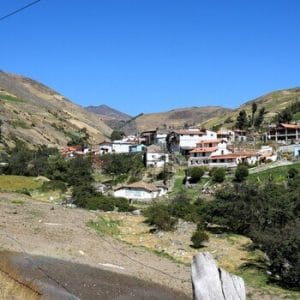
Mittelpunkt des Ortes ist die Plaza Bolívar, dominiert von dem neugotischen Santuario Inmaculada Concepción mit seinen 45 Meter hohen Türmen und auffallenden Buntglasfenstern. In der Nähe serviert die Trattoria de Herli hervorragende Pizza und Pasta, während die Posada El Tejar einfache Unterkünfte am Stadtrand bietet, wo der Besitzer Hektor gelegentlich in seiner alten Zuckerfabrik Papelon herstellt.
Einst auf Kaffee angewiesen, lebt La Azulita heute vom Tourismus. 1990 als ‘Ökologisches Dorf der Amerikas’ ausgezeichnet dank 80 % erhaltenen Primärwäldern, bietet es zudem Höhlentouren in den Cuevas del Pirata und den besten Klettersport im ganzen Bundesstaat Mérida.
La Azulita liegt an einer wichtigen Zugroute für Zugvögel, fast 400 Vogelarten wurden hier registriert, darunter Papageien, Tukanen und seltene Kolibris wie der Perijá-Kolibri und der Blaukehlspecht. Greifvögel und bedrohte Arten gedeihen hier ebenfalls, und der Ort ist international bekannt für seine Vogelbeobachtungswettbewerbe.” background=”#4D4444″ font_size=”14″ max_width=”600″ shadow=”yes”]La Azulita – das blaue Dorf der Anden[/su_tooltip][su_icon icon=”icon: instagram” background=”#ebeaea” color=”#672109″ text_color=”#672109″ size=”16″ shape_size=”4″ radius=”12″ text_size=”14″ margin=”0px 3px 0px 3px” url=”https://www.instagram.com/posadaeltejar”][/su_icon], welches nach dem bläulichen Schimmer der umliegenden Berge benannt ist. Dort, in den umliegenden Wäldern (zu 80 % erhaltene Primärwälder, 1990 mit dem Titel „Ökologisches Dorf der Amerikas“ ausgezeichnet), wurden fast 400 Vogelarten registriert – ein Paradies für Ornithologen und Wanderer. In den [su_tooltip title=”Cuevas del Pirata (Cuevas del Quebradón)” text=”Eine besondere Empfehlung für Naturliebhaber und Abenteurer: Die Cuevas del Pirata liegen im Nationalpark Sierra de La Culata, nur wenige Minuten von La Azulita entfernt. Laut Legende nutzte einst der Pirat Henry Morgan die Höhlen als Versteck, nachdem er Mérida geplündert hatte. Auch indigene Zeremonien sollen hier stattgefunden haben. Ein Ort mit Geschichte.
Das Kalkstein-Höhlensystem mit mehreren Eingängen entstand durch tausende Jahre Wasserverwitterung. Innen erwarten die Besucher Galerien, Kammern und Hallen bei angenehmen 19-22 Grad. Insekten, Vögel und nächtliche Fledermäuse leben hier. In der Höhle gibt es Routen unterschiedlicher Schwierigkeit – allerdings ist ein Guide Pflicht, da man sich leicht im Labyrinth verlieren kann.
Aktive Besucher können klettern, abseilen, mit der Seilbahn (Tirolesa) sausen oder die Baumkronenpfade erkunden. Bei Kletterern gilt dieser Ort als der beste im gesamten Bundesstaat Mérida. Guides und Sicherheitspersonal sind vor Ort – unbedingt Bargeld für die Guides mitbringen! Picknickplätze und Wanderwege laden zum Verweilen ein.
In der Nähe, auf dem Weg nach El Zancudo, liegt der Wasserfall La Palmita mit Kiosken, Tischen und einem Becken aus eiskaltem Flusswasser – ideal für einen Tag in der Natur. Es gibt ein natürliches Becken in Aguas Calientes. Alles ist gut ausgeschildert und nur wenige Minuten entfernt.

Adresse: La Azulita, Mérida
*Tipp: Denkt daran, Bargeld für die Guides mitzunehmen” background=”#4D4444″ font_size=”14″ max_width=”600″ shadow=”yes”]Cuevas del Pirata (Cuevas del Quebradón)[/su_tooltip] [su_icon icon=”icon: instagram” background=”#ebeaea” color=”#672109″ text_color=”#672109″ size=”16″ shape_size=”4″ radius=”12″ text_size=”14″ margin=”0px 3px 0px 3px” url=”https://www.instagram.com/cuevasdelquebradon”][/su_icon] werden Klettertouren und Höhlenerkundungen angeboten. Im Dorfzentrum überrascht das imposante Kirchengebäude im brutalistischen Stil, das [su_tooltip title=”Santuario de la Inmaculada Concepción (La Azulita)” text=”Dieser beeindruckende Wallfahrtsort kommt besonders für Liebhaber von Architektur und Kunst sehr empfohlen: Das Santuario de la Inmaculada Concepción in La Azulita unterscheidet sich grundlegend von den typischen kolonialen Kirchen der Region. Das 1967 fertiggestellte Gebäude kombiniert einzigartig moderne, gotische, afrikanische und arabische Stilelemente.
Seine schiere Größe ist monumentale: zwei hohe Türme, eine spitze Kuppel und ein Hauptspitzturm von 43 Metern Höhe definieren das Erscheinungsbild. Die Fassade mit ihren Säulen und Arkaden besteht aus Sichtbeton (Brutalismus). Innen fallen die maurischen Säulen und die Wände und Böden aus gehämmertem Granit ins Auge. Am Eingangsportal begrüßt eine 7-Meter-hohe Skulptur der Schutzpatronin die Besucher.
Das absolute Highlight sind die beiden riesigen, bunten Glasmalereifenster (Vitraux) im Chor. Das größere Fenster misst 30 Meter, besteht aus über zwanzig Glasscheiben und zeigt die Inmaculada Concepción (Unbefleckte Empfängnis), basierend auf einem Werk des spanischen Malers Murillo. Es flutet die gesamte Sakristei mit buntem Licht.
Das zweite Fenster (9 Meter) zeigt den Santo Cristo (Heiligen Christus) in Blau-, Scharlach- und Gelbtönen. Die beiden werden durch eine gold-bronzierte Glocke verbunden, umgeben von zehn Engeln.

Adresse: Plaza Bolívar, La Azulita, Mérida” background=”#4D4444″ font_size=”14″ max_width=”600″ shadow=”yes”]Santuario de la Inmaculada Concepción (La Azulita)[/su_tooltip] [su_icon icon=”icon: instagram” background=”#ebeaea” color=”#672109″ text_color=”#672109″ size=”16″ shape_size=”4″ radius=”12″ text_size=”14″ margin=”0px 3px 0px 3px” url=”https://www.instagram.com/santuario_laazulita”][/su_icon].

Unterkünfte

Die [su_tooltip title=”Posada El Tejar” text=”Diese Unterkunft liegt idyllisch am Rande von La Azulita, ist aber zentral gelegen: Geschäfte, Restaurants und die Plaza Bolívar sind alle fußläufig erreichbar. Hier finden Reisende alles, was sie brauchen – die Zimmer sind einfach, aber funktional eingerichtet, jedes mit eigenem kleinem Bad und gutem WLAN. Gäste können sich in der Gemeinschaftsküche selbst versorgen oder im hauseigenen Restaurant eine Mahlzeit genießen.
Ein echtes Highlight ist Hektor, der Besitzer. Er betreibt seine eigene Trapiche (traditionelle Zuckerfabrik), in der er gelegentlich seinen eigenen Papelón (Rohrzuckersirup) nach traditionellen Methoden herstellt – ein Handwerk, das selten geworden ist, das er gerne demonstriert.
In der Nähe des Flusses befinden sich Höhlen, die besichtigt werden können. Hektor kann auf Anfrage lokale Guides organisieren, die Sie dorthin bringen. Ein Ort, der zum Verweilen einlädt und an dem man gerne einen Tag länger bleiben möchte. Bei gutem Wetter kann man von hier aus sogar das berühmte Catatumbo-Licht beobachten, das nachts den Himmel erhellt.

Adresse: Inicio Avenida Paéz, La Azulita, Mérida
Preis: €” background=”#4D4444″ font_size=”14″ max_width=”600″ shadow=”yes”]Posada El Tejar[/su_tooltip] [su_icon icon=”icon: phone” background=”#ebeaea” color=”#672109″ text_color=”#672109″ size=”16″ shape_size=”4″ radius=”12″ text_size=”14″ margin=”0px 3px 0px 3px” url=”tel:582749997061″][/su_icon] [su_icon icon=”icon: instagram” background=”#ebeaea” color=”#672109″ text_color=”#672109″ size=”16″ shape_size=”4″ radius=”12″ text_size=”14″ margin=”0px 3px 0px 3px” url=”https://www.instagram.com/posadaeltejat”][/su_icon] liegt wunderschön am Rande des Dorfes. Ihr Besitzer, Hektor, betreibt einen kleinen „Trapiche“ (Zuckermühle). Im benachbarten Aussteiger-Dorf [su_tooltip title=”Ciudad Fresita – ein Rückzugsort für Aussteiger in den Bergen” text=”Tief in den Bergen oberhalb von La Azulita liegt ein besonderer Ort: Ciudad Fresita, ein kleines Dorf abseits der ausgetretenen Pfade. Diejenigen, die hier leben, sind meist zufällig oder auf der Suche nach etwas Neuem hier gelandet – und geblieben. Die Bewohner kommen aus allen Teilen der Welt und bringen unterschiedliche Religionen, Kulturen und Lebensweisen mit. Kunst, Natur und friedliches Miteinander prägen den Alltag, gemeinsam suchen sie nach Glückseligkeit.
Die kleine Siedlung besteht aus etwa 20 Häusern; es gibt einen Ashram und ein Yoga-Zentrum, und es stehen auch Unterkünfte zur Verfügung. Was diesen Ort so besonders macht, ist die völlige Ruhe. Kein Lärm, keine Kriminalität, keine politischen oder wirtschaftlichen Sorgen – hier scheint die Welt stillzustehen.” background=”#4D4444″ font_size=”14″ max_width=”600″ shadow=”yes”]Ciudad Fresita – ein Rückzugsort für Aussteiger in den Bergen[/su_tooltip] [su_icon icon=”icon: instagram” background=”#ebeaea” color=”#672109″ text_color=”#672109″ size=”16″ shape_size=”4″ radius=”12″ text_size=”14″ margin=”0px 3px 0px 3px” url=”https://www.instagram.com/campamentociudadfresita”][/su_icon] [su_icon icon=”icon: instagram” background=”#ebeaea” color=”#672109″ text_color=”#672109″ size=”16″ shape_size=”4″ radius=”12″ text_size=”14″ margin=”0px 3px 0px 3px” url=”https://www.instagram.com/ciudadfresita.fincagovinda”][/su_icon] [su_icon icon=”icon: instagram” background=”#ebeaea” color=”#672109″ text_color=”#672109″ size=”16″ shape_size=”4″ radius=”12″ text_size=”14″ margin=”0px 3px 0px 3px” url=”https://www.instagram.com/posadaaguamiellaazulita”][/su_icon] gibt es einen Ashram und ein Yoga-Zentrum.

Essen und Trinken

Köstliche Pizza und Pasta gibt es in der [su_tooltip title=”La Trattoria de Herli” text=”Direkt an der Plaza Bolívar gelegen, ist die Trattoria Herli ein echter Höhepunkt. Das Essen hier ist hervorragend – besonders die Pizzen, die als die besten der Gegend gelten. Mit knusprigem, dünnem Boden und köstlichen Belägen sind sie ein echter Genuss. Auch die Pastagerichte sind beeindruckend. Die Portionen sind großzügig und der Service exzellent.
Ein Ort, an dem man verweilen und die Atmosphäre des Dorfplatzes genießen möchte.

Adresse: Plaza Bolívar, La Azulita, Mérida
Preis: €-€€” background=”#4D4444″ font_size=”14″ max_width=”600″ shadow=”yes”]La Trattoria de Herli[/su_tooltip] [su_icon icon=”icon: phone” background=”#ebeaea” color=”#672109″ text_color=”#672109″ size=”16″ shape_size=”4″ radius=”12″ text_size=”14″ margin=”0px 3px 0px 3px” url=”tel:584263741015″][/su_icon] [su_icon icon=”icon: whatsapp” background=”#ebeaea” color=”#672109″ text_color=”#672109″ size=”16″ shape_size=”4″ radius=”12″ text_size=”14″ margin=”0px 3px 0px 3px” url=”https://wa.me/584263741015″][/su_icon] [su_icon icon=”icon: instagram” background=”#ebeaea” color=”#672109″ text_color=”#672109″ size=”16″ shape_size=”4″ radius=”12″ text_size=”14″ margin=”0px 3px 0px 3px” url=”https://www.instagram.com/latrattoriadeherli”][/su_icon] oberhalb an der Plaza Bolívar.


Santa Apolonia

Kaffeeanbau, Zuckerrohr, Kakao und Zitrusfrüchte prägen die Region um [su_tooltip title=”Santa Apolonia – der Duft von Kaffee und heißen Quellen in den Anden” text=”Am Fuße der Sierra La Culata, auf 760 Metern Höhe, liegt ein Geheimtipp für alle, die abseits der ausgetretenen Pfade Frieden und Entspannung suchen: Santa Apolonia. Die üppig grüne Umgebung eignet sich perfekt zum Wandern, kleine Bäche laden zum erfrischenden Bad ein und das angenehme Klima das ganze Jahr hindurch (täglicher Durchschnitt: 23 °C) tut das Übrige. Wer zwischendurch etwas karibischen Flair genießen möchte, erreicht in einer halben Stunde den weißen Sandstrand von Palmarito am See von Maracaibo.
Dieses malerische Andendorf wurde 1878 während des venezolanischen Kaffeebooms gegründet. Noch heute dreht sich hier das Leben – neben bescheidenem Tourismus – primär um den Kaffeeanbau. Zuckerrohr, Kakao und Zitrusfrüchte gedeihen hier ebenfalls.
Und dann gibt es da noch das wahre Herz von Santa Apolonia: die Aguas Termales El Jagüey. Hier sprudelt direkt aus den Tiefen der Anden mineralreiches Wasser mit einer Temperatur von 35-40 °C – einst von den Ureinwohnern als heilig verehrt. Heute befindet sich hier eine charmante, etwas in die Jahre gekommene Thermalbadanlage, in der Besucher inmitten von Farne und Vögel entspannen können.” background=”#4D4444″ font_size=”14″ max_width=”600″ shadow=”yes”]Santa Apolonia – der Duft von Kaffee und heißen Quellen in den Anden[/su_tooltip] an den Nordhängen der Anden. Am bekanntesten ist der Ort jedoch für seine Thermalquellen, die [su_tooltip title=”Aguas Termales El Jagüey” text=”Wenn Sie nach natürlichen heißen Quellen suchen und keine sterile Wellnessoase erwarten, dann ist dies der richtige Ort für Sie. Die familiengeführte Thermalbadanlage liegt eingebettet in die grünen Berge von Santa Apolonia und verfügt über drei Becken – darunter ein Becken mit mineralreichem Thermalwasser bei 35-40 °C, ein kaltes Becken für einen erfrischenden Kontrast und ein separates Kinderbecken. Zudem gibt es direkten Zugang zu einem kleinen Fluss, dem Río San Juan, an dem sich warmes und kaltes Wasser natürlich vermischen – ein einzigartiges Badeerlebnis.
Die Anlage wurde 1984 eröffnet und ist zu einem festen Bestandteil der Region geworden. Neben den Becken gibt es ein Restaurant mit venezolanischer Hausmannskost (Frühstück, Mittag- und Abendessen), einen Kinderspielplatz, eine Sauna und ein Hotel mit 23 einfachen, aber sauberen Zimmern (von Doppelzimmern bis hin zu Unterkünften für sechs Personen).
Die Besitzerin, Frau Ana Celis Peña Salcedo, hat diesen Paradies über die Jahre mit eigenen Händen erschaffen – ihre Geschichte ist genauso beeindruckend wie die Landschaft selbst.
Ein perfekter Ort für jeden, der ein langsameres Tempo des Lebens, die Natur und echte Gastfreundschaft schätzt.

Adresse: km 12, Santa Apolonia, Mérida” background=”#4D4444″ font_size=”14″ max_width=”600″ shadow=”yes”]Aguas Termales El Jagüey[/su_tooltip] [su_icon icon=”icon: phone” background=”#ebeaea” color=”#672109″ text_color=”#672109″ size=”16″ shape_size=”4″ radius=”12″ text_size=”14″ margin=”0px 3px 0px 3px” url=”tel:584162729953″][/su_icon] [su_icon icon=”icon: whatsapp” background=”#ebeaea” color=”#672109″ text_color=”#672109″ size=”16″ shape_size=”4″ radius=”12″ text_size=”14″ margin=”0px 3px 0px 3px” url=”https://wa.me/584162729953″][/su_icon] [su_icon icon=”icon: instagram” background=”#ebeaea” color=”#672109″ text_color=”#672109″ size=”16″ shape_size=”4″ radius=”12″ text_size=”14″ margin=”0px 3px 0px 3px” url=”https://www.instagram.com/termaleseljaguey”][/su_icon] [su_icon icon=”icon: link” background=”#ebeaea” color=”#672109″ text_color=”#672109″ size=”16″ shape_size=”4″ radius=”12″ text_size=”14″ margin=”0px 3px 0px 3px” url=”https://termaleseljaguey.com”][/su_icon].

Unterkünfte

[su_tooltip title=”Aguas Termales El Jagüey” text=”Wenn Sie nach natürlichen heißen Quellen suchen und keine sterile Wellnessoase erwarten, dann ist dies der richtige Ort für Sie. Die familiengeführte Thermalbadanlage liegt eingebettet in die grünen Berge von Santa Apolonia und verfügt über drei Becken – darunter ein Becken mit mineralreichem Thermalwasser bei 35-40 °C, ein kaltes Becken für einen erfrischenden Kontrast und ein separates Kinderbecken. Zudem gibt es direkten Zugang zu einem kleinen Fluss, dem Río San Juan, an dem sich warmes und kaltes Wasser natürlich vermischen – ein einzigartiges Badeerlebnis.
Die Anlage wurde 1984 eröffnet und ist zu einem festen Bestandteil der Region geworden. Neben den Becken gibt es ein Restaurant mit venezolanischer Hausmannskost (Frühstück, Mittag- und Abendessen), einen Kinderspielplatz, eine Sauna und ein Hotel mit 23 einfachen, aber sauberen Zimmern (von Doppelzimmern bis hin zu Unterkünften für sechs Personen).
Die Besitzerin, Frau Ana Celis Peña Salcedo, hat diesen Paradies über die Jahre mit eigenen Händen erschaffen – ihre Geschichte ist genauso beeindruckend wie die Landschaft selbst.
Ein perfekter Ort für jeden, der ein langsameres Tempo des Lebens, die Natur und echte Gastfreundschaft schätzt.

Adresse: km 12, Santa Apolonia, Mérida” background=”#4D4444″ font_size=”14″ max_width=”600″ shadow=”yes”]Aguas Termales El Jagüey[/su_tooltip] [su_icon icon=”icon: phone” background=”#ebeaea” color=”#672109″ text_color=”#672109″ size=”16″ shape_size=”4″ radius=”12″ text_size=”14″ margin=”0px 3px 0px 3px” url=”tel:584162729953″][/su_icon] [su_icon icon=”icon: whatsapp” background=”#ebeaea” color=”#672109″ text_color=”#672109″ size=”16″ shape_size=”4″ radius=”12″ text_size=”14″ margin=”0px 3px 0px 3px” url=”https://wa.me/584162729953″][/su_icon] [su_icon icon=”icon: instagram” background=”#ebeaea” color=”#672109″ text_color=”#672109″ size=”16″ shape_size=”4″ radius=”12″ text_size=”14″ margin=”0px 3px 0px 3px” url=”https://www.instagram.com/termaleseljaguey”][/su_icon] [su_icon icon=”icon: link” background=”#ebeaea” color=”#672109″ text_color=”#672109″ size=”16″ shape_size=”4″ radius=”12″ text_size=”14″ margin=”0px 3px 0px 3px” url=”https://termaleseljaguey.com”][/su_icon]


Palmarito

Gut eine halbe Autostunde von den Thermalquellen entfernt liegt [su_tooltip title=”Palmarito” text=”Schon die Anreise zu diesem kleinen Fischerdorf am Maracaibosee ist ein Erlebnis: Eine Landstraße führt durch malerische Kulissen mit Mangobäumen und Kokospalmen, die sich im Wind über dem See wiegen. Palmarito ist bekannt als „der Strand von Mérida“. Der palmenbestandene Sandstrand, die bunten Häuser und die fröhliche Atmosphäre verleihen dem Ort ein karibisches Flair – unterstützt vom ganzjährig warmen Klima.
Ursprünglich war diese Region vom indigenen Volk der Kariben besiedelt. Während der Kolonialzeit wurden afrikanische Sklaven für die hiesigen Kakaohaciendas hierher verschleppt. Bis heute ist die afrovenezolanische Tradition lebendig – etwa die Verehrung von San Benito und die Rhythmen des Chimbánguele.
Wie heißt es so schön: Mérida hat von allem: die Anden und Schnee, die Llanos, Städte und Strand.

Besonderheit: In der umliegenden Region Sur del Lago wird einer der edelsten Kakaos Venezuelas angebaut – ein weiterer Grund, Palmarito zu besuchen.” background=”#4D4444″ font_size=”14″ max_width=”600″ shadow=”yes”]Palmarito[/su_tooltip], ein idyllisches Fischerdorf mit palmengesäumtem Sandstrand und karibischem Flair.


Pueblos del Sur

Zwischen Ejido und Lagunillas zweigt die Route zu den abgeschiedenen [su_tooltip title=”Die Pueblos del Sur: Authentisches Andenleben in den Bergen” text=”Südlich von Mérida liegen die abgeschiedenen Dörfer El Morro, San Jos’e de Acequias, Mucutuy, Aricagua und Chacant’a, gemeinsam bekannt als die Pueblos del Sur. Die Region ist ideal f’r Aktivit’ten wie Trekking und Vogelbeobachtung in unber’hrter Natur und bietet Einblicke in lokales Handwerk, beispielsweise die traditionelle Ledertaschen-Herstellung in Mucutuy. Die spektakul’re, kurvenreiche Anfahrt ist besonders bei Motorradfahrern wegen ihrer anspruchsvollen Strecke beliebt. Insgesamt gew’hren die D’rfer einen authentischen Einblick in das l’ndliche Leben der venezolanischen Anden.
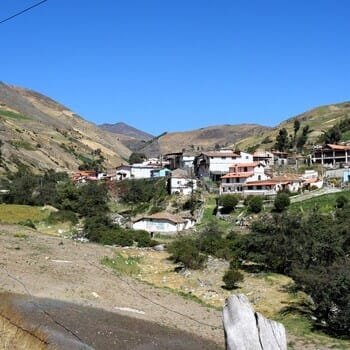
Das Leben in den Pueblos del Sur wird von traditioneller Landwirtschaft gepr’gt, mit hochwertigem Schattenkaffee, Zuckerrohr f’r Panela (nicht-raffinierter, getrockneter Zuckerrohrsaft) und kleinb’uertlicher Subsistenzwirtschaft. Die touristische Infrastruktur ist einfach und folgt dem Konzept des ‘Turismo de Pueblos’. Es gibt einfache Unterk’unfte (Mucuposadas) sowie kleine Gesch’fte und Lokale in den gr’ßeren D’rfern.
Hinweis: Die D’rfer eignen sich gut f’r Tagesausfl’ge ab M’erida, f’r einen mehrt’gigen Aufenthalt ist jedoch etwas Vorausplanung unabdingbar.” background=”#4D4444″ font_size=”14″ max_width=”600″ shadow=”yes”]Die Pueblos del Sur: Authentisches Andenleben in den Bergen[/su_tooltip] [su_icon icon=”icon: instagram” background=”#ebeaea” color=”#672109″ text_color=”#672109″ size=”16″ shape_size=”4″ radius=”12″ text_size=”14″ margin=”0px 3px 0px 3px” url=”https://www.instagram.com/destinopueblosdelsur”][/su_icon] ab – bei Motorradfahrern sehr beliebt. Besucher erleben hier authentisches Landleben und genießen die Ruhe. Die gesamte Gegend eignet sich ideal für lange Wanderungen und zur Vogelbeobachtung. [su_tooltip title=”El Morro” text=”El Morro (ehemals Mucubache) markiert seit jeher den Zugang zu den Pueblos del Sur. Auf über 1.700 Metern gelegen, diente es früher als wichtiger Handelsposten zwischen Barinas und Mérida. Der Ort liegt innerhalb des Nationalparks Sierra Nevada und ist von unberührter Natur umgeben. Die Mehrheit der Einwohner trägt den Nachnamen Dugarte, was auf eine lange und in sich geschlossene Siedlungsgeschichte seit der Gründung um 1655 hinweist.
Die Zufahrt über die kurvige und steile Straße vom Chama-Tal ist nicht ohne und bereitet den Besucher auf die Abgeschiedenheit der folgenden Dörfer vor- ein charmanter und rustikaler Einstieg in die andine Dorfkultur.” background=”#4D4444″ font_size=”14″ max_width=”600″ shadow=”yes”]El Morro[/su_tooltip], auf einer Höhe von 1.700 Metern gelegen, gilt als Tor zu den Pueblos del Sur. [su_tooltip title=”San José de Acequias” text=”San José de Acequias gilt oft als das Herz und Verwaltungszentrum der Pueblos del Sur. Sein Name verrät, was sein Leben prägt: das Wasser der ‘Acequias’ (Bewässerungskanäle), die seit Jahrhunderten die umliegenden Felder fruchtbar machen. Das Dorf liegt auf einer sonnigen Terrasse mit weitem Blick auf die schroffen Bergketten. Im Ortskern dominiert die weiße Kirche mit ihren zwei Türmen, ein Wahrzeichen der Region. Das Leben dreht sich um den Kaffeeanbau und die Landwirtschaft. Hier spürt man den lebendigen Alltag der Süddörfer, mit einem kleinen Dorfplatz und einfachen Läden.
San José de Acequias ist ein idealer Ausgangspunkt für Wanderungen zu nahegelegenen Fincas, wo man den Prozess des Kaffees von der Pflanze bis zur Tasse kennenlernen kann.” background=”#4D4444″ font_size=”14″ max_width=”600″ shadow=”yes”]San José de Acequias[/su_tooltip] ist das Verwaltungszentrum der Region. [su_tooltip title=”Mucutuy” text=”Mucutuy schmiegt sich in ein stilles, grünes Hochlandtal. Sein Name, der vermutlich indigenen Ursprungs ist, wird mit ‘Ort des ewigen Wassers’ oder ‘Ort der Brise’ übersetzt – eine treffende Beschreibung für die sanfte, naturverbundene Stimmung hier. Der Ort ist von einer friedlichen Ruhe geprägt, und die Menschen leben hier vor allem von Gemüse und Obst, das für den Eigenbedarf angebaut wird. Die Dorfkirche besticht durch ihre schlichte und dennoch eindrucksvolle Architektur.
Mucutuy ist vor allem für sein traditionelles Handwerk bekannt. Spezialität sind die robusten Ledertaschen, genannt ‘Carrieles’, die seit Generationen von den Andenbauern genutzt werden.
Ein Besuch in Mucutuy bietet einen unverfälschten Einblick in das Leben im andinen Hochland – eine Welt, die sich ihren eigenen, ruhigen Rhythmus bewahrt hat.” background=”#4D4444″ font_size=”14″ max_width=”600″ shadow=”yes”]Mucutuy[/su_tooltip] ist für seine Ledertaschen bekannt, während [su_tooltip title=”Aricagua” text=”Aricagua ist das abgelegenste und vielleicht das ursprünglichste der drei Hauptdörfer. Umgeben von dichtem Nebelwald und steilen Hängen wirkt es wie eine vergessene Enklave. Die kleine Kapelle und die verstreuten Häuser aus Lehmziegeln und Holz fügen sich perfekt in die dramatische Landschaft ein. Die Gemeinde ist klein und es gibt einen engen sozialen Zusammenhalt. Die Lebensgrundlage bilden Anbau von Kaffee, der in kleinsten Parzellen angebaut wird, und die Haltung von Schafen und Kühen. Die Qualität des hier produzierten Hochlandkaffees ist außergewöhnlich.
Aricagua bietet Zugang zu unberührten Nebelwäldern und einsamen Wanderpfaden. Der Ort eignet sich für Reisende, die das absolut Authentische suchen und bereit sind, auf Komfort zu verzichten.” background=”#4D4444″ font_size=”14″ max_width=”600″ shadow=”yes”]Aricagua[/su_tooltip] ausgezeichneten Hochlandkaffee produziert. In der Nähe von [su_tooltip title=”Chacantá” text=”Chacantá ist ein weiteres bedeutendes Dorf in dieser Region und Teil des Netzwerks der ‘Pueblos Originarios del Río Nuestra Señora’. Es ist besonders bekannt für seine spektakuläre natürliche Umgebung. In der Nähe befinden sich eindrucksvolle Wasserfälle, die nach einer anstrengenden Wanderung durch die wilde Landschaft ein erfrischendes Bad bieten.
Die Atmosphäre ist ähnlich ursprünglich wie in Aricagua, mit einer kleinen, in Landwirtschaft und Viehzucht verwurzelten Gemeinde. Es lohnt sich, hier nach lokalen Führern zu fragen, die einen zu den versteckten Naturwundern der Umgebung führen können. Chacantá unterstreicht das Bild der Pueblos del Sur als Region, in der die Natur die Hauptattraktion ist und das Dorfleben sich ihr anpasst.” background=”#4D4444″ font_size=”14″ max_width=”600″ shadow=”yes”]Chacantá[/su_tooltip] können Wanderer unter den Wasserfällen ein erfrischendes Bad nehmen.

Unterkünfte

Alle Unterkünfte sind einfach ausgestattet; eine Vorausbuchung ist ratsam. In San José de Acequias verfügt die [su_tooltip title=”Posada Mochabá” text=”Hinter dem Tor befinden sich drei kleine Hütten mit spitzen Dächern, drei Forellenteiche, Gras, leuchtende Blumen, schützende Berge und dort taucht Martín auf, mit diesem Ausdruck, als wäre die Welt perfekt, um uns willkommen zu heißen. Abendessen mit frischen Forellen und Gemüsesuppe; Frühstück mit Weizen-Arepas, Quark und Eiern aus Freilandhaltung. Es ist ein Aufenthalt zum Nachdenken, für Spaziergänge durch das Dorf und Ausritte.

Adresse: San José de Acequias, Mérida
Preise: €-€€” background=”#4D4444″ font_size=”14″ max_width=”600″ shadow=”yes”]Posada Mochabá[/su_tooltip] [su_icon icon=”icon: phone” background=”#ebeaea” color=”#672109″ text_color=”#672109″ size=”16″ shape_size=”4″ radius=”12″ text_size=”14″ margin=”0px 3px 0px 3px” url=”tel:584161751197″][/su_icon] [su_icon icon=”icon: whatsapp” background=”#ebeaea” color=”#672109″ text_color=”#672109″ size=”16″ shape_size=”4″ radius=”12″ text_size=”14″ margin=”0px 3px 0px 3px” url=”https://wa.me/584161751197″][/su_icon] [su_icon icon=”icon: instagram” background=”#ebeaea” color=”#672109″ text_color=”#672109″ size=”16″ shape_size=”4″ radius=”12″ text_size=”14″ margin=”0px 3px 0px 3px” url=”https://www.instagram.com/destinopueblosdelsur”][/su_icon] [su_icon icon=”icon: envelope” background=”#ebeaea” color=”#672109″ text_color=”#672109″ size=”16″ shape_size=”4″ radius=”12″ text_size=”14″ margin=”0px 3px 0px 3px” url=”mailto:destinospueblosdelsur@gmail.com”][/su_icon] [su_icon icon=”icon: link” background=”#ebeaea” color=”#672109″ text_color=”#672109″ size=”16″ shape_size=”4″ radius=”12″ text_size=”14″ margin=”0px 3px 0px 3px” url=”http://www.destinopueblosdelsur.com”][/su_icon] über eigene Forellenteiche. Zwischen Mucutuy und Mucuchachi liegt die einfache [su_tooltip title=”Mucoposada Samaipat” text=”Hier ist das Zuhause von Liodly Pernía und Edward García und ihren Kindern. Saubere und gemütliche Zimmer. Atemberaubende Aussicht, Blumen, Obstbäume, Eier von einheimischen Hühnern, Zucht von Wachteln, die verschieden gefüllt gegessen werden, und einheimische Schweine.

Adresse: La Ensillada, entre Mucutuy y Mucuchachí, Mérida
Preise: €-€€” background=”#4D4444″ font_size=”14″ max_width=”600″ shadow=”yes”]Mucoposada Samaipat[/su_tooltip] [su_icon icon=”icon: phone” background=”#ebeaea” color=”#672109″ text_color=”#672109″ size=”16″ shape_size=”4″ radius=”12″ text_size=”14″ margin=”0px 3px 0px 3px” url=”tel:584166743561″][/su_icon] [su_icon icon=”icon: whatsapp” background=”#ebeaea” color=”#672109″ text_color=”#672109″ size=”16″ shape_size=”4″ radius=”12″ text_size=”14″ margin=”0px 3px 0px 3px” url=”https://wa.me/584166743561″][/su_icon] [su_icon icon=”icon: envelope” background=”#ebeaea” color=”#672109″ text_color=”#672109″ size=”16″ shape_size=”4″ radius=”12″ text_size=”14″ margin=”0px 3px 0px 3px” url=”mailto:mmeza@andestropicales.org”][/su_icon] [su_icon icon=”icon: link” background=”#ebeaea” color=”#672109″ text_color=”#672109″ size=”16″ shape_size=”4″ radius=”12″ text_size=”14″ margin=”0px 3px 0px 3px” url=”http://www.destinopueblosdelsur.com”][/su_icon] [su_icon icon=”icon: instagram” background=”#ebeaea” color=”#672109″ text_color=”#672109″ size=”16″ shape_size=”4″ radius=”12″ text_size=”14″ margin=”0px 3px 0px 3px” url=”https://www.instagram.com/destinopueblosdelsur”][/su_icon]. Das Zisterzienserkloster [su_tooltip title=”Monasterio Trapense Nuestra Señora De Los Andes” text=”Es ist die Heimat der Zisterzienser-Trappistenmönche und ideal, um der Stille zu lauschen. Umgeben von Bergen ist es ein wunderschönes, schlichtes Gebäude mit herrlichen Gärten. Unterkunft in der Casa de Retiros und der Casa San Bernardo, beide mit komfortablen Zimmern und reichhaltigen Mahlzeiten.
Die Anlage ist architektonisch reizvoll und bietet mit ihrer ruhigen Atmosphäre einen idealen Rahmen für Besinnung und Kontemplation.

Adresse: Carretera vía Estanques hacia Los Pueblos del Sur, Mérida
Preise: €-€€” background=”#4D4444″ font_size=”14″ max_width=”600″ shadow=”yes”]Monasterio Trapense Nuestra Señora De Los Andes[/su_tooltip] [su_icon icon=”icon: phone” background=”#ebeaea” color=”#672109″ text_color=”#672109″ size=”16″ shape_size=”4″ radius=”12″ text_size=”14″ margin=”0px 3px 0px 3px” url=”tel:584166712123″][/su_icon] [su_icon icon=”icon: whatsapp” background=”#ebeaea” color=”#672109″ text_color=”#672109″ size=”16″ shape_size=”4″ radius=”12″ text_size=”14″ margin=”0px 3px 0px 3px” url=”https://wa.me/584166712123″][/su_icon] [su_icon icon=”icon: instagram” background=”#ebeaea” color=”#672109″ text_color=”#672109″ size=”16″ shape_size=”4″ radius=”12″ text_size=”14″ margin=”0px 3px 0px 3px” url=”https://www.instagram.com/trapensesmerida”][/su_icon] bietet Gästezimmer an. In Chacantá befindet sich die [su_tooltip title=”Posada Kiutrindú” text=”Die Besitzerin Tomasa García stammt aus Chacantá. Sie eröffnete eine Pension, weil es in ihrem Dorf kein einziges Bett gab, um Besucher zu beherbergen. Der Name bedeutet ‘Blume’, und jedes Zimmer ist nach einer Blume benannt. Sie führt ihre Gäste zu den Wasserfällen und zur Zuckerrohrmühle und bietet ihnen Biruz an, wie der Kaffeeersatz genannt wird, den man in dieser Gegend trinkt. Sie ist unterhaltsam und gesprächig. Ihre Pension ist einfach und hübsch.

Adresse: Al final de la calle Sucre, casa #18-04, Chacantá, Mérida
Preise: €-€€” background=”#4D4444″ font_size=”14″ max_width=”600″ shadow=”yes”]Posada Kiutrindú[/su_tooltip] [su_icon icon=”icon: phone” background=”#ebeaea” color=”#672109″ text_color=”#672109″ size=”16″ shape_size=”4″ radius=”12″ text_size=”14″ margin=”0px 3px 0px 3px” url=”tel:584166743561″][/su_icon] [su_icon icon=”icon: whatsapp” background=”#ebeaea” color=”#672109″ text_color=”#672109″ size=”16″ shape_size=”4″ radius=”12″ text_size=”14″ margin=”0px 3px 0px 3px” url=”https://wa.me/584166743561″][/su_icon] [su_icon icon=”icon: instagram” background=”#ebeaea” color=”#672109″ text_color=”#672109″ size=”16″ shape_size=”4″ radius=”12″ text_size=”14″ margin=”0px 3px 0px 3px” url=”https://www.instagram.com/destinopueblosdelsur”][/su_icon] [su_icon icon=”icon: envelope” background=”#ebeaea” color=”#672109″ text_color=”#672109″ size=”16″ shape_size=”4″ radius=”12″ text_size=”14″ margin=”0px 3px 0px 3px” url=”mailto:mmeza@andestropicales.org”][/su_icon] [su_icon icon=”icon: link” background=”#ebeaea” color=”#672109″ text_color=”#672109″ size=”16″ shape_size=”4″ radius=”12″ text_size=”14″ margin=”0px 3px 0px 3px” url=”http://www.destinopueblosdelsur.com”][/su_icon].


Lagunillas

Tierra Negra liegt etwa 600 Meter oberhalb des kolonialen Stadtzentrums von [su_tooltip title=”Lagunillas” text=”1656 unter dem Namen San Juan Bautista de Lagunillas gegründet liegt der rund 118.000 Einwohner zählende Ort auf einer Höhe von gut 1.000 Metern in einem traditionell landwirtschaftlich geprägten Tal. Die hochentwickelten indigenen Kulturen der Timoto-Cuica betrieben hier einst mit kunstvollen Terrassenfeldern und Bewässerungssystemen Landwirtschaft.
Lagunillas besticht durch einen schönen kolonialen Ortskern, dessen Herzstück das Viertel Pueblo Viejo ist – ein wahres Freilichtmuseum mit gut erhaltenen Bauten aus vergangenen Epochen, das zu einem entspannten Spaziergang einlädt.
Die Umgebung ist nicht nur für ihre Felder bekannt, sondern auch für ein besonderes Abenteuer: Vom nahegelegenen Tierra Negra aus starten Gleitschirmflüge über die spektakuläre, andine Landschaft. Parapente Tierra Negra bietet auch Tandem-Flüge an.” background=”#4D4444″ font_size=”14″ max_width=”600″ shadow=”yes”]Lagunillas[/su_tooltip] und ist der Ausgangspunkt für Gleitschirmflüge (auch Tandemflüge) ins Rio-Chama-Tal.

Aktivitäten

[su_tooltip title=”Parapente Tierra Negra – Deine Therapie in 500 Metern Höhe” text=”Manche Antworten findet man nicht auf der Couch, sondern in der Luft. Denn Glueck kann man vielleicht nicht kaufen – aber einen Paragliding-Flug schon. Und der kommt dem Gefuehl verdammt nahe.
Tierra Negra ist ein international bekannter Spot fuer Gleitschirmfluege. Dank der stabilen Wind- und Wetterverhaeltnisse kann man hier fast das ganze Jahr fliegen, ob alleine oder im Tandem zu zweit. Der Start erfolgt auf rund 1.600 Metern, die Landung im Tal des Rio Chama auf etwa 1.100 Metern.
Mit 28 Jahren Erfahrung und FAM-zertifizierten Piloten steht bei Parapente Tierra Negra Sicherheit an erster Stelle – egal, ob du einen Tandemflug buchst oder einen Kurs machen moechtest. Vom Start bis zur Landung ist alles organisiert, zu fairen Preisen.
Erlebe atemberaubende Ausblicke ueber Merida, puren Adrenalinkick und ein Gefuehl von Freiheit, das du so schnell nicht vergisst.” background=”#4D4444″ font_size=”14″ max_width=”600″ shadow=”yes”]Parapente Tierra Negra – Deine Therapie in 500 Metern Höhe[/su_tooltip] [su_icon icon=”icon: phone” background=”#ebeaea” color=”#672109″ text_color=”#672109″ size=”16″ shape_size=”4″ radius=”12″ text_size=”14″ margin=”0px 3px 0px 3px” url=”tel:584143740340″][/su_icon] [su_icon icon=”icon: whatsapp” background=”#ebeaea” color=”#672109″ text_color=”#672109″ size=”16″ shape_size=”4″ radius=”12″ text_size=”14″ margin=”0px 3px 0px 3px” url=”https://wa.me/584143740340″][/su_icon] [su_icon icon=”icon: instagram” background=”#ebeaea” color=”#672109″ text_color=”#672109″ size=”16″ shape_size=”4″ radius=”12″ text_size=”14″ margin=”0px 3px 0px 3px” url=”https://www.instagram.com/parapentetierranegra”][/su_icon] ist einer von mehreren Anbietern.


El Vigía – das tropische Tor zu den Anden

Der [su_tooltip title=”Flughafen El Vigía” text=”Der moderne Regionalflughafen von El Vigía (IATA-Code: VIG) ist das wichtigste Luftdrehkreuz fr die gesamte Andenregion. Als praktische und schnelle Alternative zur zeitraubenden Anfahrt ber Land ist er ein beliebter Zugang zur Sierra Nevada und zum kolonialen Mrida.
Der Flughafen liegt sehr verkehrsgnstig direkt an der Panamericana, etwa 70 km westlich von Mrida und nur wenige Minuten vom Zentrum El Vigs entfernt. Taxis oder Mietwagen bringen Sie zuverlssig nach Mrida (ca. 1,5 Stunden Fahrt).
Derzeit wird der Flughafen ausschlielich von venezolanischen Fluggesellschaften bedient. Die wichtigste und regelmigste Verbindung ist die Route nach Caracas. Einer der Hauptanbieter auf dieser Strecke ist Laser Airlines.” background=”#4D4444″ font_size=”14″ max_width=”600″ shadow=”yes”]Flughafen El Vigía[/su_tooltip] [su_icon icon=”icon: link” background=”#ebeaea” color=”#672109″ text_color=”#672109″ size=”16″ shape_size=”4″ radius=”12″ text_size=”14″ margin=”0px 3px 0px 3px” url=”https://www.laserairlines.com”][/su_icon] ist der wichtigste Zugang per Flugzeug zur Andenregion. Im Stadtzentrum von [su_tooltip title=”Palmarito” text=”Schon die Anreise zu diesem kleinen Fischerdorf am Maracaibosee ist ein Erlebnis: Eine Landstraße führt durch malerische Kulissen mit Mangobäumen und Kokospalmen, die sich im Wind über dem See wiegen. Palmarito ist bekannt als „der Strand von Mérida“. Der palmenbestandene Sandstrand, die bunten Häuser und die fröhliche Atmosphäre verleihen dem Ort ein karibisches Flair – unterstützt vom ganzjährig warmen Klima.
Ursprünglich war diese Region vom indigenen Volk der Kariben besiedelt. Während der Kolonialzeit wurden afrikanische Sklaven für die hiesigen Kakaohaciendas hierher verschleppt. Bis heute ist die afrovenezolanische Tradition lebendig – etwa die Verehrung von San Benito und die Rhythmen des Chimbánguele.
Wie heißt es so schön: Mérida hat von allem: die Anden und Schnee, die Llanos, Städte und Strand.

Besonderheit: In der umliegenden Region Sur del Lago wird einer der edelsten Kakaos Venezuelas angebaut – ein weiterer Grund, Palmarito zu besuchen.” background=”#4D4444″ font_size=”14″ max_width=”600″ shadow=”yes”]Palmarito[/su_tooltip], auf der [su_tooltip title=”Plaza El Ferrocarril” text=”Die Plaza El Ferrocarril, offiziell „Plaza La Cordillera“ genannt, ist das historische Herz und der symbolische Gründungsort El Vigías. Die Ankunft der ersten Eisenbahn aus Santa Barbara del Zulia am 28. Juli 1892 markiert die eigentliche Geburtsstunde des modernen El Vigía und läutete dessen Rolle als zentralen Handelsknotenpunkt für die umliegenden Bundesstaaten ein.
Der Platz in seiner heutigen Gestalt ist relativ jung: Er wurde zwischen 1967 und 1972 errichtet. Sein Herzstück bildet eine der originalen Dampflokomotiven aus der glorreichen Eisenbahnepoche. Die Bahnlinie „La Cordillera“ verband über 60 Jahre lang El Vigía mit den Häfen im benachbarten Bundesstaat Zulia, von wo aus der berühmte Andenkaffee in alle Welt exportiert wurde. Erst die verheerenden Überschwemmungen des Río Chama, die die Trasse zerstörten, führten zur Einstellung des Betriebs. Heute wird der Kaffee per Lkw zu den Häfen transportiert.
Der Platz dient bis heute als beliebte Kulisse für Feierlichkeiten, wirkt aber insgesamt etwas vernachlässigt. Es bleibt zu hoffen, dass seine historische Bedeutung in Zukunft durch entsprechende Pflege und Aufwertung gewürdigt wird.” background=”#4D4444″ font_size=”14″ max_width=”600″ shadow=”yes”]Plaza El Ferrocarril[/su_tooltip], kann man eine historische Dampflokomotive bewundern, ein Überbleibsel der ehemaligen Eisenbahnlinie, die früher zum Transport von Kaffee diente.

Unterkünfte

Das [su_tooltip title=”Juniotel Hotel Boutique” text=”Ausgezeichnetes Fünf-Sterne-Hotel mit geräumigen und komfortablen Zimmern zum erschwinglichen Preis. Das Hotel liegt in einer modernen Mall, in unmittelbarer Umgebung gibt es ein reichhaltiges Gastro-Angebot und Ausgehmöglichkeiten.

Adresse: Avenida Don Pepe Rojas, C.C. Junior Mall, Nivel 1 Local S/N, El Vigía, Mérida
Preise: €€-€€€” background=”#4D4444″ font_size=”14″ max_width=”600″ shadow=”yes”]Juniotel Hotel Boutique[/su_tooltip] [su_icon icon=”icon: phone” background=”#ebeaea” color=”#672109″ text_color=”#672109″ size=”16″ shape_size=”4″ radius=”12″ text_size=”14″ margin=”0px 3px 0px 3px” url=”tel:584247458883″][/su_icon] [su_icon icon=”icon: whatsapp” background=”#ebeaea” color=”#672109″ text_color=”#672109″ size=”16″ shape_size=”4″ radius=”12″ text_size=”14″ margin=”0px 3px 0px 3px” url=”https://wa.me/584247458883″][/su_icon] [su_icon icon=”icon: envelope” background=”#ebeaea” color=”#672109″ text_color=”#672109″ size=”16″ shape_size=”4″ radius=”12″ text_size=”14″ margin=”0px 3px 0px 3px” url=”mailto:reserva@juniotel.com”][/su_icon] [su_icon icon=”icon: instagram” background=”#ebeaea” color=”#672109″ text_color=”#672109″ size=”16″ shape_size=”4″ radius=”12″ text_size=”14″ margin=”0px 3px 0px 3px” url=”https://www.instagram.com/juniotelboutique”][/su_icon], direkt neben dem Flughafen gelegen, ist eines der wenigen Fünf-Sterne-Hotels des Landes. Etwas zentraler gelegen ist das familiengeführte [su_tooltip title=”Bari Hotel” text=”Das Bari Hotel ist der perfekte Erholungsort nach einem aufregenden Tag in der Natur. Nach der anstrengenden Bootsfahrt zu den spektakulären Catatumbo-Gewittern erwartet Sie hier der Komfort einer heißen Dusche und geräumige, bequeme Betten.
Das familiär geführte Hotel punktet mit persönlichem Service und liebevollen Details. Zu den Annehmlichkeiten zählen ein erfrischender Pool (ein Segen im tropischen Klima El Vigías), ein Restaurant mit leckerer Küche – probieren Sie die Pizza! – und eine Terrasse, auf der sogar Yoga-Kurse angeboten werden, ideal zum Entspannen.
Die Besitzer organisieren Touren zu dem Naturwunder der Relámpagos.

Adresse: Avenida Don Pepe Rojas, El Vigía, Mérida
Preise: €-€€” background=”#4D4444″ font_size=”14″ max_width=”600″ shadow=”yes”]Bari Hotel[/su_tooltip] [su_icon icon=”icon: phone” background=”#ebeaea” color=”#672109″ text_color=”#672109″ size=”16″ shape_size=”4″ radius=”12″ text_size=”14″ margin=”0px 3px 0px 3px” url=”tel:+584247003726″][/su_icon] [su_icon icon=”icon: whatsapp” background=”#ebeaea” color=”#672109″ text_color=”#672109″ size=”16″ shape_size=”4″ radius=”12″ text_size=”14″ margin=”0px 3px 0px 3px” url=”https://wa.me/+584247003726″][/su_icon] [su_icon icon=”icon: envelope” background=”#ebeaea” color=”#672109″ text_color=”#672109″ size=”16″ shape_size=”4″ radius=”12″ text_size=”14″ margin=”0px 3px 0px 3px” url=”mailto:reservasbarihotel@gmail.com”][/su_icon] [su_icon icon=”icon: instagram” background=”#ebeaea” color=”#672109″ text_color=”#672109″ size=”16″ shape_size=”4″ radius=”12″ text_size=”14″ margin=”0px 3px 0px 3px” url=”https://www.instagram.com/barihoteles”][/su_icon], welches auch Touren zu den Catatumbo-Gewittern organisiert (mit Übernachtung in einer Hängematte).


Tovar und Bailadores

Wenn man von Lagunillas aus der Hauptstraße (Troncal 7) in westlicher Richtung folgt, erreicht man bald den Doppelort [su_tooltip title=”Bailadores und Tovar” text=”Im Jahr 1601 als Veracruz de los Bailadores gegründet, war der Ort lange Zeit ein bedeutendes landwirtschaftliches Zentrum, das im 20. Jahrhundert sogar als eine der ‘Weizenkammern’ Venezuelas galt. Heute präsentiert sich die Region den Besuchern als vielseitiges Reiseziel, das Natur und Kultur vereint. Im Ort zieht der Wasserfall La Cascada de La India Carú viele Ausflügler an und in Richtung San Cristóbal leitet die Serpentine La M auf der Trasandina den spektakulären Aufstieg in die Nebelwelt des Páramo La Negra einleitet.
Im Zentrum von Bailadores laden die Plaza Bolívar und die imposante Kirche Santuario Diocesano de Nuestra Señora de la Candelaria zum Verweilen ein. Ein besonderes historisches Juwel ist die Casa de los Belandria, in der der Überlieferung nach Simón Bolívar übernachtete und wo ihm die Einwohner bereits 1813 den Titel ‘El Libertador’ (der Befreier) verliehen haben sollen.
Der Nachbarort Tovar, ‘La Sultana del Mocotíes’ (frei übersetzt die ‘Sultanin im Tal des Rio Mocoties), bildet als wirtschaftliches Zentrum des Tals einen Kontrapunkt. Mit einer deutlich geringeren Höhenlage von etwa 952 Metern ist das Klima spürbar wärmer. Die Stadt ist ein anerkanntes kulturelles Zentrum und trägt mit Stolz den Beinamen ‘Cuna del Arte Merideño’ – die Wiege der Kunst aus Mérida. Hier findet man die Werkstätten und Ursprünge des Kunsthandwerks, das in der gesamten Region angeboten wird.
Für einen angenehmen Aufenthalt ist die Estancia La Vera Cruz die erste Wahl. Die erstklassige Landhaus-Lodge verbindet modernen Komfort mit regionaler Verwurzelung und fördert lokale Produkte.” background=”#4D4444″ font_size=”14″ max_width=”600″ shadow=”yes”]Bailadores und Tovar[/su_tooltip]. Ein Großteil des in Mérida erhältlichen Kunsthandwerks wird in dem kleinen Ort Tovar hergestellt.

Der Übergang zur viel älteren Stadt Bailadores ist nahtlos. Sie ist das landwirtschaftliche Zentrum der Region und Heimat der [su_tooltip title=”Finca El Camarero” text=”Die Finca El Camarero ist der größte Rosenproduzent Venezuelas, und wird als Familienunternehmen von Eduardo Belandria und Naiyibi Arias im Hochland von Bailadores geführt. Das Unternehmen steht für den unbeugsamen Pioniergeist der Region: Statt auf traditionelle Landwirtschaft setzt der Betrieb erfolgreich auf hochwertigen Zierpflanzenanbau und versorgt den nationalen Markt mit Millionen Rosen pro Jahr – alles wird im Land verkauft.
Die Finca verkörpert tiefe Verbundenheit mit der Heimat und den Willen, das Land durch harte Arbeit und Innovation voranzubringen.
Auf dem Gelände befinden sich auch Gästezimmer für Übernachtungen.

Adresse: am Ortseingang von Bailadores, direkt an der Hauptstraße, Mérida
Preise: € (Eintritt und Übernachtung budgetfreundlich)” background=”#4D4444″ font_size=”14″ max_width=”600″ shadow=”yes”]Finca El Camarero[/su_tooltip] [su_icon icon=”icon: phone” background=”#ebeaea” color=”#672109″ text_color=”#672109″ size=”16″ shape_size=”4″ radius=”12″ text_size=”14″ margin=”0px 3px 0px 3px” url=”tel:584129663559″][/su_icon] [su_icon icon=”icon: whatsapp” background=”#ebeaea” color=”#672109″ text_color=”#672109″ size=”16″ shape_size=”4″ radius=”12″ text_size=”14″ margin=”0px 3px 0px 3px” url=”https://wa.me/584129663559″][/su_icon] [su_icon icon=”icon: instagram” background=”#ebeaea” color=”#672109″ text_color=”#672109″ size=”16″ shape_size=”4″ radius=”12″ text_size=”14″ margin=”0px 3px 0px 3px” url=”https://www.instagram.com/finca_elcamarero”][/su_icon], Venezuelas größtem Rosenproduzenten (Übernachtungsmöglichkeiten vorhanden). Nicht weit von der Hauptstraße entfernt lädt die [su_tooltip title=”Cascada de La India Carú” text=”Dieser Wasserfall in der Nähe von Bailadores liegt innerhalb eines dicht bewaldeten, naturbelassenen Parks, der ein beliebtes Ziel für Naturfreunde darstellt. Für den Zugang wird ein kleines Eintrittsgeld erhoben. Da die Wege in der feuchten Umgebung des Wasserfalls oft rutschig sind, ist festes, wasserdichtes Schuhwerk für den Besuch ratsam.
Die Cascada de La India Carú eignet sich gut für einen Halbtagesausflug und lässt sich mit der Erkundung der weiteren Region um Bailadores kombinieren.” background=”#4D4444″ font_size=”14″ max_width=”600″ shadow=”yes”]Cascada de La India Carú[/su_tooltip] zu einem Bad ein.

Im nördlich gelegenen [su_tooltip title=”Páramo Batallón y La Negra” text=”Der Parque Nacional General Juan Pablo Peñaloza, der die Páramos Batallón y La Negra umfasst, ist ein Naturschutzgebiet von außergewöhnlicher Schönheit und ökologischer Schlüsselbedeutung in den venezolanischen Anden. Mit einer Fläche von 75.200 Hektar erstreckt er sich entlang der Grenze zwischen den Bundesstaaten Mérida und Táchira.
Diese einzigartigen Hochgebirgslandschaften liegen auf Höhen zwischen 1.800 und 3.300 Metern über dem Meeresspiegel. Sie fungieren als gigantische natürliche Wasserspeicher und sind die wichtigste Quelle der Trinkwasserversorgung für die umliegenden Regionen. Ein Netzwerk aus 117 Lagunen durchzieht die oft nebelverhangene Landschaft. Eine der bekanntesten ist die Laguna Brava (auch Laguna las Palmas genannt), die auf etwa 2.200 Metern Höhe direkt an der Staatsgrenze mit ihrem klaren Wasser und der imposanten Bergkulisse Besucher beeindruckt.
Der Park beherbergt eine vielfältige Fauna, darunter bedrohte Arten wie den Brillenbären (Oso Frontino), den Tapir und das Bergstachelschwein. Für Vogelbeobachter gibt es den bunt gefiederten Andensittich zu entdecken, einen der wenigen Papageien, der dauerhaft in den extremen Höhen über 2.000 Metern lebt. Die Anfahrt selbst, insbesondere die Serpentinenstraße von Bailadores hinauf zum Páramo La Negra, ist bereits ein Erlebnis und bietet atemberaubende Panoramablicke über das Valle del Mocotíes; die berühmte ‘M’-Kurve auf dieser Strecke ist ein legendärer Fotostopp. Für Aktivurlauber bietet der Park ideale Möglichkeiten zum Wandern und Trekking durch die unberührte Hochlandschaft. Fotografen finden mit der weiten Landschaft, der vielfältigen Tierwelt und den atemberaubenden Panoramen faszinierende Motive.
Praktische Hinweise: Für einen Besuch ist der Ort Bailadores eine gute Ausgangsbasis. Die Straße führt von dort hinauf in die Páramo-Landschaft, wobei der Zugang zur Laguna Brava typischerweise von der Seite Méridas aus erfolgt. Aufgrund des typischen, kühlen und oft nebligen Hochgebirgsklimas sind warme Kleidung und wetterfeste Ausrüstung unbedingt empfehlenswert.” background=”#4D4444″ font_size=”14″ max_width=”600″ shadow=”yes”]Páramo Batallón y La Negra[/su_tooltip] mit seinen mehr als hundert Lagunen sind ausgedehnte Wanderungen und Trekkingtouren möglich. Wenn man Bailadores verlässt, erreicht man nach kurzer Zeit [su_tooltip title=”La ‘M’ de Bailadores” text=”Das ‘M’ von Bailadores ist eine berühmte und malerische Haarnadelkurve in Form des Buchstabens M auf der Carretera Trasandina, auf dem Abschnitt zwischen Bailadores in Mérida und La Grita in Táchira. Diese emblematische Stelle ist ein beliebter Aussichtspunkt und Fotostopp aufgrund ihrer spektakulären Lage und der weiten Panoramablicke über die andine Landschaft.
Die Kurve liegt auf etwa 2.200 Metern Höhe in der Nähe der Grenze zwischen den Bundesstaaten Mérida und Táchira, auf dem Weg zum Páramo de La Negra. Das frische Klima, die häufig auftretende Nebelschicht und der Blick auf die grünen Berghänge und landwirtschaftlichen Terrassen machen den Ort zu einem beeindruckenden Naturerlebnis.
Über die Entstehung der ungewöhnlichen Straßenführung gibt es verschiedene Erzählungen. Eine lokale Legende besagt, dass der damalige Präsident Marcos Pérez Jiménez die Route als absichtliche Umleitung anordnete, nachdem die Grundbesitzerin sich dem ursprünglichen Trassenverlauf widersetzte. Wahrscheinlicher ist jedoch, dass die Ingenieure die Serpentine aus topografischer Notwendigkeit so planten, um den steilen Anstieg der Straße zu bewältigen.
Heute ist die ‘M’ ein obligatorischer Stopp für Reisende im Valle del Mocotíes und ein Symbol für die beeindruckende Ingenieurskunst und landschaftliche Schönheit der venezolanischen Anden.

Adresse: Carretera Trasandina entre Bailadores, Mérida und La Grita, Táchira” background=”#4D4444″ font_size=”14″ max_width=”600″ shadow=”yes”]La ‘M’ de Bailadores[/su_tooltip], eine M-förmige Haarnadelkurve in luftigen 2.200 Metern Höhe, die ein beliebter Fotostopp ist.

Südlich der Hauptroute zeugen Orte wie die stillgelegte Mine Rincón de Las Tapias von der [su_tooltip title=”Bergbaugeschichte” text=”Die Andenregion Venezuelas ist nicht nur eine Landschaft von atemberaubender Schönheit, sondern trägt auch die Spuren einer langen Bergbautradition. Die Frage, ob dieser Wirtschaftszweig wiederbelebt werden soll, führt zu Konflikten zwischen Kapitalinteressen, staatlicher Politik und dem Willen der lokalen Gemeinschaften. Ein exemplarischer Fall spielt sich im Mocotíes-Tal bei Bailadores ab.
Dort wurde die Mine „Rincón de Las Tapias“ über Jahrhunderte bis 1966 ausgebeutet. Sie hinterließ Altlasten insbesondere durch Schwermetalle in den Gewässern. Die Möglichkeit einer Wiedereröffnung solcher Minen stellt die Region vor enorme Herausforderungen. Die Rechtslage ist dabei widersprüchlich: Einerseits besitzt Venezuela eine verfassungsrechtlich verankerte und fortschrittliche Umweltgesetzgebung, die schützenswerte Ökosysteme bewahren will. Andererseits schaffen neuere Gesetze wie das „Anti-Blockade-Gesetz“ von 2022 und der staatliche Bergbauplan 2019-2025 einen Rahmen, der eine rasche Reaktivierung von Minenprojekten begünstigen und etablierte Umweltauflagen umgehen kann.
Die Gemeinde von Bailadores hat sich dieser Bedrohung bereits zweimal erfolgreich entgegengestellt. 1992 verhinderte breiter Widerstand die Pläne eines internationalen Bergbau-Konsortiums, die Mine (für die Gewinnung von Zink, Kupfer und Blei) zu reaktivieren. 2018/19 gelang es erneut, durch entschlossenen zivilgesellschaftlichen Protest den illegalen Bau einer Zufahrtsstraße zu stoppen. Die Behörden wurden zum Handeln gezwungen und alle Aktivitäten vorerst eingestellt. Der Konflikt schwelt zwar weiter, doch der bisherige Erfolg der Bevölkerung unterstreicht die Kraft kollektiven Handelns in einem komplexen und widersprüchlichen politisch-rechtlichen Umfeld.” background=”#4D4444″ font_size=”14″ max_width=”600″ shadow=”yes”]Bergbaugeschichte[/su_tooltip] der Region und vom Kampf der Einheimischen um ein menschenwürdiges Leben.

Unterkünfte

Die [su_tooltip title=”Estancia La Vera Cruz” text=”Die Estancia La Vera Cruz ist eine privat geführte Landhaus-Lodge nahe Bailadores. Sie verbindet modernen Komfort mit der Natur und Kultur der Anden. Das Anwesen besticht durch seine makellose und warme Gestaltung. Gäste schätzen die weitläufigen Gärten, den Pool mit Panoramablick und den großen, zum Landschaftspanorama hin offenen Speisesaal. Im Hintergrund ragen die schützenden Bergketten auf.
Die Estancia fördert die Region, indem sie lokale Produkte vermarktet und authentische Ausflüge in die Umgebung anbietet.

Adresse: Mesa de Adrián, Carretera Trasandina zwischen Tovar und Bailadores, Mérida
Preise: €€” background=”#4D4444″ font_size=”14″ max_width=”600″ shadow=”yes”]Estancia La Vera Cruz[/su_tooltip] [su_icon icon=”icon: phone” background=”#ebeaea” color=”#672109″ text_color=”#672109″ size=”16″ shape_size=”4″ radius=”12″ text_size=”14″ margin=”0px 3px 0px 3px” url=”tel:584147321000″][/su_icon] [su_icon icon=”icon: whatsapp” background=”#ebeaea” color=”#672109″ text_color=”#672109″ size=”16″ shape_size=”4″ radius=”12″ text_size=”14″ margin=”0px 3px 0px 3px” url=”https://wa.me/584147321000″][/su_icon] [su_icon icon=”icon: instagram” background=”#ebeaea” color=”#672109″ text_color=”#672109″ size=”16″ shape_size=”4″ radius=”12″ text_size=”14″ margin=”0px 3px 0px 3px” url=”https://www.instagram.com/estancialaveracruz”][/su_icon] [su_icon icon=”icon: envelope” background=”#ebeaea” color=”#672109″ text_color=”#672109″ size=”16″ shape_size=”4″ radius=”12″ text_size=”14″ margin=”0px 3px 0px 3px” url=”mailto:reservas@estancialaveracruz.com”][/su_icon] [su_icon icon=”icon: link” background=”#ebeaea” color=”#672109″ text_color=”#672109″ size=”16″ shape_size=”4″ radius=”12″ text_size=”14″ margin=”0px 3px 0px 3px” url=”http://www.estancialaveracruz.com”] ist eine elegante Lodge im Landhausstil.

West of Mérida: Travel Guide: Between highland coffee and Caribbean beaches


As of July 15, 2026

[lwptoc]

The western half of the state of Mérida offers a delightfully diverse landscape: below the high mountain zone, aromatic highland coffee is grown in many places, whilst high-quality cocoa (origin: Sur del Lago) is cultivated at even lower altitudes. Several winding side roads lead down from the mountains into the lowlands of the Llanos or to Lake Maracaibo. There, in El Vigía, lies the region’s main airport with daily connections to Caracas.

[su_image_carousel source=”media: 10564,10559,10562,10561,10560″ controls_style=”light” crop=”1:1″ columns=”3″ spacing=”no” align=”center” autoplay=”3″]

Ejido

[su_tooltip title=”Ejido” text=”Ejido, the second-largest city in the state of Merida, forms the vibrant administrative and economic heart of the region. As part of a major urban axis, it lies at an altitude of around 1,200 metres in the fertile valley of the Rio Chama, in the immediate vicinity of the state capital, Merida. The town is a major transport hub and is known above all for its intensive agricultural production, with the cultivation of garlic, onions and peppers having made the region famous beyond the country’s borders.
For travellers, Ejido is primarily a stopover, serving as a base for excursions into the surrounding Andean landscape, such as the Sierra Nevada National Park. Within the town, attractions such as the modern Cathedral of Nuestra Senora del Rosario de Chiquinquira, the central Plaza Bolivar and the Parque La Isla recreational park on the riverbank invite visitors to linger. A visit to the local Mercado Municipal offers a genuine insight into everyday life and the region’s agricultural produce.” background=”#4D4444″ font_size=”14″ max_width=”600″ shadow=”yes”]Ejido[/su_tooltip] – With over 100,000 inhabitants, it is the second-largest city, an agricultural centre (garlic, onions, peppers) and a transport hub. Worth seeing are Plaza Bolívar, the Iglesia Matriz De Ejido church and the nearby Mercado Municipal, which is a hive of colourful activity.


Jají

[su_tooltip title=”Jají – An Andean gem with colonial charm” text=”About an hour’s drive from Mérida, at an altitude of 1,780 metres, lies the picturesque village of Jají. This picturesque village with its cobbled streets was founded as early as 1586, but acquired its current, uniform appearance during an extensive reconstruction in 1971. The approximately 60 colonial-style houses, whose façades are traditionally painted in blue and white, lend Jají its unique charm. Around Plaza Bolívar, you can browse the craft shops, whilst several restaurants invite you to stop for a bite to eat.
At Fonda Doña Carmen, a colonial-era building with a beautiful courtyard, the local specialities of pea soup and trout are served in a variety of ways. Simple accommodation is available in the village itself. A good half-hour’s drive away, towards La Azulita, the Estancia La Bravera, with its lovingly tended gardens, is a highly recommended place to stay.
A worthwhile destination is the theme park ‘La Venezuela de Antier’. Here, the artist Alexis Montilla has faithfully recreated 1920s Venezuela with its various regions and traditions. In the mountains above Jají, Thomas Niko Walter, a German with a fascinating history, grows high-quality Andean coffee on a small finca.” background=”#4D4444″ font_size=”14″ max_width=”600″ shadow=”yes”]Jají – An Andean gem with colonial charm[/su_tooltip] – If you turn off towards the north-west at Ejido, you first pass the open-air museum [su_tooltip title=”La Venezuela de Antier” text=”A unique open-air museum created with great dedication by the artist Alexis Montilla. Since its opening in 1991, visitors have been able to discover the Venezuela of the 1920s here – faithfully recreated in all its richness and diversity of traditions.
Across the extensive grounds, every single state is represented with its own architecture, folklore, cuisine, music and dances. The depiction of Yaracuy is particularly impressive, where cattle are driven over the mountains. A replica of Salto Angel will soon be added to the site.
The atmosphere is steeped in nostalgia and history, transporting visitors of all ages back to a bygone era. A hands-on journey into the past – vivid, lovingly designed, educational and particularly popular with families. Due to the high altitude, it is advisable to pack warm clothing.

Address: km 5, Carretera Panamericana, via Jaji, Merida
Price: €€-€€€” background=”#4D4444″ font_size=”14″ max_width=”600″ shadow=”yes”]La Venezuela de Antier[/su_tooltip] [su_icon icon=”icon: instagram” background=”#ebeaea” color=”#672109″ text_color=”#672109″ size=”16″ shape_size=”4″ radius=”12″ text_size=”14″ margin=”0px 3px 0px 3px” url=”https://www.instagram.com/venezueladeantier”][/su_icon]. You then arrive in the beautiful little town of Jají with its blue and white colonial houses. A stroll around Plaza Bolívar is well worth it.

Accommodation

Half an hour past Jají, towards La Azulita, lies [su_tooltip title=”Estancia La Bravera” text=”Halfway between Jají and La Azulita, this paradise for nature lovers is hidden behind an unassuming entrance gate. Much like a botanical garden, the estate brings together all the plant species of the Andean páramos – expertly identified by specialists and lovingly arranged. Particularly enchanting are the countless hummingbirds flitting through the lush vegetation.
The ten rooms are tastefully furnished and invite you to linger. The heart of the estate is a traditional caney with a wood-burning stove, where the owners themselves cook for their guests.
The estancia is run by the owners, who look after their guests’ well-being with personal dedication.

Address: Km 18 vía Jají-La Azulita, Páramo del Tambor, Mérida” background=”#4D4444″ font_size=”14″ max_width=”600″ shadow=”yes”]Estancia La Bravera[/su_tooltip] [su_icon icon=”icon: phone” background=”#ebeaea” color=”#672109″ text_color=”#672109″ size=”16″ shape_size=”4″ radius=”12″ text_size=”14″ margin=”0px 3px 0px 3px” url=”tel:584142933306″][/su_icon] [su_icon icon=”icon: whatsapp” background=”#ebeaea” color=”#672109″ text_color=”#672109″ size=”16″ shape_size=”4″ radius=”12″ text_size=”14″ margin=”0px 3px 0px 3px” url=”https://wa.me/584142933306″][/su_icon] [su_icon icon=”icon: envelope” background=”#ebeaea” color=”#672109″ text_color=”#672109″ size=”16″ shape_size=”4″ radius=”12″ text_size=”14″ margin=”0px 3px 0px 3px” url=”mailto:labravera@gmail.com”][/su_icon] [su_icon icon=”icon: link” background=”#ebeaea” color=”#672109″ text_color=”#672109″ size=”16″ shape_size=”4″ radius=”12″ text_size=”14″ margin=”0px 3px 0px 3px” url=”http://www.estancialabravera.com”][/su_icon] [su_icon icon=”icon: instagram” background=”#ebeaea” color=”#672109″ text_color=”#672109″ size=”16″ shape_size=”4″ radius=”12″ text_size=”14″ margin=”0px 3px 0px 3px” url=”https://www.instagram.com/estancialabravera”][/su_icon], which is worth a visit for its hummingbirds and botanical garden alone.

Food and drink

In a side street not far from Plaza Bolívar, [su_tooltip title=”Fonda Doña Carmen” text=”This popular restaurant is situated in an old colonial building with thick adobe walls and tiled roofs, not far from Plaza Bolívar. Owner Omar Balza welcomes his guests with authentic Andean cuisine, centred around two specialities: the famous pea soup (Sopa de arvejas) and trout (Trucha), which is prepared here in every conceivable way. There are also hearty chicken and beef stews (Hervidos) as well as meat dishes grilled over an open fire.
Of particular interest is the courtyard, where guests can experience the cultivation and processing of regional coffee up close – a wonderful complement to the culinary offerings.

Address: Calle Sucre, No. 22, opposite the Museo de Los Pájaros, Jají, Mérida
Price: €” background=”#4D4444″ font_size=”14″ max_width=”600″ shadow=”yes”]Fonda Doña Carmen[/su_tooltip] [su_icon icon=”icon: phone” background=”#ebeaea” color=”#672109″ text_color=”#672109″ size=”16″ shape_size=”4″ radius=”12″ text_size=”14″ margin=”0px 3px 0px 3px” url=”tel:584264734537″][/su_icon] [su_icon icon=”icon: whatsapp” background=”#ebeaea” color=”#672109″ text_color=”#672109″ size=”16″ shape_size=”4″ radius=”12″ text_size=”14″ margin=”0px 3px 0px 3px” url=”https://wa.me/584264734537″][/su_icon] [su_icon icon=”icon: envelope” background=”#ebeaea” color=”#672109″ text_color=”#672109″ size=”16″ shape_size=”4″ radius=”12″ text_size=”14″ margin=”0px 3px 0px 3px” url=”mailto:alquilerelcarmen@gmail.com”][/su_icon] [su_icon icon=”icon: instagram” background=”#ebeaea” color=”#672109″ text_color=”#672109″ size=”16″ shape_size=”4″ radius=”12″ text_size=”14″ margin=”0px 3px 0px 3px” url=”https://www.instagram.com/fondadonacarmen”][/su_icon] serves pea soup and trout.

And elsewhere

Just before Jají, the German political activist [su_tooltip title=”Thomas “Niko” Walter” text=”Ultimately, it is not just the fascinating landscapes, but above all the extraordinary people who make a journey worthwhile. One of them is Thomas ‘Niko’ Walter. In the green mountains near Mérida, the German political rebel has built a new life for himself – as a coffee farmer, craftsman and witness to a life that cannot be easily categorised.
His path led him, via various detours, to Venezuela. In the 1990s, he was part of the militant left in Berlin. The charge: planning to blow up a deportation detention centre, with the intention that no one should be harmed in the process. In 1995, he and his comrades went into hiding; via stopovers in places such as Nicaragua, they eventually reached Venezuela. Their story has even been made into a film – the documentary ‘Gegen den Strom – Abgetaucht in Venezuela’ (Partisan Filmverleih) portrays the rebels’ journey.
Today, aged over 60, Thomas lives in Venezuela as a recognised political refugee. Here, he runs a small coffee finca with great dedication, and is happy to show visitors around. He explains the entire process – from bean to cup. You’ll learn how coffee is grown, harvested, processed and roasted. He has also set up a small workshop where he teaches local young people the craft of carpentry. Of course, there’s plenty of time for conversation. There’s no shortage of fascinating topics.” background=”#4D4444″ font_size=”14″ max_width=”600″ shadow=”yes”]Thomas “Niko” Walter[/su_tooltip] [su_icon icon=”icon: whatsapp” background=”#ebeaea” color=”#672109″ text_color=”#672109″ size=”16″ shape_size=”4″ radius=”12″ text_size=”14″ margin=”0px 3px 0px 3px” url=”https://wa.me/584241707159″][/su_icon] runs a small coffee finca and a carpentry training workshop.
Meanwhile, [su_tooltip title=”La Caravana Escuela” text=”In 2019, blacksmith and cameraman Daniel Souto launched the ‘Travelling Blacksmith School,’ which travels through mountain villages around Mérida. In five-day intensive courses, participants learn the ancient craft of blacksmithing, using scrap materials like old car body panels as raw material. At the end, a fully equipped smithy is left to the village community, where trained blacksmiths can continue working, make tools, and later sell them.
The blacksmiths meet regularly for exchange and further training, and there is now collaboration with schools integrating the craft into technical lessons. In just a few years, over 200 farmers have been trained, more than 5,000 tools forged, and several thousand people reached along the production chain. New jobs have been created not only in smithies, but also in construction, carpentry, and arts and crafts.
The team is especially proud that many young people are becoming enthusiastic about the craft. ‘Blacksmithing transcends generations,’ says Souto. ‘Our workshops are spaces of creativity and freedom where young people can have fun and feel useful whilst learning invaluable skills.’ Souto can be contacted via WhatsApp for visits to village smithies; donations can also be made through his Instagram profile.” background=”#4D4444″ font_size=”14″ max_width=”600″ shadow=”yes”]La Caravana Escuela[/su_tooltip] [su_icon icon=”icon: whatsapp” background=”#ebeaea” color=”#672109″ text_color=”#672109″ size=”16″ shape_size=”4″ radius=”12″ text_size=”14″ margin=”0px 3px 0px 3px” url=”https://wa.me/584140361528″][/su_icon] [su_icon icon=”icon: instagram” background=”#ebeaea” color=”#672109″ text_color=”#672109″ size=”16″ shape_size=”4″ radius=”12″ text_size=”14″ margin=”0px 3px 0px 3px” url=”https://www.instagram.com/lacaravanaescuela”][/su_icon]’s blacksmithing school is on the move, travelling through the mountain villages and teaching people the craft of blacksmithing.


La Azulita

[su_tooltip title=”La Azulita – the blue village of the Andes” text=”With just 16,000 inhabitants, La Azulita lies at 1,135 metres in the Venezuelan Andes, offering year-round temperatures of 17-25°C. Named after the bluish glow of its surrounding mountains, the village is an idyllic retreat for nature lovers.
The heart of the town is Plaza Bolivar, dominated by the neo-Gothic Santuario Inmaculada Concepcion with its 45-metre towers and striking stained-glass windows. Nearby, Trattoria de Herli serves excellent pizza and pasta, while Posada El Tejar offers simple accommodation on the outskirts, where owner Hektor occasionally makes papelon in his old sugar mill.
Once reliant on coffee, La Azulita now thrives on tourism. Designated an ‘Ecological Village of the Americas’ in 1990 thanks to 80% intact primary forest, it also offers caving at Cuevas del Pirata and the best climbing in Merida state.
La Azulita lies on a major bird migration corridor, with nearly 400 bird species recorded, including parakeets, toucans, and rare hummingbirds like the Perija hummingbird and blue-throated starling. Birds of prey and endangered species also thrive here, and the town is internationally known for its birdwatching competitions.” background=”#4D4444″ font_size=”14″ max_width=”600″ shadow=”yes”]La Azulita – the blue village of the Andes[/su_tooltip][su_icon icon=”icon: instagram” background=”#ebeaea” color=”#672109″ text_color=”#672109″ size=”16″ shape_size=”4″ radius=”12″ text_size=”14″ margin=”0px 3px 0px 3px” url=”https://www.instagram.com/posadaeltejar”][/su_icon] – If you follow the route northwards from Jají, you’ll reach the village of La Azulita in just over an hour; it’s named after the bluish glow of the surrounding mountains. There, in the surrounding primary forests (80% preserved, awarded the title of ‘Ecological Village of the Americas’ in 1990), nearly 400 bird species have been recorded – a paradise for birdwatchers and hikers. Climbing tours and cave explorations are offered at the [su_tooltip title=”Cuevas del Pirata (Cuevas del Quebradón)” text=”A special recommendation for nature lovers and adventure seekers: the Cuevas del Pirata are located in the Sierra de La Culata National Park, just a few minutes from La Azulita. According to legend, the pirate Henry Morgan once used the caves as a hideout after raiding Mérida. Indigenous ceremonies are also said to have taken place here. A place steeped in history.
The limestone cave system, with several entrances, was formed by thousands of years of water erosion. Inside, visitors will find galleries, chambers and halls at a pleasant 19-22 degrees. Insects, birds and nocturnal bats live here. Inside the cave, there are routes of varying difficulty – however, a guide is mandatory, as it is easy to get lost in the labyrinth.
Active visitors can go climbing, abseiling, whizzing down the zip line (Tirolesa) or exploring the treetop trails. Among climbers, this spot is considered the best in the entire state of Mérida. Guides and safety staff are on hand – make sure to bring cash for the guides! Picnic areas and hiking trails invite you to linger.
Nearby, on the way to El Zancudo, lies La Palmita waterfall with kiosks, tables and a pool of ice-cold river water – ideal for a day out in the fresh air. There is a natural pool in Aguas Calientes. Everything is signposted and just a few minutes away.

Address: La Azulita, Mérida
*Tip: remember to bring cash for the guides” background=”#4D4444″ font_size=”14″ max_width=”600″ shadow=”yes”]Cuevas del Pirata (Cuevas del Quebradón)[/su_tooltip] [su_icon icon=”icon: instagram” background=”#ebeaea” color=”#672109″ text_color=”#672109″ size=”16″ shape_size=”4″ radius=”12″ text_size=”14″ margin=”0px 3px 0px 3px” url=”https://www.instagram.com/cuevasdelquebradon”][/su_icon]. In the village centre, the imposing brutalist church building, the [su_tooltip title=”Santuario de la Inmaculada Concepción (La Azulita)” text=”This impressive place of worship comes highly recommended for lovers of architecture and art: the Santuario de la Inmaculada Concepción in La Azulita differs fundamentally from the region’s typical colonial churches. Completed in 1967, the building uniquely combines modern, Gothic, African and Arabic stylistic elements.
Its sheer scale is monumental: two tall towers, a pointed dome and a main spire 43 metres high define its appearance. The façade, with its columns and arcades, is made of exposed concrete (Brutalism). Inside, the Moroccan-style columns and the walls and floors of hammered granite catch the eye. At the entrance portal, a 7-metre-high sculpture of the patron saint welcomes visitors.
The absolute highlight is the two huge, colourful stained-glass windows (vitrales) in the chancel. The larger window measures 30 metres, consists of over twenty glass panels and depicts the Inmaculada Concepción (Immaculate Conception), based on a work by the Spanish painter Murillo. It floods the entire sanctuary with coloured light.
The second window (9 metres) depicts the Santo Cristo (Holy Christ) in shades of blue, scarlet and yellow. The two are linked by a painted gold-bronze bell, surrounded by ten angels.

Address: Plaza Bolívar, La Azulita, Mérida” background=”#4D4444″ font_size=”14″ max_width=”600″ shadow=”yes”]Santuario de la Inmaculada Concepción (La Azulita)[/su_tooltip] [su_icon icon=”icon: instagram” background=”#ebeaea” color=”#672109″ text_color=”#672109″ size=”16″ shape_size=”4″ radius=”12″ text_size=”14″ margin=”0px 3px 0px 3px” url=”https://www.instagram.com/santuario_laazulita”][/su_icon], is a surprise.

Accommodation

The [su_tooltip title=”Posada El Tejar” text=”This accommodation is idyllically situated on the outskirts of La Azulita, yet remains central: shops, restaurants and Plaza Bolívar are all within easy walking distance. Here, travellers will find everything they need – the rooms are simply but functionally furnished, each with its own small bathroom and good Wi-Fi. Guests can cook for themselves in the communal kitchen or enjoy a meal in the on-site restaurant.
A real highlight is Hektor, the owner. He runs his own trapiche (traditional sugar mill), where he occasionally makes his own papelón (cane sugar syrup) using traditional methods – a craft that has become rare, which he is happy to demonstrate.
Near the river are caves that can be visited. Hektor can arrange local guides to take you there on request. A place that invites you to linger and where you’ll want to stay an extra day. In good weather, you can even watch the famous Catatumbo lightning from here, which lights up the sky at night.

Address: Inicio Avenida Paéz, La Azulita, Mérida
Price: €” background=”#4D4444″ font_size=”14″ max_width=”600″ shadow=”yes”]Posada El Tejar[/su_tooltip] [su_icon icon=”icon: phone” background=”#ebeaea” color=”#672109″ text_color=”#672109″ size=”16″ shape_size=”4″ radius=”12″ text_size=”14″ margin=”0px 3px 0px 3px” url=”tel:582749997061″][/su_icon] [su_icon icon=”icon: instagram” background=”#ebeaea” color=”#672109″ text_color=”#672109″ size=”16″ shape_size=”4″ radius=”12″ text_size=”14″ margin=”0px 3px 0px 3px” url=”https://www.instagram.com/posadaeltejat”][/su_icon] is beautifully situated on the outskirts of the village. Its owner, Hektor, runs a small trapiche (sugar mill). In the off-the-beaten-track village of [su_tooltip title=”Ciudad Fresita – a haven for dropouts in the mountains” text=”Deep in the mountains above La Azulita lies a special place: Ciudad Fresita, a small village off the beaten track. Those who live here have usually ended up here by chance or in search of something new – and stayed. The residents come from all corners of the globe, bringing with them different religions, cultures and ways of life. Art, nature and peaceful coexistence characterise everyday life, and together they seek happiness.
The small settlement consists of around 20 houses; there is an ashram and a yoga centre, and accommodation is also available. What makes this place so special is the complete tranquillity. No noise, no crime, no political or economic worries – here, the world seems to stand still.” background=”#4D4444″ font_size=”14″ max_width=”600″ shadow=”yes”]Ciudad Fresita – a haven for dropouts in the mountains[/su_tooltip] [su_icon icon=”icon: instagram” background=”#ebeaea” color=”#672109″ text_color=”#672109″ size=”16″ shape_size=”4″ radius=”12″ text_size=”14″ margin=”0px 3px 0px 3px” url=”https://www.instagram.com/campamentociudadfresita”][/su_icon] [su_icon icon=”icon: instagram” background=”#ebeaea” color=”#672109″ text_color=”#672109″ size=”16″ shape_size=”4″ radius=”12″ text_size=”14″ margin=”0px 3px 0px 3px” url=”https://www.instagram.com/ciudadfresita.fincagovinda”][/su_icon] [su_icon icon=”icon: instagram” background=”#ebeaea” color=”#672109″ text_color=”#672109″ size=”16″ shape_size=”4″ radius=”12″ text_size=”14″ margin=”0px 3px 0px 3px” url=”https://www.instagram.com/posadaaguamiellaazulita”][/su_icon], there is an ashram and a yoga centre.

Food and drink

Delicious pizza and pasta are available at the [su_tooltip title=”La Trattoria de Herli” text=”Located right on Plaza Bolívar, Trattoria Herli is a real highlight. The food here is excellent – especially the pizzas, which are considered the best in the area. With a crispy, thin base and delicious toppings, they are a real treat. The pasta dishes are also impressive. The portions are generous and the service is excellent.
A place where you’ll want to linger and enjoy the atmosphere of the village square.

Address: Plaza Bolívar, La Azulita, Mérida
Price: €-€€” background=”#4D4444″ font_size=”14″ max_width=”600″ shadow=”yes”]La Trattoria de Herli[/su_tooltip] [su_icon icon=”icon: phone” background=”#ebeaea” color=”#672109″ text_color=”#672109″ size=”16″ shape_size=”4″ radius=”12″ text_size=”14″ margin=”0px 3px 0px 3px” url=”tel:584263741015″][/su_icon] [su_icon icon=”icon: whatsapp” background=”#ebeaea” color=”#672109″ text_color=”#672109″ size=”16″ shape_size=”4″ radius=”12″ text_size=”14″ margin=”0px 3px 0px 3px” url=”https://wa.me/584263741015″][/su_icon] [su_icon icon=”icon: instagram” background=”#ebeaea” color=”#672109″ text_color=”#672109″ size=”16″ shape_size=”4″ radius=”12″ text_size=”14″ margin=”0px 3px 0px 3px” url=”https://www.instagram.com/latrattoriadeherli”][/su_icon], above Plaza Bolívar.


Santa Apolonia

[su_tooltip title=”Santa Apolonia – the scent of coffee and hot springs in the Andes” text=”At the foot of the Sierra La Culata, at an altitude of 760 metres, lies an insider’s tip for anyone seeking peace and relaxation off the beaten track: Santa Apolonia. The lush green surroundings are perfect for hiking, small streams tempt you to take a refreshing dip, and the pleasant climate all year round (daily average: 23 °C) does the rest. Those wishing to enjoy a touch of Caribbean flair in between can reach the white sandy beach of Palmarito on Lake Maracaibo in half an hour.
This picturesque Andean village was founded in 1878 during the Venezuelan coffee boom. Even today, life here revolves – alongside modest tourism – primarily around coffee cultivation. Sugar cane, cocoa and citrus fruits also thrive here.
And then there is the true heart of Santa Apolonia: the Aguas Termales El Jagüey. Here, mineral-rich water at a temperature of 35-40 °C bubbles up directly from the depths of the Andes – once revered as sacred by the indigenous people. Today, there is a charming, somewhat ageing thermal spa here, where visitors can relax surrounded by ferns and birds.” background=”#4D4444″ font_size=”14″ max_width=”600″ shadow=”yes”]Santa Apolonia – the scent of coffee and hot springs in the Andes[/su_tooltip] – Coffee cultivation, sugar cane, cocoa and citrus fruits characterise the region around Santa Apolonia on the northern slopes of the Andes. However, the town is best known for its thermal springs, the [su_tooltip title=”Aguas Termales El Jagüey” text=”If you’re looking for natural hot springs and don’t expect a sterile wellness oasis, this is the place for you. The family-run thermal spa is nestled in the green mountains of Santa Apolonia and boasts three pools – including a pool with mineral-rich thermal water at 35-40 °C, a cold pool for a refreshing contrast, and a separate children’s pool. There is also direct access to a small river, the Río San Juan, where warm and cold water mix naturally – a unique bathing experience.
The complex opened in 1984 and has become an integral part of the region. In addition to the pools, there is a restaurant serving Venezuelan home-style cooking (breakfast, lunch and dinner), a children’s playground, a sauna and a hotel with 23 simple but clean rooms (ranging from double rooms to six-person group accommodation).
The owner, Ms Ana Celis Peña Salcedo, has built this paradise with her own hands over the decades – her story is as impressive as the landscape itself.
A perfect place for anyone who appreciates a slower pace of life, nature and genuine hospitality.

Address: km 12, Santa Apolonia, Mérida” background=”#4D4444″ font_size=”14″ max_width=”600″ shadow=”yes”]Aguas Termales El Jagüey[/su_tooltip] [su_icon icon=”icon: phone” background=”#ebeaea” color=”#672109″ text_color=”#672109″ size=”16″ shape_size=”4″ radius=”12″ text_size=”14″ margin=”0px 3px 0px 3px” url=”tel:584162729953″][/su_icon] [su_icon icon=”icon: whatsapp” background=”#ebeaea” color=”#672109″ text_color=”#672109″ size=”16″ shape_size=”4″ radius=”12″ text_size=”14″ margin=”0px 3px 0px 3px” url=”https://wa.me/584162729953″][/su_icon] [su_icon icon=”icon: instagram” background=”#ebeaea” color=”#672109″ text_color=”#672109″ size=”16″ shape_size=”4″ radius=”12″ text_size=”14″ margin=”0px 3px 0px 3px” url=”https://www.instagram.com/termaleseljaguey”][/su_icon] [su_icon icon=”icon: link” background=”#ebeaea” color=”#672109″ text_color=”#672109″ size=”16″ shape_size=”4″ radius=”12″ text_size=”14″ margin=”0px 3px 0px 3px” url=”https://termaleseljaguey.com”][/su_icon].

Accommodation

[su_tooltip title=”Aguas Termales El Jagüey” text=”If you’re looking for natural hot springs and don’t expect a sterile wellness oasis, this is the place for you. The family-run thermal spa is nestled in the green mountains of Santa Apolonia and boasts three pools – including a pool with mineral-rich thermal water at 35-40 °C, a cold pool for a refreshing contrast, and a separate children’s pool. There is also direct access to a small river, the Río San Juan, where warm and cold water mix naturally – a unique bathing experience.
The complex opened in 1984 and has become an integral part of the region. In addition to the pools, there is a restaurant serving Venezuelan home-style cooking (breakfast, lunch and dinner), a children’s playground, a sauna and a hotel with 23 simple but clean rooms (ranging from double rooms to six-person group accommodation).
The owner, Ms Ana Celis Peña Salcedo, has built this paradise with her own hands over the decades – her story is as impressive as the landscape itself.
A perfect place for anyone who appreciates a slower pace of life, nature and genuine hospitality.

Address: km 12, Santa Apolonia, Mérida” background=”#4D4444″ font_size=”14″ max_width=”600″ shadow=”yes”]Aguas Termales El Jagüey[/su_tooltip] [su_icon icon=”icon: phone” background=”#ebeaea” color=”#672109″ text_color=”#672109″ size=”16″ shape_size=”4″ radius=”12″ text_size=”14″ margin=”0px 3px 0px 3px” url=”tel:584162729953″][/su_icon] [su_icon icon=”icon: whatsapp” background=”#ebeaea” color=”#672109″ text_color=”#672109″ size=”16″ shape_size=”4″ radius=”12″ text_size=”14″ margin=”0px 3px 0px 3px” url=”https://wa.me/584162729953″][/su_icon] [su_icon icon=”icon: instagram” background=”#ebeaea” color=”#672109″ text_color=”#672109″ size=”16″ shape_size=”4″ radius=”12″ text_size=”14″ margin=”0px 3px 0px 3px” url=”https://www.instagram.com/termaleseljaguey”][/su_icon] [su_icon icon=”icon: link” background=”#ebeaea” color=”#672109″ text_color=”#672109″ size=”16″ shape_size=”4″ radius=”12″ text_size=”14″ margin=”0px 3px 0px 3px” url=”https://termaleseljaguey.com”][/su_icon]


Palmarito

[su_tooltip title=”Palmarito” text=”Even the journey to this small fishing village on Lake Maracaibo is an experience in itself: a country road winds through picturesque scenery dotted with mango trees and coconut palms swaying in the breeze above the lake. Palmarito is known as ‘the beach of Mérida’. The palm-fringed sandy beach, the colourful houses and the cheerful atmosphere lend the place a Caribbean flair – enhanced by the warm climate all year round.
Originally, this region was settled by the indigenous Carib people. During the colonial era, African slaves were brought here to work on the local cocoa haciendas. To this day, the Afro-Venezuelan tradition remains alive – such as the veneration of San Benito and the rhythms of the Chimbánguele.
As the saying goes: Mérida has it all: the Andes and snow, the Llanos, towns and beaches.


Special feature: In the surrounding Sur del Lago region, one of Venezuela’s finest cocoa varieties is grown – another reason to visit Palmarito.” background=”#4D4444″ font_size=”14″ max_width=”600″ shadow=”yes”]Palmarito[/su_tooltip] – A good half an hour’s drive from the hot springs lies this idyllic fishing village with its palm-fringed sandy beach and Caribbean flair.


Pueblos del Sur

[su_tooltip title=”The Pueblos del Sur: Authentic Andean life in the mountains” text=”South of Mérida lie the secluded villages of El Morro, San José de Acequias, Mucutuy, Aricagua and Chacantá, collectively known as the Pueblos del Sur. The region is ideal for activities such as trekking and birdwatching in unspoilt nature and offers insights into local crafts, such as traditional leather bag-making in Mucutuy. The spectacular, winding approach is particularly popular with motorcyclists due to its challenging route. Overall, the villages offer an authentic glimpse into rural life in the Venezuelan Andes.
Life in the Pueblos del Sur is characterised by traditional agriculture, with high-quality shade-grown coffee, sugarcane for panela (unrefined, dried sugarcane juice) and small-scale subsistence farming. The tourist infrastructure is basic and follows the concept of ‘Turismo de Pueblos’. There is basic accommodation (mucuposadas) as well as small shops and eateries in the larger villages.
*Tip: The villages are suitable for day trips from Mérida, but advance planning is essential for a stay of several days.” background=”#4D4444″ font_size=”14″ max_width=”600″ shadow=”yes”]The Pueblos del Sur: Authentic Andean life in the mountains[/su_tooltip] [su_icon icon=”icon: instagram” background=”#ebeaea” color=”#672109″ text_color=”#672109″ size=”16″ shape_size=”4″ radius=”12″ text_size=”14″ margin=”0px 3px 0px 3px” url=”https://www.instagram.com/destinopueblosdelsur”][/su_icon] – Between Ejido and Lagunillas, the route to the secluded Pueblos del Sur (Villages of the South) – very popular with motorcyclists – branches off. Visitors experience authentic country life and enjoy the tranquillity. The entire area is ideal for long hikes and birdwatching.
[su_tooltip title=”El Morro – The Gateway to the South” text=”El Morro (formerly Mucubache) has always marked the entrance to the Pueblos del Sur. Situated at over 1,700 metres, it formerly served as an important trading post between Barinas and Mérida. The village lies within the Sierra Nevada National Park and is surrounded by unspoilt nature. The majority of the inhabitants bear the surname Dugarte, which points to a long and self-contained settlement history dating back to its foundation around 1655.
The approach via the winding and steep road from the Chama Valley is no easy feat and prepares visitors for the seclusion of the villages that follow – a charming and rustic introduction to Andean village culture.” background=”#4D4444″ font_size=”14″ max_width=”600″ shadow=”yes”]El Morro[/su_tooltip], at an altitude of 1,700 metres, is known as the gateway to the Pueblos del Sur. [su_tooltip title=”San José de Acequias” text=”San José de Acequias is often regarded as the heart and administrative centre of the Pueblos del Sur. Its name reveals what shapes its life: the water of the ‘acequias’ (irrigation channels), which have been making the surrounding fields fertile for centuries. The village sits on a sunny terrace with sweeping views of the rugged mountain ranges. The village centre is dominated by the white church with its two towers, a landmark of the region. Life revolves around coffee cultivation and agriculture. Here you can experience the vibrant daily life of the southern villages, with a small village square and simple shops.
San José de Acequias is an ideal starting point for hikes to nearby fincas, where you can learn about the coffee-making process from plant to cup.” background=”#4D4444″ font_size=”14″ max_width=”600″ shadow=”yes”]San José de Acequias[/su_tooltip] is the administrative centre of the region. [su_tooltip title=”Mucutuy” text=”Mucutuy nestles in a quiet, green highland valley. Its name, which is thought to be of indigenous origin, translates as ‘place of eternal water’ or ‘place of the breeze’ – an apt description of the gentle, nature-loving atmosphere here. The village is characterised by a peaceful tranquillity, and the people here live mainly off vegetables and fruit grown for their own consumption. The village church captivates with its simple yet impressive architecture.
Mucutuy is best known for its traditional crafts. A speciality are the sturdy leather bags, called ‘carrieles’, which have been used by Andean farmers for generations.
A visit to Mucutuy offers an authentic insight into life in the Andean highlands – a world that has retained its own, tranquil rhythm.” background=”#4D4444″ font_size=”14″ max_width=”600″ shadow=”yes”]Mucutuy[/su_tooltip] is known for its leather bags, whilst [su_tooltip title=”Aricagua” text=”Aricagua is the most remote and perhaps the most unspoilt of the three main villages. Surrounded by dense cloud forest and steep slopes, it feels like a forgotten enclave. The small chapel and the scattered houses made of mud bricks and wood blend perfectly into the dramatic landscape. The community is small and there is a close-knit social bond. The main livelihoods are coffee cultivation, grown on tiny plots, and the rearing of sheep and cows. The quality of the highland coffee produced here is exceptional.
Aricagua offers access to unspoilt cloud forests and secluded hiking trails. The village is ideal for travellers seeking an utterly authentic experience and willing to forego comfort.” background=”#4D4444″ font_size=”14″ max_width=”600″ shadow=”yes”]Aricagua[/su_tooltip] produces excellent highland coffee. Near [su_tooltip title=”Chacantá” text=”Chacantá is another significant village in this region and part of the network of the ‘Pueblos Originarios del Río Nuestra Señora’. It is particularly renowned for its spectacular natural surroundings. Nearby are impressive waterfalls that offer a refreshing dip after a strenuous hike through the wild landscape.
The atmosphere is just as unspoilt as in Aricagua, with a small community rooted in agriculture and livestock farming. It is worth asking here for local guides who can lead you to the hidden natural wonders of the area. Chacantá reinforces the image of the Pueblos del Sur as a region where nature is the main attraction and village life adapts to it.” background=”#4D4444″ font_size=”14″ max_width=”600″ shadow=”yes”]Chacantá[/su_tooltip], hikers can take a refreshing dip beneath the waterfalls.

Accommodation

All accommodation is of a basic standard; booking in advance is advisable. In San José de Acequias, the [su_tooltip title=”Posada Mochabá” text=”Behind the gate lie three small huts with pointed roofs, three trout ponds, grass, bright flowers, sheltering mountains, and there Martín appears, with that look on his face as if the world were perfect, to welcome us. Dinner of fresh trout and vegetable soup; breakfast of wheat arepas, quark and free-range eggs. It’s a stay for reflection, for strolls through the village and horse rides.

Address: San José de Acequias, Mérida” background=”#4D4444″ font_size=”14″ max_width=”600″ shadow=”yes”]Posada Mochabá[/su_tooltip] [su_icon icon=”icon: phone” background=”#ebeaea” color=”#672109″ text_color=”#672109″ size=”16″ shape_size=”4″ radius=”12″ text_size=”14″ margin=”0px 3px 0px 3px” url=”tel:584161751197″][/su_icon] [su_icon icon=”icon: whatsapp” background=”#ebeaea” color=”#672109″ text_color=”#672109″ size=”16″ shape_size=”4″ radius=”12″ text_size=”14″ margin=”0px 3px 0px 3px” url=”https://wa.me/584161751197″][/su_icon] [su_icon icon=”icon: instagram” background=”#ebeaea” color=”#672109″ text_color=”#672109″ size=”16″ shape_size=”4″ radius=”12″ text_size=”14″ margin=”0px 3px 0px 3px” url=”https://www.instagram.com/destinopueblosdelsur”][/su_icon] [su_icon icon=”icon: envelope” background=”#ebeaea” color=”#672109″ text_color=”#672109″ size=”16″ shape_size=”4″ radius=”12″ text_size=”14″ margin=”0px 3px 0px 3px” url=”mailto:idestinospueblosdelsur@gmail.com”][/su_icon] [su_icon icon=”icon: link” background=”#ebeaea” color=”#672109″ text_color=”#672109″ size=”16″ shape_size=”4″ radius=”12″ text_size=”14″ margin=”0px 3px 0px 3px” url=”http://www.destinopueblosdelsur.com”][/su_icon] has its own trout ponds. Between Mucutuy and Mucuchachi lies the simple [su_tooltip title=”Mucoposada Samaipat” text=”This is the home of Liodly Pernía and Edward García and their children. Clean and cosy rooms. Breathtaking views, flowers, fruit trees, eggs from free-range hens, quail farming (the quail are served in various stuffed dishes), and free-range pigs.

Address: La Ensillada, between Mucutuy and Mucuchachí, Mérida” background=”#4D4444″ font_size=”14″ max_width=”600″ shadow=”yes”]Mucoposada Samaipat[/su_tooltip] [su_icon icon=”icon: phone” background=”#ebeaea” color=”#672109″ text_color=”#672109″ size=”16″ shape_size=”4″ radius=”12″ text_size=”14″ margin=”0px 3px 0px 3px” url=”tel:584166743561″][/su_icon] [su_icon icon=”icon: whatsapp” background=”#ebeaea” color=”#672109″ text_color=”#672109″ size=”16″ shape_size=”4″ radius=”12″ text_size=”14″ margin=”0px 3px 0px 3px” url=”https://wa.me/584166743561″][/su_icon] [su_icon icon=”icon: envelope” background=”#ebeaea” color=”#672109″ text_color=”#672109″ size=”16″ shape_size=”4″ radius=”12″ text_size=”14″ margin=”0px 3px 0px 3px” url=”mailto:mmeza@andestropicales.org”][/su_icon] [su_icon icon=”icon: link” background=”#ebeaea” color=”#672109″ text_color=”#672109″ size=”16″ shape_size=”4″ radius=”12″ text_size=”14″ margin=”0px 3px 0px 3px” url=”http://www.destinopueblosdelsur.com”][/su_icon] [su_icon icon=”icon: instagram” background=”#ebeaea” color=”#672109″ text_color=”#672109″ size=”16″ shape_size=”4″ radius=”12″ text_size=”14″ margin=”0px 3px 0px 3px” url=”https://www.instagram.com/destinopueblosdelsur”][/su_icon]. The [su_tooltip title=”Monasterio Trapense Nuestra Señora De Los Andes” text=”It is home to the Cistercian Trappist monks and the perfect place to listen to the silence. Surrounded by mountains, it is a beautiful, simple building with magnificent gardens. Accommodation is available at the Casa de Retiros and the Casa San Bernardo, both offering comfortable rooms and hearty meals.
The complex is architecturally charming and, with its peaceful atmosphere, provides an ideal setting for reflection and contemplation.

Address: Carretera vía Estanques towards Los Pueblos del Sur, Mérida” background=”#4D4444″ font_size=”14″ max_width=”600″ shadow=”yes”]Cistercian monastery Monasterio Trapense Nuestra Señora De Los Andes[/su_tooltip] [su_icon icon=”icon: phone” background=”#ebeaea” color=”#672109″ text_color=”#672109″ size=”16″ shape_size=”4″ radius=”12″ text_size=”14″ margin=”0px 3px 0px 3px” url=”tel:584166712123″][/su_icon] [su_icon icon=”icon: whatsapp” background=”#ebeaea” color=”#672109″ text_color=”#672109″ size=”16″ shape_size=”4″ radius=”12″ text_size=”14″ margin=”0px 3px 0px 3px” url=”https://wa.me/584166712123″][/su_icon] [su_icon icon=”icon: instagram” background=”#ebeaea” color=”#672109″ text_color=”#672109″ size=”16″ shape_size=”4″ radius=”12″ text_size=”14″ margin=”0px 3px 0px 3px” url=”https://www.instagram.com/trapensesmerida”][/su_icon] offers rooms to guests. In Chacantá is the [su_tooltip title=”Posada Kiutrindú” text=”The owner, Tomasa García, is from Chacantá. She opened a guesthouse because there wasn’t a single bed in her village to accommodate visitors. The name means ‘flower’, and each room is named after a flower. She takes her guests to the waterfalls and the sugar mill and offers them biruz, as the coffee substitute drunk in this area is called. She is entertaining and talkative. Her guesthouse is simple and pretty.

Address: At the end of Calle Sucre, house #18-04, Chacantá, Mérida” background=”#4D4444″ font_size=”14″ max_width=”600″ shadow=”yes”]Posada Kiutrindú[/su_tooltip] [su_icon icon=”icon: phone” background=”#ebeaea” color=”#672109″ text_color=”#672109″ size=”16″ shape_size=”4″ radius=”12″ text_size=”14″ margin=”0px 3px 0px 3px” url=”tel:584166743561″][/su_icon] [su_icon icon=”icon: whatsapp” background=”#ebeaea” color=”#672109″ text_color=”#672109″ size=”16″ shape_size=”4″ radius=”12″ text_size=”14″ margin=”0px 3px 0px 3px” url=”https://wa.me/584166743561″][/su_icon] [su_icon icon=”icon: instagram” background=”#ebeaea” color=”#672109″ text_color=”#672109″ size=”16″ shape_size=”4″ radius=”12″ text_size=”14″ margin=”0px 3px 0px 3px” url=”https://www.instagram.com/destinopueblosdelsur”][/su_icon] [su_icon icon=”icon: envelope” background=”#ebeaea” color=”#672109″ text_color=”#672109″ size=”16″ shape_size=”4″ radius=”12″ text_size=”14″ margin=”0px 3px 0px 3px” url=”mailto:mmeza@andestropicales.org”][/su_icon] [su_icon icon=”icon: link” background=”#ebeaea” color=”#672109″ text_color=”#672109″ size=”16″ shape_size=”4″ radius=”12″ text_size=”14″ margin=”0px 3px 0px 3px” url=”http://www.destinopueblosdelsur.com”][/su_icon].


Lagunillas

[su_tooltip title=”Lagunillas” text=”Founded in 1656 under the name San Juan Bautista de Lagunillas, this town of around 118,000 inhabitants lies at an altitude of just over 1,000 metres in a valley traditionally characterised by agriculture. The highly developed indigenous cultures of the Timoto-Cuica once practised agriculture here using elaborate terraced fields and irrigation systems.

Lagunillas boasts a beautiful colonial town centre, the heart of which is the Pueblo Viejo district – a veritable open-air museum with well-preserved buildings from bygone eras, inviting visitors to take a leisurely stroll.
The surrounding area is not only known for its fields, but also for a special adventure: paragliding flights take off from nearby Tierra Negra, soaring over the spectacular Andean landscape. Parapente Tierra Negra also offers tandem flights.” background=”#4D4444″ font_size=”14″ max_width=”600″ shadow=”yes”]Lagunillas[/su_tooltip] – Tierra negra lies around 600 metres above the colonial town centre and is the starting point for paragliding flights into the Rio Chama valley.

Activities

Parapente Tierra Negra [su_tooltip title=”Parapente Tierra Negra – Your therapy at 500 metres” text=”Some answers aren’t found on the sofa, but in the air. Because you might not be able to buy happiness – but you can buy a paragliding flight. And that comes pretty damn close to the feeling.
Tierra Negra is an internationally renowned spot for paragliding. Thanks to the stable wind and weather conditions, you can fly here almost all year round, whether alone or in a tandem flight. The take-off is at around 1,600 metres, with the landing in the Rio Chama valley at approximately 1,100 metres.
With 28 years of experience and FAM-certified pilots, safety is the top priority at Parapente Tierra Negra – whether you’re booking a tandem flight or want to take a course. Everything is organised from take-off to landing, at fair prices.
Experience breathtaking views over Merida, a pure adrenaline rush and a sense of freedom you won’t forget in a hurry.” background=”#4D4444″ font_size=”14″ max_width=”600″ shadow=”yes”]Parapente Tierra Negra[/su_tooltip] [su_icon icon=”icon: phone” background=”#ebeaea” color=”#672109″ text_color=”#672109″ size=”16″ shape_size=”4″ radius=”12″ text_size=”14″ margin=”0px 3px 0px 3px” url=”tel:584143740340″][/su_icon] [su_icon icon=”icon: whatsapp” background=”#ebeaea” color=”#672109″ text_color=”#672109″ size=”16″ shape_size=”4″ radius=”12″ text_size=”14″ margin=”0px 3px 0px 3px” url=”https://wa.me/584143740340″][/su_icon] [su_icon icon=”icon: instagram” background=”#ebeaea” color=”#672109″ text_color=”#672109″ size=”16″ shape_size=”4″ radius=”12″ text_size=”14″ margin=”0px 3px 0px 3px” url=”https://www.instagram.com/parapentetierranegra”][/su_icon] is one of several operators.


El Vigía

[su_tooltip title=”El Vigía – The tropical gateway to the Andes” text=”El Vigía, with around 70,000 inhabitants, is Mérida state’s second-largest city and its youngest, founded just over a century ago. While Mérida sits in the cool highlands, El Vigía offers tropical flair at just 130 metres above sea level on the banks of the Río Chama, with year-round temperatures averaging 32 °C. The fertile plains are shaped by livestock farming and plantations, especially plantains. El Vigía is a modern transport hub with a historic past. From 1893 to 1952, its railway shipped Andean coffee to Zulia’s ports – a legacy still honoured by a steam locomotive on Plaza El Ferrocarril. Today, El Vigía International Airport is the main entry point for travellers heading to Mérida, saving them the arduous overland journey. From there, buses or private transport continue to Mérida.
A regional highlight lies about 50 km north in Zulia state: from the fishing village of Concha, boat trips lead to the Río Catatumbo estuary. Between March and October, the famous Relámpagos del Catatumbo occur there – silent lightning displays illuminating Lake Maracaibo, best viewed from stilt houses or organised tours.” background=”#4D4444″ font_size=”14″ max_width=”600″ shadow=”yes”]El Vigía[/su_tooltip], the tropical gateway to the Andes. El [su_tooltip title=”El Vigía Airport – Your gateway to the Andes” text=”The modern regional airport of El Vigía (IATA code: VIG) is the most important air hub for the entire Andean region. As a practical and fast alternative to the time-consuming overland journey, it is a popular gateway to the Sierra Nevada and the colonial city of M?rida.
The airport is very conveniently located directly on the Pan-American Highway, about 70 km west of M?rida and just a few minutes from the centre of El Vig?a. Taxis or hire cars will take you reliably to M?rida (approx. 1.5-hour drive).” background=”#4D4444″ font_size=”14″ max_width=”600″ shadow=”yes”]El Vigía Airport[/su_tooltip] [su_icon icon=”icon: link” background=”#ebeaea” color=”#672109″ text_color=”#672109″ size=”16″ shape_size=”4″ radius=”12″ text_size=”14″ margin=”0px 3px 0px 3px” url=”http://www.laserairlines.com”][/su_icon] (IATA: VIG) is the main gateway to the Andean region by air. In the town centre, at [su_tooltip title=”Plaza El Ferrocarril – Where the city began” text=”Plaza El Ferrocarril, officially known as ‘Plaza La Cordillera’, is the historic heart and symbolic birthplace of El Vigia. The arrival of the first train from Santa Barbara del Zulia on 28 July 1892 marks the actual birth of modern El Vigia and heralded its role as a central trading hub for the surrounding states.
The square in its present form is relatively young: it was built between 1967 and 1972. At its centre stands one of the original steam locomotives from the glorious railway era. For over 60 years, the ‘La Cordillera’ railway line connected El Vigia with the ports in the neighbouring state of Zulia, from where the famous Andean coffee was exported all over the world. It was only the devastating floods of the Rio Chama, which destroyed the track, that led to the cessation of operations. Today, the coffee is transported to the ports by lorry.
The square still serves as a popular backdrop for celebrations, but appears somewhat neglected overall. It is to be hoped that its historical significance will be honoured in future through appropriate maintenance and enhancement.” background=”#4D4444″ font_size=”14″ max_width=”600″ shadow=”yes”]Plaza El Ferrocarril[/su_tooltip], you can admire a historic steam locomotive, a remnant of the former railway line that was used to transport coffee.

Accommodation

The [su_tooltip title=”Juniotel Hotel Boutique” text=”An excellent five-star hotel with spacious and comfortable rooms at an affordable price. The hotel is located in a modern shopping centre next tot he airport, with a wide range of dining options and nightlife in the immediate vicinity.

Address: Avenida Don Pepe Rojas, C.C. Junior Mall, Level 1, Unit S/N, El Vigia, Merida
Price:
€€-€€€” background=”#4D4444″ font_size=”14″ max_width=”600″ shadow=”yes”]Juniotel Hotel Boutique[/su_tooltip] [su_icon icon=”icon: phone” background=”#ebeaea” color=”#672109″ text_color=”#672109″ size=”16″ shape_size=”4″ radius=”12″ text_size=”14″ margin=”0px 3px 0px 3px” url=”tel:584247458883″][/su_icon] [su_icon icon=”icon: whatsapp” background=”#ebeaea” color=”#672109″ text_color=”#672109″ size=”16″ shape_size=”4″ radius=”12″ text_size=”14″ margin=”0px 3px 0px 3px” url=”https://wa.me/584247458883″][/su_icon] [su_icon icon=”icon: envelope” background=”#ebeaea” color=”#672109″ text_color=”#672109″ size=”16″ shape_size=”4″ radius=”12″ text_size=”14″ margin=”0px 3px 0px 3px” url=”mailto:reserva@juniotel.com”][/su_icon] [su_icon icon=”icon: instagram” background=”#ebeaea” color=”#672109″ text_color=”#672109″ size=”16″ shape_size=”4″ radius=”12″ text_size=”14″ margin=”0px 3px 0px 3px” url=”https://www.instagram.com/juniotelboutique”][/su_icon], situated right next to the airport, is one of the country’s few five-star hotels. Somewhat more centrally located is the family-run [su_tooltip title=”Bari Hotel” text=”The Bari Hotel is the perfect place to unwind after an exciting day in the great outdoors. Following the strenuous boat trip to the spectacular Catatumbo thunderstorms, you can look forward to the comfort of a hot shower and spacious, comfortable beds.
This family-run hotel stands out for its personalised service and thoughtful touches. Facilities include a refreshing swimming pool (a blessing in El Vigia’s tropical climate), a restaurant serving delicious food – do try the pizza! – and a terrace where yoga classes are even offered, ideal for unwinding.
The owners organise tours to the natural wonder of the Relampagos.

Address: Avenida Don Pepe Rojas, El Vigia, Merida
Price: €-€€” background=”#4D4444″ font_size=”14″ max_width=”600″ shadow=”yes”]Bari Hotel[/su_tooltip] [su_icon icon=”icon: phone” background=”#ebeaea” color=”#672109″ text_color=”#672109″ size=”16″ shape_size=”4″ radius=”12″ text_size=”14″ margin=”0px 3px 0px 3px” url=”tel:584247003726″][/su_icon] [su_icon icon=”icon: whatsapp” background=”#ebeaea” color=”#672109″ text_color=”#672109″ size=”16″ shape_size=”4″ radius=”12″ text_size=”14″ margin=”0px 3px 0px 3px” url=”https://wa.me/584247003726″][/su_icon] [su_icon icon=”icon: envelope” background=”#ebeaea” color=”#672109″ text_color=”#672109″ size=”16″ shape_size=”4″ radius=”12″ text_size=”14″ margin=”0px 3px 0px 3px” url=”mailto:reservasbarihotel@gmail.com”][/su_icon] [su_icon icon=”icon: instagram” background=”#ebeaea” color=”#672109″ text_color=”#672109″ size=”16″ shape_size=”4″ radius=”12″ text_size=”14″ margin=”0px 3px 0px 3px” url=”https://www.instagram.com/barihoteles”][/su_icon], which also organises tours to the Catatumbo thunderstorms (with an overnight stay in a hammock).


Bailadores and Tovar

[su_tooltip title=”Bailadores and Tovar” text=”Founded in 1601 as Veracruz de los Bailadores, Bailadores was long an agricultural centre and one of Venezuela’s ‘breadbaskets’ in the 20th century. Today, it offers a mix of nature, culture, and local enterprise. Attractions include the Cascada de La India Caru waterfall and the legendary La M serpentine road, which marks the start of the ascent into the Páramo La Negra.
Modern Bailadores thrives on change: while ore mining continued into the 1960s, tourism and specialised crops now dominate – notably Finca El Camarero, Venezuela’s largest rose producer. In the town centre, Plaza Bolívar and the Santuario Diocesano de Nuestra Señora de la Candelaria are worth a visit, as is the Casa de los Belandria, where Simón Bolívar was reportedly first hailed as ‘El Libertador’ in 1813.
Neighbouring Tovar, the ‘Sultana del Mocotíes,’ sits lower at 952 metres with a warmer climate. A cultural hub, it is known as the ‘Cuna del Arte Merideño’ – the cradle of Mérida’s art – and is home to many regional arts and crafts workshops. For accommodation, Estancia La Vera Cruz offers modern comfort with local roots and promotes regional produce.” background=”#4D4444″ font_size=”14″ max_width=”600″ shadow=”yes”]Bailadores and Tovar[/su_tooltip] – If you follow the main road (Troncal 7) westwards from Lagunillas, you will soon reach Tovar. Much of Mérida’s handicrafts are produced in this small town. The transition to the much older town of Bailadores is seamless. It is the agricultural centre of the region, and home to [su_tooltip title=”Finca El Camarero” text=”Finca El Camarero is Venezuela’s largest rose producer and is run as a family business by Eduardo Belandria and Naiyibi Arias in the highlands of Bailadores. The company embodies the region’s indomitable pioneering spirit: rather than relying on traditional agriculture, the business has successfully focused on the cultivation of high-quality ornamental plants and supplies the national market with millions of roses each year – all of which are sold domestically.
The finca embodies a deep connection to the local area and a determination to advance the region through hard work and innovation.
The site also features guest rooms for overnight stays.


Address: at the entrance to Bailadores, directly on the main road, Mérida
*Price: € (Admission and accommodation are budget-friendly)” background=”#4D4444″ font_size=”14″ max_width=”600″ shadow=”yes”]Finca El Camarero[/su_tooltip] [su_icon icon=”icon: phone” background=”#ebeaea” color=”#672109″ text_color=”#672109″ size=”16″ shape_size=”4″ radius=”12″ text_size=”14″ margin=”0px 3px 0px 3px” url=”tel:584129663559″][/su_icon] [su_icon icon=”icon: whatsapp” background=”#ebeaea” color=”#672109″ text_color=”#672109″ size=”16″ shape_size=”4″ radius=”12″ text_size=”14″ margin=”0px 3px 0px 3px” url=”https://wa.me/584129663559″][/su_icon] [su_icon icon=”icon: instagram” background=”#ebeaea” color=”#672109″ text_color=”#672109″ size=”16″ shape_size=”4″ radius=”12″ text_size=”14″ margin=”0px 3px 0px 3px” url=”https://www.instagram.com/finca_elcamarero”][/su_icon], Venezuela’s largest rose producer (overnight stays available). A short distance from the main road, the [su_tooltip title=”Cascada de La India Carú” text=”This waterfall near Bailadores lies within a densely wooded, unspoilt park, which is a popular destination for nature lovers. A small entrance fee is charged. As the paths in the damp surroundings of the waterfall are often slippery, sturdy, waterproof footwear is advisable for a visit.
Cascada de La India Carú is ideal for a half-day trip and can be combined with exploring the wider region around Bailadores.” background=”#4D4444″ font_size=”14″ max_width=”600″ shadow=”yes”]Cascada de La India Carú[/su_tooltip] invites you to take a dip. Extensive hikes and trekking tours are possible in the [su_tooltip title=”Páramo Batallón and Páramo La Negra” text=”General Juan Pablo Peñaloza National Park, encompassing the Páramos Batallón and La Negra, is a reserve of exceptional beauty and ecological importance in the Venezuelan Andes. Covering 75,200 hectares, it stretches along the Mérida–Táchira border.
These high-mountain landscapes lie between 1,800 and 3,300 metres and act as giant natural water reservoirs, supplying drinking water to surrounding regions. A network of 117 lagoons criss-crosses the misty landscape. One of the best known is Laguna Brava (Laguna las Palmas), at around 2,200 metres on the state border, with clear waters and an imposing mountain backdrop.
The park hosts endangered species such as the spectacled bear, tapir, and mountain porcupine. Birdwatchers can spot the colourful Andean parakeet, one of few parrots living permanently above 2,000 metres. The winding road from Bailadores up to Páramo La Negra offers breathtaking panoramic views over the Valle del Mocotíes; the famous ‘M’ bend is a legendary photo stop. The park also offers excellent hiking and trekking through unspoilt high-altitude terrain.


Address: General Juan Pablo Peñaloza National Park, Mérida-Táchira border
*Tip: Bailadores is a good starting point. Access to Laguna Brava is typically from the Mérida side. Due to the cool, misty climate, warm and weatherproof clothing is recommended. A visit here offers an authentic experience of the Andes’ elemental grandeur – a must for nature lovers!” background=”#4D4444″ font_size=”14″ max_width=”600″ shadow=”yes”]Páramo Batallón and Páramo La Negra[/su_tooltip] to the north, with its more than one hundred lagoons. Leaving Bailadores, after a short distance you reach [su_tooltip title=”The “M” of Bailadores” text=”The “M” of Bailadores is a famous and picturesque hairpin bend in the shape of the letter M on the Carretera Trasandina, on the stretch between Bailadores in Merida and La Grita in Tachira. This iconic spot is a popular viewpoint and photo stop due to its spectacular location and sweeping panoramic views over the Andean landscape.
The bend lies at an altitude of around 2,200 metres near the border between the states of Merida and Tachira, on the way to the Paramo de La Negra. The cool climate, the frequent mist and the view of the green mountain slopes and agricultural terraces make the spot an impressive natural experience.
There are various stories about how this unusual road layout came about. A local legend has it that the then-president, Marcos Perez Jimenez, ordered the route to be a deliberate detour after the landowner objected to the original alignment. It is more likely, however, that the engineers designed the hairpin bends out of topographical necessity to cope with the road’s steep gradient.
Today, the ‘M’ is a must-see for travellers in the Valle del Mocoties and a symbol of the impressive engineering and scenic beauty of the Venezuelan Andes.” background=”#4D4444″ font_size=”14″ max_width=”600″ shadow=”yes”]La “M” de Bailadores[/su_tooltip], a hairpin bend shaped like an M at an altitude of 2,200 metres, which is a popular spot for photos. South of the main route, places such as the abandoned Rincón de Las Tapias mine bear witness to the region’s mining history [su_tooltip title=”Historical mining and contemporary conflicts: the case of Bailadores” text=”The Andean region of Venezuela is not only a landscape of breathtaking beauty, but also bears the marks of a long tradition of mining. In some places, this tradition dates back as far as the 17th century. The question of whether this historic industry should be revived today is leading to profound conflicts between economic interests, government policy and the will of local communities. A case in point is unfolding in the Mocotíes Valley near Bailadores.
There, the ‘Rincón de Las Tapias’ mine was exploited for centuries until 1966, leaving behind lasting environmental damage, particularly due to heavy metals in the waterways. The possibility of reopening such mines poses enormous challenges for the region. The legal situation is contradictory: on the one hand, Venezuela has progressive environmental legislation enshrined in its constitution, designed to preserve ecosystems worthy of protection. On the other hand, more recent laws such as the ‘Anti-Blockade Law’ of 2022 and the 2019–2025 National Mining Plan create a framework that could facilitate the rapid reactivation of mining projects and circumvent established environmental regulations.
The municipality of Bailadores has already successfully resisted this threat on two occasions. In 1992, widespread resistance thwarted plans by an international mining consortium to reactivate the mine (for the extraction of zinc, copper and lead). In 2018–19, determined civil society protests, public gatherings and the use of social media once again succeeded in halting the illegal construction of an access road near the national park. This commitment forced the authorities to act and has brought all related activities to a standstill for the meantime.
The story of Bailadores shows how local communities, through unity, mobilisation and drawing on their historical experience, can effectively stand up for the protection of their livelihoods, their water resources and their natural heritage. Although the conflict continues to smoulder, the population’s success to date underscores the power of collective action within a complex and contradictory political and legal environment. For travellers, this perspective offers a deeper understanding of the region, which is characterised not only by an agricultural idyll but also by the active defence of that very idyll.
The conflict illustrates how local communities in the Venezuelan Andes are actively protecting their livelihoods and environment. For visitors, this offers an authentic insight into a region whose identity is shaped not only by breathtaking nature but also by the self-assured commitment of its inhabitants.” background=”#4D4444″ font_size=”14″ max_width=”600″ shadow=”yes”]Region’s mining history[/su_tooltip] and the locals’ struggle for a decent life.

Accommodation

[su_tooltip title=”Estancia La Vera Cruz” text=”Estancia La Vera Cruz is a privately run country lodge near Bailadores. It combines modern comfort with the nature and culture of the Andes. The estate captivates with its immaculate and warm design. Guests appreciate the extensive gardens, the pool with panoramic views and the large dining room opening out onto the landscape. In the background, the protective mountain ranges rise up.
The Estancia supports the region by promoting local products and offering authentic excursions in the surrounding area.


Address: Mesa de Adrián, Carretera Trasandina between Tovar and Bailadores, Mérida.” background=”#4D4444″ font_size=”14″ max_width=”600″ shadow=”yes”]Estancia La Vera Cruz[/su_tooltip] [su_icon icon=”icon: phone” background=”#ebeaea” color=”#672109″ text_color=”#672109″ size=”16″ shape_size=”4″ radius=”12″ text_size=”14″ margin=”0px 3px 0px 3px” url=”tel:584147321000″][/su_icon] [su_icon icon=”icon: whatsapp” background=”#ebeaea” color=”#672109″ text_color=”#672109″ size=”16″ shape_size=”4″ radius=”12″ text_size=”14″ margin=”0px 3px 0px 3px” url=”https://wa.me/584147321000″][/su_icon] [su_icon icon=”icon: instagram” background=”#ebeaea” color=”#672109″ text_color=”#672109″ size=”16″ shape_size=”4″ radius=”12″ text_size=”14″ margin=”0px 3px 0px 3px” url=”https://www.instagram.com/estancialaveracruz”][/su_icon] [su_icon icon=”icon: envelope” background=”#ebeaea” color=”#672109″ text_color=”#672109″ size=”16″ shape_size=”4″ radius=”12″ text_size=”14″ margin=”0px 3px 0px 3px” url=”mailto:reservas@estancialaveracruz.com”][/su_icon] [su_icon icon=”icon: link” background=”#ebeaea” color=”#672109″ text_color=”#672109″ size=”16″ shape_size=”4″ radius=”12″ text_size=”14″ margin=”0px 3px 0px 3px” url=”https://www.estancialaveracruz.com”][/su_icon] is an elegant country-style lodge.